Rivers, Dinosaurs and Tracks & the Grand Valley, CO June 2015

17 Jun

Eleanor Roosevelt once said, “The purpose of life is to live it, to taste it, to experience to the utmost, to reach out eagerly and without fear for newer and richer experience.” This trip exemplifies what Eleanor was talking about, I think.

I flew to Grand Junction, CO on June 1 to stay with long time, good friend, Shirley Porter and began tasting life within an hour of landing. There are about 22 wineries in the Grand Valley wherein lies Grand Junction and we got to test only three that afternoon. That leaves a lot to be visited during a return visit.  (Don’t forget to click on the images.  You will be able to see more details on some pictures if you do)
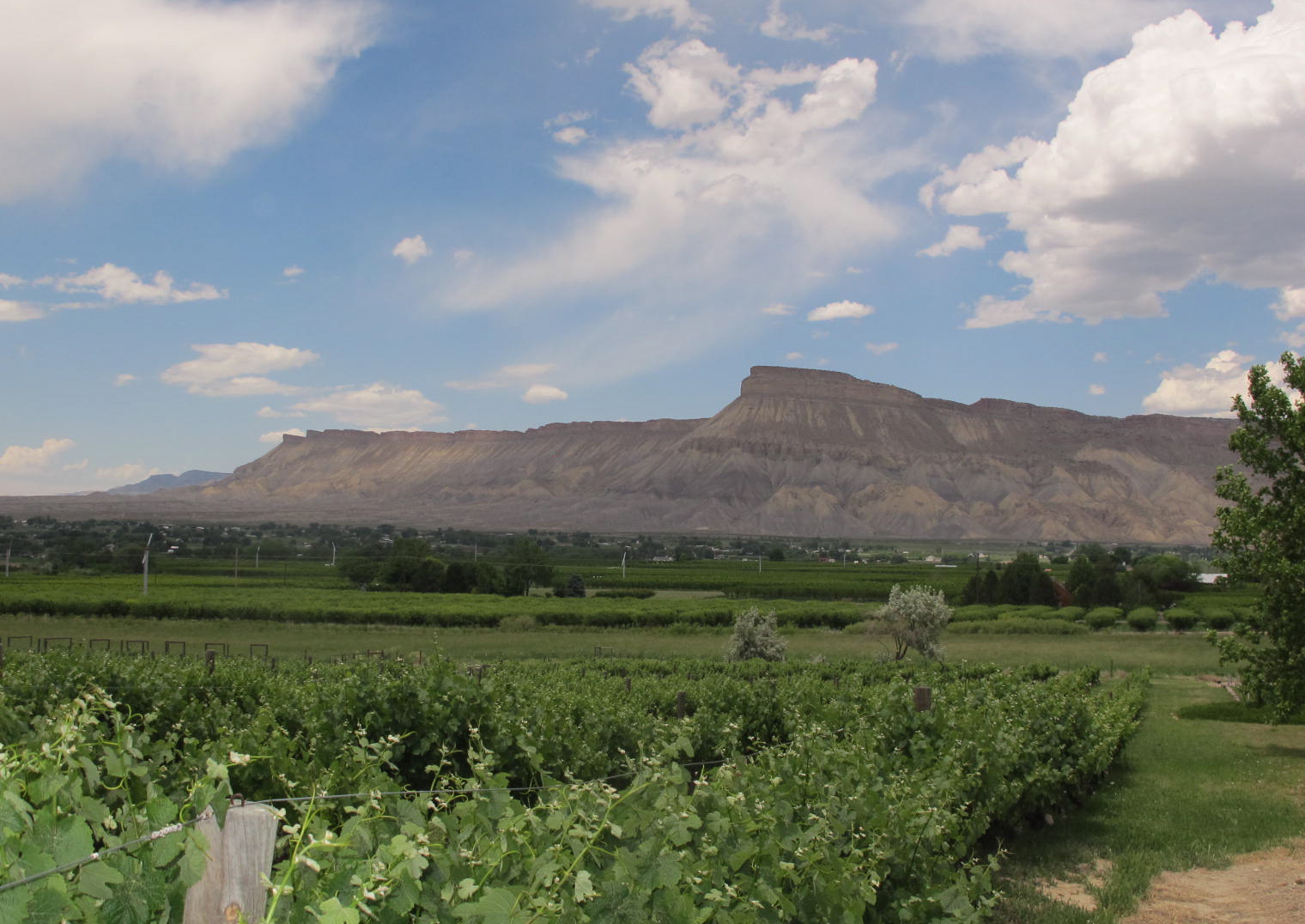
This is looking from a winery with Mt. Garfield and the Bookcliffs in the background. The Bookcliffs are a range that goes west into Utah.

Looking toward Mt. Garfield and the Bookcliffs, a range that goes west into Utah. Taken from one of our three wineries. Fun!
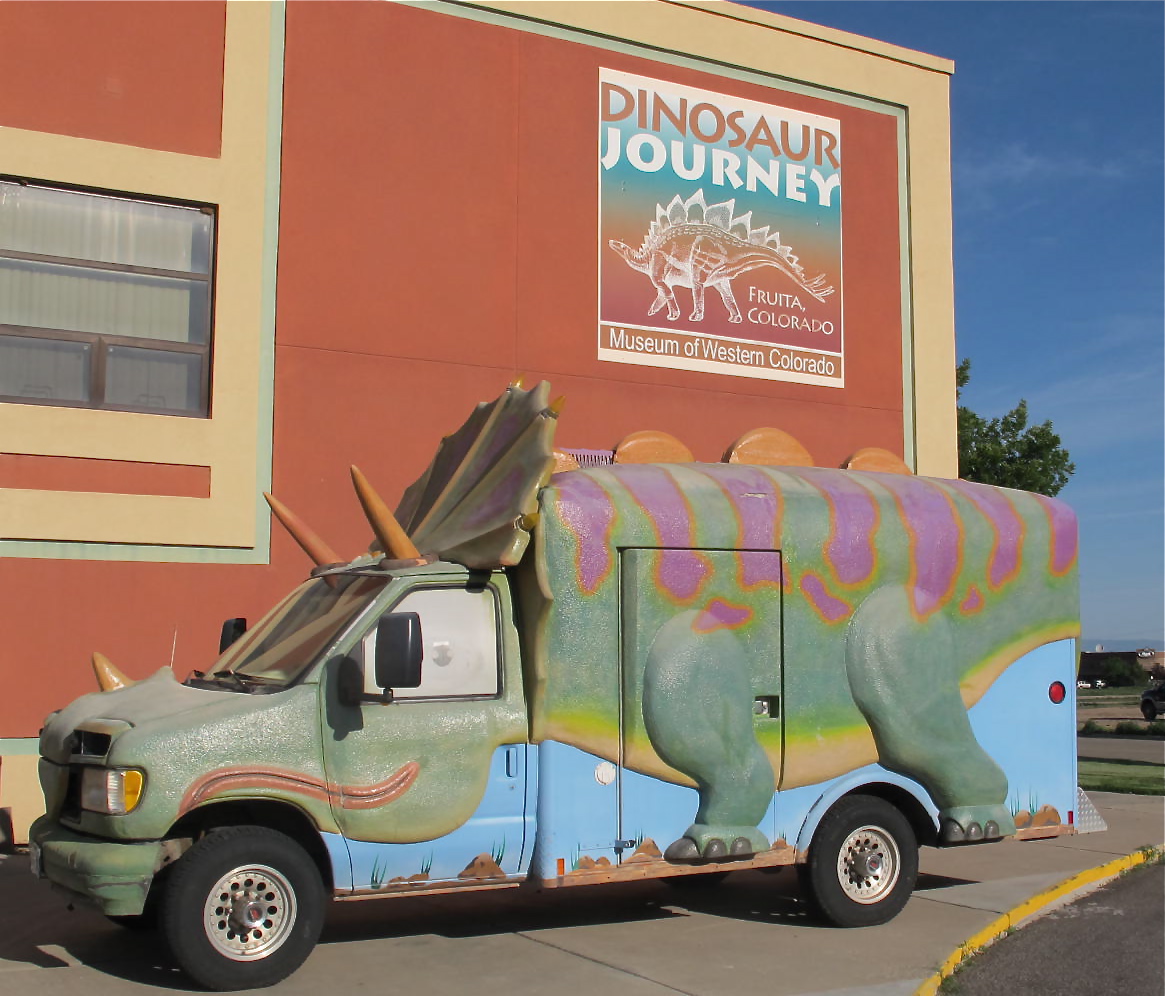
The next morning, we drove to Dinosaur Journey in Fruita, CO that is one-third of the Museum of Western Colorado.

The next morning, we drove to Dinosaur Journey in Fruita, CO that is one-third of the Museum of Western Colorado.

There, we met Chris and Mitch, our delightful young guides (very young to us) who led us through our adventure for the next three days. (This tour was very special as Shirley and I were the only two people on the tour. So we received lots of attention and had all our questions answered to the nth degree). They took us to the Rimrock River Adventures where we met Steve, our boat driver. We floated/rowed and motored about 30 miles down the Colorado River through the Ruby and Horsethief Canyons all the way to Westwater, Utah. To me, it was sort of a mini-Grand Canyon rafting trip where we saw like rock formations (except some of the nomenclature is different, which confused me) plus dinosaur tracks and some pictographs as well as learning more about geology and paleontology. We loved it!

Mitch, Shirley and our boat driver, Steve when we began our journey together down the river.
Mitch, Shirley and our boat driver, Steve when we began our journey together down the river.

Chris was our other guide

Chris was our other guide

Mitch and Chris were both such nice guys and had tons of geological and paleontological info and puns. Steve also had many jokes and stories to tell us.

The first picture from the raft is of the FPA (Fruita Paleontological Area)(never heard of such a thing. I thought something with *PA dealt with Pale Ale) It is an area rich with fossils. As we moved on down the river, we began to see several more layers of formations.
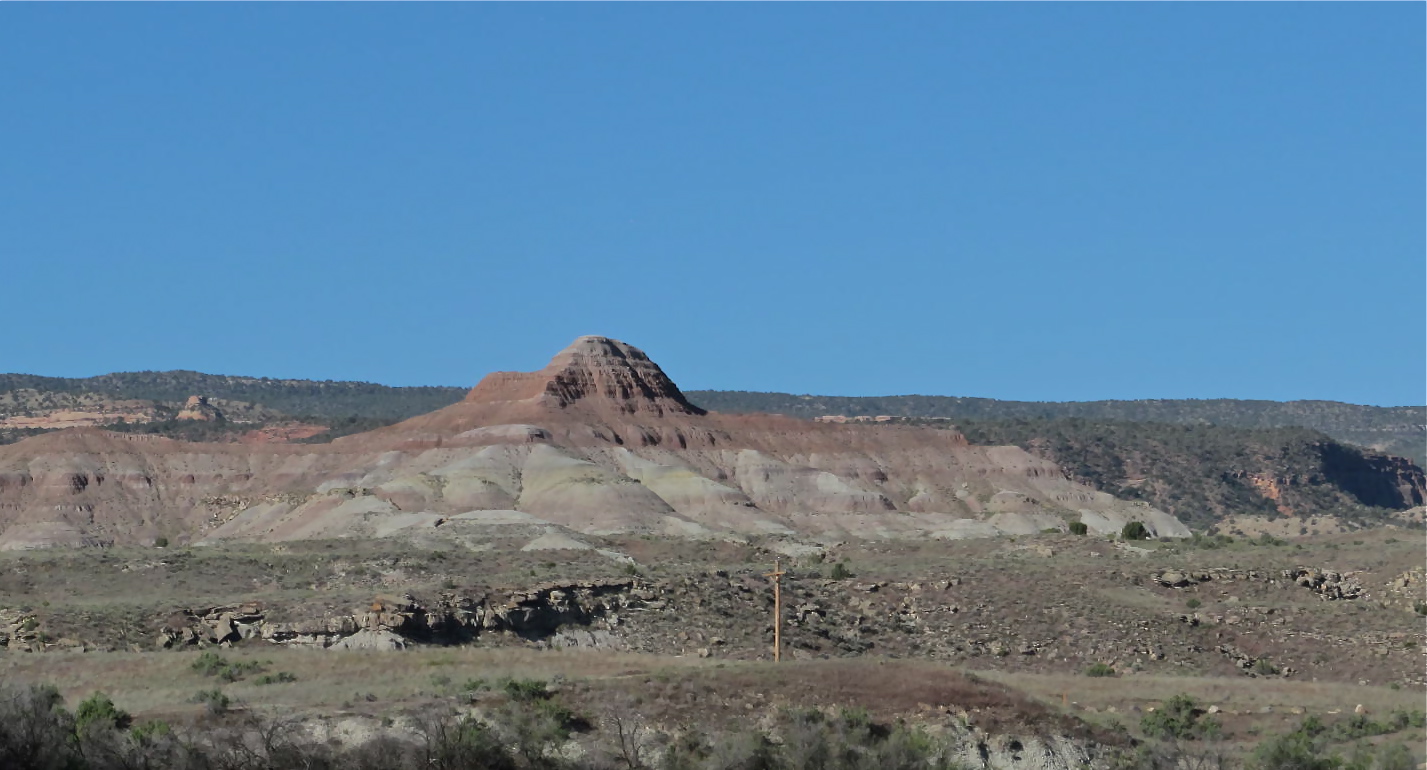
The Fruita Paleontological Area
The Fruita Paleontological Area

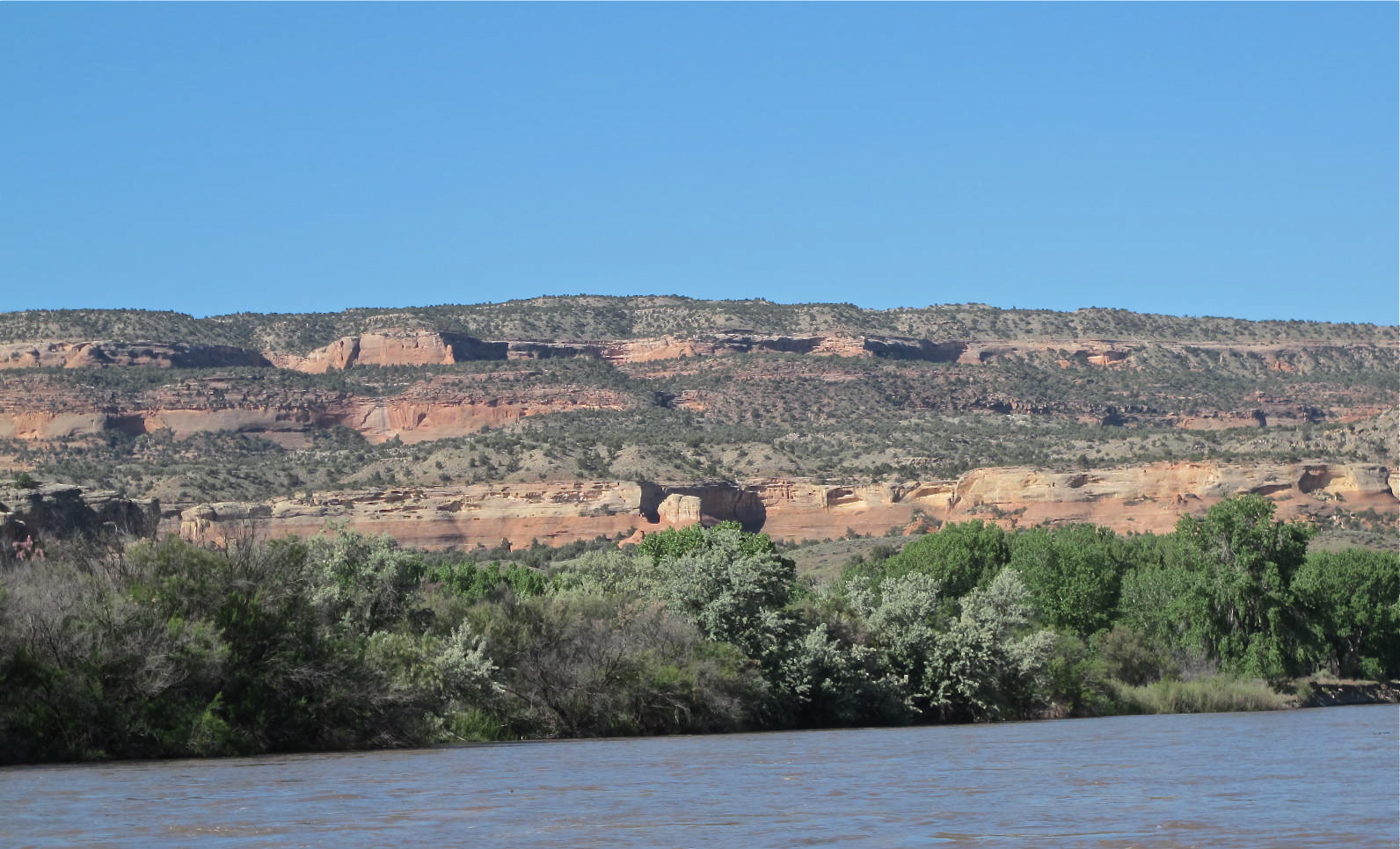
Some of the many formations in the Ruby and Horsethief Canyons

Some of the many formations in the Ruby and Horsethief Canyons

We learned about the following formations:  Schist, Chinle, Wingate, Kayenta, Entrada, Morrison (THE major dinosaur bone layer which also includes the Tidwell, salt wash and brushy basin layers), and Mancos shale. To add more data and confuse you more, here are some more terms and time periods. The Mesozoic Era includes the Jurassic Period from 210 million years ago and lasted for 70 million years. The Cretaceous Period is described as the last period of the dinosaurs and lasted from about 144 to about 65 million years ago. Those are the two eras we were most interested in even though we saw all of the other layers. I know that’s confusing. I can show you pictures of these beautiful layers and formations, but I am unable to tell you which specific formation they are. I just couldn’t get it even after the “boys” explained it several times. So I’m going to tell you about some of the things that I’m fairly sure of.

The Great Uncomformity?  At the very least, it's a visible fault in the earth

The Great Uncomformity? At the very least, it’s a visible fault in the earth

I thought this picture was of the Great Unconformity (Occurring worldwide, the Great Unconformity juxtaposes old rocks, formed billions of years ago deep within the Earth’s crust, with relatively young Cambrian sedimentary rock formed from deposits left by shallow ancient seas that covered the continents just a half billion years ago), but now I’m not sure. I AM pretty sure this picture shows a fault that caused the disappearance of some layers.

You can see a lot of folding of layers in this picture. I think the Morrison formation is the top layer.

You can see a lot of folding of layers in this picture. I think the Morrison formation is the top layer.

Steve pulled over to the shore and we clambered up the steep slope to view some special formations as well as a few dino tracks.
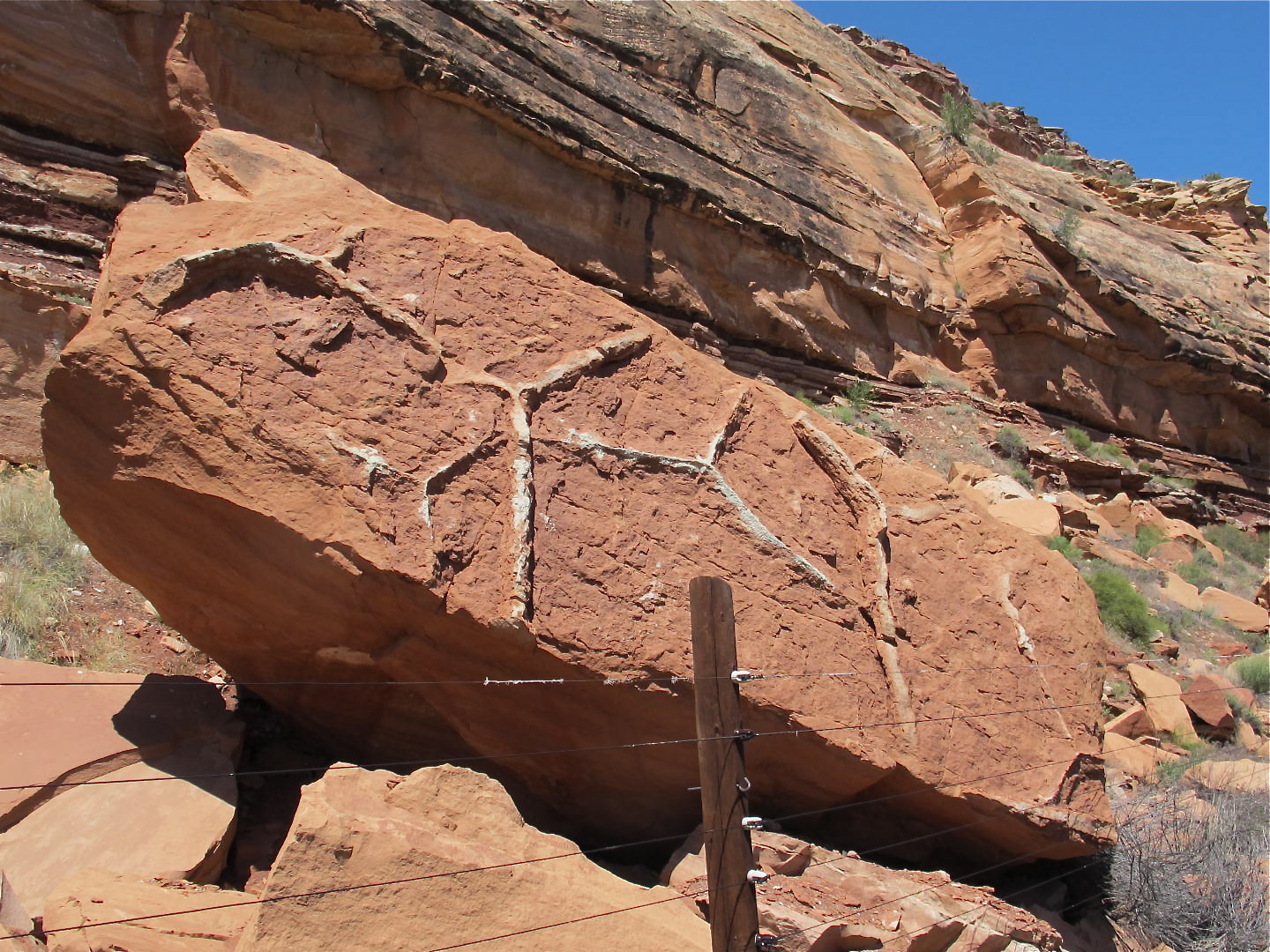
The white lines in this rock are mud cracks. They form in fine clay material that has dried out. As the moisture is removed, the surface will split into cracks that extend a short way down into the mud. Later sediments can fill in the cracks and are preserved. Geologists can tell what the original orientation of the rock was using mud cracks.

The white lines in this rock are mud cracks. They form in fine clay material that has dried out. As the moisture is removed, the surface will split into cracks that extend a short way down into the mud. Later sediments can fill in the cracks and are preserved. Geologists can tell what the original orientation of the rock was using mud cracks.

A dino track in the center of the picture. It might be a theropod.
A dino track in the center of the picture. It might be a theropod.

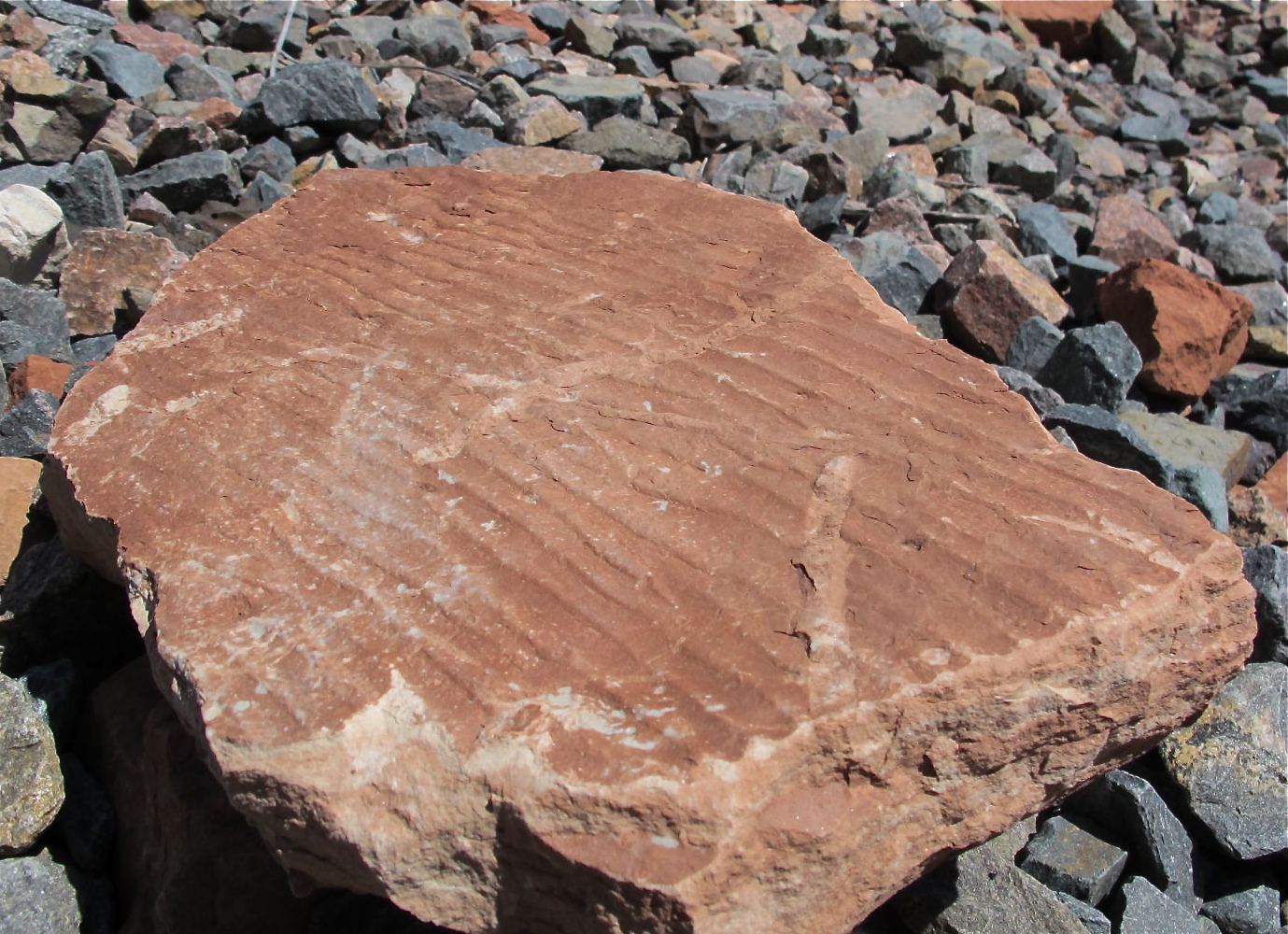
I think the picture with the red stone is cool. The wrinkles you see are ripples from a river or some water mass. The water lapped lazily on the shore and the little ripples were preserved. We saw several examples of this on our voyage.
I think the picture with the red stone is cool. The wrinkles you see are ripples from a river or some water mass. The water lapped lazily on the shore and the little ripples were preserved. We saw several examples of this on our voyage.

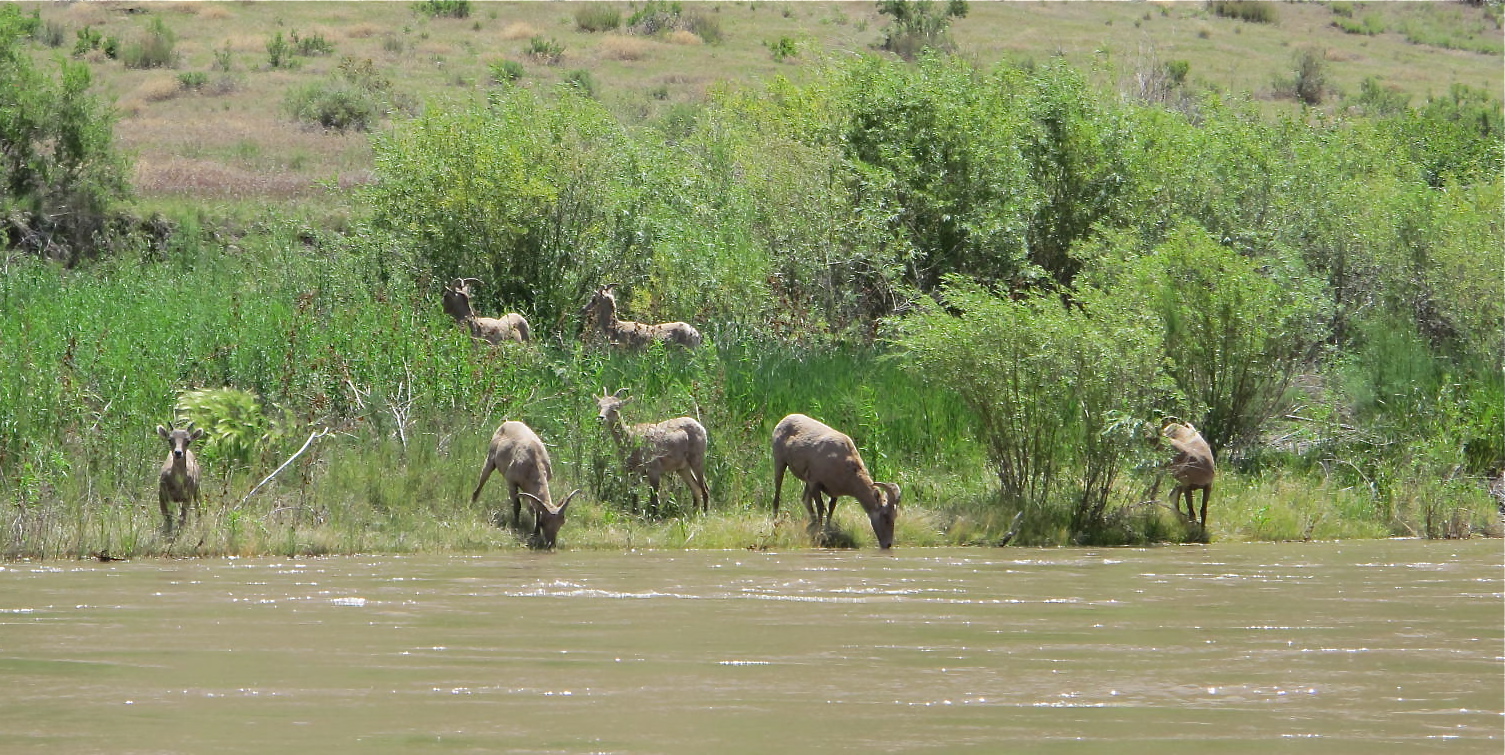
Some of the 17 bighorn sheep we saw

Some of the 17 bighorn sheep we saw

Right across the river from the ripples, we saw a total of 17 bighorn sheep. They were grazing close to the water and some were getting a drink. We also saw 3 bald eagles, many great blue herons, one eider, many ravens and no lizards (which seemed strange to me).

Look in the low center of the picture and you’ll see a peculiarly balanced rock. Steve said he had been watching it for years, waiting to see if and when it falls.

Look in the low center of the picture and you’ll see a peculiarly balanced rock. Steve said he had been watching it for years, waiting to see if and when it falls.

We ate lunch at Black Rocks or “deep schist.” That’s pretty old rock.   You can see that the hole was big enough to crawl into. There was a hole on the other side to spy on river travelers.

I was fascinated by the rock with the hole in it. Shirley and I thought it looked like a sculpted polar bear but others thought it was fingers pointing out to the river. I like our description better.
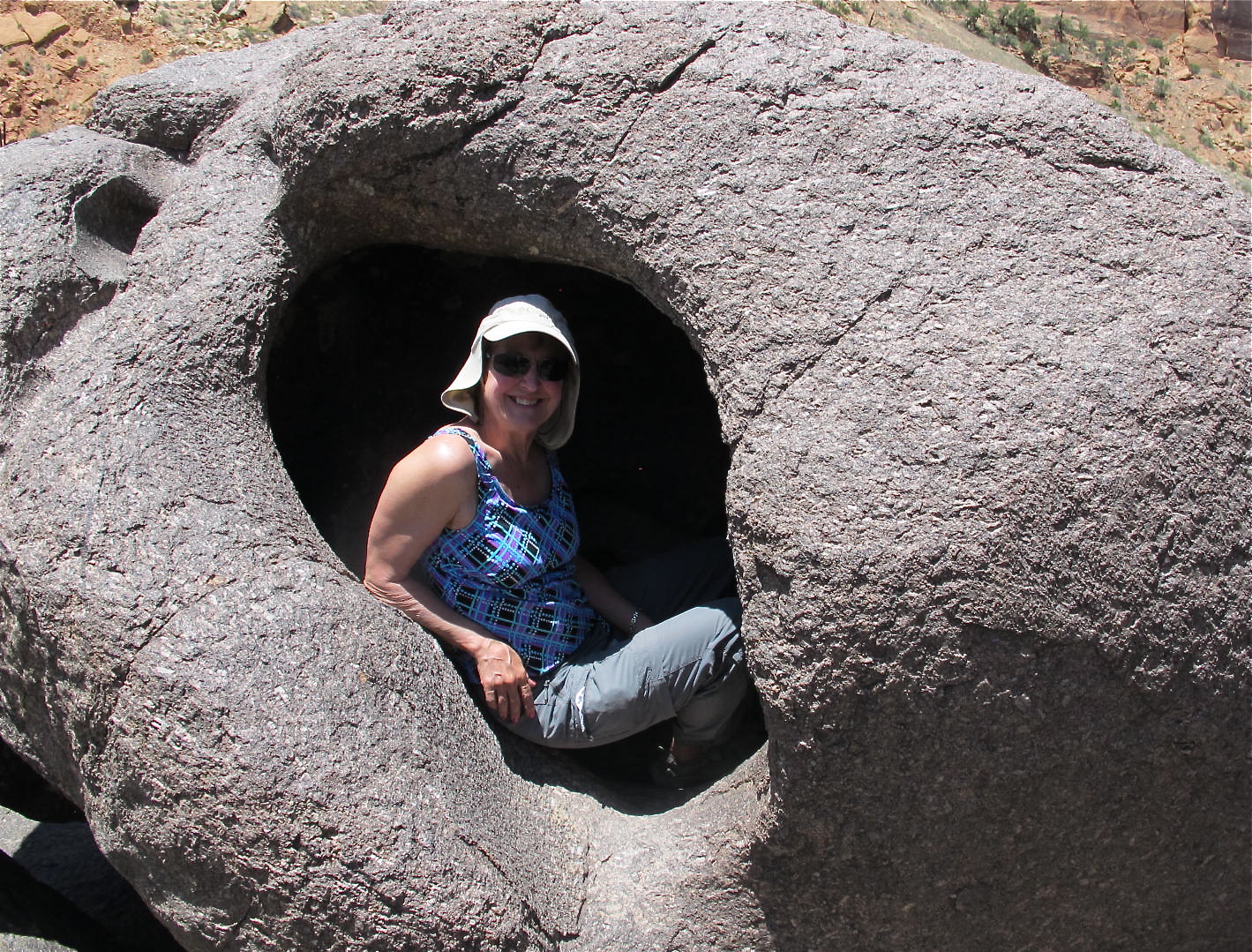
I was fascinated by the rock with the hole in it. Shirley and I thought it looked like a sculpted polar bear but others thought it was fingers pointing out to the river. I like our description better.

Shirley is checking out the bear

Shirley is checking out the bear

You can also see that the river is brown because it was filled with silt that was washed off the mountains due to some severe storms. We also saw limbs and trees as well as other debris floating in the water. The water was cold and very swift. I would not have wanted to fall overboard and try to get to shore or back into the boat.
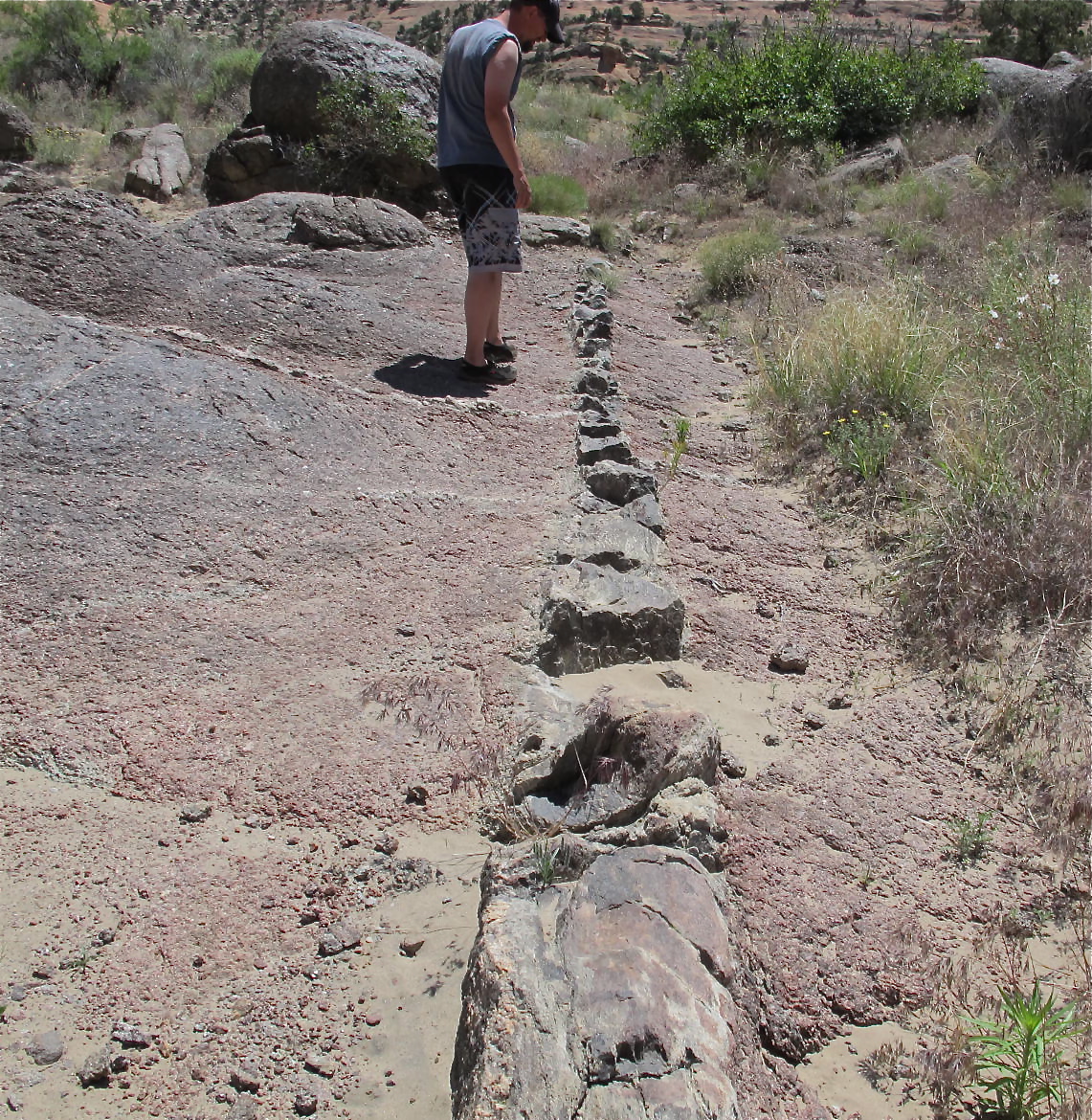
Chris is standing on the schist and looking at quartz dikes that came up in cracks of the schist before it totally cooled.   It really does look like someone placed a dike in the rock. Another dike is by Chris’ right foot and goes perpendicular to the large dike.
Chris is standing on the schist and looking at quartz dikes that came up in cracks of the schist before it totally cooled. It really does look like someone placed a dike in the rock. Another dike is by Chris’ right foot and goes perpendicular to the large dike.

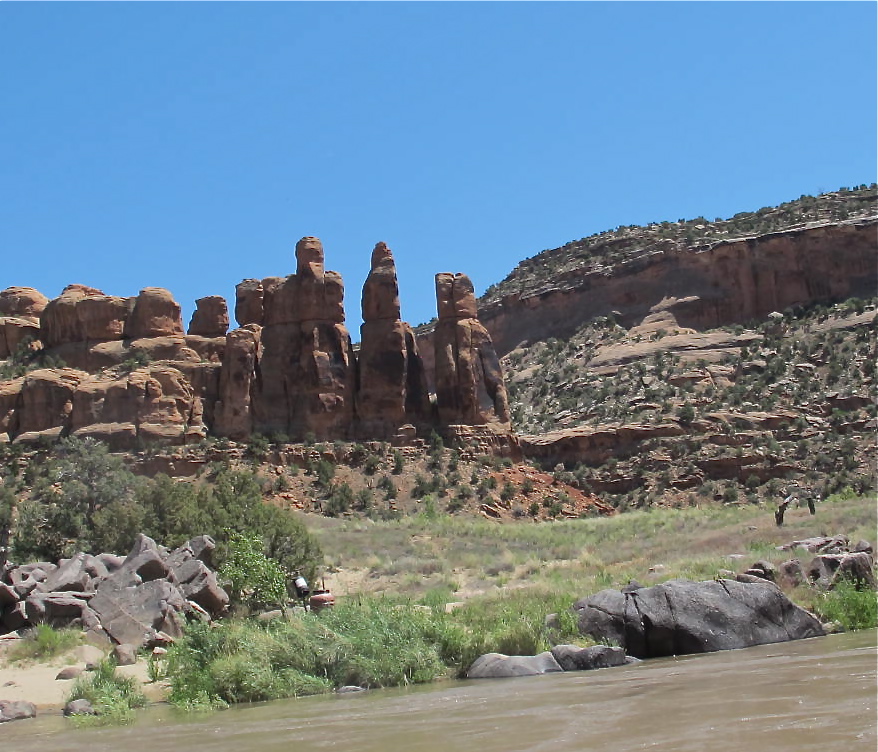
The spires in this picture are called hoodoos. It’s some picturesque erosion, whatever their names are. We saw several examples of hoodoos throughout our tour.

The spires in this picture are called hoodoos. It’s some picturesque erosion, whatever their names are. We saw several examples of hoodoos throughout our tour.

Steve. took us into a tiny creek mouth where we got out of the boat and hiked a distance to see a natural amphitheater and two spectacular pictographs (painted images on rock walls. Petroglyphs are etched into the rock).

 The figure on the left is a bear and the other is a shaman.

The figure on the left is a bear and the other is a shaman.

Steve told us that he heard a concert in this place and the acoustics were just about perfect. I thought it was a magical, spiritual place.
Steve told us that he heard a concert in this place and the acoustics were just about perfect. I thought it was a magical, spiritual place.

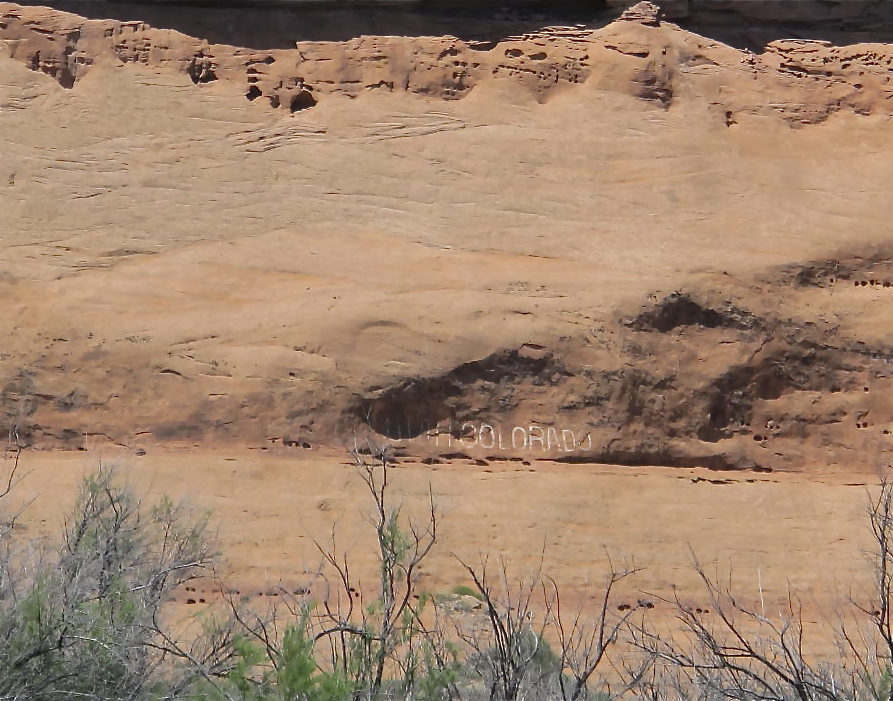
 Someone painted the borderline on the rock wall letting us know this particular fact. You can just barely see the white writing at the base of the wall

Someone painted the borderline on the rock wall letting us know this particular fact. You can just barely see the white writing at the base of the wall

Not long before we ended our journey, we floated into Utah. I thought it was cool that the Colorado River only has to go about 30 miles from Fruita to flow into Utah. I felt sort of like an explorer, not knowing which way the river would turn or what would be around the next corner.

The wind came up during our voyage and it seemed to blow in our faces for at least the last two-thirds of the trip. It wasn’t a hot wind but it seemed to suck the energy out of Shirley and me. We were close to exhaustion that evening and slept well.

The next day was the Big Dig day. We were excited to get to the Mygatt-Moore Quarry (some miles west of Fruita in Rabbit Valley), get instructions and dig down to find a new fossil. (Jerri had teased me that if I found a big bone, our local paper would have a headline of “An Old Fossil finds a New Fossil!”) Mind you, some big bones had been found in that quarry, so there was a possibility. It didn’t quite work out like that, but we had a little orientation and began to dig in our assigned spot of a small, layered mud embankment.  I found out later that we were digging in mud that was 150 million years old!
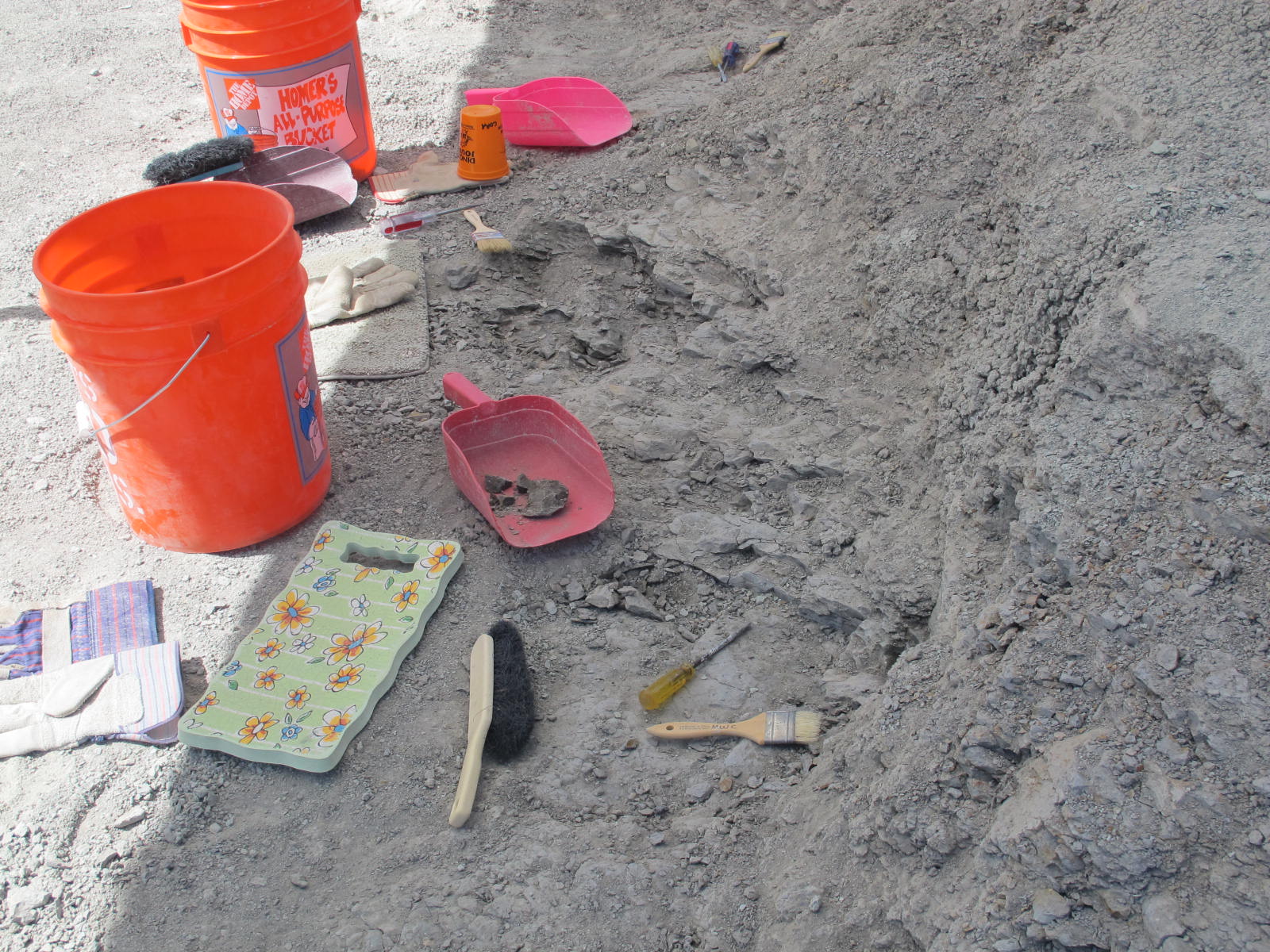
Our tools for the day
Our tools for the day

Shirley is carefully checking out some fragments.

Shirley is carefully checking out some fragments.

Shirley is carefully checking out some fragments.

They are real fossils!

We both found mostly plant fragments, but we were excited when we were able to properly identify bone fragments.   Neither one of us found a long bone, but right next to where we were digging, Mitch found a rib of something but he ran out of time and was not able to extract it from the earth.
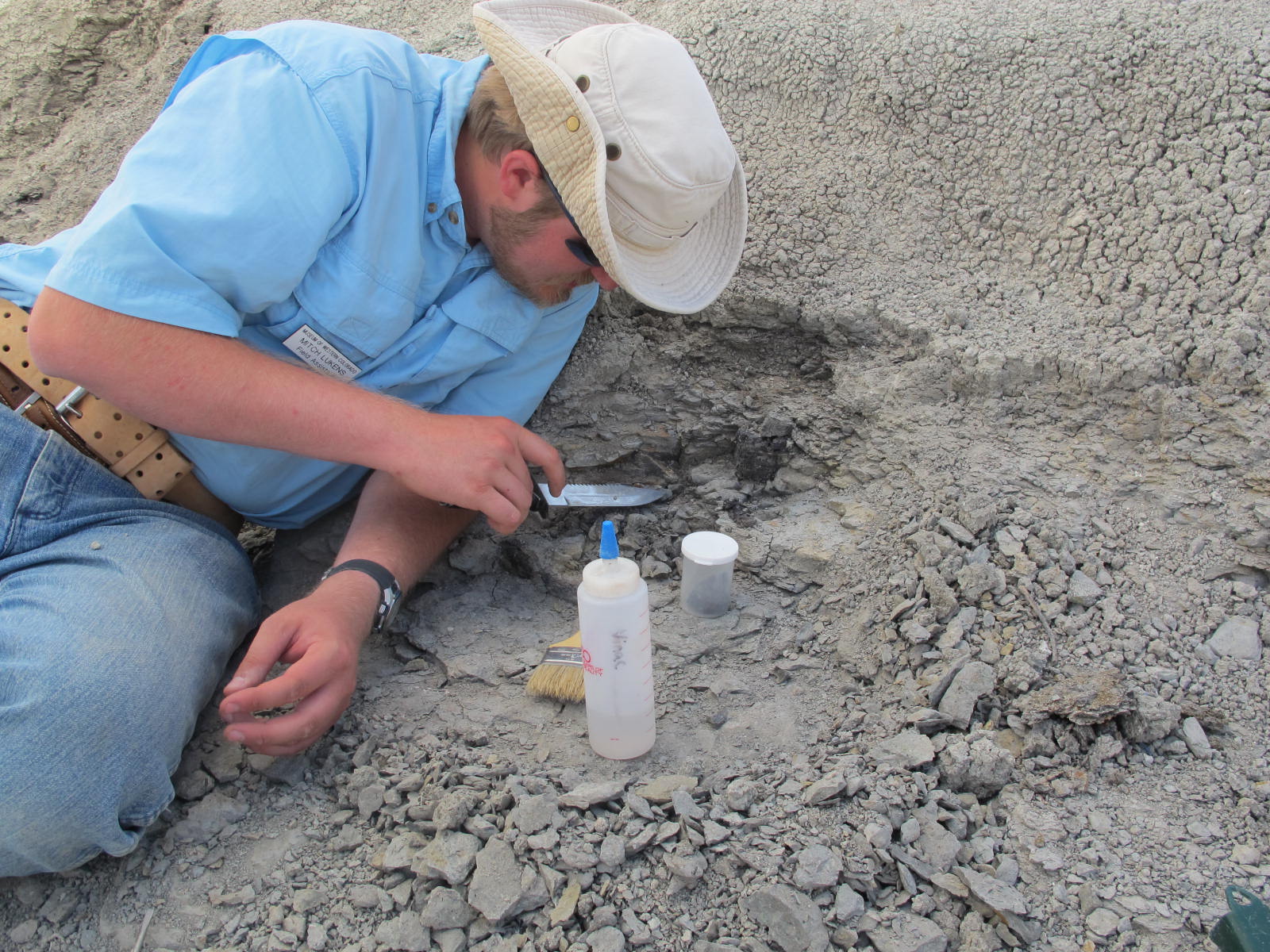
Mitch is digging out a rib of some sort
Mitch is digging out a rib of some sort

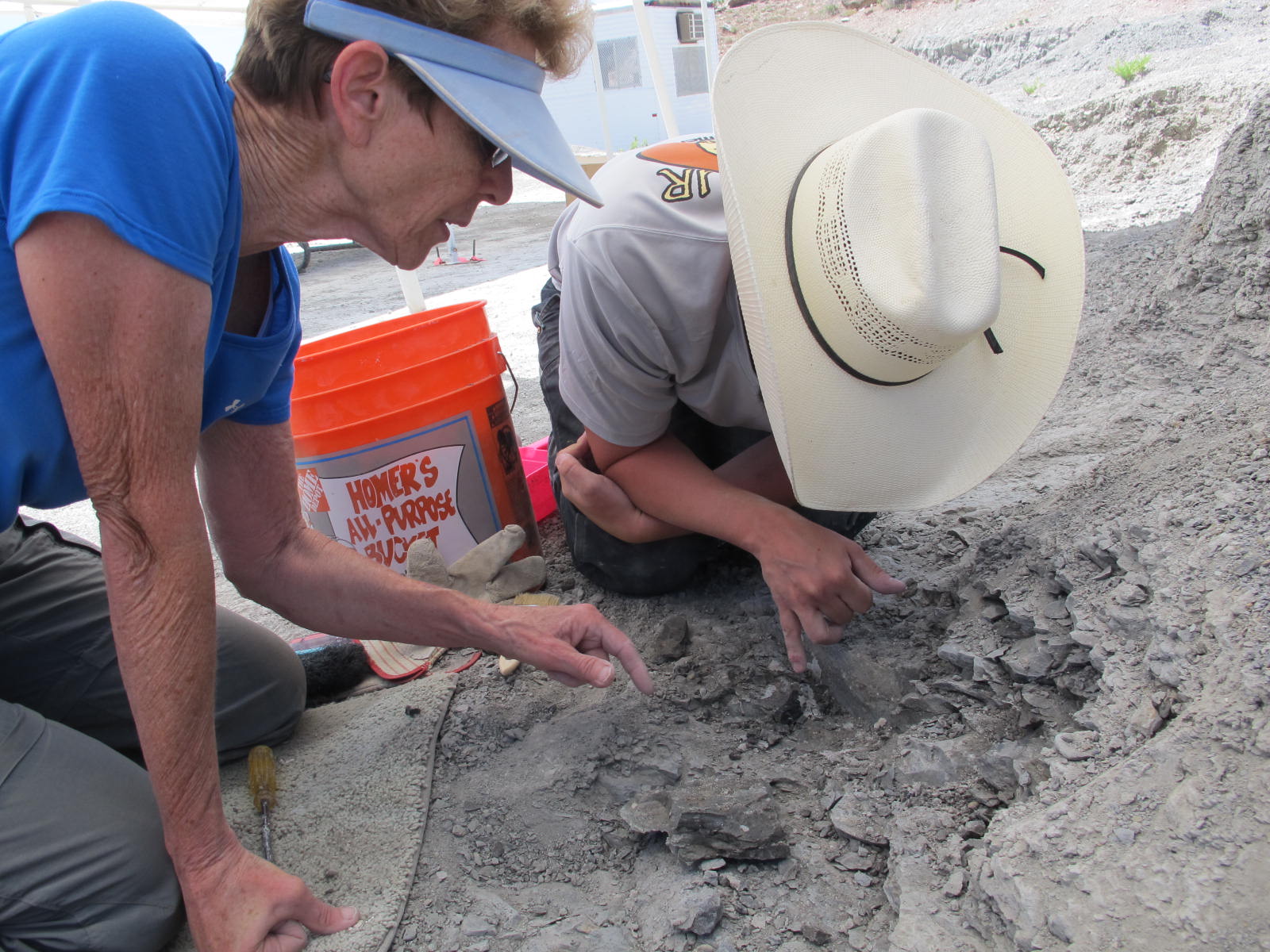
Chris and I are discussing how to dig out the fossil I'd found.

Chris and I are discussing how to dig out the fossil I’d found.
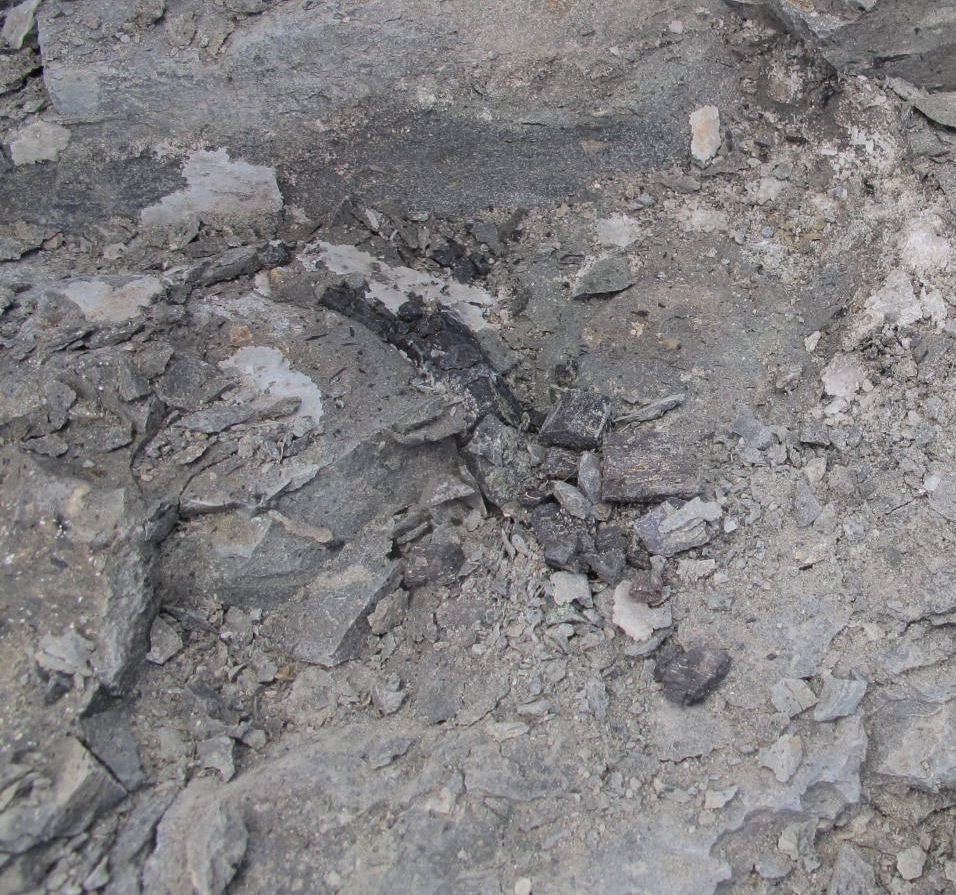
The elongated black thing in the center is a bone

The elongated black thing in the center is a bone

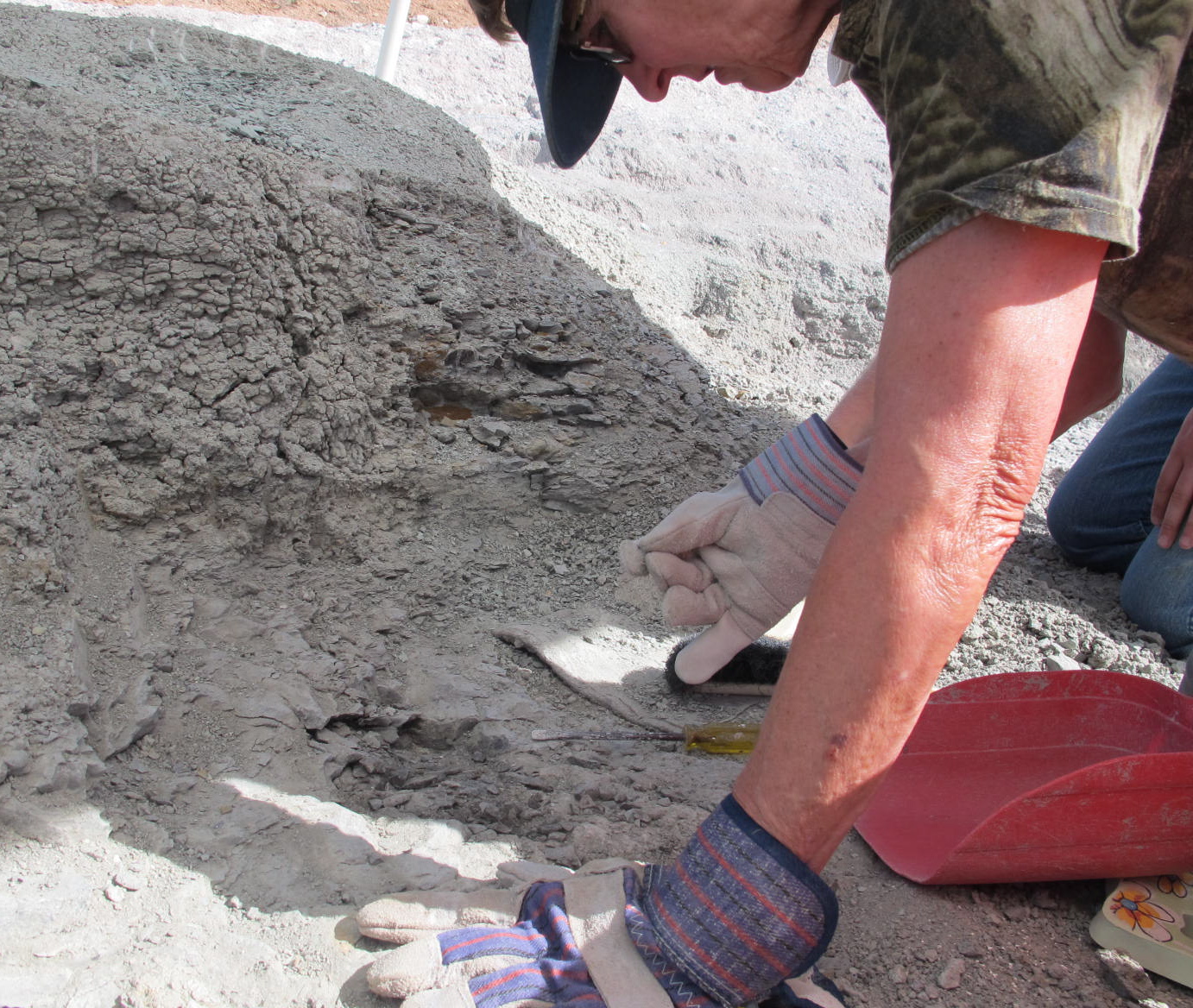
Something that Shirley and I quickly discovered is that paleontology and digging for bones takes a great deal of patience, care and finesse. There is also the fact that one spends a lot of time on the knees. We were using little carpets for kneepads, but they didn’t help much after a while. We also found that there is a lot of consulting of each other as to what something might be. I found it good to have so much teamwork. Chris and I were discussing how to dig around a bone (that’s another patience stretcher because in being delicate about this, you might run into another bone and therefore have to expand your digging around area). That black thing in the middle of the picture is a dinosaur bone fragment. I spent the afternoon digging around it but like Mitch, ran out of time.

An interesting thing is that we could not leave the dig area open like you see it in the picture. We put carpets or some type of protective material over it and then shoveled dirt on top of it to make it look like nothing was there. The reason is that vandals and/or tourists can walk into the quarry, look around and take stuff. It is against Federal law to remove any artifact/fossil that one finds unless one has specific permission (like the museum has). No, Shirley and I did not take even one tiny fragment.

While we were busily digging in our little area, other volunteers were digging around a very large bone that had been uncovered and then casted and covered in 2008. No one knew why it had been forgotten but it was. So they dug out as much as they could and then discovered several other bones around the one they were trying to get at. So, again, they had to begin to dig around the “new” bones. They had hoped to extract the original bone by the end of this dig season, but they figure now it will be at least two entire dig seasons to do so.
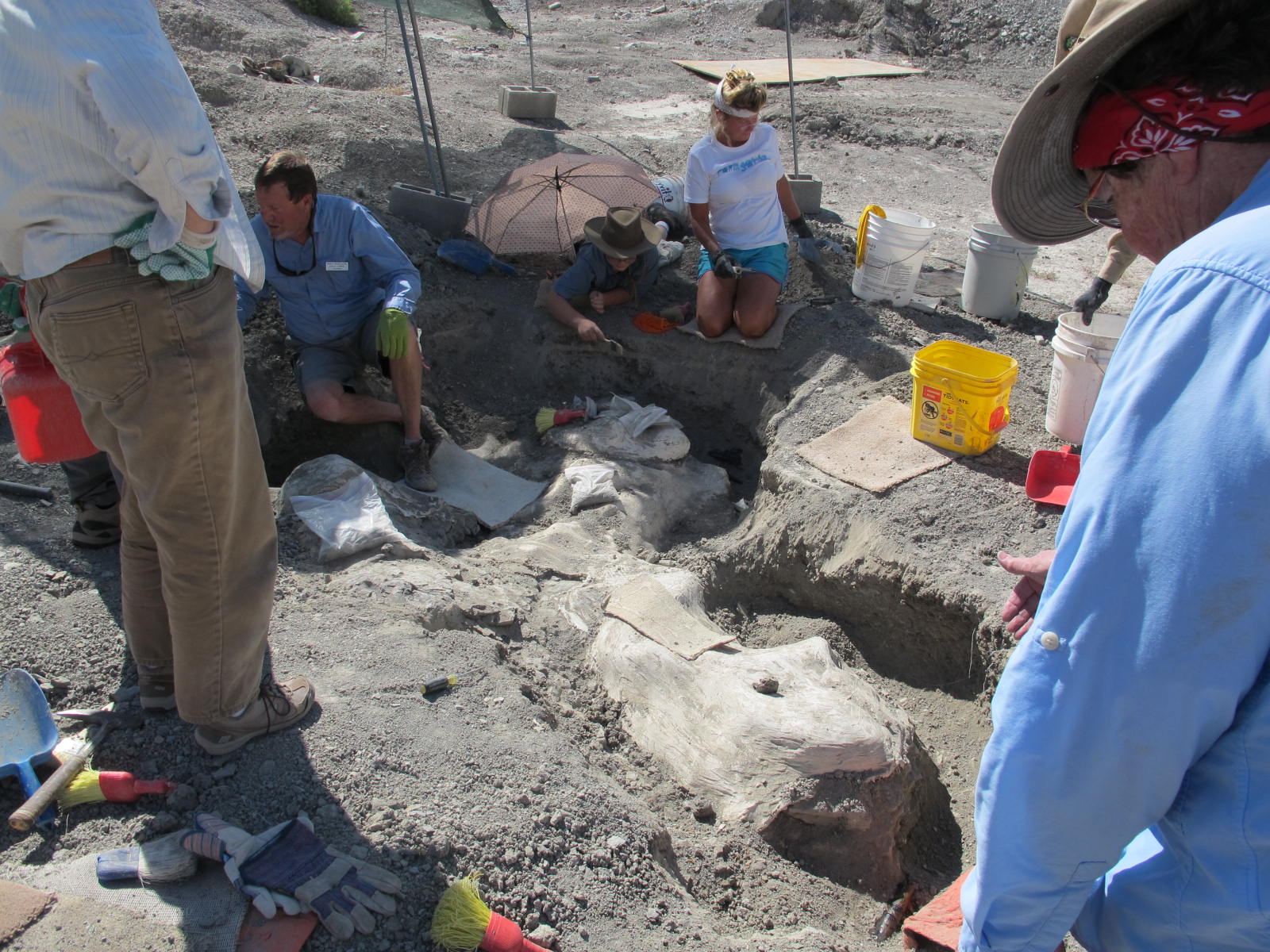
Volunteers digging out a large bone buried since 2008.
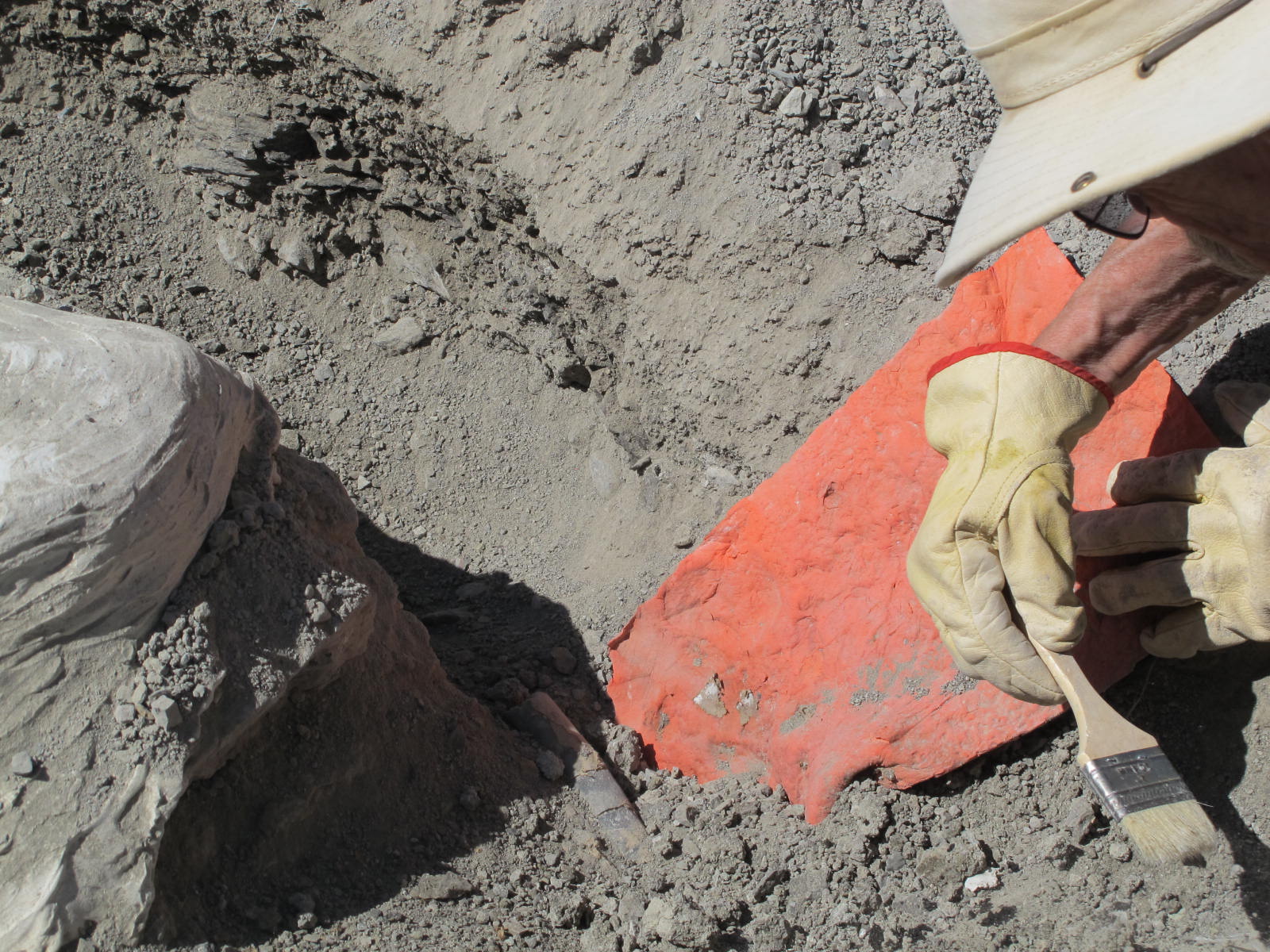
Volunteers digging out a large bone buried since 2008.

If you look to the left of the orange cloth, you’ll see a round thing and that is one of the “new” bones.

If you look to the left of the orange cloth, you’ll see a round thing and that is one of the “new” bones.

That big bone, etc. was also covered up with plywood, carpets and dirt so as to protect it from the elements as well as people. They don’t dig every day and there is no security out there, so prevention is very important.

There is a popular “Trail of Time” just down the hill from the quarry where people can walk along a trail to see actual fossils sticking out of the ground/rock. Well-marked signs tell them what they are seeing and why such a critter might have been there. It is an informative trail for the average person and kid who are interested in dinosaurs.

Shirley and i at the end of the day.  Our digging area is all covered up.

Shirley and I at the end of the day. Our digging area is all covered up.

I found the volunteers working that day to be very dedicated to their work. The lead volunteer, Kay, had been volunteering for 30 years at the museum and the dig. Mitch and Chris consulted her as often as each other because she knew so much. Most of the other folks had been digging for 10 to 20 years. As I said, they are very dedicated. Carter, only 12, had been working at the museum in the lab for one winter and now he’s out at the dig being treated pretty as much an equal. Yes, he wants to be a paleontologist.

After our dig, Shirley and I were given a “behind the scenes” tour of the paleontology lab at the museum. We had a chance to view the largest femur (6’7”) of an allosaurus that was discovered at the quarry where Shirley and I dug.
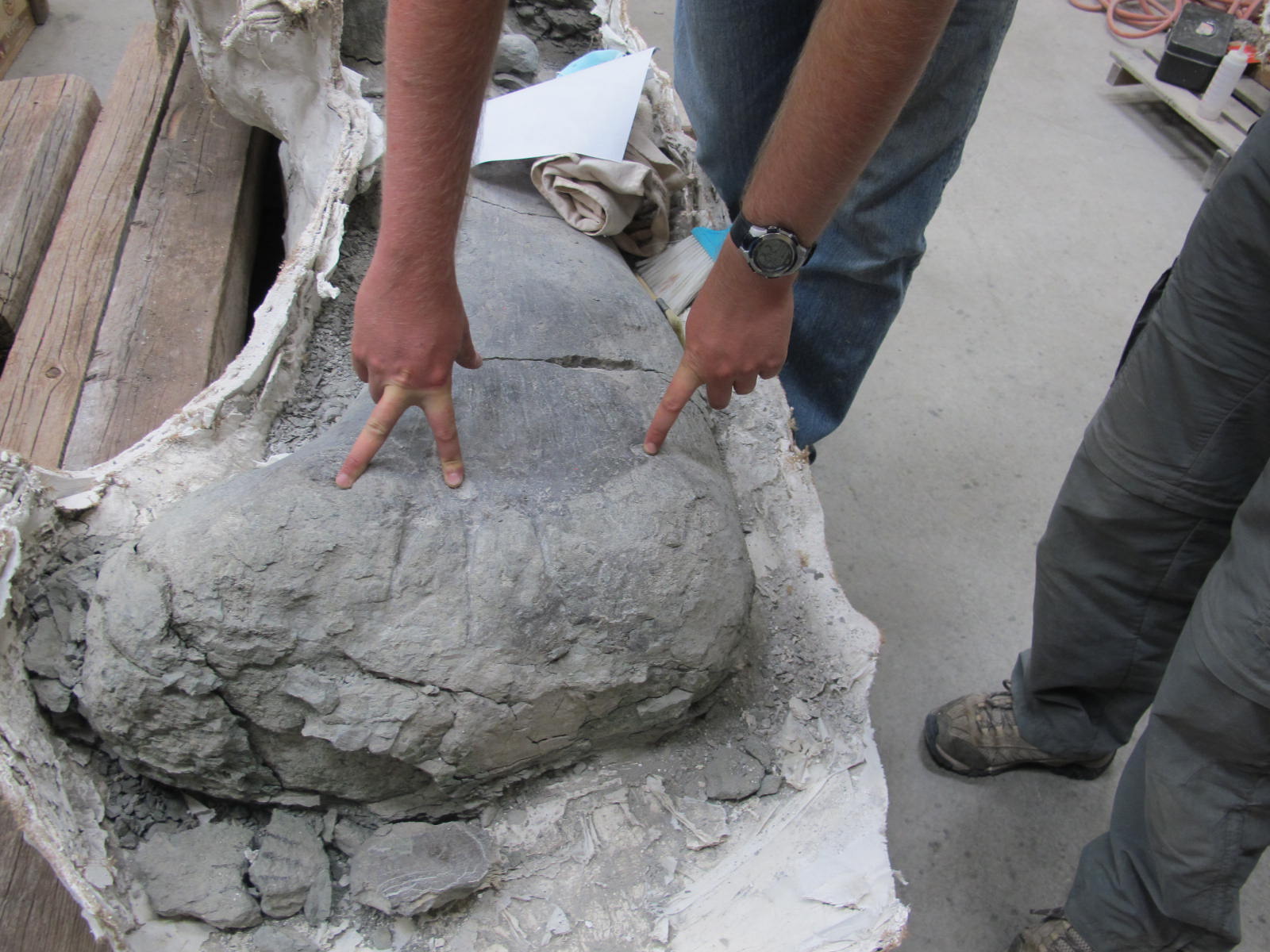
An interesting note is that Mitch is pointing to bite and claw marks on the femur.

An interesting note is that Mitch is pointing to bite and claw marks on the femur.

Shirley is checking out some microscopic material that will eventually be teased out of its encasement.
Shirley is checking out some microscopic material that will eventually be teased out of its encasement.

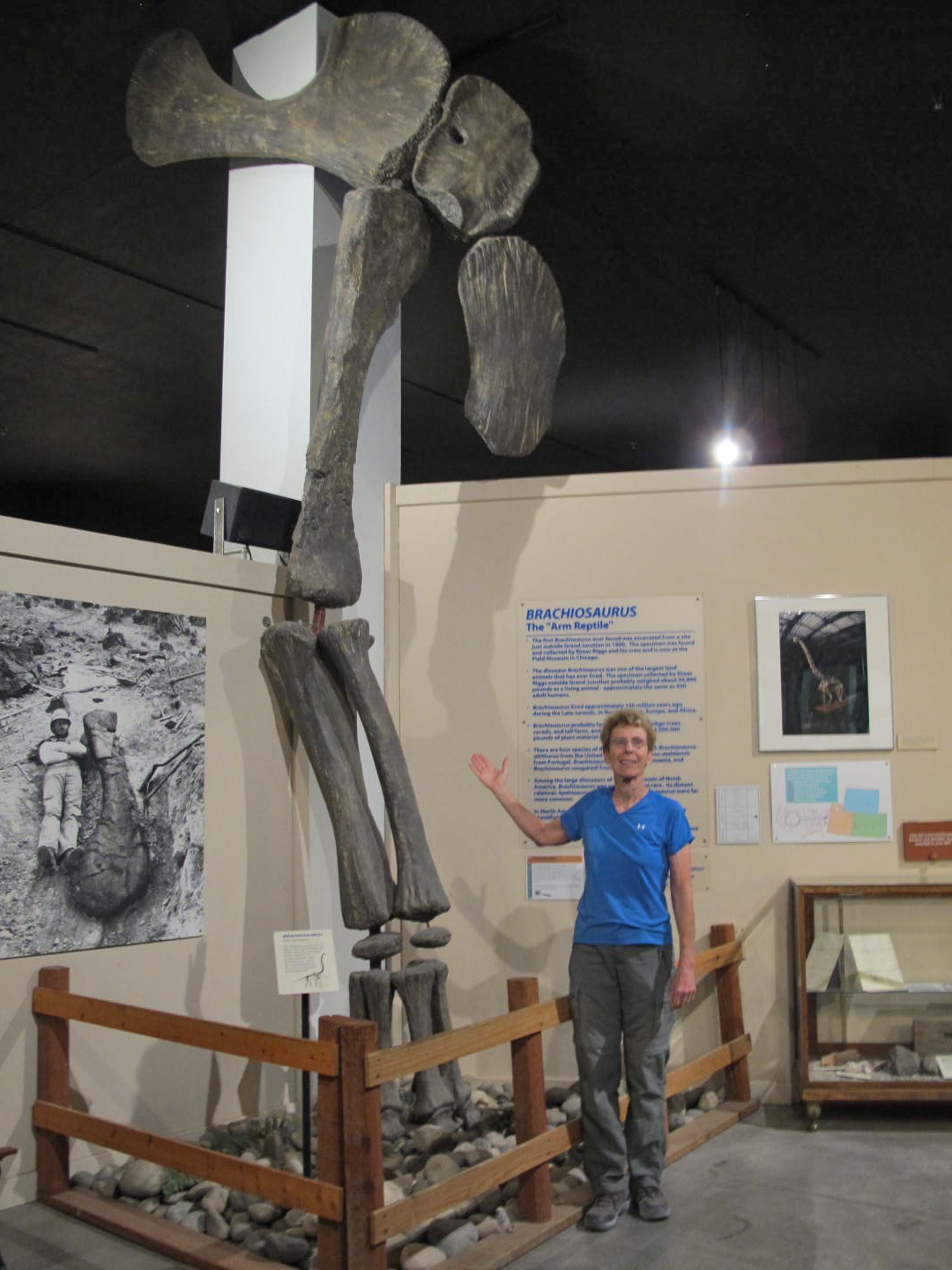
I  am standing beside the front leg bones of a brachiosaurus that stand over 18’ tall.

I am standing beside the front leg bones of a brachiosaurus that stand over 18’ tall.

Can you imagine an animal that would have been about 85’ long and 40 to 50’ tall? The cool thing about the brachiosaurus is that it was first described by Elmer S. Riggs in 1903 from fossils found less than a mile from where I am standing. Right there in Fruita! Didn’t I say the Grand Valley was rich in fossils?
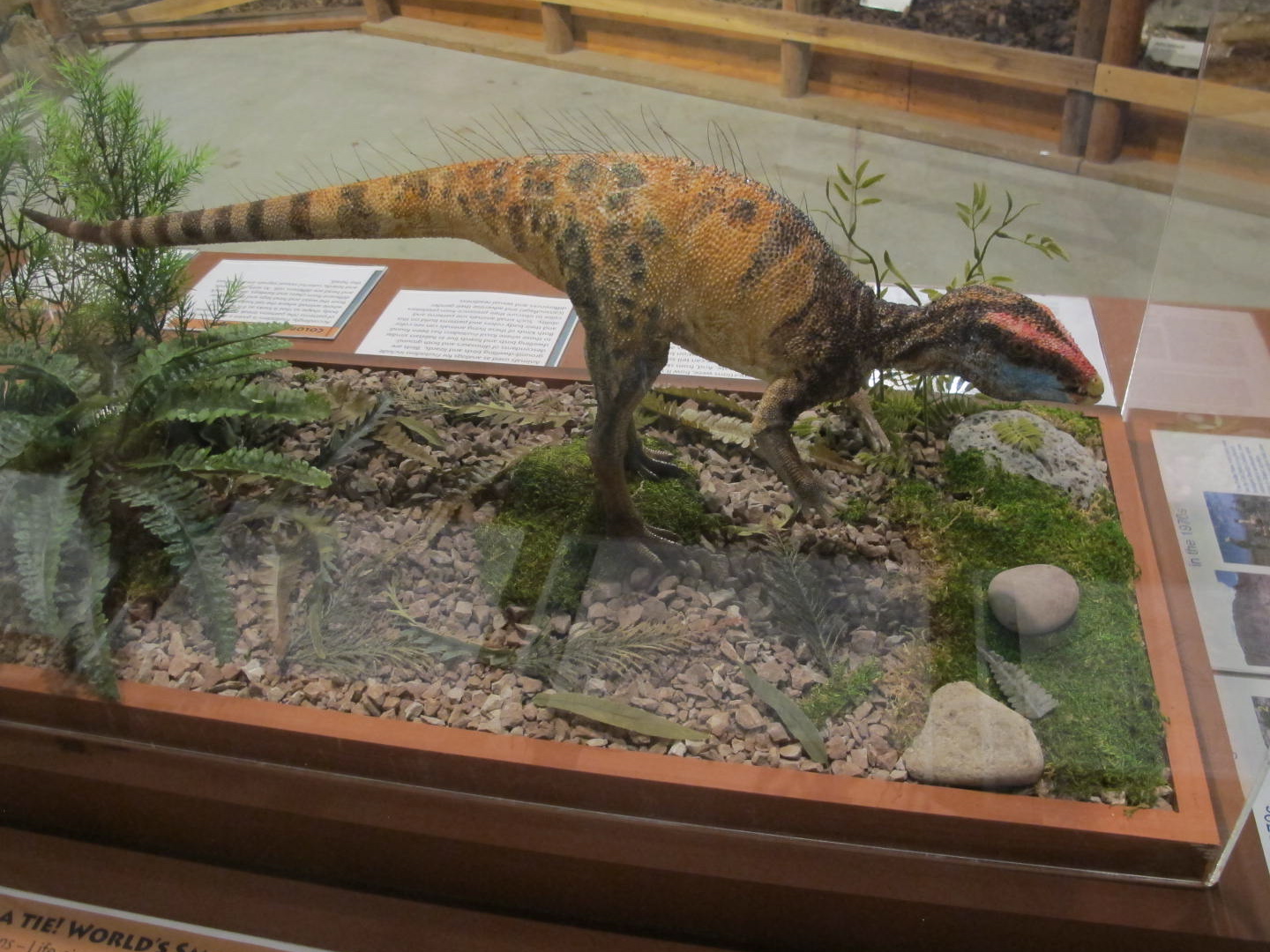
This is Fruitadens, a tiny adult dinosaur found in the Morrison formation just southwest of Fruita. It only weighed about one pound. Compare that to the Apatosaurus, found in the same rocks, that weighed in at 75,000 pounds!

This is Fruitadens, a tiny adult dinosaur found in the Morrison formation just southwest of Fruita. It only weighed about one pound. Compare that to the Apatosaurus, found in the same rocks, that weighed in at 75,000 pounds!

The Greeter

The Greeter

I loved the Dinosaur Journey Museum as it was clean, interactive, entertaining and informative.  Kids and adults were loving it!

Our third and last day was spent in the Moab, Utah area checking out dinosaur tracks and petroglyphs. It was a very fun day with again, seeing some spectacular colorful country.
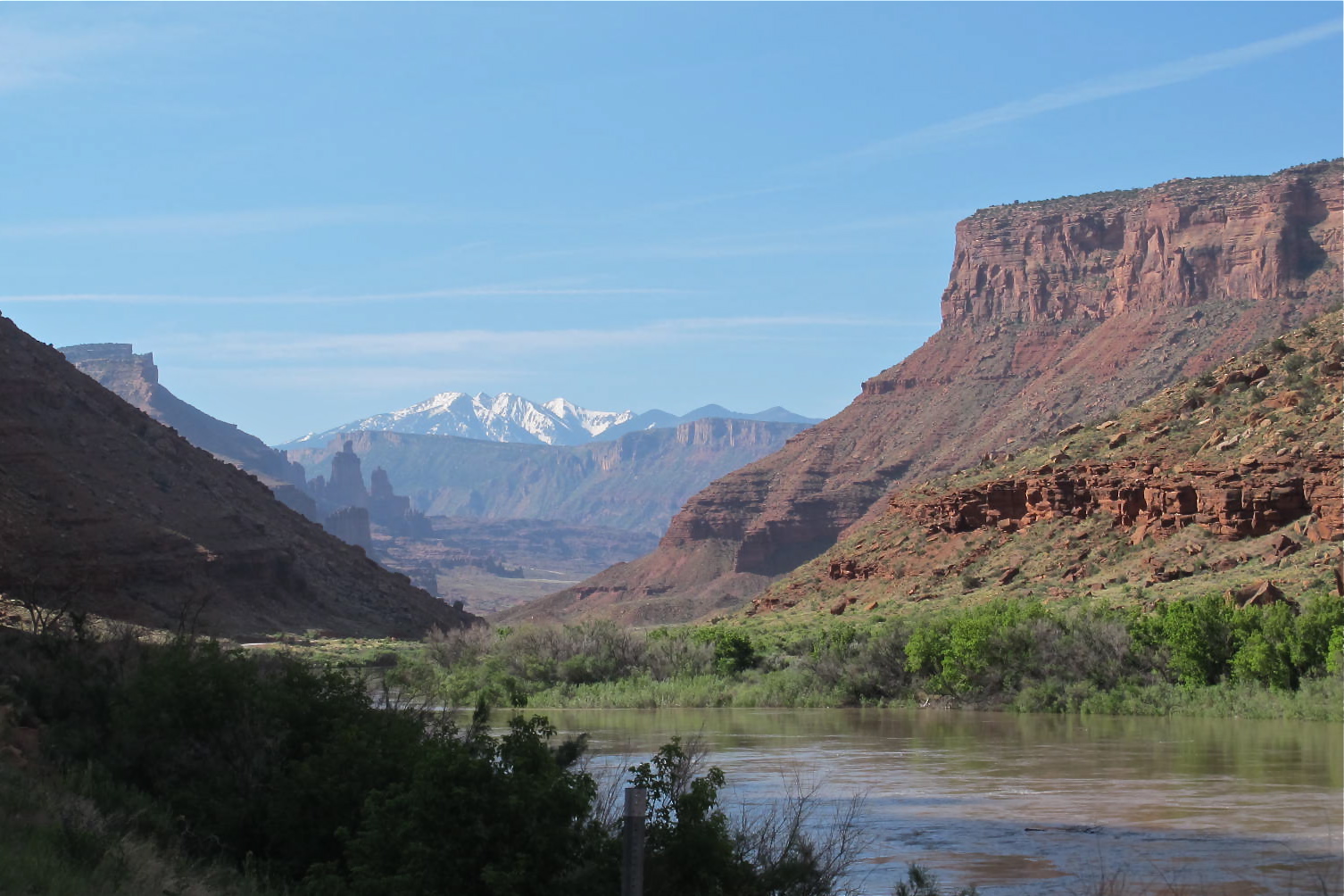
shot of the Colorado River It was a gorgeous day looking toward the La Sal Mountains.

shot of the Colorado River It was a gorgeous day looking toward the La Sal Mountains.

Those little spires in the background are called Fisher Towers. The Towers are named for a miner who lived near them in the 1880s and are world renowned as a subject for photography and for its classic rock climbing routes.

Our first dino track was in some sandstone beside the highway. A spring was running nearby and people were stopping by to fill their water jugs with the spring water. Apparently, the water was polluted but they didn’t seem to care.
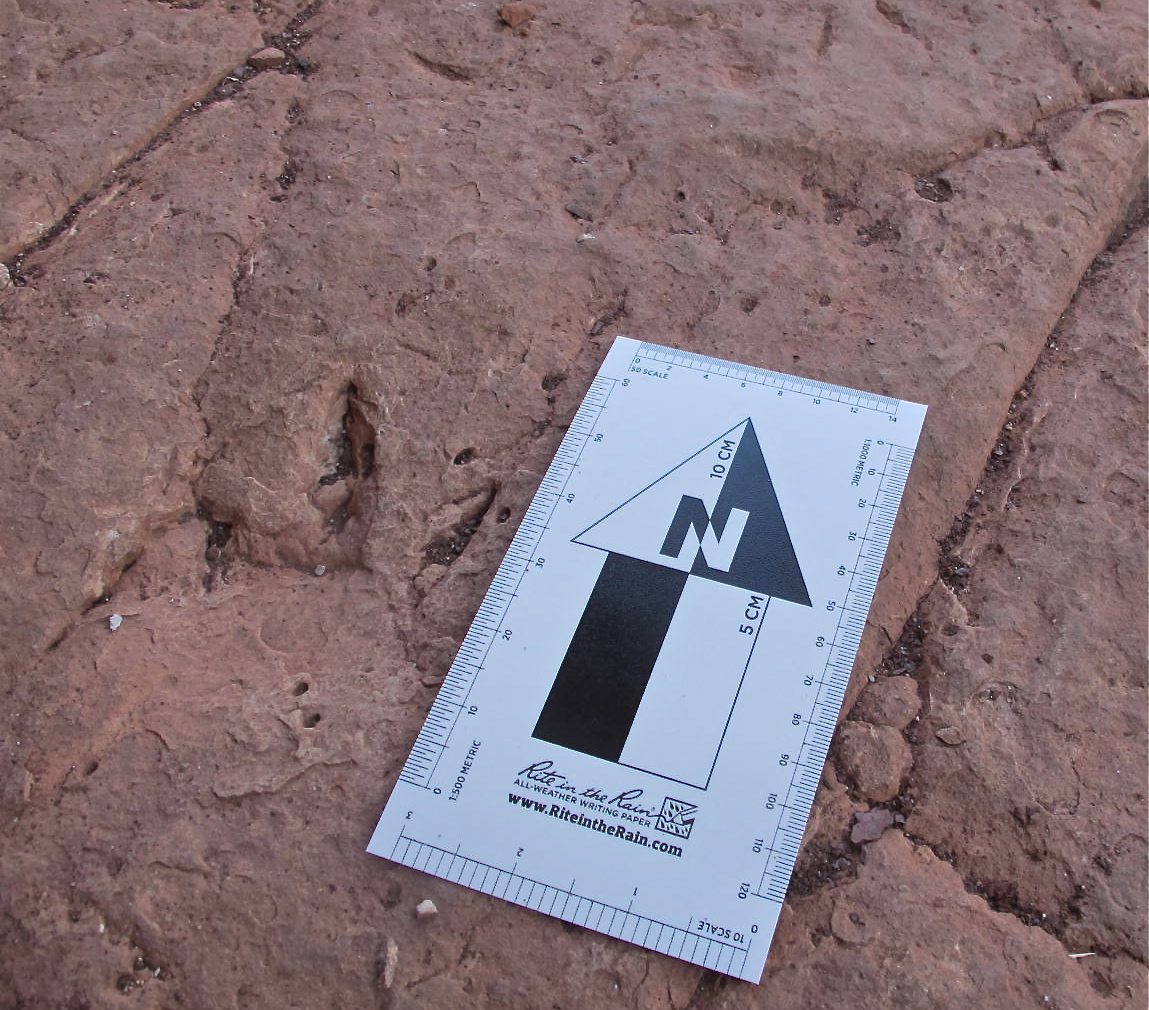
The track, to the left of the marker, is not large, maybe six inches. I think it was a small therapod.

The track, to the left of the marker, is not large, maybe six inches. I think it was a small therapod.

We next drove to Poison Spider, a well known place to take a trail to see some prints and petroglyphs.

The white marks on the rock are dino tracks. They are white because someone tried to cast them and left plaster marks in the tracks. That is a big no no.
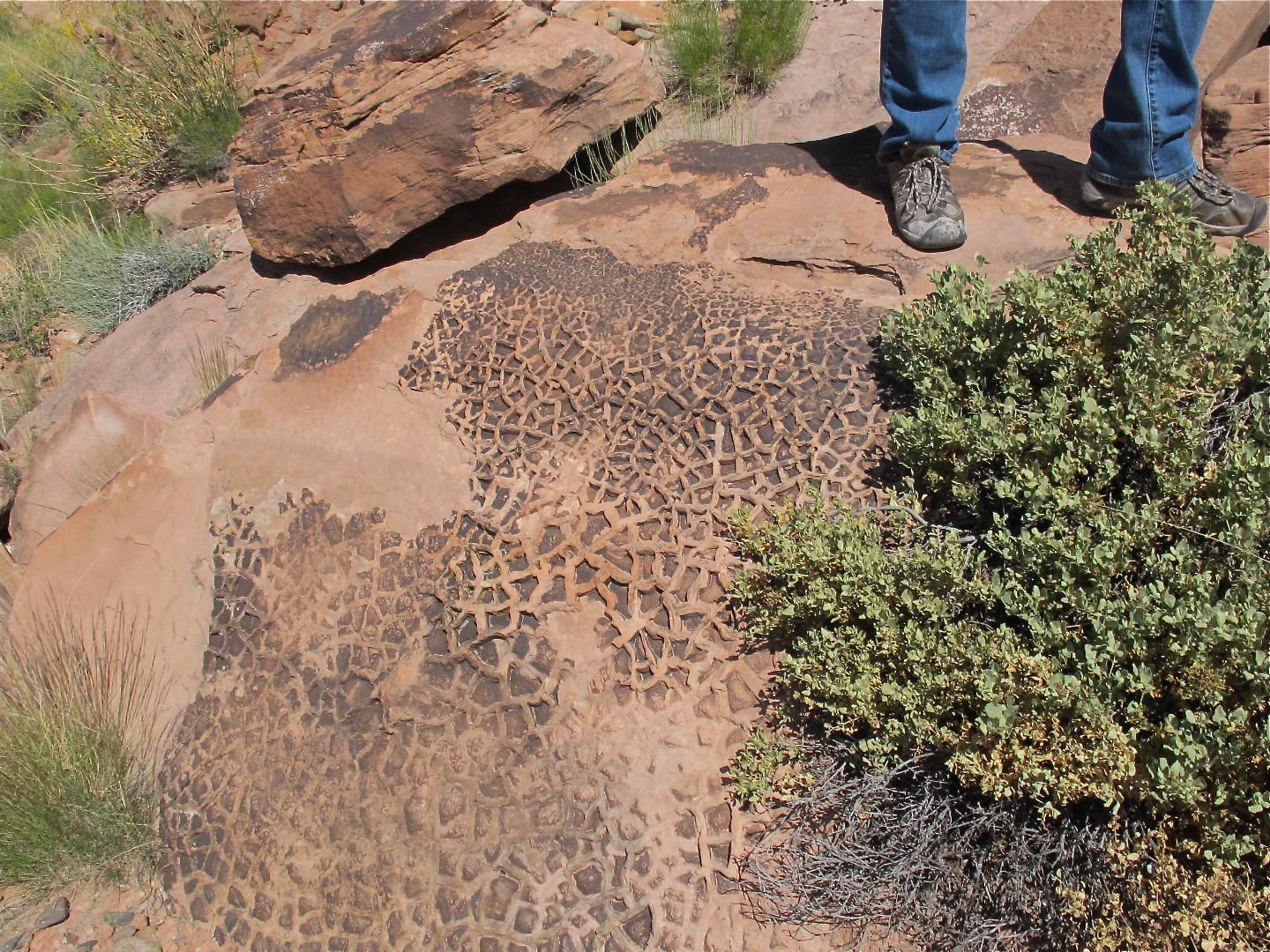
The white marks on the rock are dino tracks. They are white because someone tried to cast them and left plaster marks in the tracks. That is a big no no.

The photo below is indicative of a fossilized dried lake bed. You probably can relate when you look at a dried up mud puddle with the cracked mud. This is the same principal. The bigger cracks are more toward the center.
The photo is indicative of a fossilized dried lake bed. You probably can relate when you look at a dried up mud puddle with the cracked mud. This is the same principal. The bigger cracks are more toward the center.

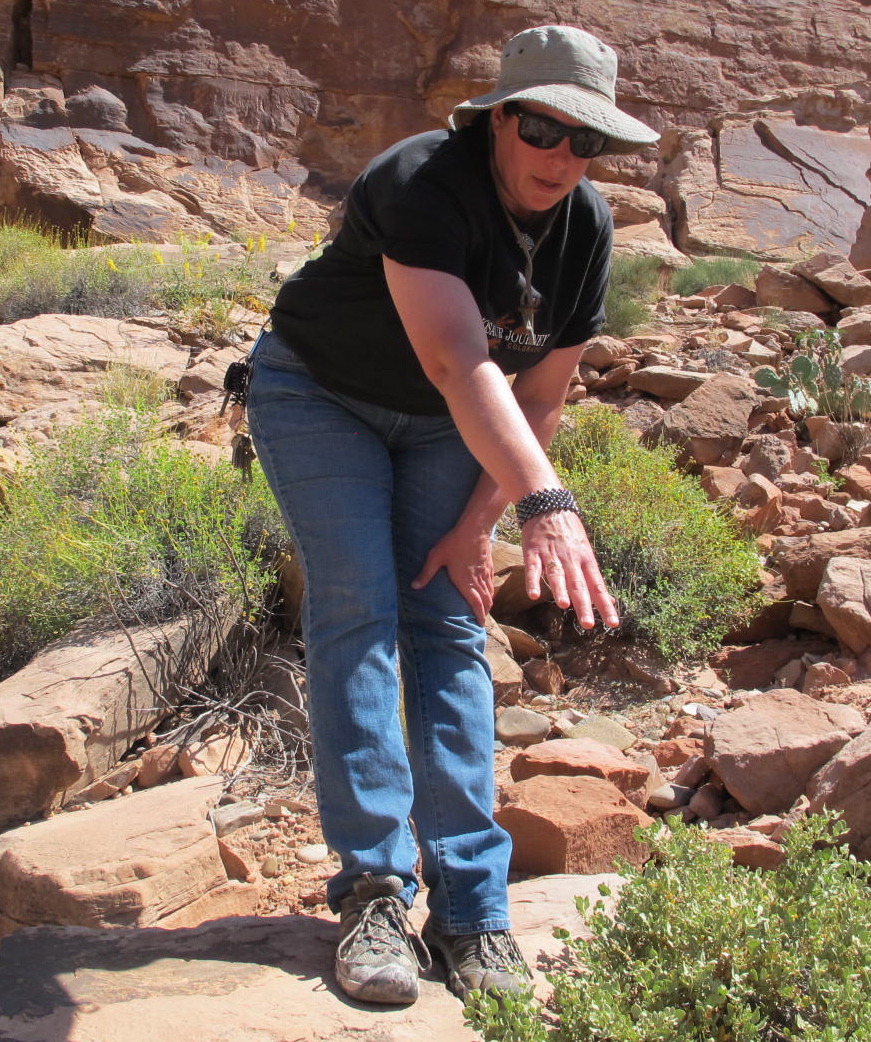
Julia, the museum curator, was describing the scene to us. Boy! Does she ever know her stuff! (They all did, but she was a good teacher)

Julia, the museum curator, was describing the scene to us. Boy! Does she ever know her stuff! (They all did, but she was a good teacher)

About 30’ above Julia was a rock face with many petroglyphs. They were etched onto the rock face by first the Fremont Culture and then the Utes.   The Fremont people tended to use triangular forms and I did not get a good picture of them. I believe that the Utes did the following pictures.
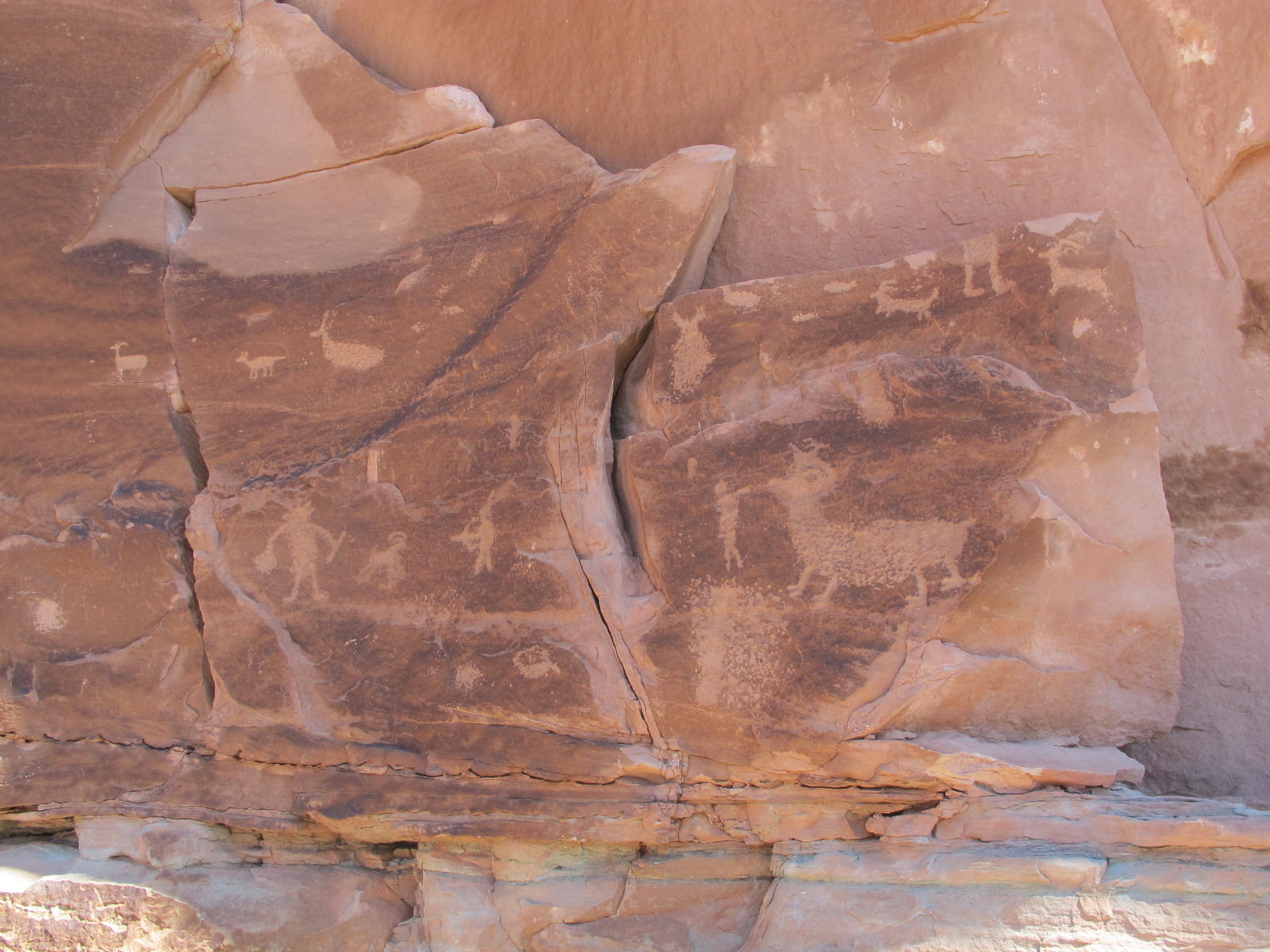
Ute petroglyphs

Ute petroglyphs

After lunch, we drove to a place called Mill Canyon where we saw an ancient crocodile tail marks as well as tracks. I could see it in real time but it didn’t come out well in the photo. The next track is by a medium sized theropod. The tracks we saw were from 7 to 14 inches long, which indicated a dinosaur about six feet tall at the hip. It lived about 112 million years ago.

A medium sized therapod track almost in the center of the picture

A medium sized therapod track almost in the center of the picture

An interesting fact is that the newer signs at that site and at the museum show feathers on the dinos. There is much recent evidence that many had feathers.

This is a dromaeosaur. It was about 4’ tall. Note the sickle like claw that must have been used for tearing the flesh of its victim.

This is a dromaeosaur. It was about 4’ tall. Note the sickle like claw that must have been used for tearing the flesh of its victim.

What amazed Shirley and me and made us marvel at paleontologists’ skills was that these tracks were out in the middle of a desert under several feet of dirt. What made them dig where they did to find such a treasure trove of tracks in that old lagoon-type pond? And then that led me to wonder if mankind will leave stuff/fossils that will be found millions of years hence. I wonder if Pampers fossilize.

Our last track site was at Copper Ridge where we got to see the huge tracks of a Camarasaurus made about 150 million years ago. This critter was a sauropod that topped the scales at about 50 tons and was about 75 feet long. It was a plant eater. An Allosaurus, a hunter capable of traveling up to 30 mph made other tracks in the area.
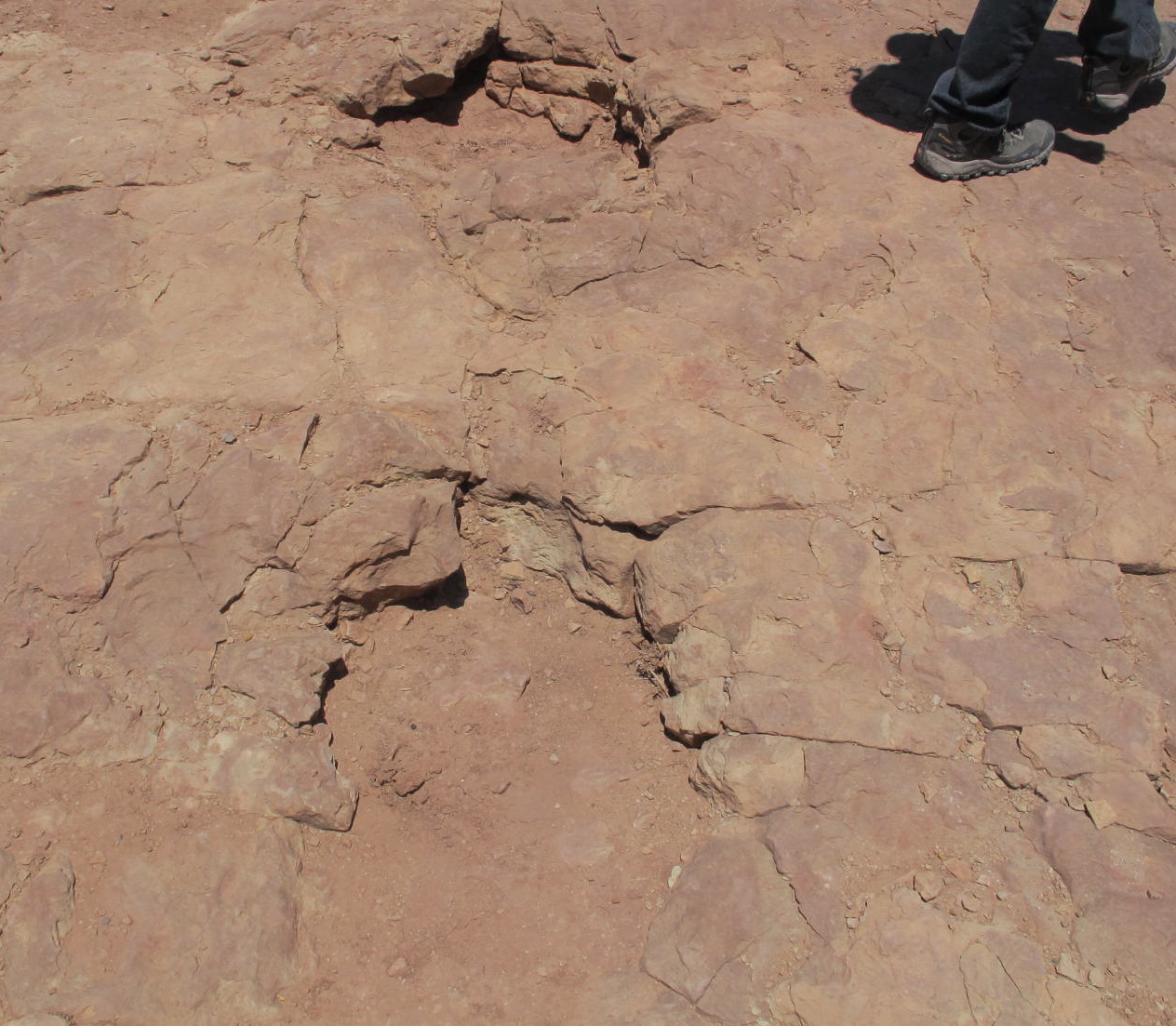
A Camarasaurus footprint.

A Camarasaurus footprint.

Our tour was a great success and Shirley and I enjoyed it to the utmost. We both learned a lot and can remember many terms, but we still find it difficult to identify the formations with their proper names. Perhaps someday…
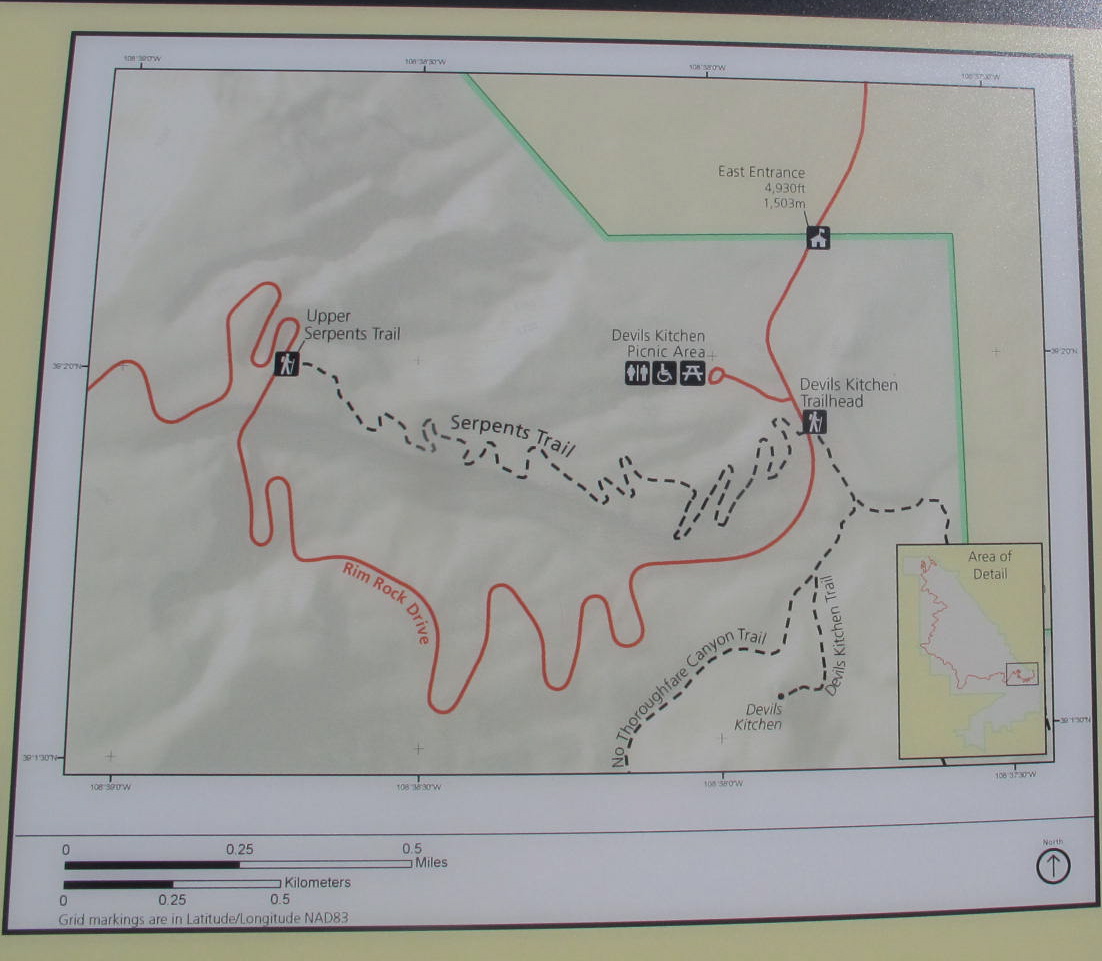
Check out the black line and you’ll see why it’s named Serpents Trail.

Check out the black line and you’ll see why it’s named Serpents Trail.

Another activity that we did was to hike Serpents Trail in the Colorado National Monument. Called the “crookedest road in the world,” it had 20 switchbacks in 1.75 miles and gains 770 feet in elevation. When it was completed in 1921, most cars had no fuel pumps and had to back up the steep road to use gravity to make the fuel flow. It became a hiking trail in 1961.  It has gorgeous views of the Grand Valley, the Grand Mesa, Grand Junction and the beautiful formations within the National Monument.

This picture shows a switchback in the middle center, the Grand Valley with the Bookcliffs in the background.
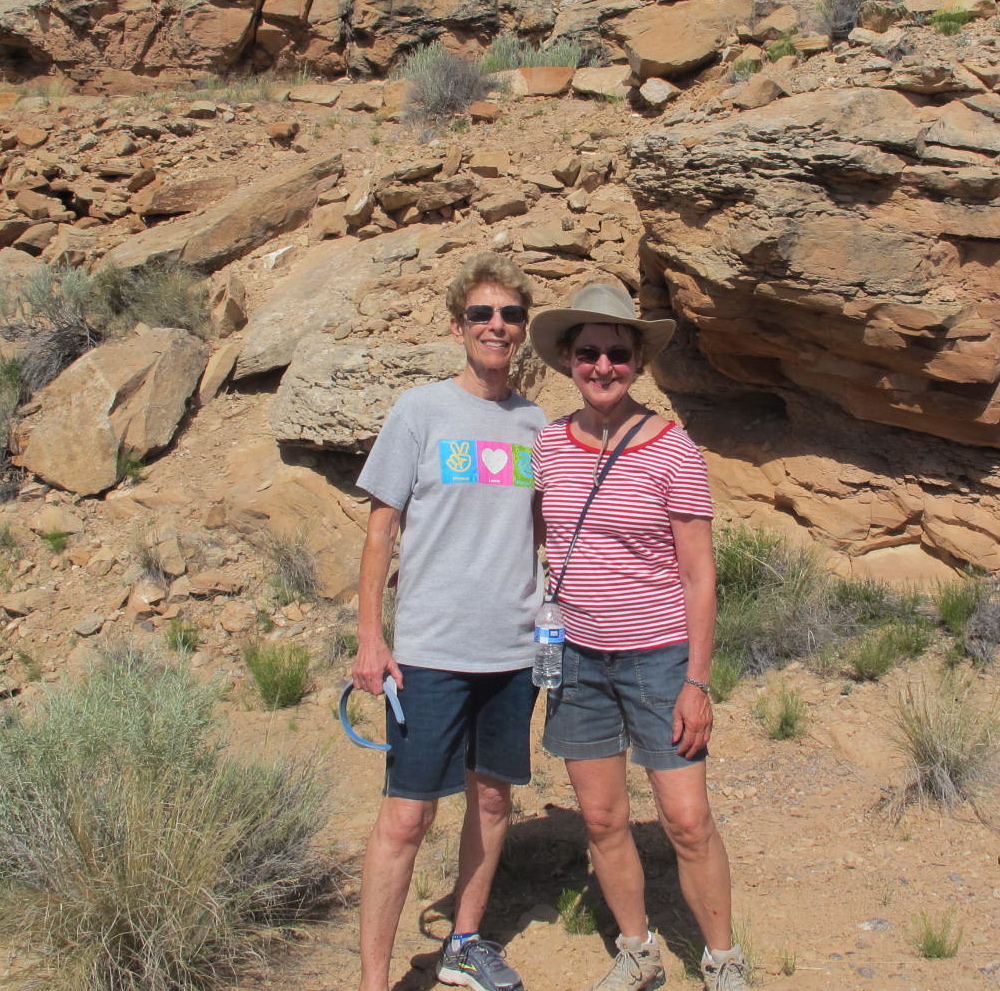
This picture shows a switchback in the middle center, the Grand Valley with the Bookcliffs in the background.

On the trail

On the trail

Shirley took me out to see the Hanging Flume somewhere southwest of Grand Junction. We drove through the scenic and geologically unique Unaweep Canyon. The canyon goes uphill and then downhill (You say, of course it does, you ninny!) But at the Unaweep Divide, two creeks (East and West) flow…one to the east and one to the west. Unaweep is a Ute name that means “canyon with two mouths.”

Thimble Rock is impressive behind the Driggs Mansion, home of a pioneer in the early 1900s.

Thimble Rock is impressive behind the Driggs Mansion, home of a pioneer in the early 1900s.

The Hanging Flume was really impressive. It hangs out over the Dolores River. It was part of a 13 miles long canal and flume to deliver water from the river to gold mining operations. It literally hangs to the canyon wall for the last five miles of the flume. It gave me the jitters just to look at it and try to take a picture.
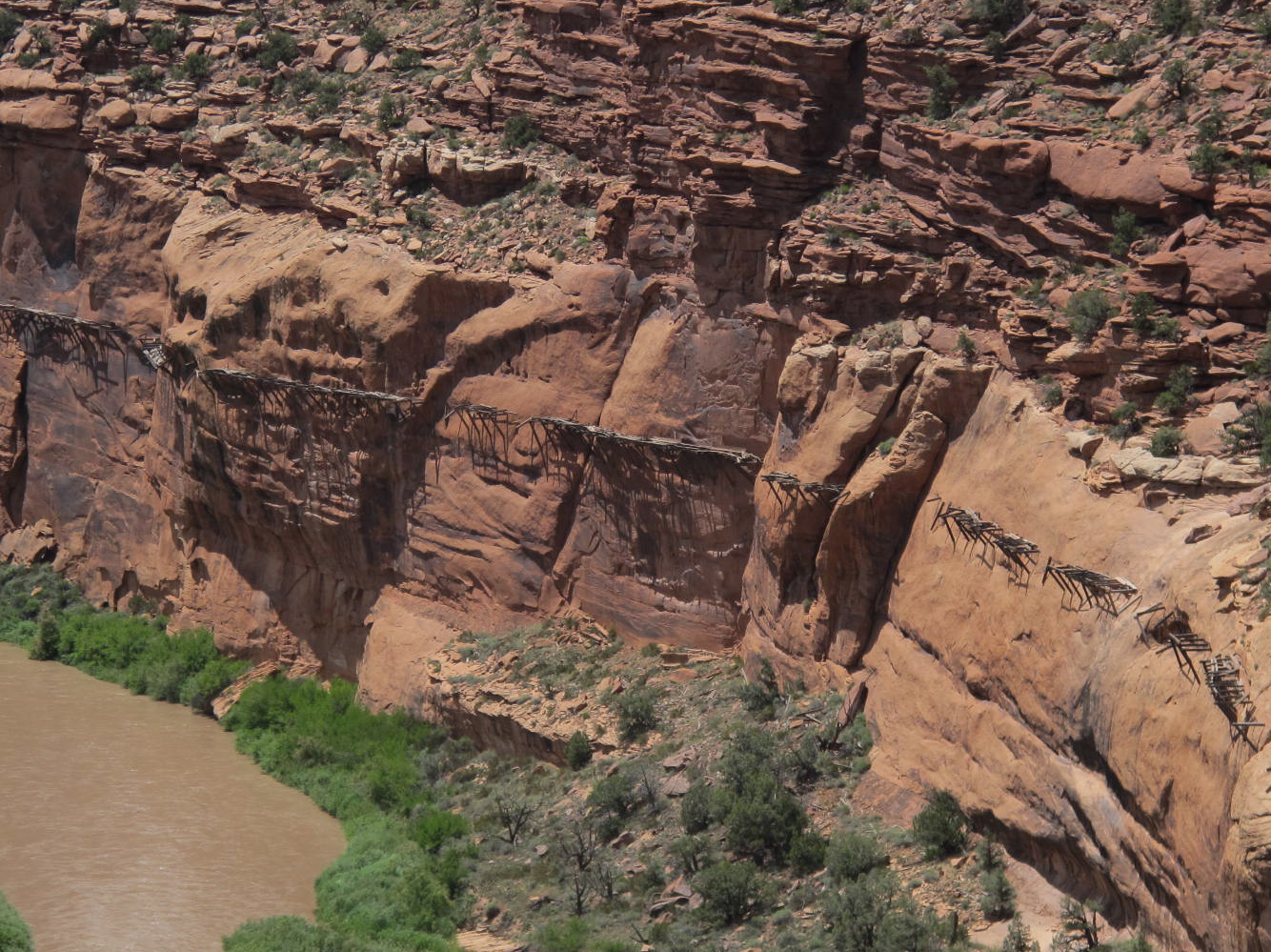
You can see the flume as a dark line about one third down on the smooth rock

You can see the flume as a dark line about one third down on the smooth rock

This trip was filled with spectacular sights, exciting adventure, and lots of good conversation. I’m so glad that I had the opportunity to do this and spend some time with Shirley and the Grand Valley.  Thank you, Shirley, for such a great time!
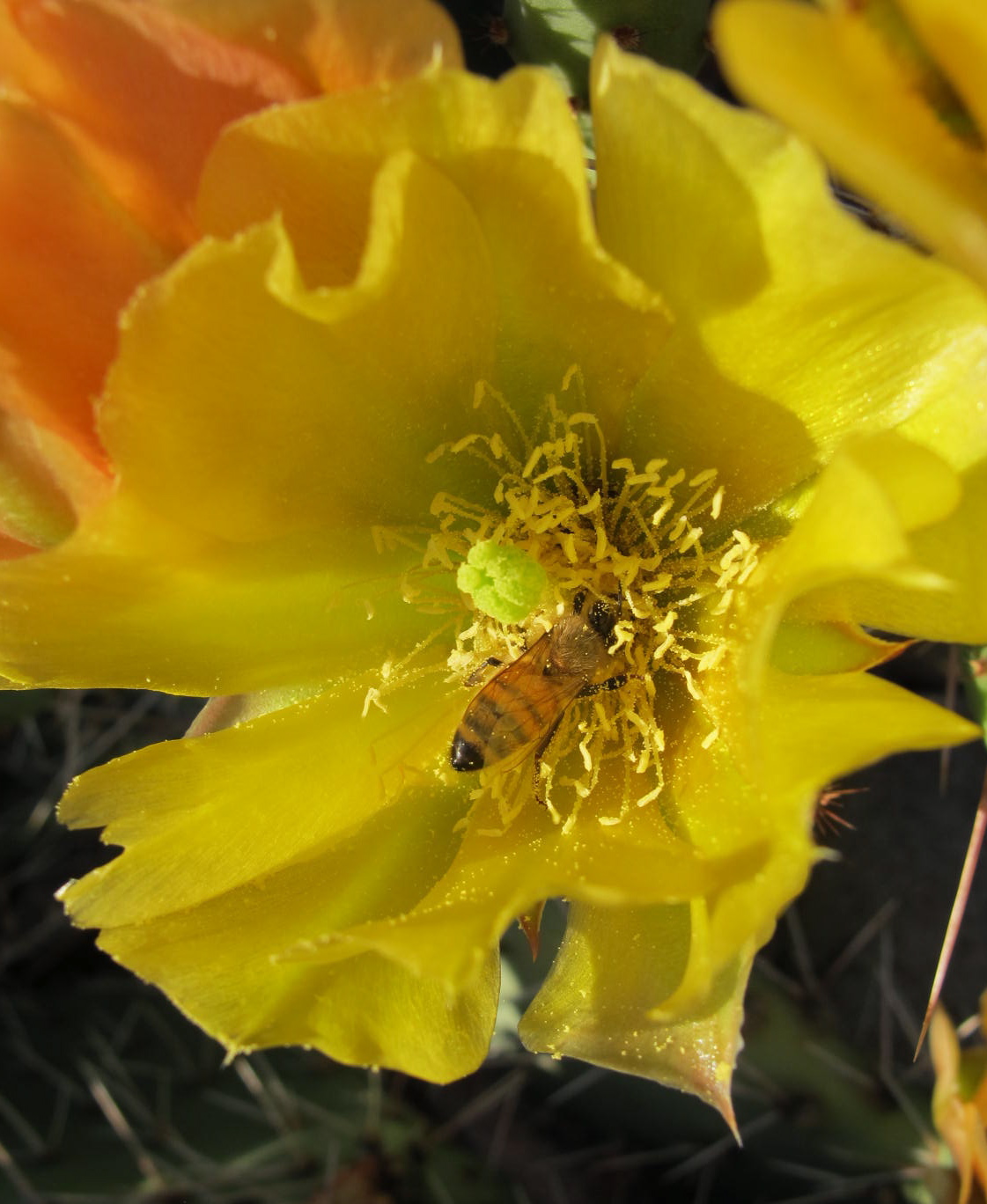
Shirley’s bee in a prickly pear blossom

Shirley’s bee in a prickly pear blossom

Shirley's back forty.  It's pretty with many blossoms and sometimes friendly rabbits and quail.  A deer even visited her neighbor's yard while I was there.

Shirley’s back forty. It’s pretty with many blossoms and sometimes friendly rabbits and quail. A deer even visited her neighbor’s yard while I was there.
A New Visitor to the Yard and The Mighty Glenbrook Roars Again! May 21, 2015 (Officially May 23, 2015)

23 May

A Western Tanager visited at the birdbath and then at the feeding area yesterday. He only stayed for short while and I haven’t seen him again, but that short visit was superb! He is such a beautiful bird. I hope he was scouting the area and will bring his wife next time. I was so excited to see him because I haven’t seen one for at least 30 years. I just had to share this with you.

A Western tanager, about the size of a blackbird

A Western tanager, about the size of a blackbird

Annie Oakes Lee, a fellow museum tour guide who also volunteers at the State Railroad Museum in Carson City, asked Jerri and me to join her at that museum this past Thursday. She was practicing how to take folks on the handcar and needed people to practice on. Apparently the brake is tricky and it’s easy to step on it too hard and pitch people off the car. So we went and had a blast. Annie was very proper in making us adhere to the rules and I got into trouble because I didn’t keep both feet on the car. She thought I was swinging my body but I was actually trying to get more leverage to push down on the bar. But she was right. I didn’t have both feet on the floor of the car. We got to take three or four rides and got excited about thinking we could race on one of those cars. That night, though, my forearms and upper shoulders were a bit tight. So maybe racing isn’t a good idea.

Cora, Jerri and Annie on the handcar

Cora, Jerri and Annie on the handcar (Don’t forget to click on the photo to enlarge it)

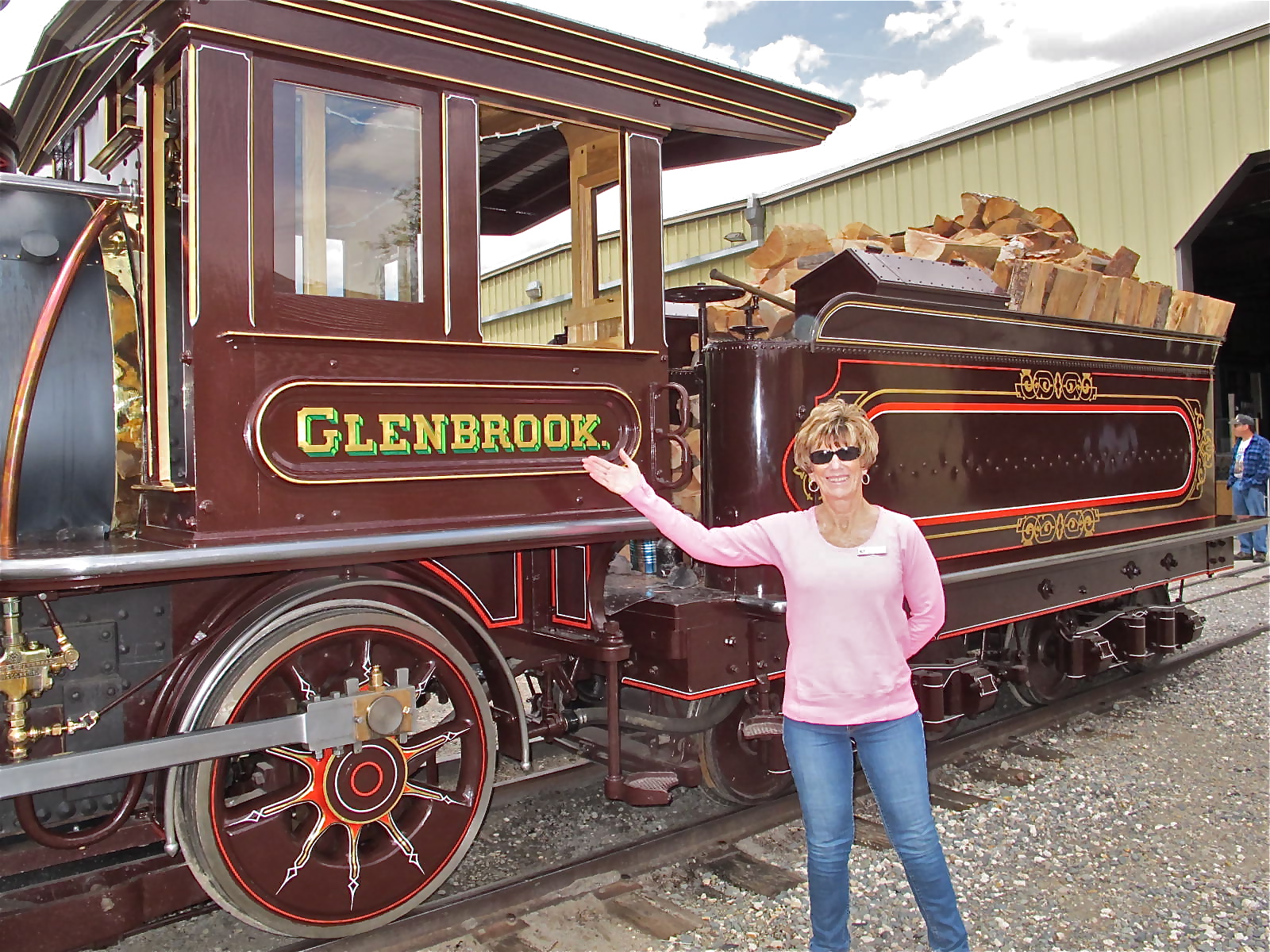
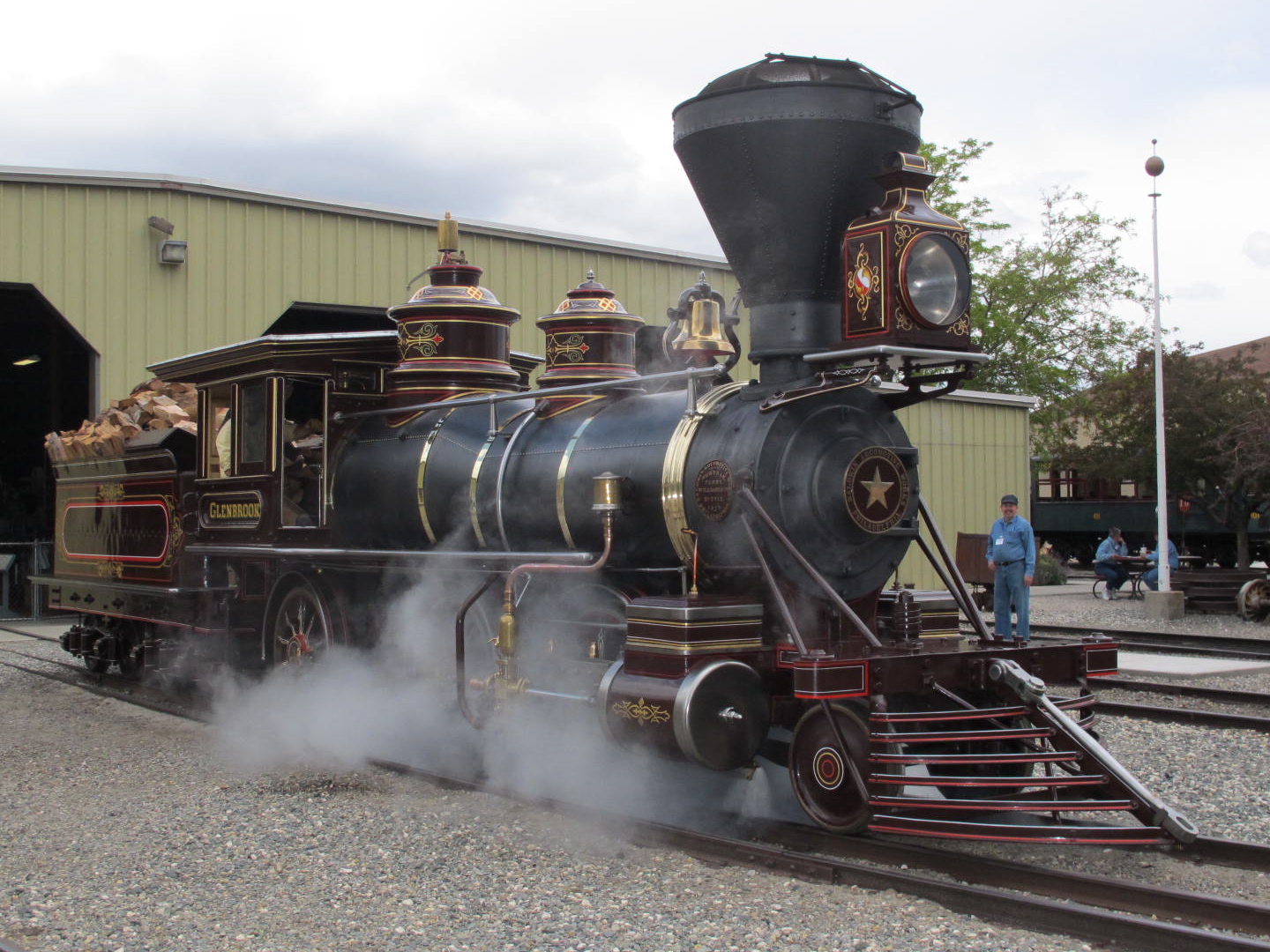
In addition to the excitement of the handcar, the Railroad Museum is about to officially unveil the restoration of the Glenbrook engine. As it happened, the Glenbrook was steamed up and sitting out of its barn (or whatever the official term is for where engines live). So we got a preview and will avoid the tumultuous crowds on the 23rd of May. A general history of the Glenbrook can be found at this link from the Reno Gazette Journal http://www.rgj.com/story/news/2014/11/19/years-glenbrook-locomotive-lives/19296427/ and also from the Las Vegas Review Journal http://www.reviewjournal.com/news/nevada/glenbrook-locomotive-soon-returning-active-duty

Jerri by the Glenbrook engine cab

Jerri by the Glenbrook engine cab

 A short summary of the articles is that the Glenbrook was built in 1875 and is a narrow gauge 2-6-0 Mogul. From 1875 to 1898, it hauled out lumber and cord wood from sawmills on the shores of Lake Tahoe to Spooner Summit, where the lumber was flumed down to Eagle Valley (Carson City area). From 1898 until retiring in 1923, the Glenbrook hauled thousands of tourists between Truckee and Tahoe City, CA. The Bliss family, the owners, eventually donated the Glenbrook to the state where it sat in front of the Nevada State Museum for many years. It was moved to the Railroad Museum in 1982 where restoration work began on it. Chris DeWitt, chief maintenance officer, and his crew worked for 33 years to get it to pristine condition and ready for its second debut. That’s dedication!

The Glenbrook is steamed up

The Glenbrook is steamed up

Ready to go

Ready to go

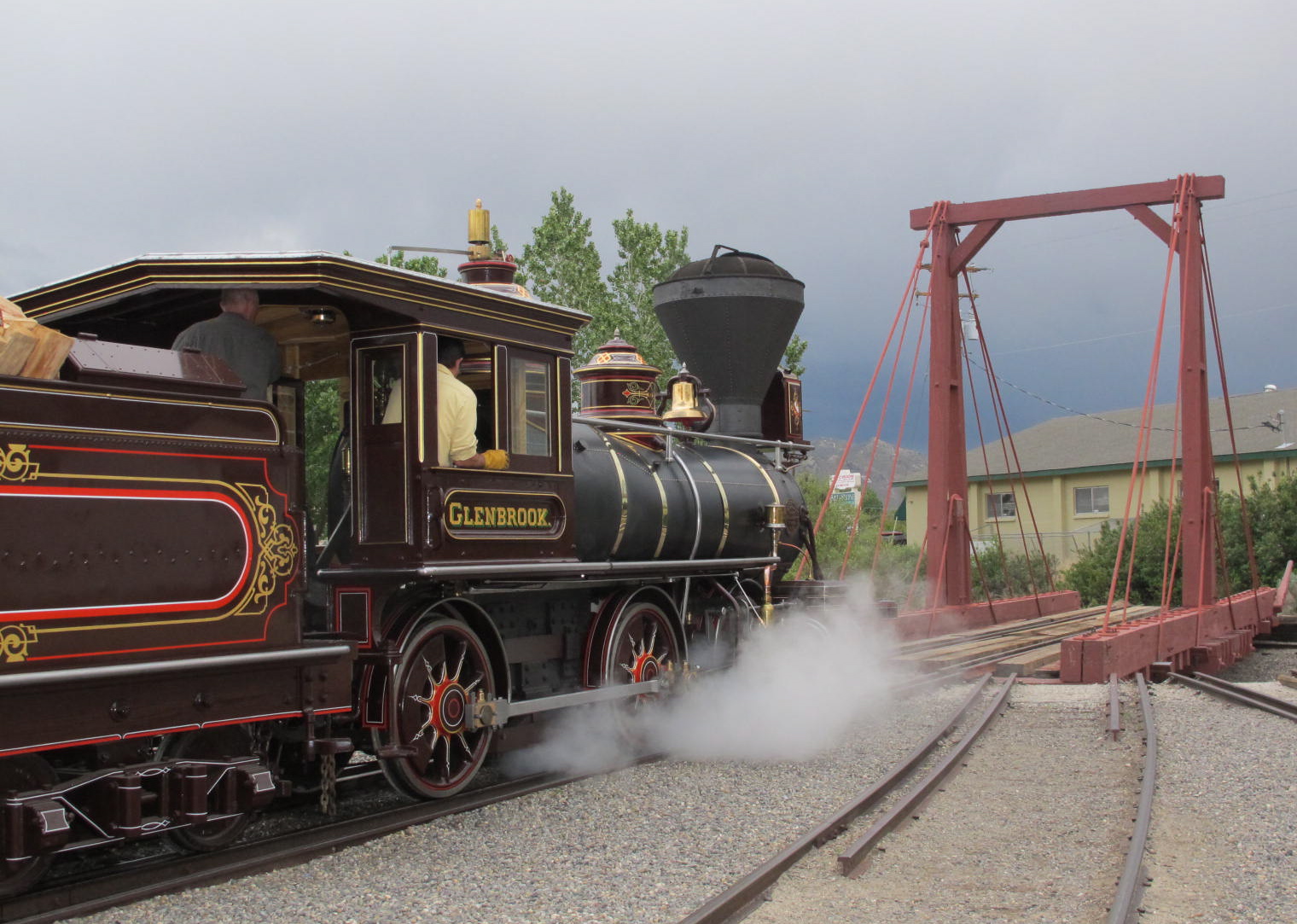
 Annie told us that it takes 3 to 4 hours to get the engine steamed up so that it can go. We were there at the right time and got to see it move, be turned around on the turntable and then run on another track for a bit longer distance for some official photographers. I’m not really a train aficionado but this was fun to see. The steam, the whistle and the soft choo choo noises as it sat idling were somehow a bit soothing. Mom used to talk about hearing steam engines in Santa Ana in the 1920s and she thought the noises were comforting. I could see/hear what she meant.

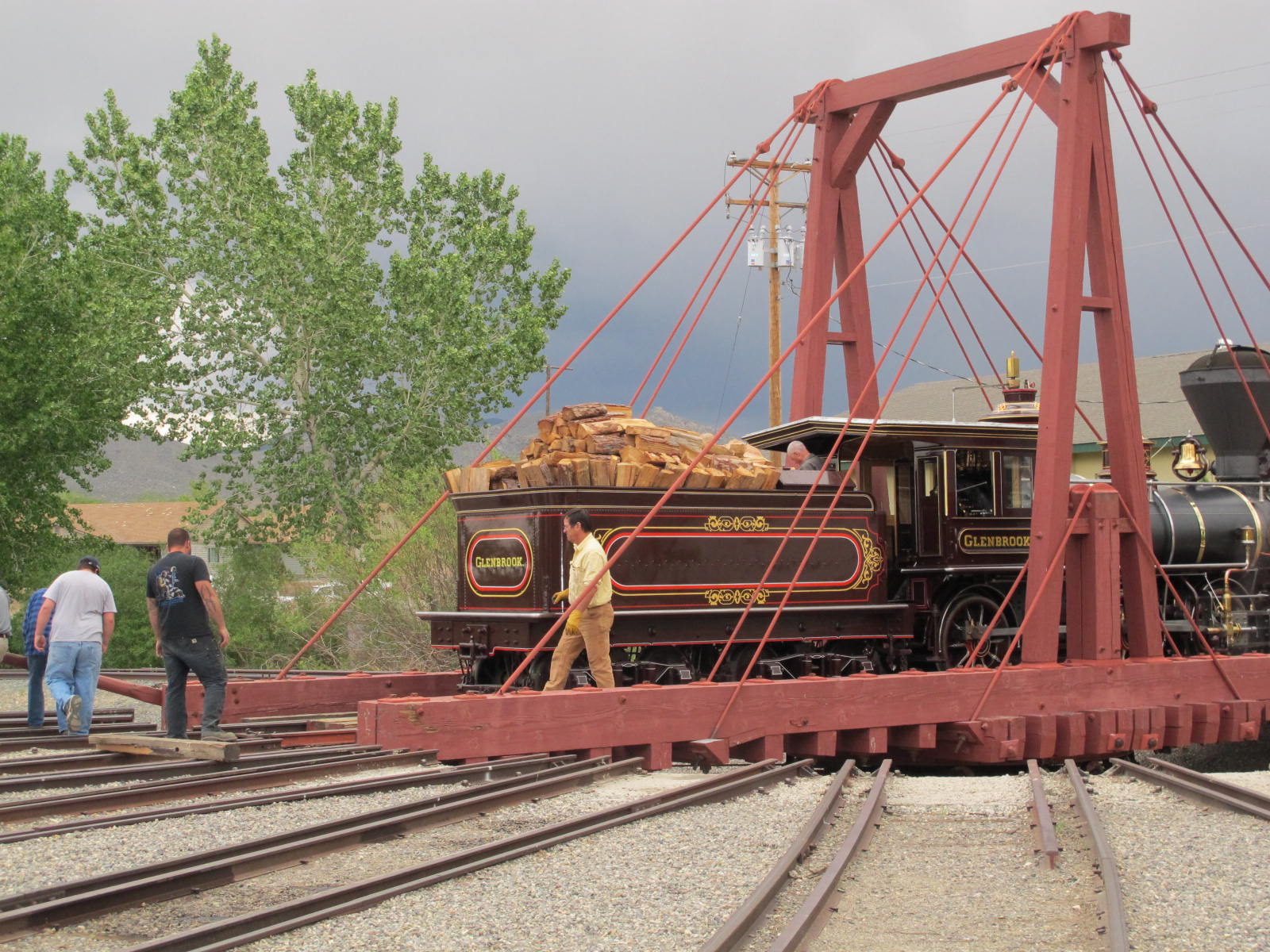
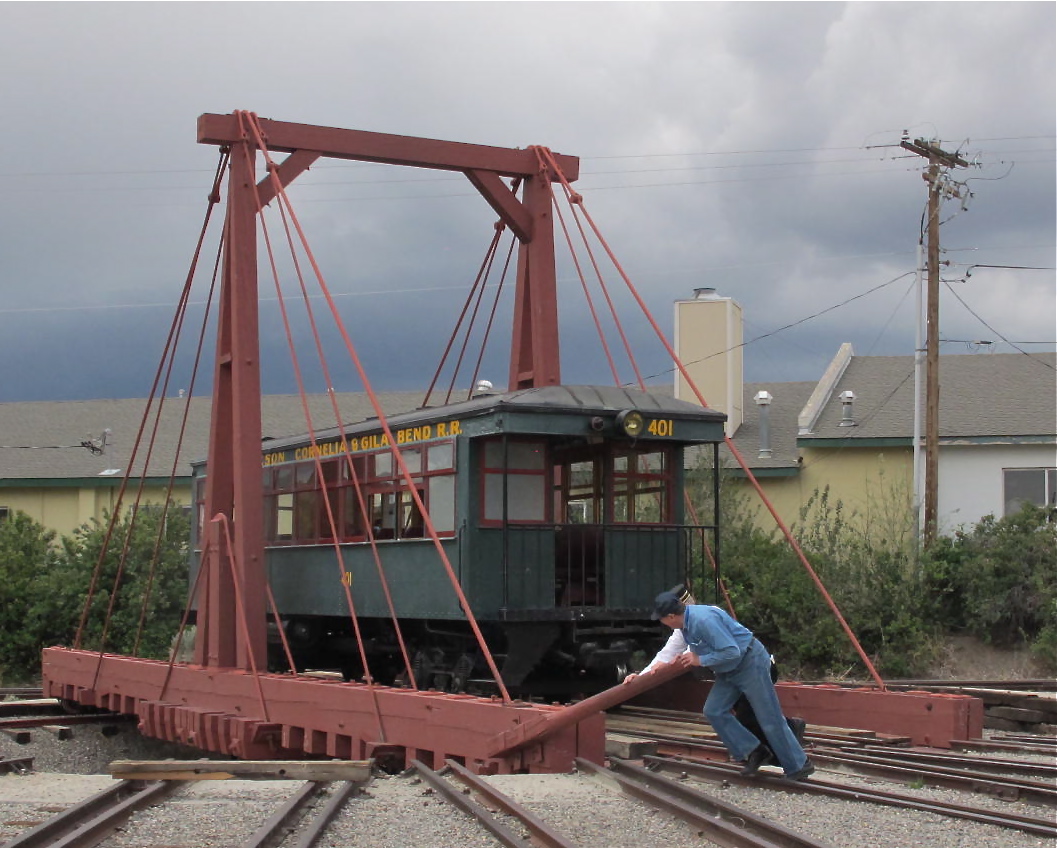
The turntable is operated by hand. The engine and wood car (I thought this car was called a coal car, but I don’t know what the official name is) park on the turntable and men physically push the turntable around so that the train can move to another track. We watched the men push the turntable and then the engine backed up onto another track. The turntable must be on pretty good ball bearings or something because that engine plus the loaded wood car (coal car) must weigh many tons.

Entering the turntable

Entering the turntable

Turning the Glenbrook onto the proper track

Turning the Glenbrook onto the proper track

While we were checking out the Glenbrook and admiring it, a trolley car was rolled out. I don’t know how old it is, but it looked pretty ancient to me. The able craftsmen at the Railroad Museum had restored it also. Annie told me it ran on diesel fuel. It took its turn on the turntable and you can see that it took only two guys to turn it so that it could get on its correct track.

Starting to turn the trolley

Starting to turn the trolley

A tour for about 50 school kids was scheduled for noon that day and they were going to take a ride on the trolley. Annie was also going to give them rides on the handcar.  These kids had walked from wherever their school was (due to buses costing too much for field trips) and then ate their lunch on the museum grounds. You can see in the pictures that the skies were threatening and we could hear thunder rumbling in the distance. Jerri and I left just when the kids were getting ready for their official tour. We weren’t more than 5 or 10 minutes down the road when the rain began to pour. I heard later from Annie that they were able to get most of the kids finished with their handcar rides before getting drenched. I don’t know how the rest of the tour went, but I felt sorry for them having to walk back to school in the rain.

I was very happy to get our special tour of the museum and appreciated Annie letting us “play” on the handcar. It was a special privilege to get to see the Glenbrook before the official public unveiling on the 23rd.  I look forward to hearing its whistle and the museum’s other steam engines’ noises in the future  as they take people on rides around the museum tracks.  Maybe we’ll get to take some rides on it when they get some cars to attach to it.

On a trial run

On a trial run


Prime Time Chronicles May 5 – 8, 2015

11 May
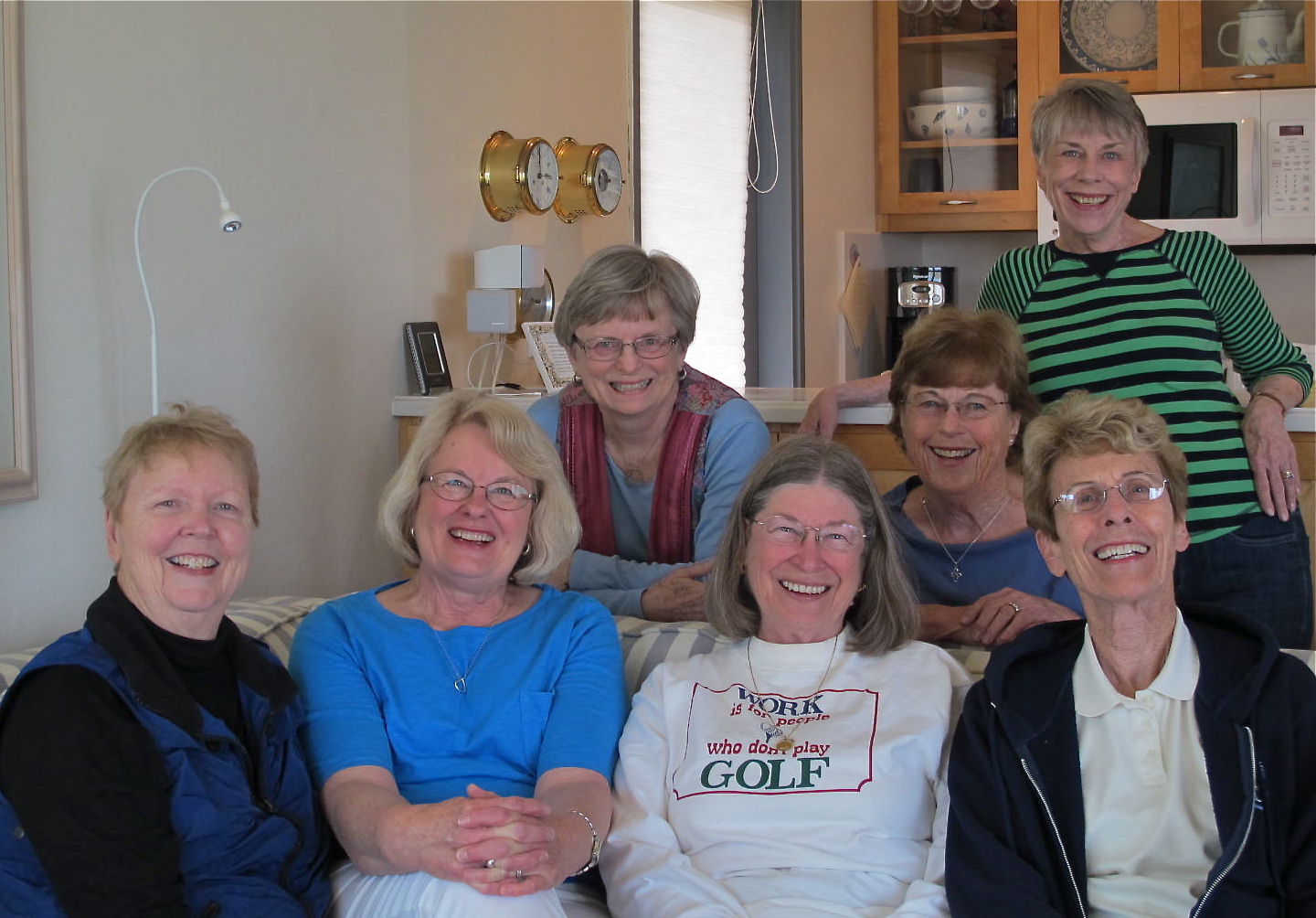
 Pajaro Panthers

The Pajaro Panthers

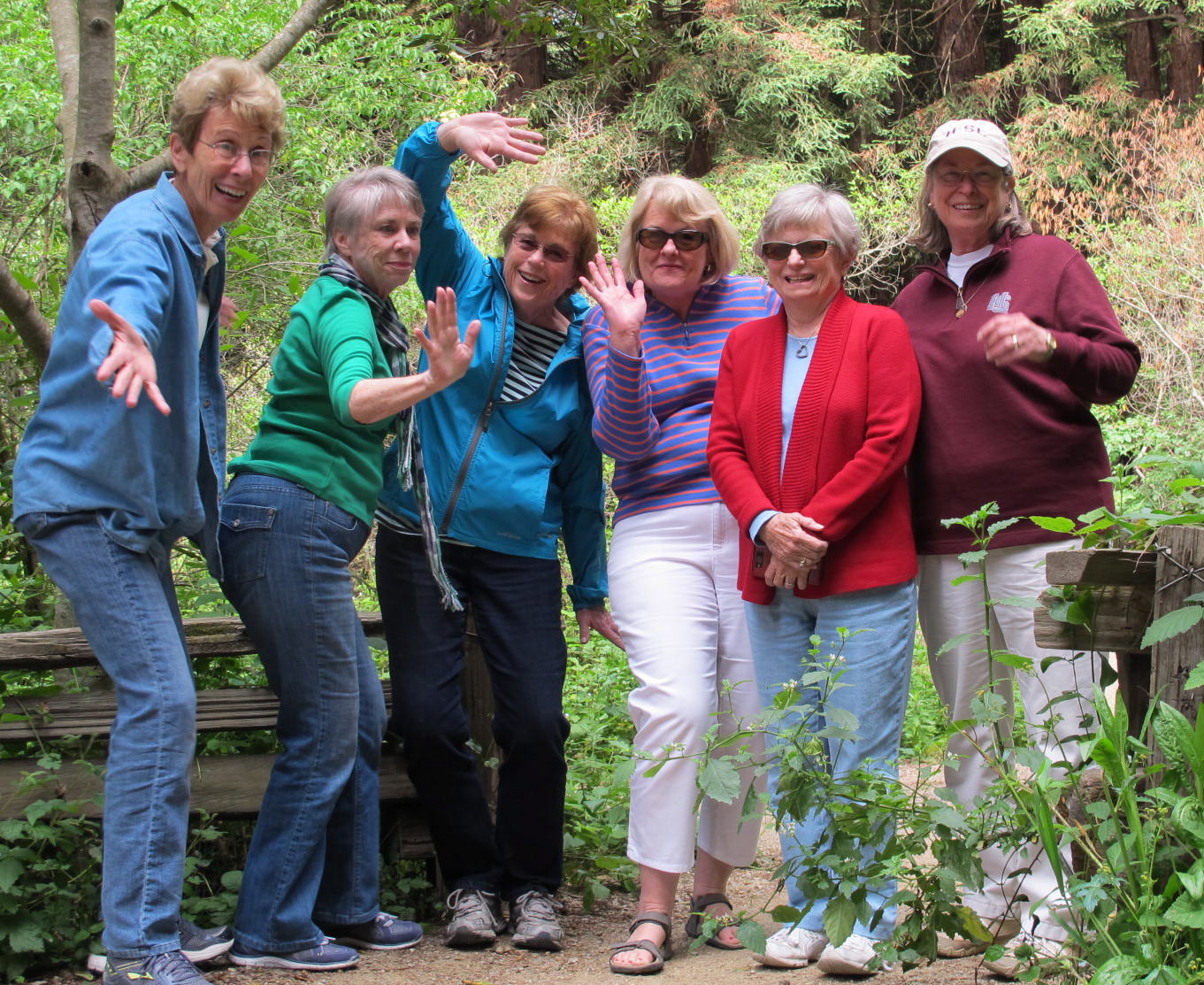
 This is the cast of characters for the 2015 Prime Time at Pajaro. We greatly missed those of you who weren’t able to join us and we hope you will be able to join us next year. However, even with only seven of us, there were often several simultaneous conversations.  As usual, we never stopped talking.  We had a lot to catch up on!  (Don’t forget to click on the pictures to enlarge them)

Lynda had picked up Dot at the San Jose airport in the morning and they got groceries for the first night’s dinner. Diana and I picked up Susan at the same airport that afternoon and then zoomed to Pelican 10. It wasn’t long before the first bottle of wine was uncorked and the festivities began.  You don’t see Shoo in this picture because she had just come home from Holland on May 4 and didn’t join us until the afternoon of the 6th.  She said the tulips were exquisitely beautiful and her Dutch adventure was excellent.

Before the first glass of wine.  We're ready to party!

We were having a good time even before the first glass of wine!

Many years ago, Trish had the foresight to save many of the letters we had written to her during our freshman year of college. They were written primarily during the first semester when we were all filled with wonder, awe, and dread of what was to come in our maiden year of college. She distributed them to us and it was fun reading our thoughts. There were thoughts about classes, parties, kissing, making out, and the whole ball of wax that one goes through going away from home for the first time. That of course, led to more discussions and memories of college. It seems so long ago (and it was), but we remember those days just like it was yesterday…perhaps with some embellishments? Who knows? It was fun to talk about those crazy days.

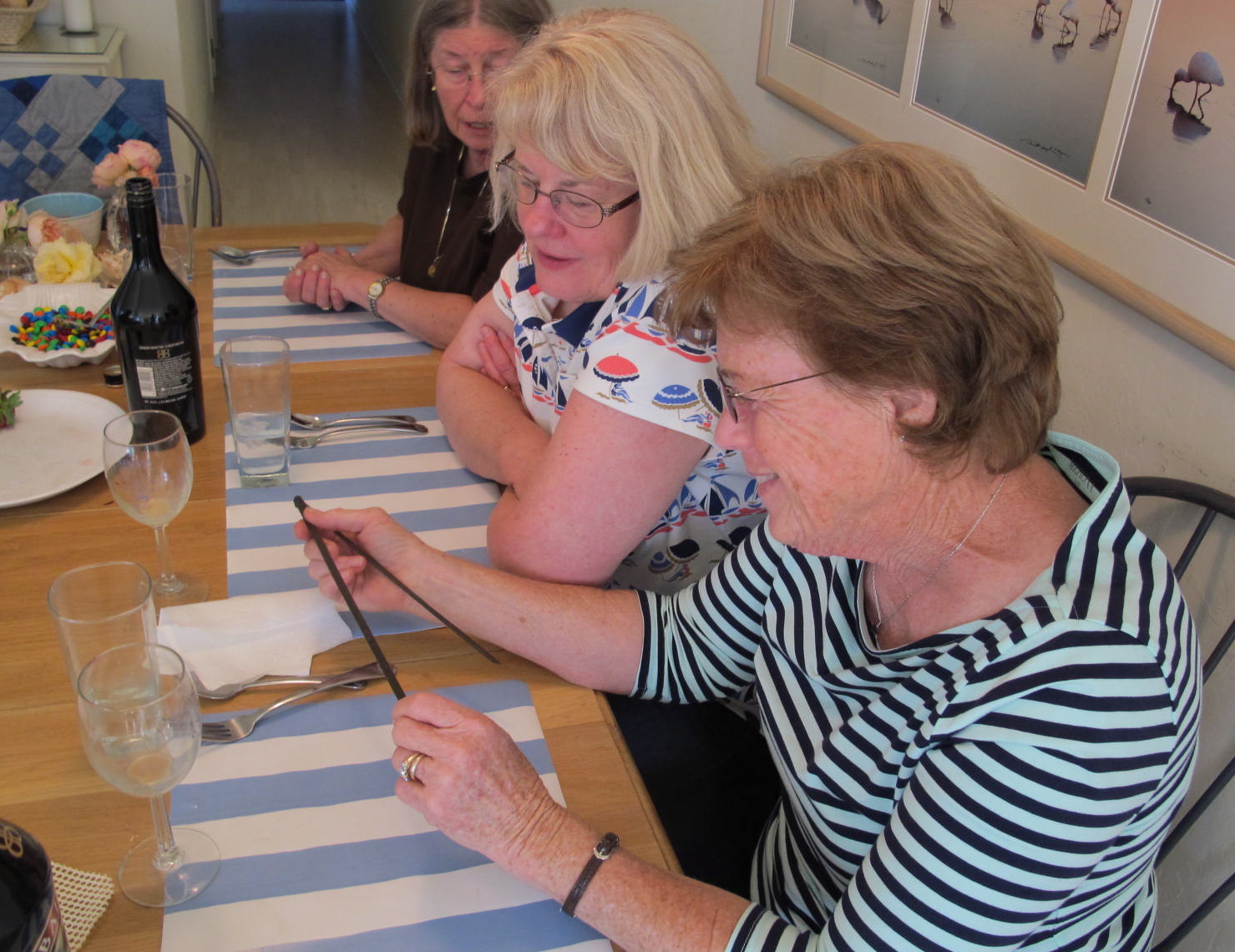
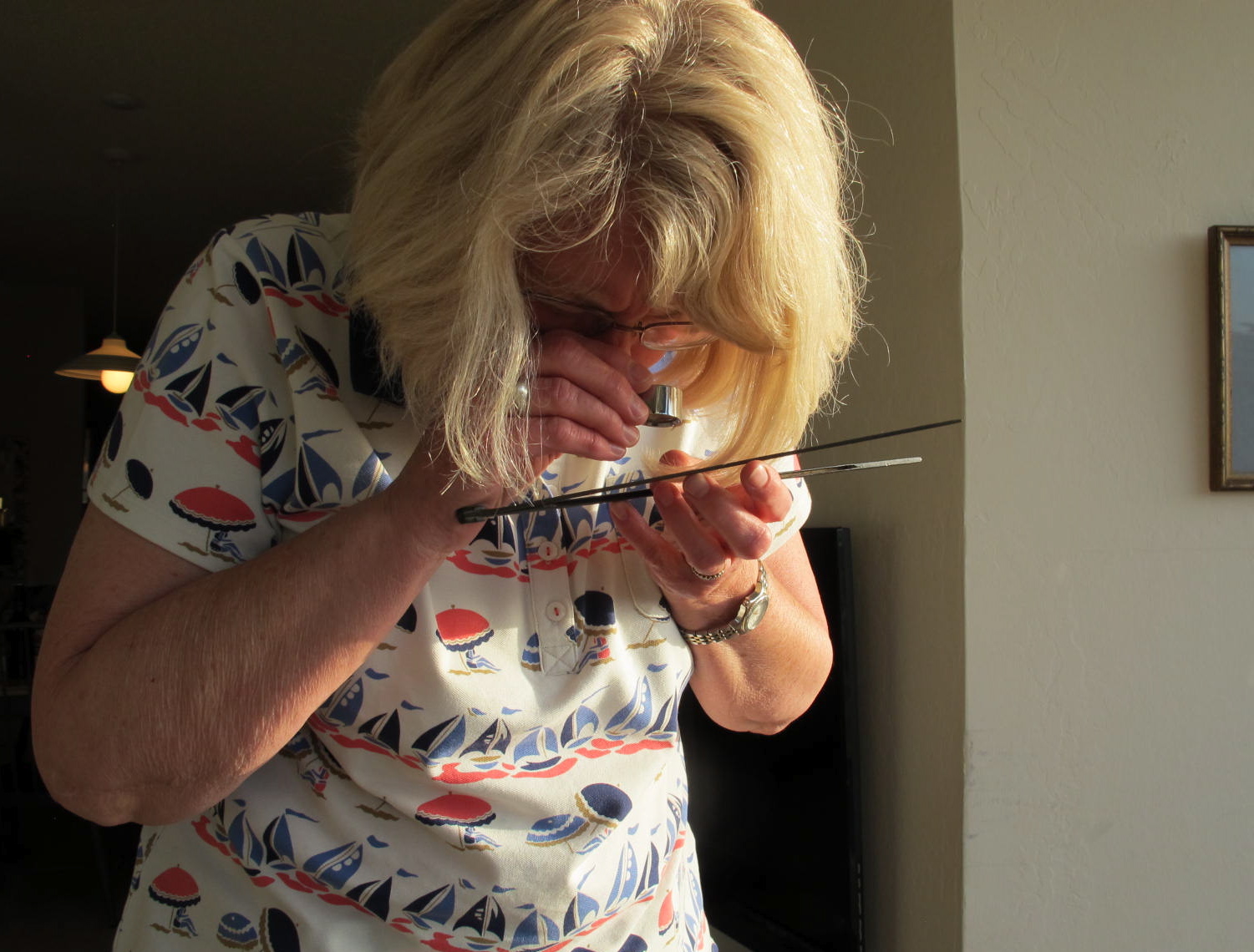
Trish had an antique of unknown nomenclature that we all examined. Diana even checked it out with her loupe, but she and we never arrived at any conclusion as to what it is. I think it has something to do with surveying, but we don’t know.

Lynda is examining the antique

Lynda is examining the antique

Diana is ever prepared to examine antiques

Diana is ever prepared to examine antiques

We didn’t walk as much on the beach as we usually do because of wind, weather and other activities. I think we needed Sherry to jump-start us in that direction.

But we did take a hike in the Nisene Marks State Park , which is four miles north of Aptos. The park offers rugged semi-wilderness, rising from sea level to steep coastal mountains of more than 2,600 feet. Once the site of logging operations until the 1920s, visitors can still find evidence of logging operations, mill sites and trestles in the park. The land was donated to the state by the Marks family in 1963. One note of interest is that the park was the epicenter of the Loma Prieta earthquake in 1989. Lynda’s house sustained quite a bit of damage from that quake.

Here we are getting ready to enter the Nisene Marks trails

Here we are getting ready to enter the Nisene Marks trails

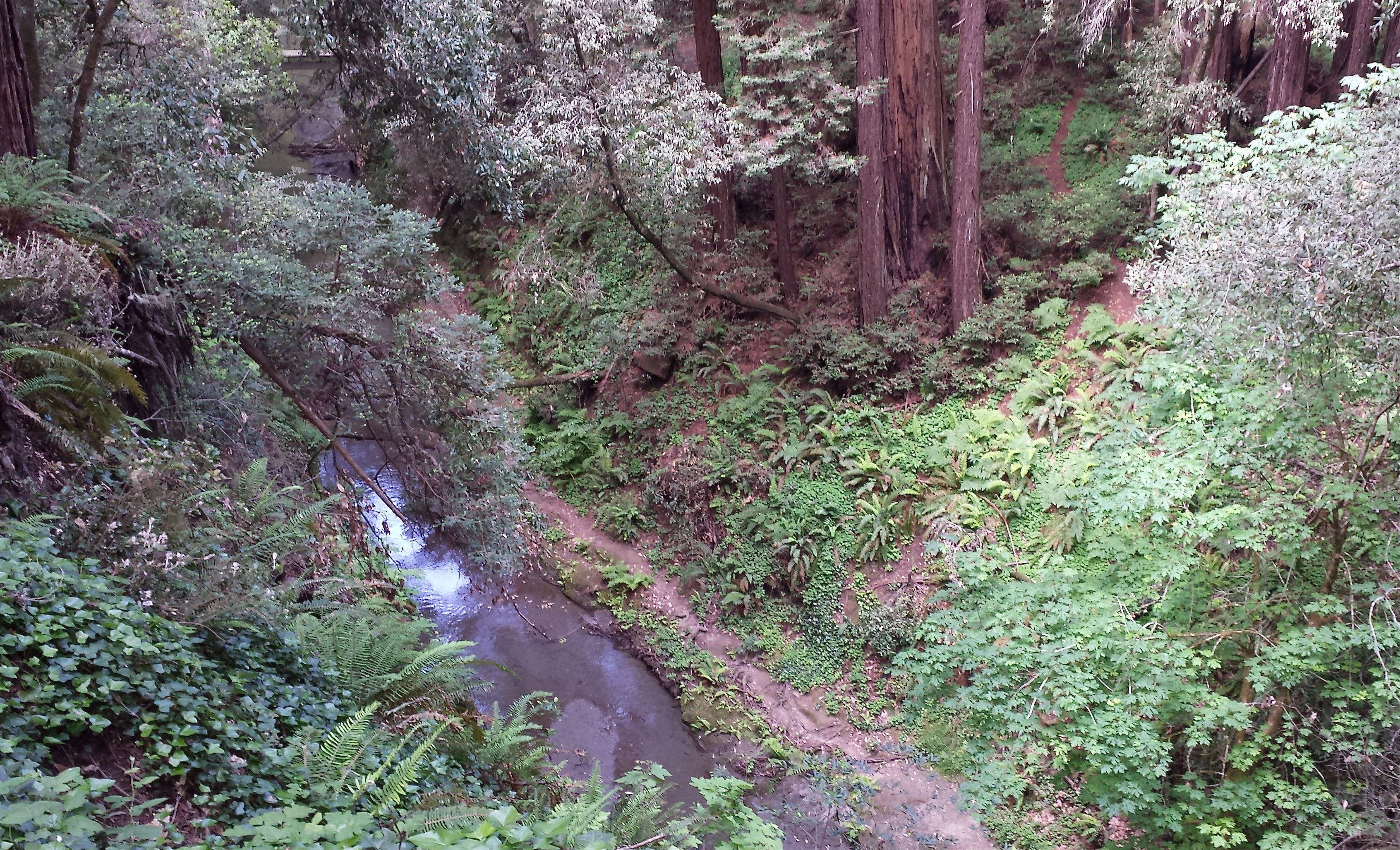
This view is not far from the trailhead and looks down on Aptos Creek.

What a beautiful park! It’s a hidden delight for hikers and bikers.

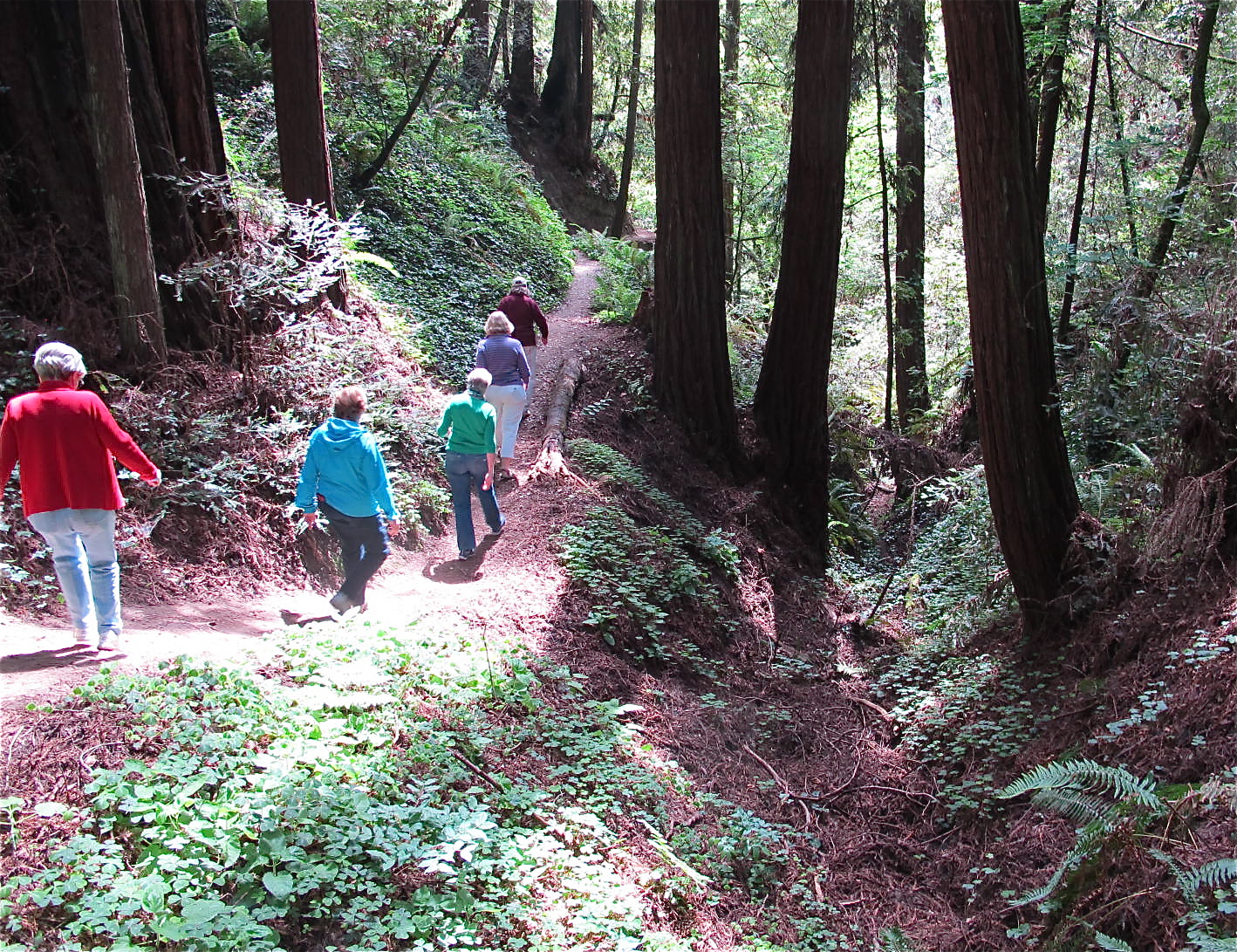
What a beautiful park! It’s a hidden delight for hikers,  bikers and walkers.  The forest has redwoods, some new growth, many ferns, wildflowers, redwood sorrel and even some poison oak that we all deftly avoided.

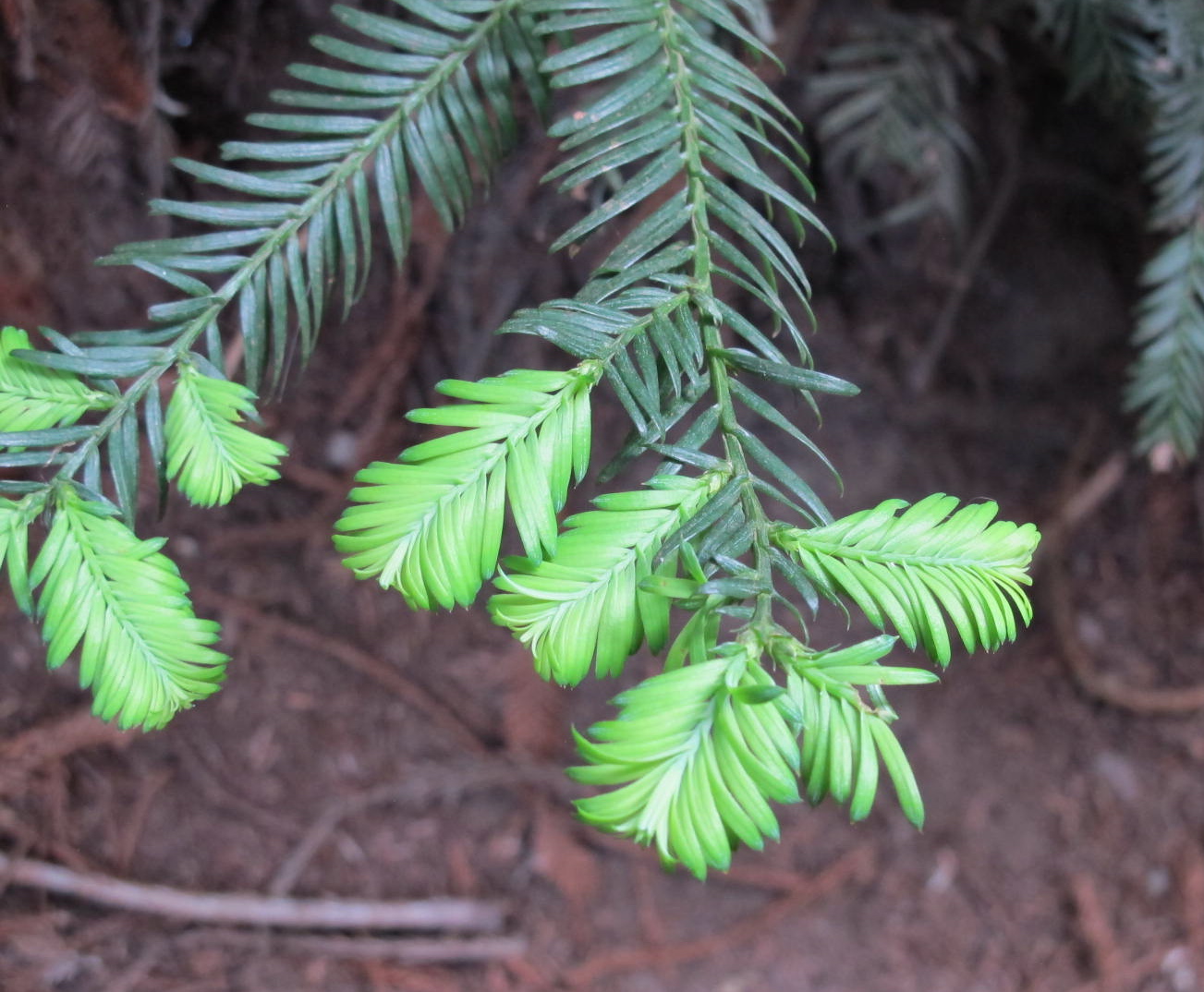
Pretty new growth

Pretty new growth

It's like a little Eden in here.

It’s like a little Eden in here.

Lynda is an elfin spirit

Lynda is an elfin spirit in the forest.

Walking the trail

Walking the trail

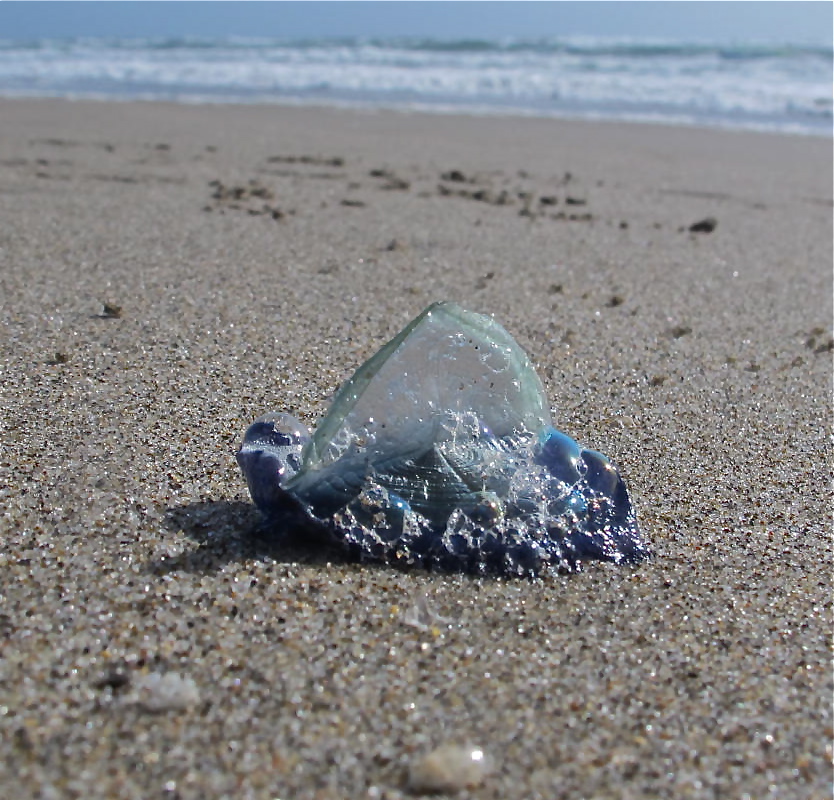
Our first total group walk on the beach produced the usual views of the godwits poking their beaks into the sand, sanderlings scooting along the shore, pelicans flying overhead, and grebes floating and then diving for food in the waves. But we also espied many purple sail jellyfish washed up on the shore.

A by-the-wind sailor...not very big.  They are perhaps an inch and a half to two inches long.

A by-the-wind sailor…not very big. They are perhaps an inch and a half to two inches long.

An invasion is afoot along beaches from Oregon to California: Millions of glassy purple, jellyfish-like sea creatures that look like sailboats have been washing ashore. Known as “by-the-wind sailors,” they typically live in the open ocean, but when warm water and storms draw them near shore, the wind blows them onto beaches, where they die in stinking piles. These creatures, whose scientific name is Velella velella, aren’t actually jellyfish, but hydrozoans, related to the Portuguese man-of-war.  (according to Live Science.com)  They are pretty, in their own way, and are harmless to humans. Luckily, they were not stinking on the Pajaro beach.

A great place for chowder and other sea food delights

A great place for chowder and other sea food delights

For dinner that evening, we drove to Phil’s Fish Market and Eatery at Moss Landing. I meant to get pictures of our plates, but was too engrossed in my own food. Oops. Suffice to say that we all enjoyed our vittles very much and were stuffed to the gills. Later on, that didn’t stop us from enjoying Diana’s famous berry cobbler made with Jacobs Berry Farm berries. Delicious!

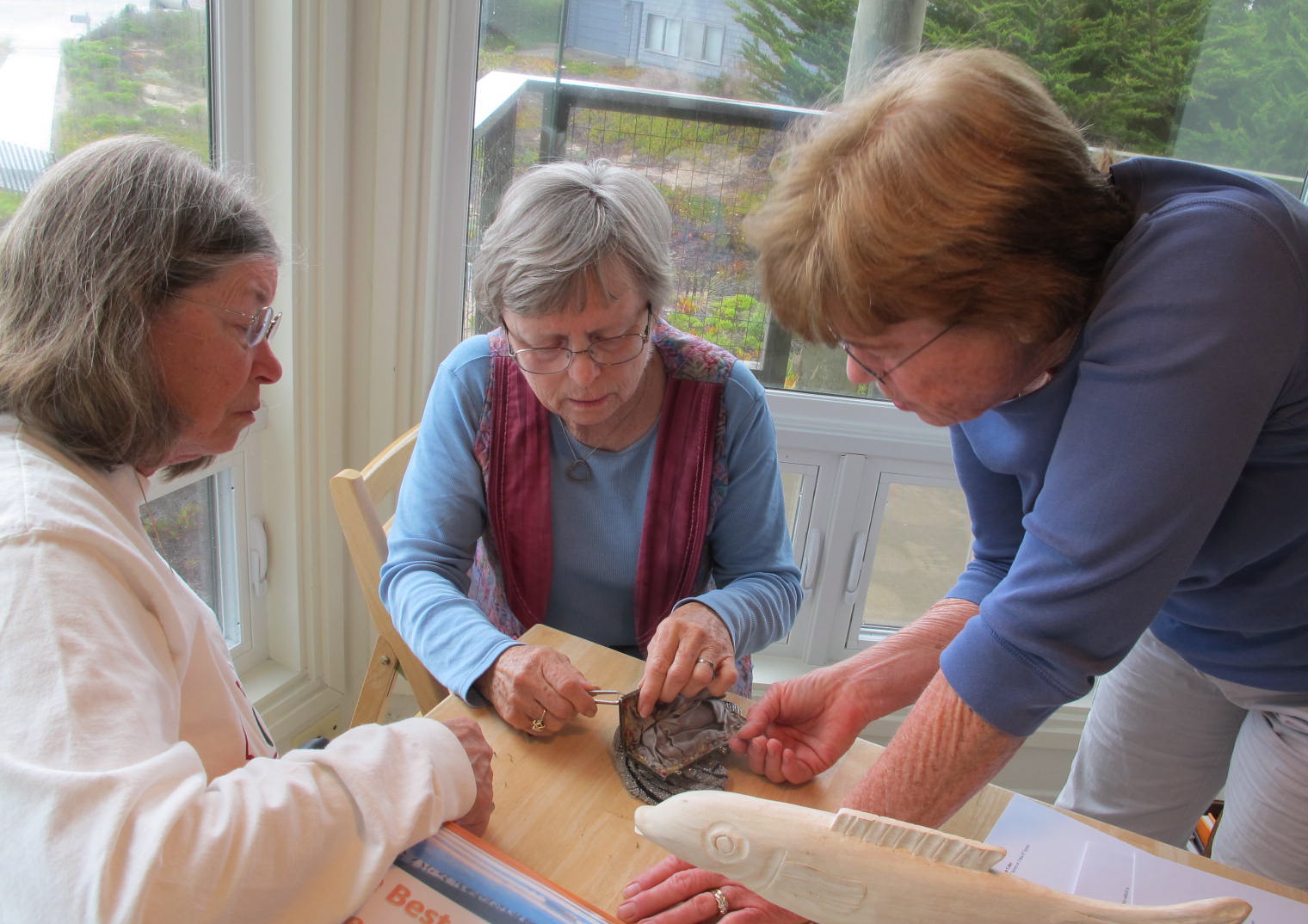
The next morning, Susan, Dot and Lynda helped do an antique beaded purse restoration for Diana. Such talent in our group!

The next morning, Susan, Dot and Lynda helped restore an antique beaded purse  for Diana. Such talent in our group!

The toys and games

The toys and games

As you can see, we all have our electronic toys and phones upon which can be played games. For a bit, we were pretty much occupied with playing Dropwords. I did pretty well with it when I was working with Dot, Susan and Lynda. Alone, I was too slow.

We tried to get reservations to take a tour of the Elkhorn Slough, but they were sold out on the day we could all go. So we drove to the mouth of the slough and watched pelicans and sea lions on a breakwater. We even saw a sea lion pup, which didn’t look too happy.  Many sea lions are not getting enough to eat these days due to warming waters that drive their food supply to cooler areas of the ocean.

A small sea lion on the breakwater

A small sea lion on the breakwater

Pelicans on the breakwater.  The brown blobs to the right are sea lions camped on their section of the rocks

Pelicans on the breakwater. The brown blobs to the right are sea lions camped on their section of the rocks

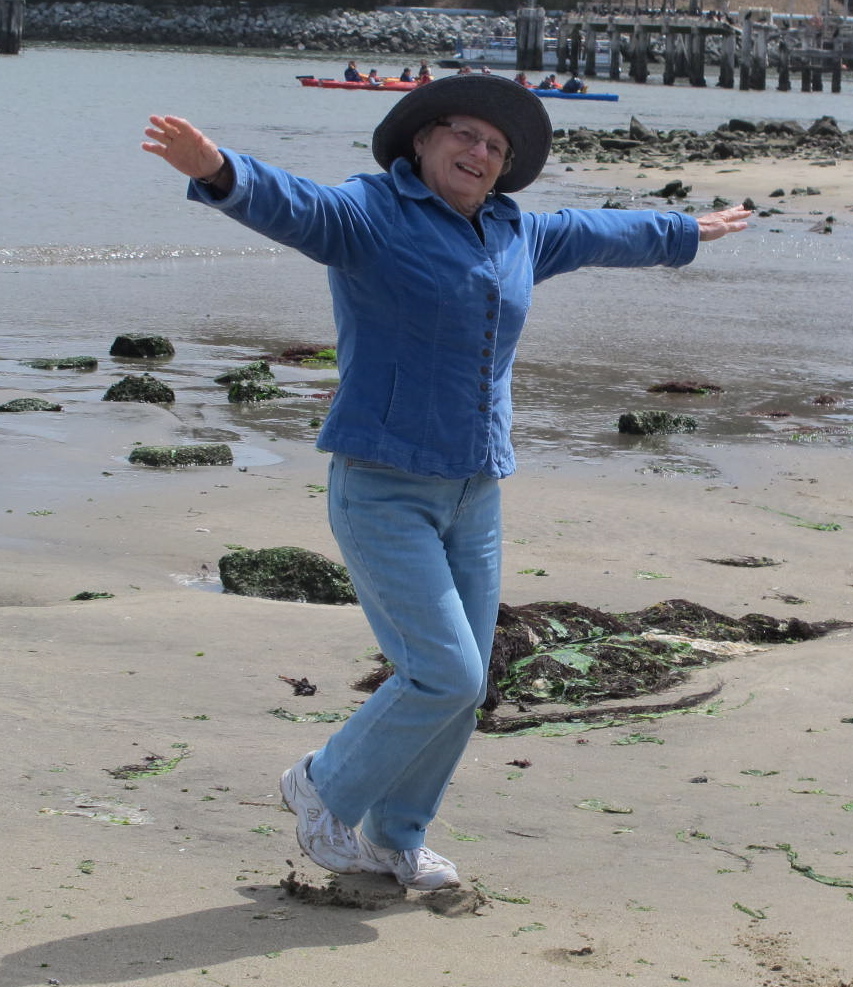
Dot is enjoying the sea breeze and trying out her own wings.

Dot is enjoying the sea breeze and trying out her own wings.

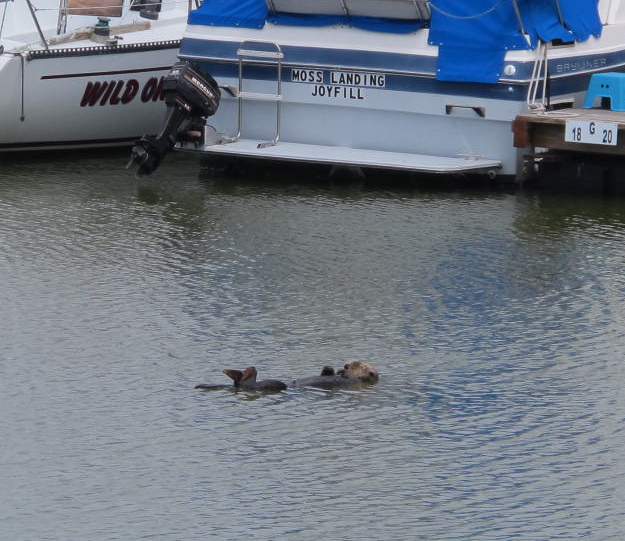
We didn’t get to take the slough tour but we did see one otter floating on his back near the shore of the marina. Some locals told us he is there quite often.

The Moss Landing malingerer

The Moss Landing malingerer

We had our traditional lunch at the Whole Enchilada at Moss Landing and enjoyed a variety of Mexican food delights. Susan had the biggest chili relleno I have ever seen. I thought there had to be at least 2 or 3 peppers in the dish, but it was just one. Wow! What a meal! Again, we didn’t get our traditional picture marking our presence at the Whole Enchilada, but we do have a few.

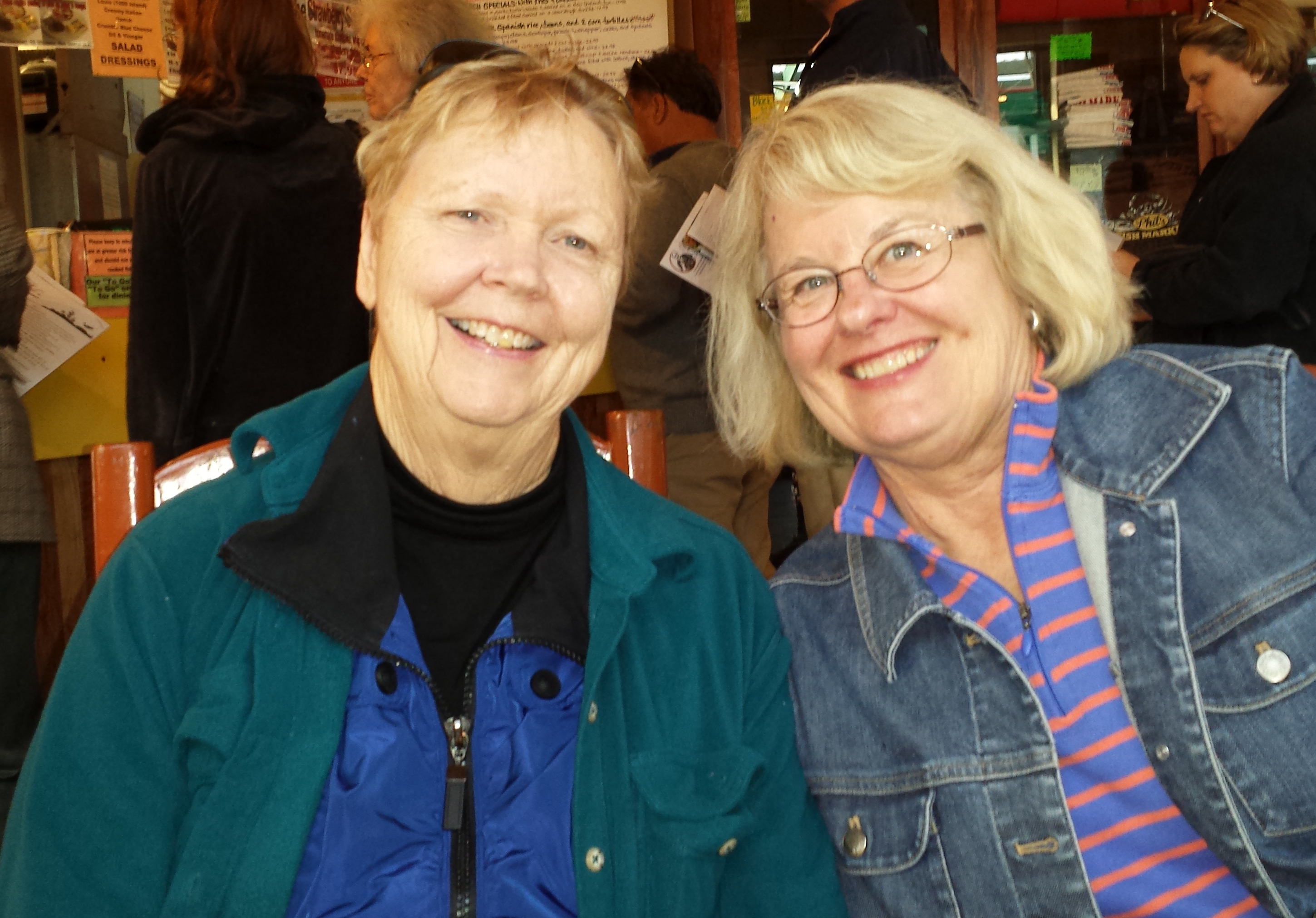
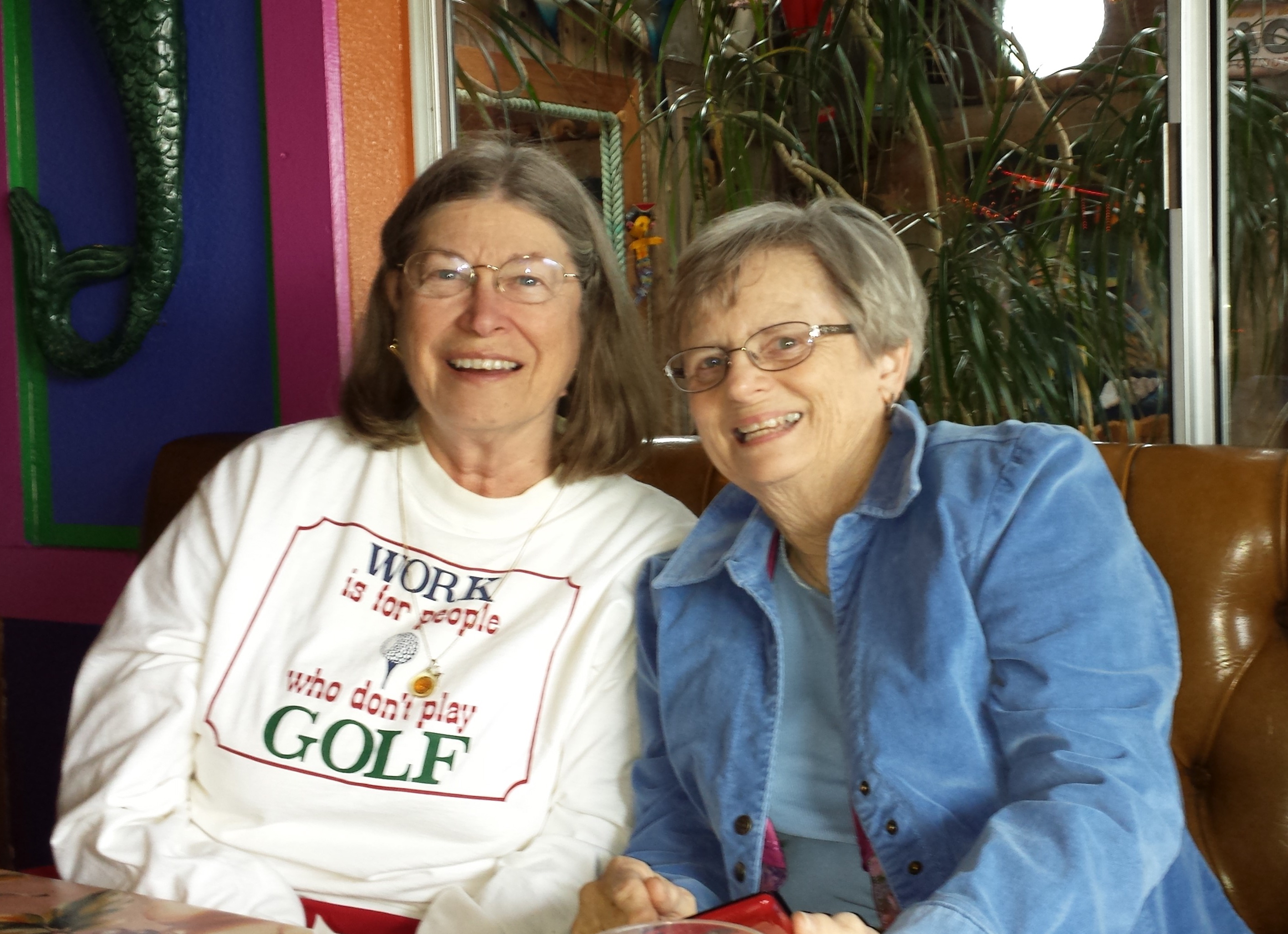
Shoo and Diana

Shoo and Diana

Susan and Dot

Susan and Dot

Ray, the proprietor, always seems to come around to talk to us when we have lunch there. He always talks a bit, asks who is in charge and then gives her a pitch about being in business together. Then he gives her a Lotto ticket saying he gets 50% of the winnings. This year, we couldn’t decide who was in charge, so he had us each choose a number. Diana has been the one in charge before and didn’t want to do it again. However, she picked the exact number and then felt lucky with the ticket since she was spot on. But, alas, it was a loser. Rats!  Diana is always a good sport about these things and we admire her for going with the flow.

It began to rain during our lunch but we walked to a couple of nearby shops to check out their wares. The local boutique made out quite well with our group.

After our walk through the rain, making purchases and checking again on the marina otter, we drove on home to make sure the wine was still in good shape. Well, that is not totally true, but there was a lot more conversation. It seems as though we always have something interesting to talk about. I always learn a lot of stuff when I’m with these ladies.

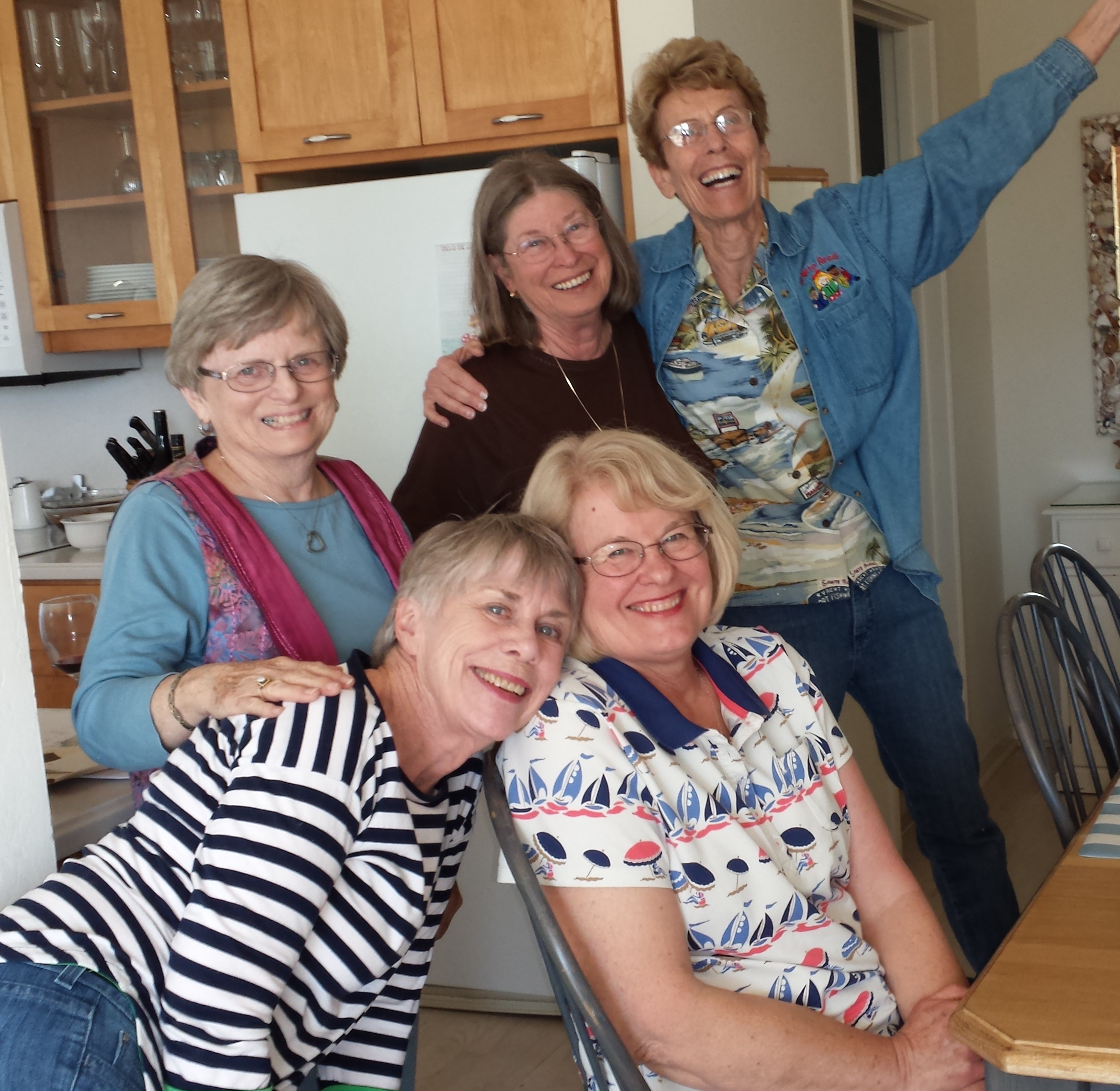
The chatting forum

The chatting forum

It is such a joy to be able to gather each year to celebrate this group. It is not often that a group of high school gals bonds in such a way that the relationship lasts a lifetime. When we come together, it’s as if we haven’t been apart for a long time and we coalesce back into the amazing group we’ve always been. (Not that we aren’t supporting throughout the year, it’s just now it’s face-to-face)  We always know that the group will be there to help in any way it can.

It’s just great to be together with these ladies.  Thank you all for being you!  And thank you, Lynda, for contributing some of the pictures.


A Black Cat Takes a Jaunt in the Spring

19 Apr

Some of you may have already seen this in an email, but I decided to put it in a blog to commemorate that fact that B.C. will be 21 in people years (approximately 147 in cat years…no, it’s not a record) next month.  Who would have thought that she would still be going strong at this age.  She seems to be pretty healthy other than being deaf and VERY persnickety.  Jerri says I should put her in my will in case she outlives me.  Happy Spring to those of you in the East.  You might even be seeing some hints of the season by now!  (Don’t forget to click on the photos to enlarge them)

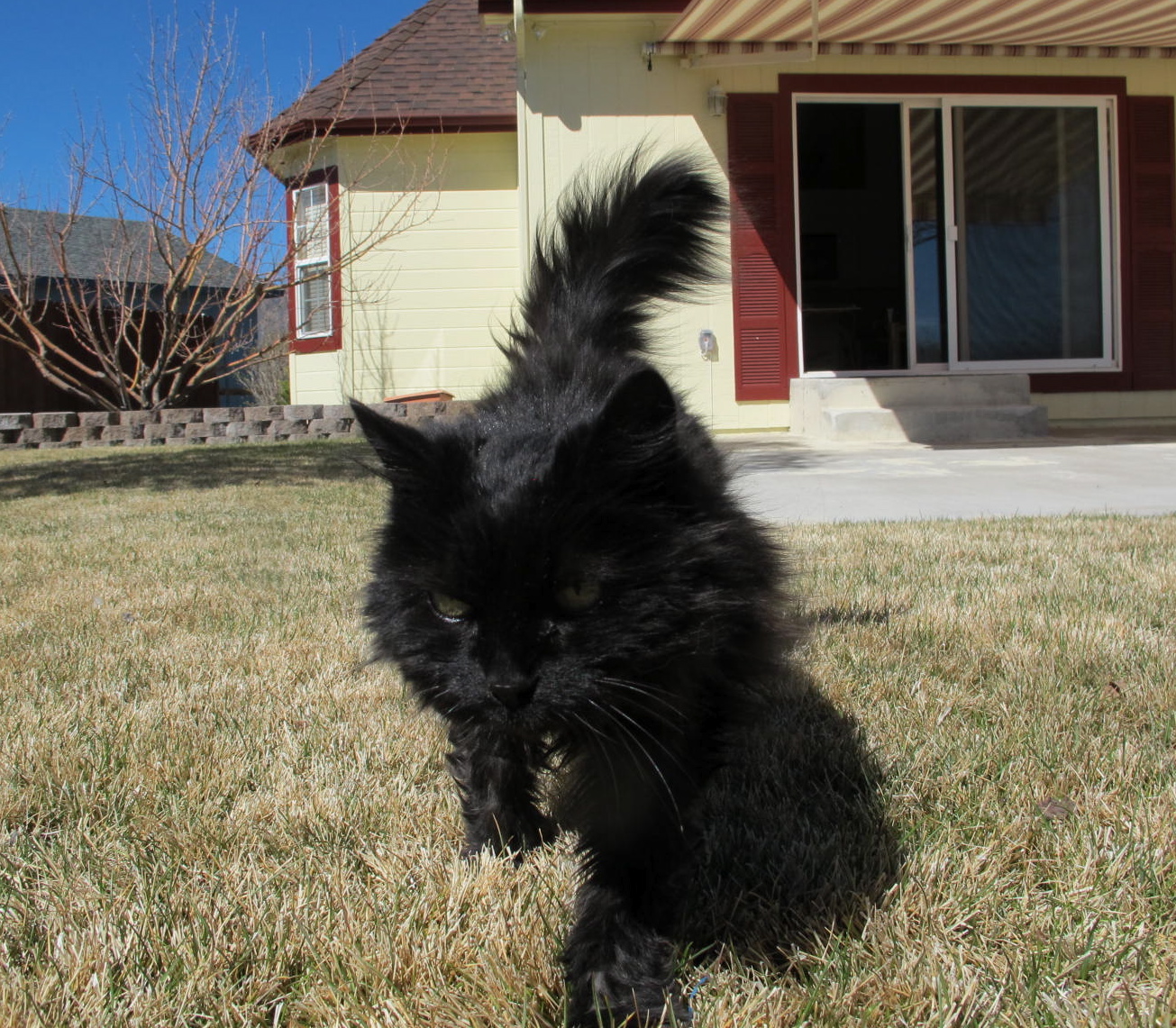
I may not be a spring chicken but I know a good day when I see it.  Here I am striding toward the camera, just like any other diva.

I may not be a spring chicken but I know a good day when I see it. Here I am striding toward the camera, just like any other diva.

I  stop for a sniff at a lady bug.  No response, so I move on.

I stop for a sniff at a lady bug. No response, so I move on.

A stop by the daffodils but they aren't what I'm really looking for.

A stop by the daffodils but they aren’t what I’m really looking for.

HERE IT IS!  Some catnip coming up from Mom's last year's garden.  YEA!!!  This stuff gets me going!

HERE IT IS! Some catnip coming up from Mom’s last year’s garden. YEA!!! This stuff gets me going!

Well, on second thought, I think I'll go back into the house to take a bit of a snooze.

Well, on second thought, I think I’ll go back into the house to take a bit of a snooze.

I felt pretty good until I sat down.  Now I feel sort of spacey.  Watch out for my claws.  I might accidentally stab you in my drugged state.  Cat nip is still the best.  I'm glad that Mom lets it grow in a protected fence so the squirrels don't eat it.  :-)

I felt pretty good until I sat down. Now I feel sort of spacey. Watch out for my claws. I might accidentally stab you in my drugged state. Cat nip is still the best. I’m glad that Mom lets it grow in a protected area so the squirrels don’t eat it. 🙂

A Walk through Old Bodie – a Real Ghost Town

16 Apr

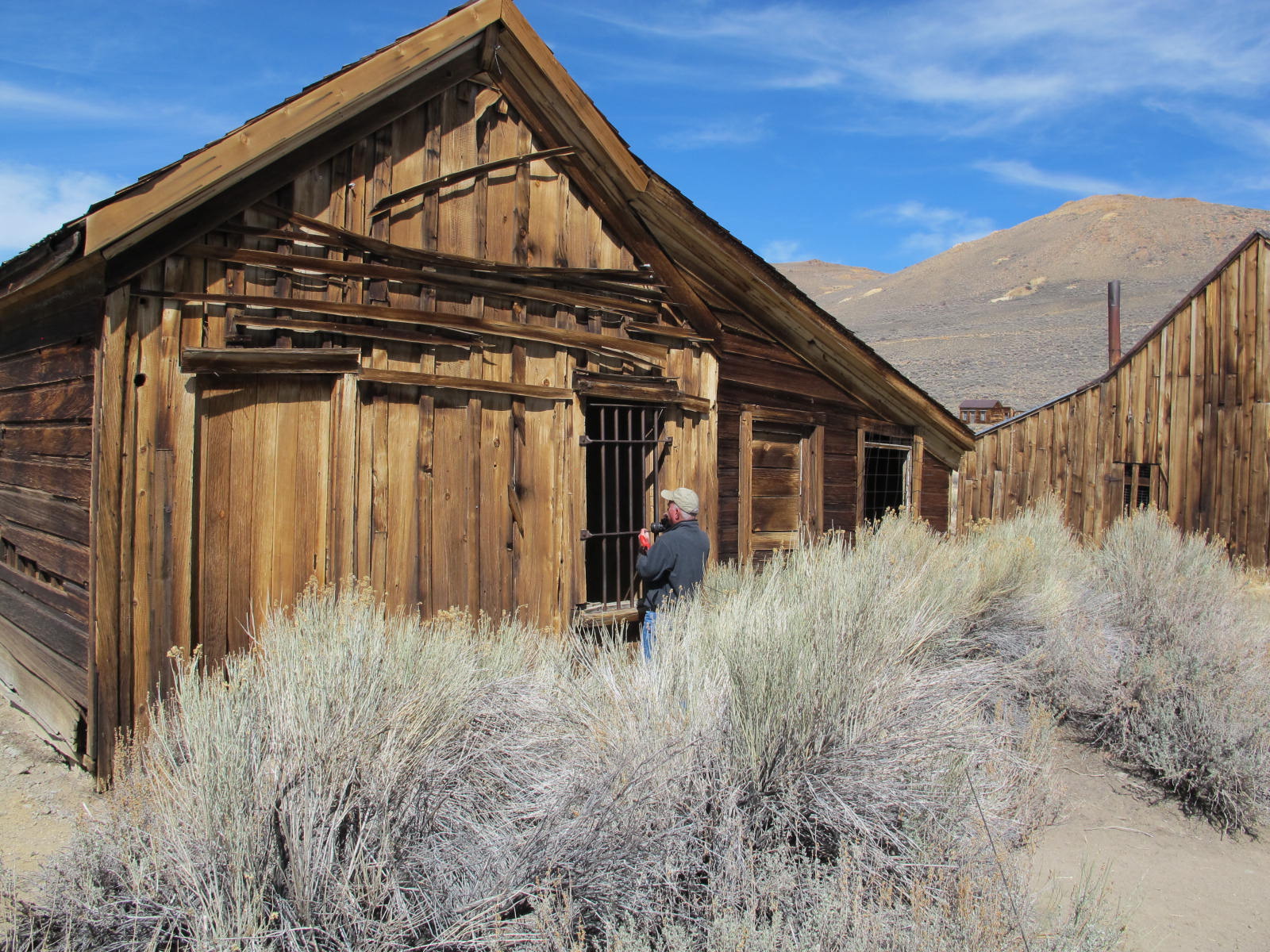
It was a glorious spring day with beautiful blue skies and wispy clouds when Diana and Jack asked me to join them and son Jim and their two dogs, Lucy and Molly, to go to Bodie, an old mining town. Never one to turn down an outing, this promised to be a lot of fun as I hadn’t been to Bodie in about 25 years.

But first a bit of background from the Bodie State Historic Park Guide:  Bodie was named after Waterman S. Body (aka William S. Bodey), who discovered gold there in 1859. The change in spelling of the town’s name has often been attributed to an illiterate sign painter, but it was a deliberate change by the citizenry to ensure proper pronunciation. (Bo-dee)

What's left of the boomtown of Bodie, CA. (Don't forget to click on the photo to enlarge it)

Bodie once had a population of about 10,000. (Don’t forget to click on the photo to enlarge it)

 By 1879, Bodie boasted a population of about 10,000 and was second to none for wickedness, badmen and “the worst climate out of doors.” One little girl, whose family was taking her to the remote and infamous town, wrote in her diary, “Goodbye God, I’m going to Bodie.” The phrase came to be known throughout the West.

Bodie lies about 13 miles east of Highway 395 and about seven miles south of Bridgeport, CA. I think one reason the town in such good shape is that it’s far off the beaten track and part of the road is dirt, gravel and some rocks. One has to make an effort to get there and the road is not open for several months of the year. The climate is still wicked during the winter. I surely wouldn’t want to be there in the winter with the wind howling and snow drifting all over. A picture in a brochure showed men standing on the roof of a store and snow is just a few feet from their boots.

Designated as a National Historic Site and a State Historic Park in 1962, the remains of Bodie are being preserved in a state of “arrested decay”. Sadly, only about five per cent of the buildings it contained during its 1880s heyday still remain.  Today, it stands just as time, fire and the elements have left it—a genuine California gold mining ghost town.

The Lampe family, who owned Jack and Diana’s property during pioneer days, used to take a wagon to deliver cheese, eggs and other goods to the Bodie miners. It took them three weeks to get there from Gardnerville! Apparently it was worth the trek as they made some good money doing that. It took us just a couple of hours to get to Bodie. I think I like our transportation better.

Of course, one of the first buildings I peeked into was the school, built in 1879. Originally the Bon Ton Lodging house, it became the school when an early-day juvenile delinquent burned down the first school.  You can see electric lines and poles. Electricity was available during late 1800s from a hydroelectric plant built about 13 miles from Bodie.

The school is the building with the spire on the right side of the street.

The school is the building with the spire on the right side of the street.

Looking west toward the Miners Union Hall, to the right of the large building (that looks like two buildings) in the center of the picture

Looking west toward the Miners Union Hall, to the right of the large building (that looks like two buildings) in the center of the picture.  The morgue and undertaker’s office is to the right of the Union Hall. Caskets are still inside of it.

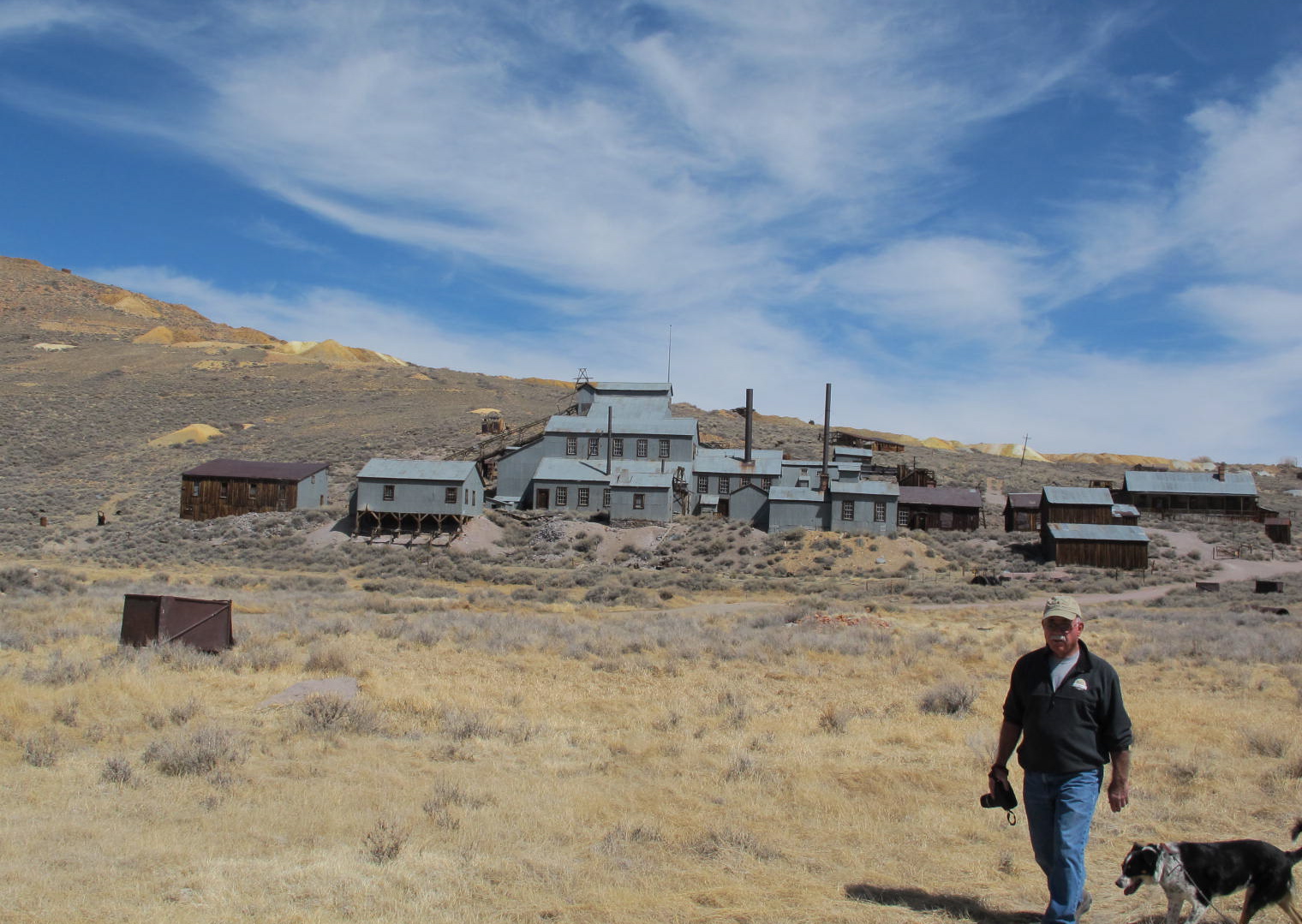
The Standard stamp mill where much of the processing and refining process was done.   Jack and Lucy are in the foreground.

The Standard stamp mill where much of the processing and refining process was done. Jack and Lucy are in the foreground.

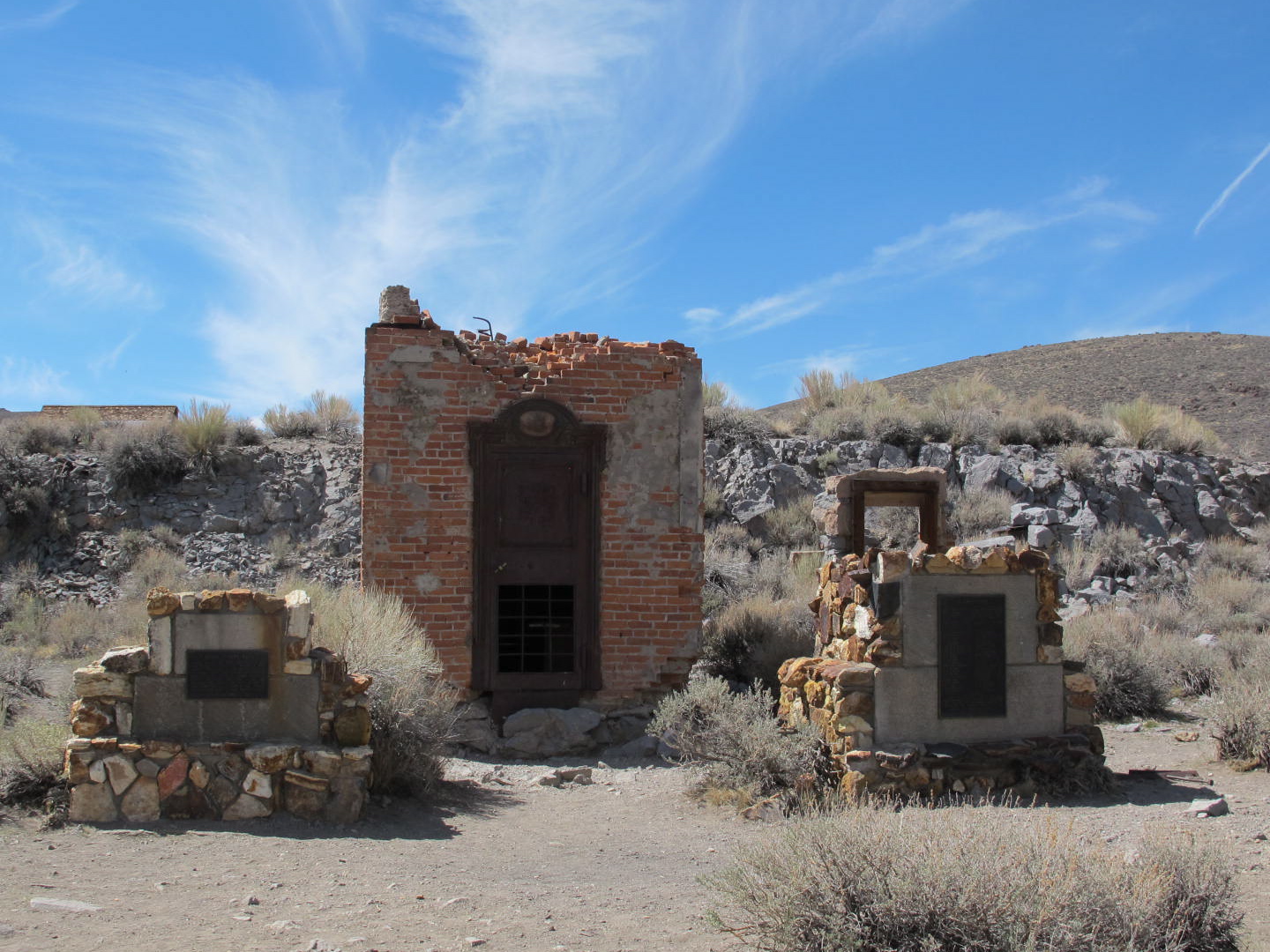
The bank vault.

The bank vault.

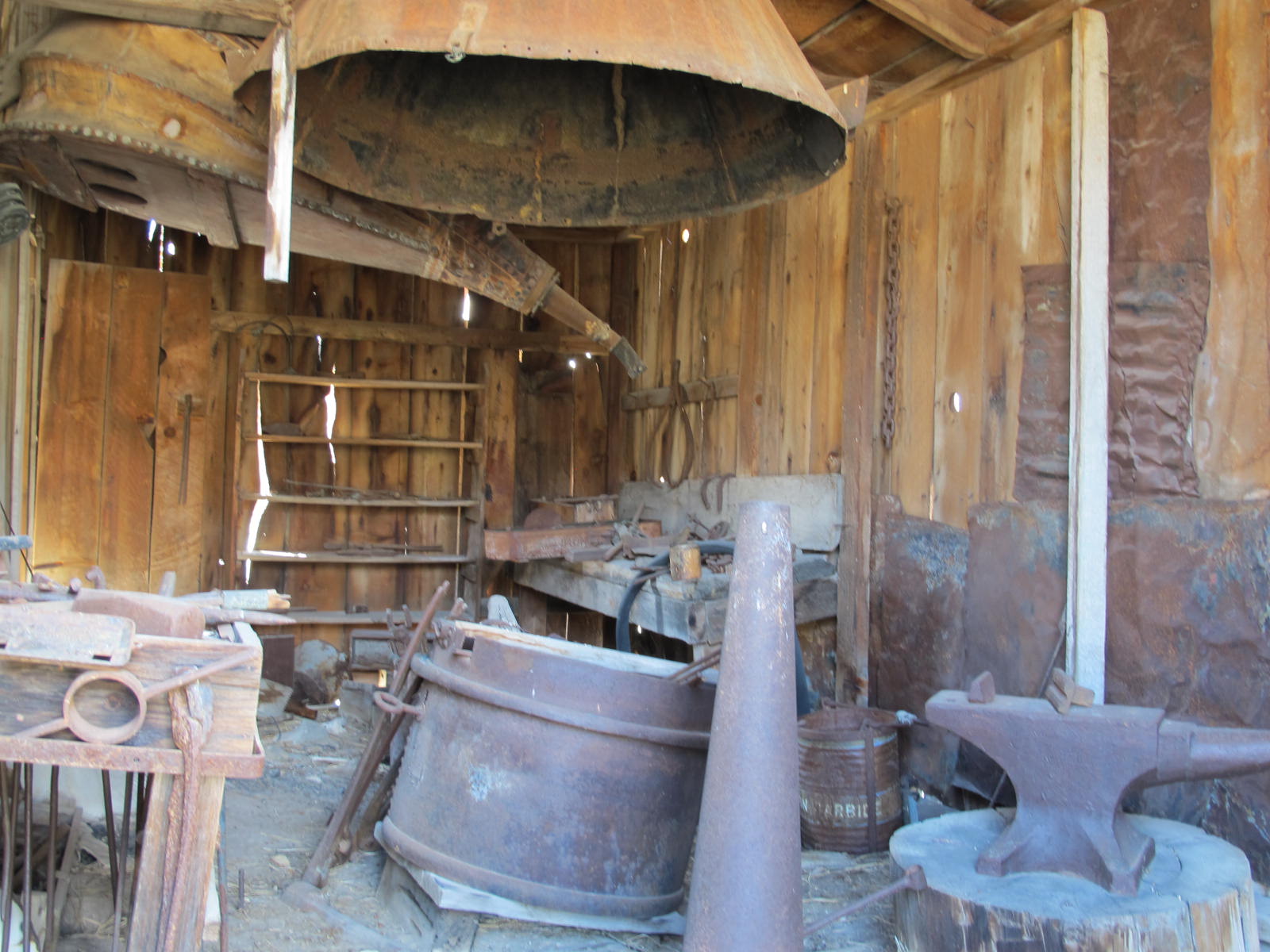
The Stuart Kirkwood Livery Stable and blacksmith shop. Note the size of the bellows behind the hood. Many wagons and literally hundreds of horses, mules and other draft animals were required to haul in tons of goods daily.

The Stuart Kirkwood Livery Stable and blacksmith shop. Note the size of the bellows behind the hood. Many wagons and literally hundreds of horses, mules and other draft animals were required to haul in tons of goods daily.

Only one prisoner escaped from the Bodie jail

Only one prisoner escaped from the Bodie jail

The town jail was a busy place what with killings occurring almost daily.   A minister in 1881 pronounced Bodie as a “sea of sin, lashed by the tempests of lust and passion.” Bail for “guests” was $5.  Joseph DeRoche was taken from here by the Bodie “601,” a vigilante group, and hanged.  He must have done something terrible to rile up those vigilantes like that.  Probably one reason the jail was busy was that there were 65 saloons in Bodie.  There were many opportunities for the miners to find R and R after a hard day’s work and then possibly find trouble.

People had other needs, too. This was a two-holer that has sunk into the ground.

People had other needs, too. This was a two-holer that has sunk into the ground.

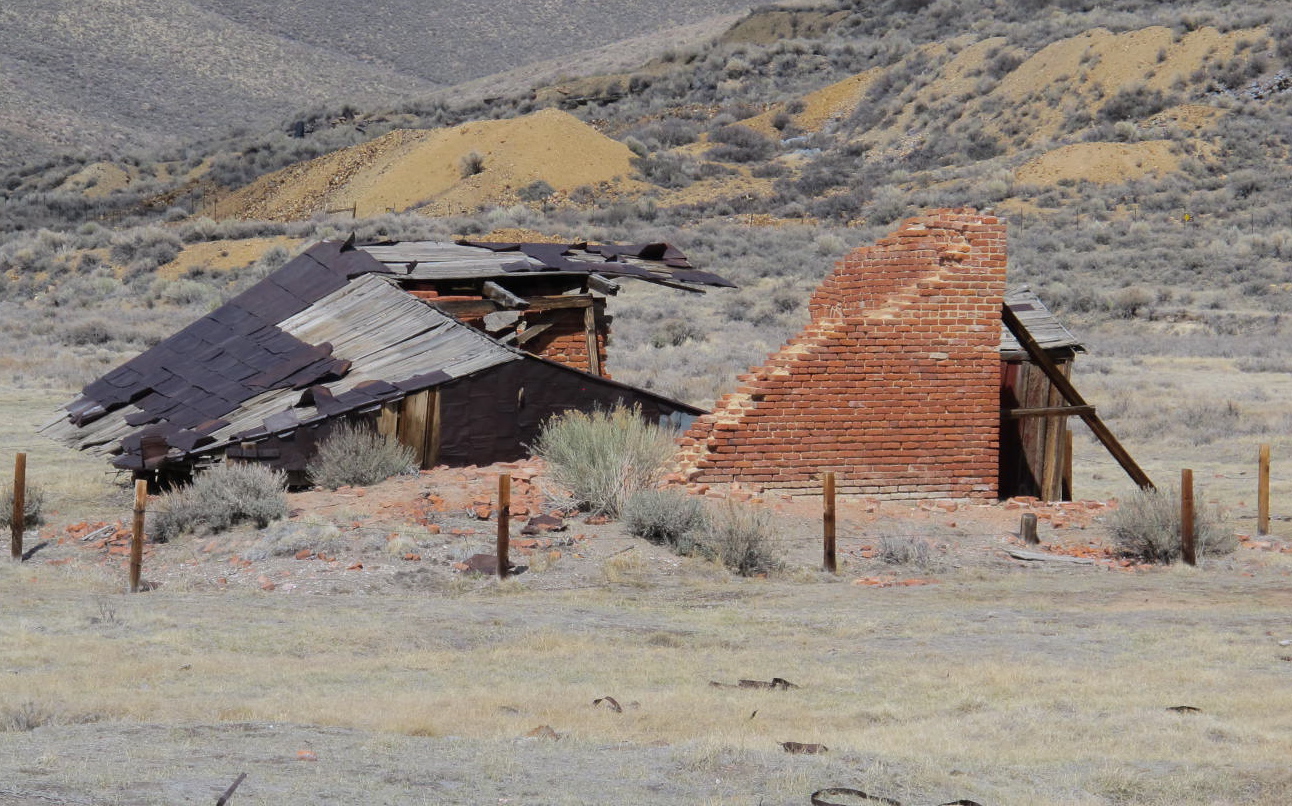
The Mastretti Liquor Warehouse is in ruins now but we could see very thick brick walls and a vault-like door that would have protected the booze from thirsty miners.

The walls were five - six bricks thick

The liquor warehouse walls were five to six bricks thick

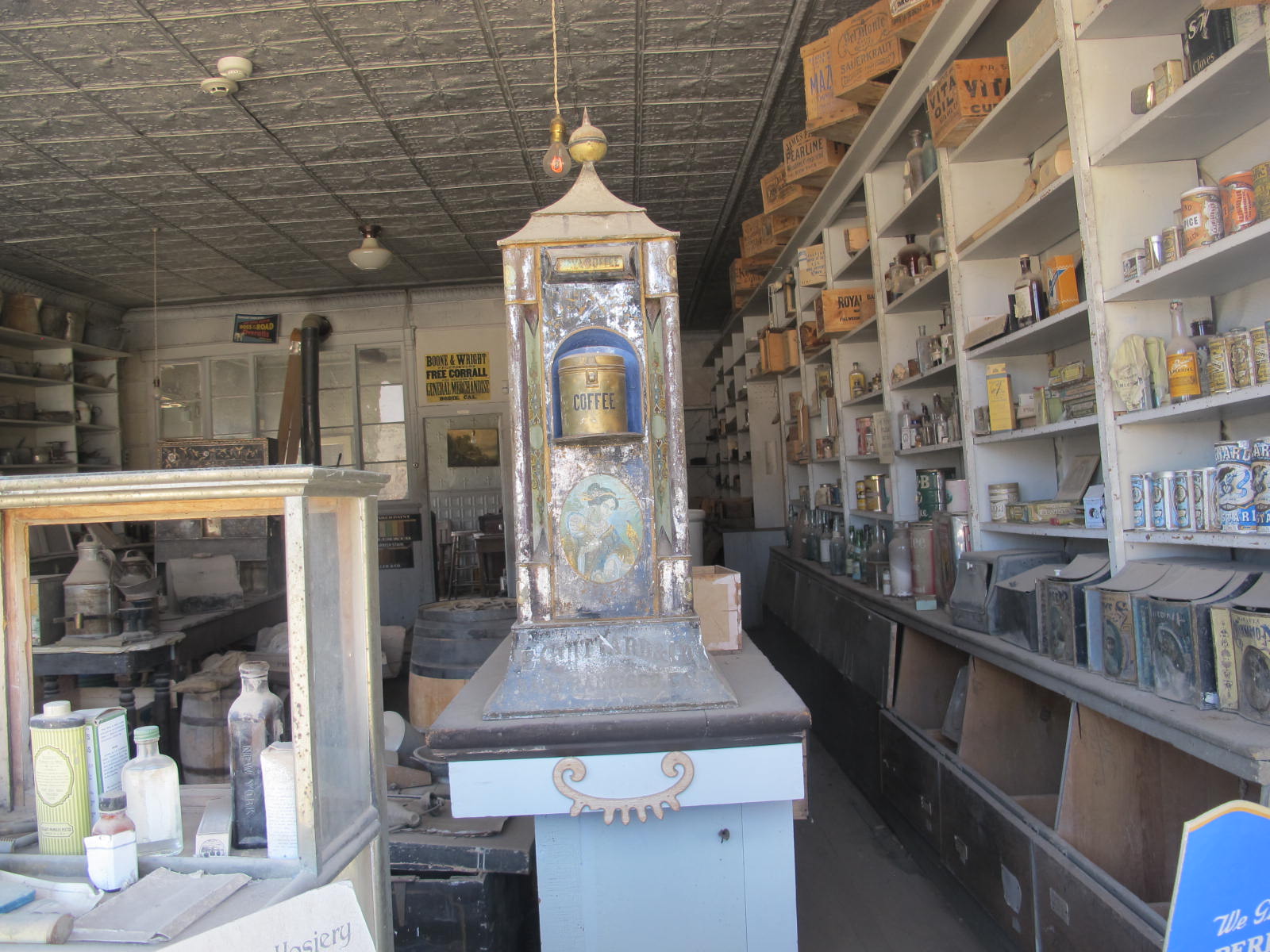
Boone Store and Warehouse, erected in 1879.  Harvey Boone was a direct descendant of Daniel Boone.

Boone Store and Warehouse, erected in 1879. Harvey Boone was a direct descendant of Daniel Boone.

An old coffee grinder in the Boone Store.  It was amazing how much stuff was left in that store.

An old coffee grinder in the Boone Store. With so much stuff on the shelves, it almost looks as if the store could open up tomorrow.

The Methodist church was erected in 1882 and was the only Protestant church in Bodie.

The Methodist church was erected in 1882 and was the only Protestant church in Bodie.

E.J. Clinton of San Francisco restored the Methodist church and held the last service in 1932.  Since then, the interior has been badly vandalized, and the Ten Commandments painted on oilcloth which once hung behind the pulpit (“Thou shalt not steal”) has been stolen.  A Catholic church, also built in 1882, burned down in 1928.

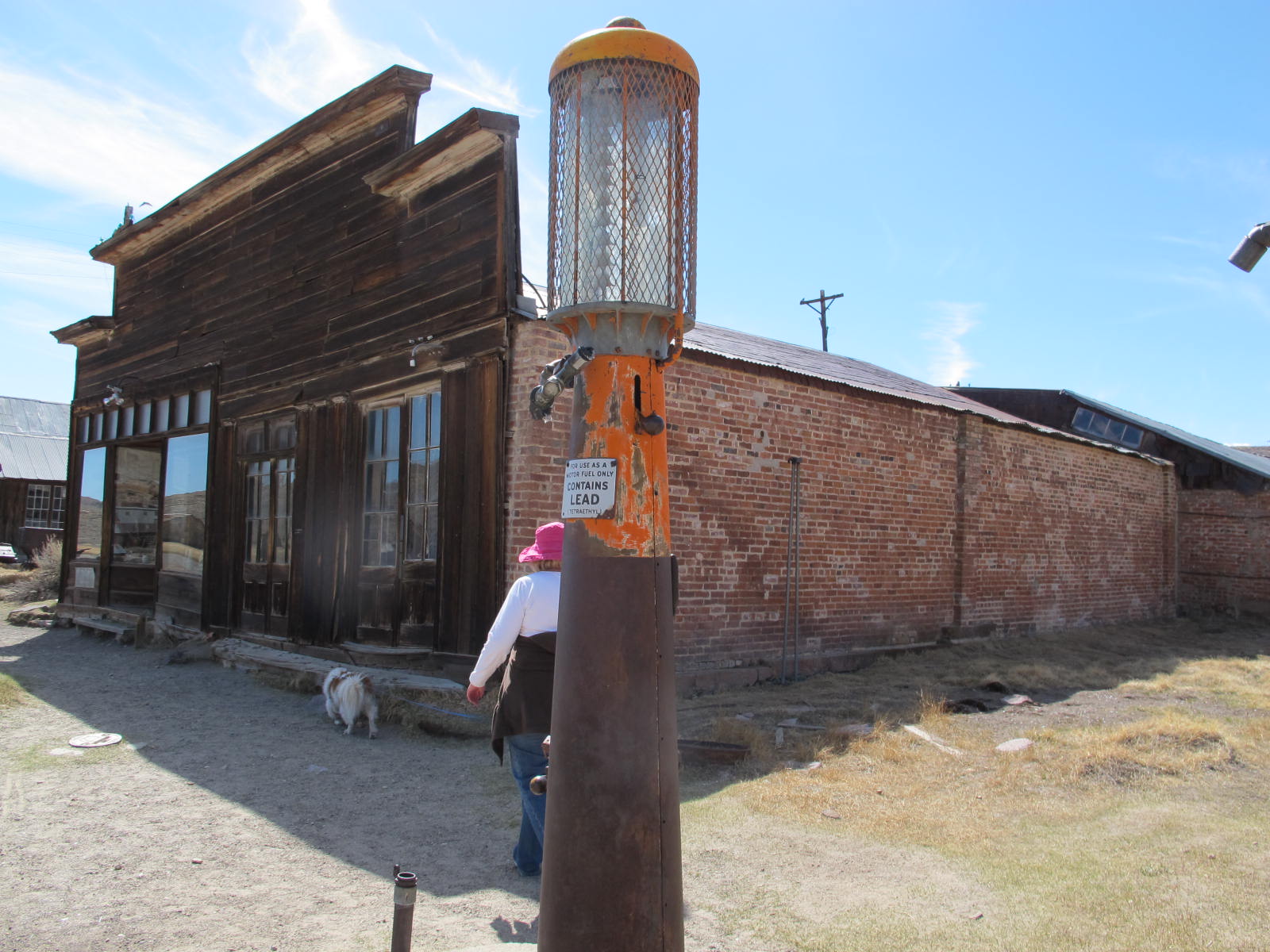
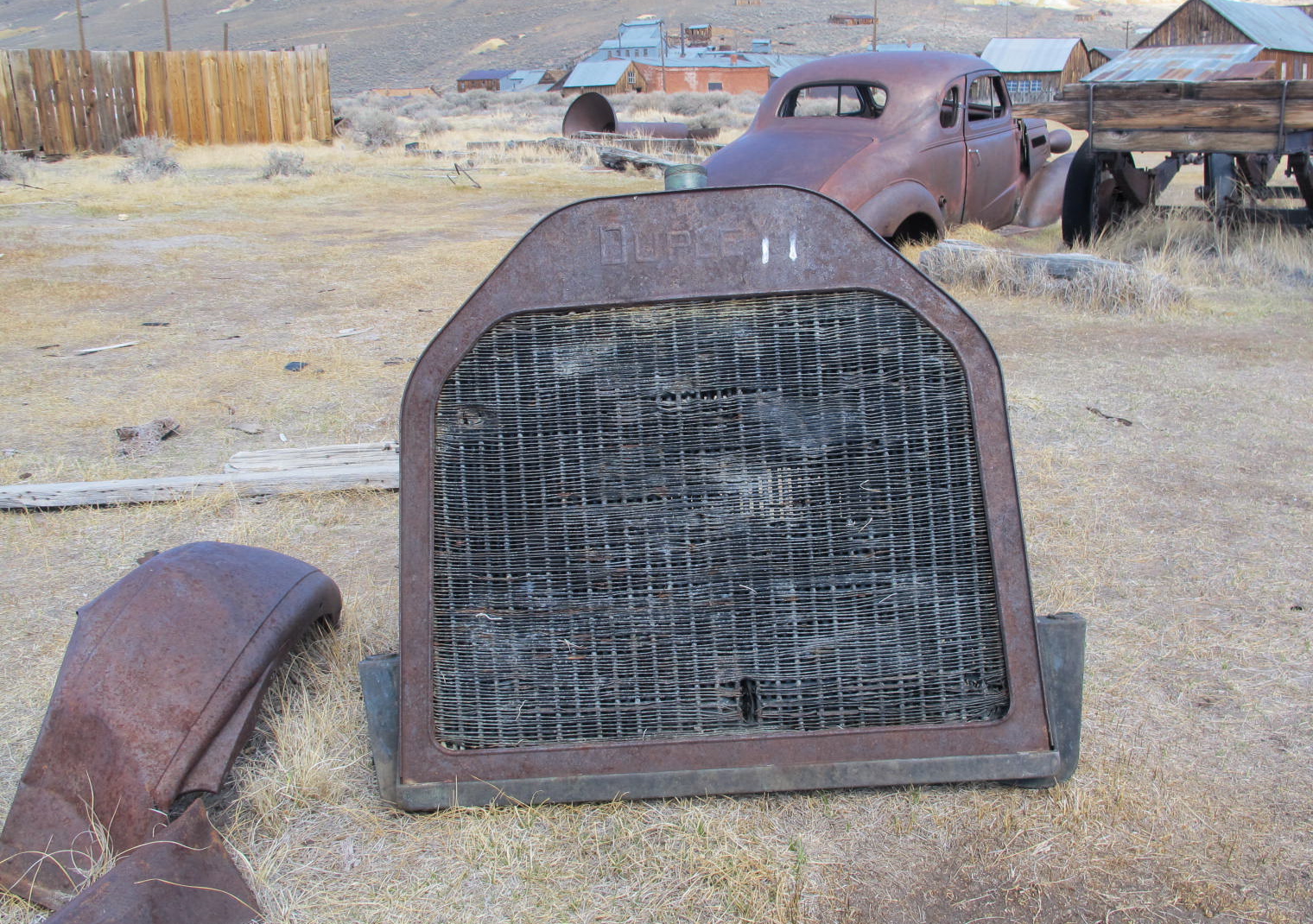
Cars, trucks, wagons, carts, wagons and equipment are strewn all around Bodie. I bet this 1937 Chevy coupe was a hot car in its day.

Cars, trucks, wagons, carts, wagons and equipment are strewn all around Bodie. I bet this 1937 Chevy coupe was a hot car in its day.

A clever poet could write a requiem for these abandoned vehicles and pieces of equipment. It just seems sad to seem them sitting in the dust.

IMG_6413

IMG_6398

IMG_6417Our last trek was to the cemetery, which is actually three cemeteries; Ward’s (the first undertaker), Masonic and Miners’ Union. We were free to wander around the graves and had to be careful not to disturb any of the little colored flags that we could see between gravestones. Those flags depicted unmarked graves that human remains detection dogs had alerted to.

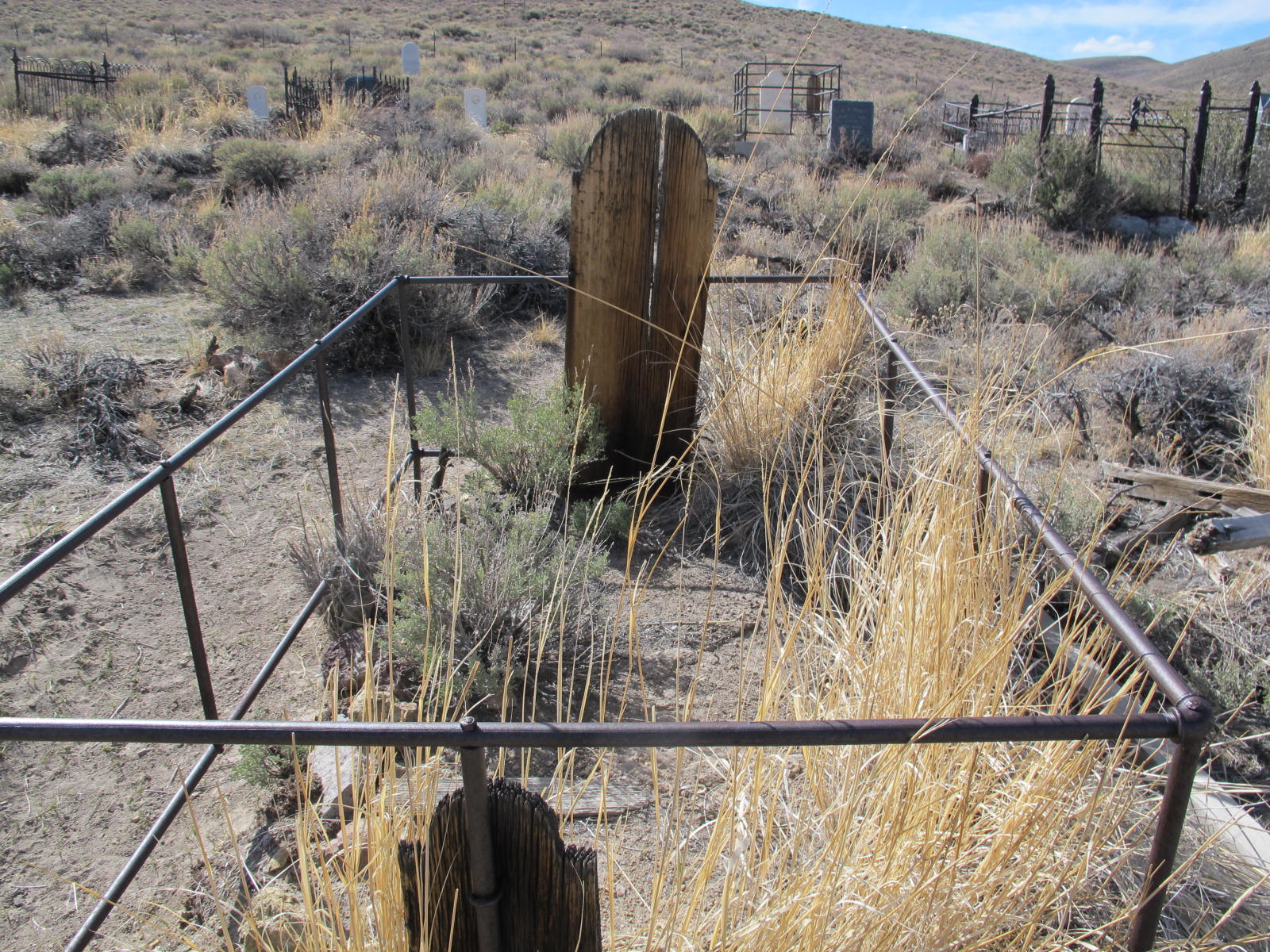
One of the weather-beaten grave markers in the cemetery

One of the weather-beaten grave markers in the cemetery. The smaller one at the foot of the grave might have been for a child.

Bodie’s Cemetery:  Lives Within told several stories about some of the inhabitants of the cemetery.  A.C. Robertson died 1880. Tried to thaw out frozen powder in his oven.  Chatto Encinos, 1880. Killed by Sam Chung for raiding his vegetable garden.  James Kennedy, 1880. His fumbled draw and bad aim put him six feet under.  One headstone is outside the fenced cemetery. That is of Rosa May, a prostitute, who died in 1911 or 1912. To this day, people leave money on and around her headstone.

The visit to Bodie was enlightening and I am very glad that no one is allowed to move, pick up or take anything from the park. It’s great to see these artifacts in situ and to imagine folks going about their daily business during the mining booms.

Starting to Do One Simple Thing and Having It Mushroom into Many Tasks (How Does This Happen?)

14 Apr

About 18 months or so ago, Jerri and I attended training to become tour guides at the Nevada State Museum (NSM) in Carson City.   This was shortly after I moved to Minden/Carson Valley and I thought it would be a good way to meet people and learn more about Nevada history. This was accomplished and I’ve been enjoying giving tours of the museum and the state capitol to students and tourists. This was basically all I ever wanted to do at the museum and that is how it went for the first six months or so.

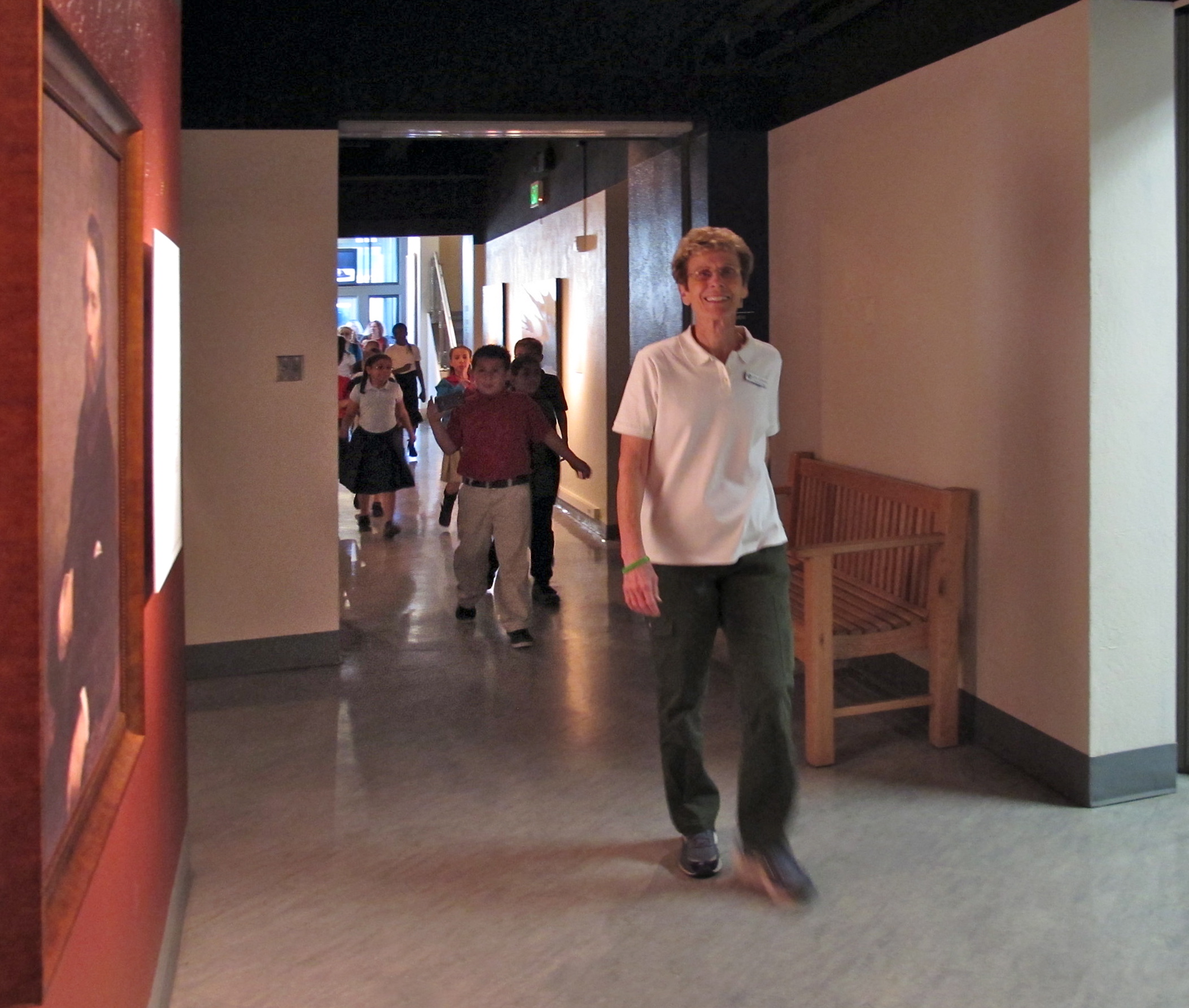
Taking the kids on a History, Mint and Mine tour

Taking the kids on a History, Mint and Mine tour (Photo by RD Schmidt)

Then I was asked to help with Friends of the Nevada State Museum bake sales during the NSM Coin Show (August) and Nevada Day (October). The original chair was involved in a bigger fundraiser for the museum and needed help. Well, that didn’t seem like too much work, so I said yes, I’d help. I think she neglected to tell me that acceptance meant that I’d be a member of the Friends Board. How did that happen?

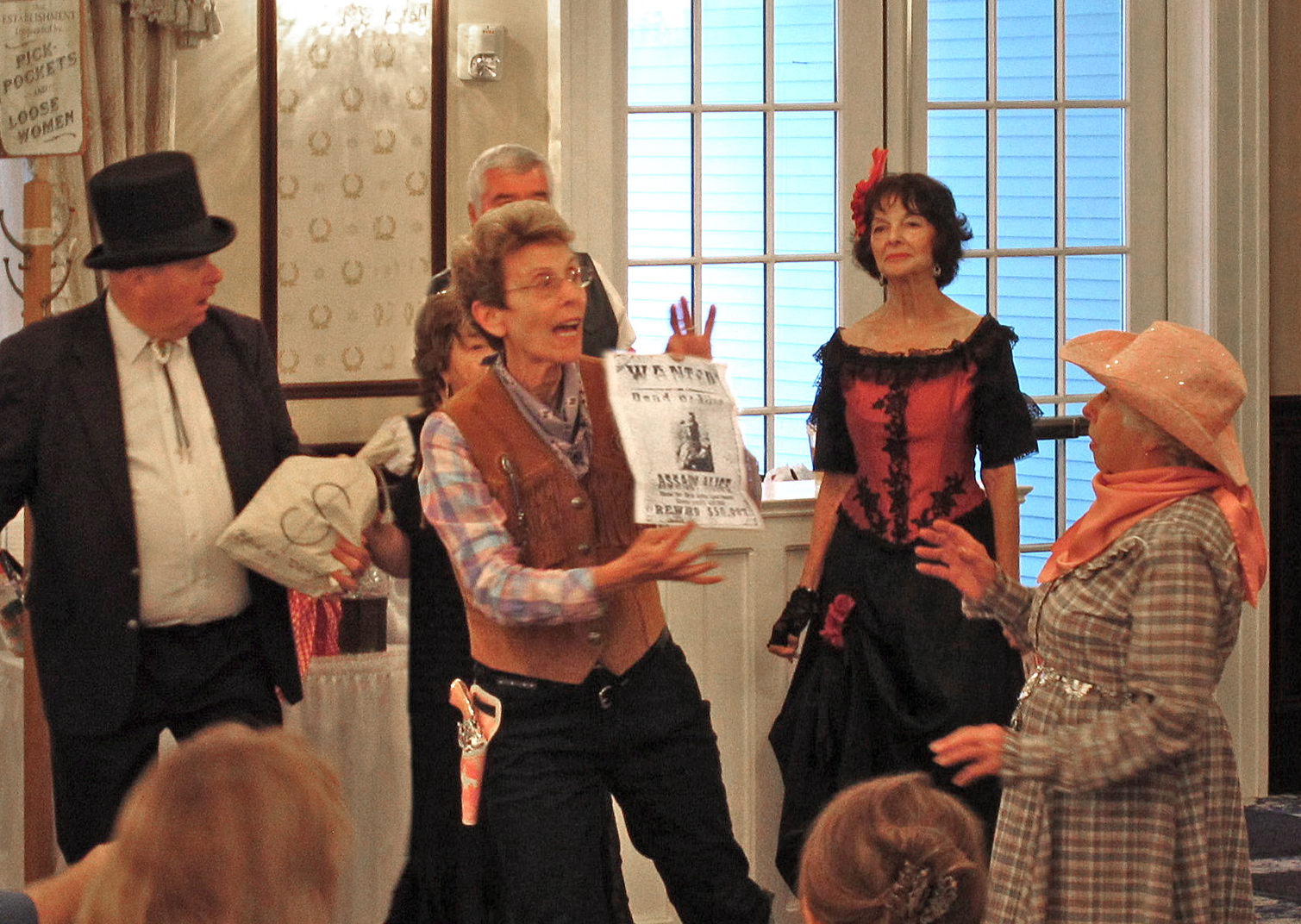
Then, the same chair (now the major fundraiser committee) asked me to be Black Barbara in the play she and others were writing to perform at the Museum and also the encore performance at the Governor’s Mansion. They said they were desperate and I’d be perfect for Black Barbara. How can I resist such flattery? Soon, I was attending rehearsals and what not, getting ready for the big nights. We raised a lot of money for the Museum and it was good. But, how did that happen?

Accusing Poker Alice the murder

Accusing Poker Alice the murder (photo by RD Schmidt)

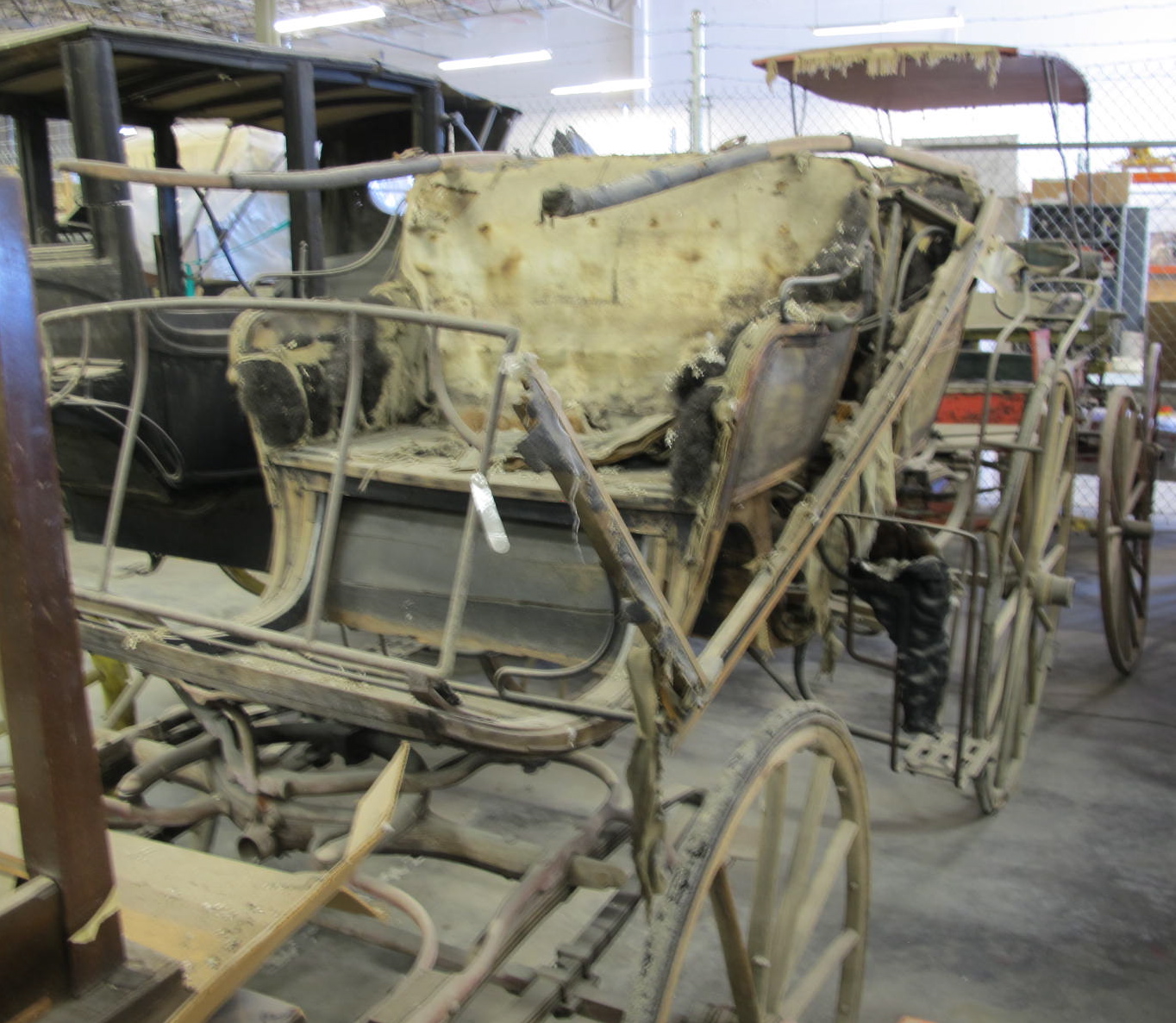
 The year moved on with meetings, tours, and Friends’ field trips to other museums. Then, the Friends learned of a collections crisis in the NSM’s storage facilities. In a nutshell, the museum desperately needs additional space to house artifacts and collections according to standards of the American Alliance of Museums. I could write for hours about this stuff as I have learned so much. I won’t go into the details of the facilities (especially items stored at the NDOT(NV Dept. of Transportation) facility. Trust me when I say our collections are in crisis and many artifacts are in danger of being destroyed by air quality, dust, vermin and pigeons.

Carriage being destroyed by mice and pigeons (at NDOT facility)

Carriage being destroyed by mice and pigeons (at NDOT facility)  Yes, it’s really old but mice are using stuffing for nests and pigeons do their business from the rafters

I began to learn about this crisis when Jim Barmore, Director of the NSM, spoke about it at one of our Friends board meetings. I innocently asked how we could help, thinking he’d probably say that we could volunteer to help clean up the facilities and help with artifacts. But, instead, he suggested that we write letters to the governor and legislators about the state budget, explaining the needs and how critical the situation is. So, we mounted a campaign and I actually wrote quite a few letters. (I NEVER did that in California. I NEVER thought that anyone there would pay attention.) Many of us actually received letters in response. They were diplomatic and didn’t really say much, but I felt good about them anyway.

Then the state budget was presented and the storage addition proposal wasn’t on it. Rats!!! It’s the same old story. There is never enough government money to go around.   We talked about it in our next board meeting.  We decided to write stronger legislative letters including pictures and perhaps contact a TV station and the Nevada Appeal (our local newspaper). I emailed the pictures and a little packet to the Reno ABC affiliate and they actually sent a reporter that very day! The report was aired that evening. Pretty good, huh?

The same day of the TV report, I received a letter from the Senate Chair of Finance. He suggested that I attend the Assembly Committee on Ways and Means and speak to try to make the museum’s case there. So I worked hard to prepare a speech accompanied by the pictures and the packet and I went to the meeting on April 10. (It was a momentous day as it was the first time I’ve worn a skirt since moving to Nevada. A real sacrifice!)  Two other Friends went with me and we made our points. Speaking in front of the committee was daunting and exciting at the same time. Don’t want to do it again, though. How did it go from just writing a one-page letter to speaking at the Legislature? I don’t know. It just happened.

Unfortunately, all this effort will probably go for naught. The Nevada legislature meets biannually for 120 days only. By the time we got involved with the process, budgets had pretty well been set. But, there is a very slight hope that something for the museum could be appended to another bill at the tail end of the session. Another way to look at it is that seeds have been planted. Some of the fertilizer (and it wasn’t BS) that we talked about might stick on the walls and something may come of it in the next biennium.

Oh, in the midst of all this activity, I will become chairperson of the Friends of the NSM in May. I sort of think it was by default because most of the other board members have already served a term. How did this happen when all I wanted to do was be a tour guide?  I think Jerri was smart in stepping back and doing only a few activities with the tour guides.  🙂

So this is my saga about things mushrooming.  This epistle might sound like a giant vent, but it really isn’t.  I’m just wondering how these things happen.


Mooving Along – A Little Jaunt to the Settelmeyer Ranch, February 19, 2015

20 Feb

Today was another beautiful day in Minden, Nevada…one that beckoned me to get out and breathe the good air. After all, I had been breathing my own cootie-filled air at my house for almost a week and I needed to get out for a few minutes. It’s been a long time since I’ve been sick enough to stay indoors and not care about picking up junk around the house, checking email or even eat much. An upper respiratory infection will do that to you. One person I talked to said her doctor called it the 100-day cough because folks just can’t get rid of it. I hope my cough doesn’t last that long, but it surely has been exhausting to endure the hacking.

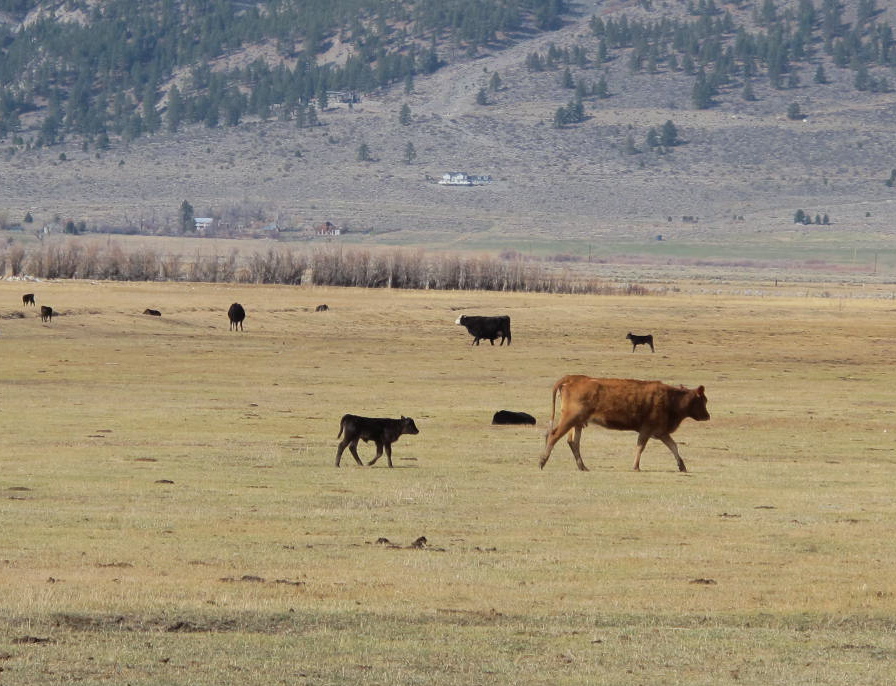
Anyway, back to the adventure. I drove out to the Settelmeyer Ranch where many calves have been born in the last two weeks. They are so cute. I watched one little guy bound back and forth between a ditch and the rest of the herd. He was really kicking up his heels. Others were newbies and were sleeping off the rigors of being born.   Just watching the herd eat, nurse the babies, moo to each other and just sort of watch the world go by was very relaxing and I enjoyed every minute of it.

This little guy was a bundle of energy as he ran toward the ditch.

This little guy in the back left was a bundle of energy as he ran toward the ditch.

The little spot is the same calf bounding toward the herd

The little spot is the same calf bounding toward the herd

In my estimation, cows, up close and personal are not necessarily cuddly type animals.  But, in the pasture, they become relaxing and pleasant to watch and hear.  They are curious but wary and many of the new moms are not afraid to go after a coyote or another predator who might be a threat to their little one.

A view of the herd grazing on some hay

A view of the herd grazing on some hay

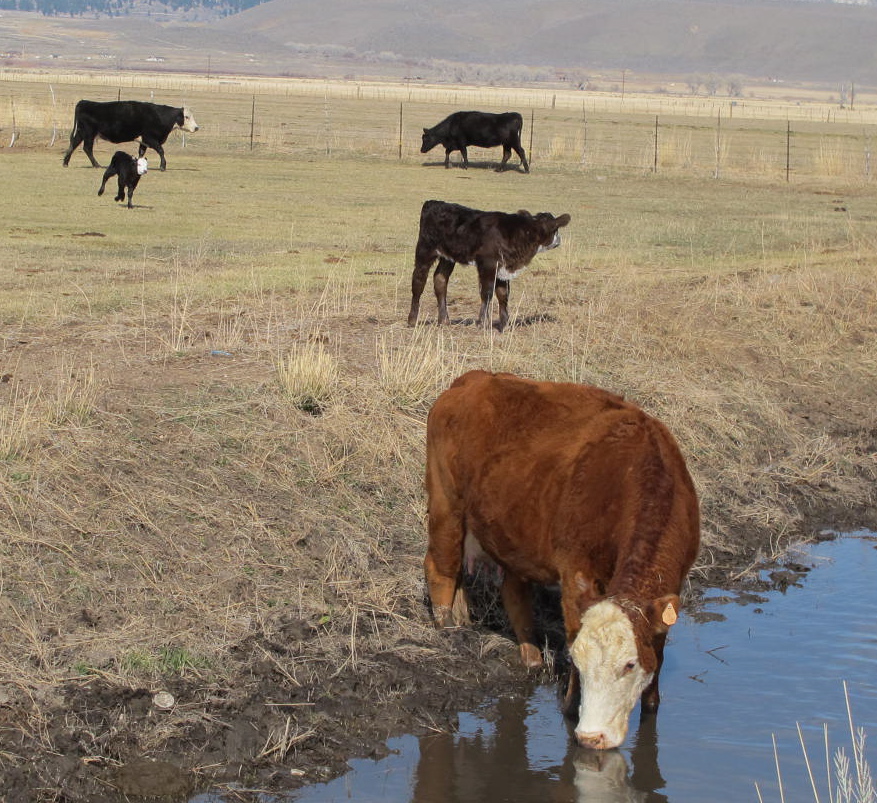
This lady had not had her baby yet, but was kind enough to pose for me after getting a drink.

This lady had not had her baby yet, but was kind enough to pose for me after getting a drink.

I wondered why she was the only one in the herd with horns. Perhaps she was a different breed or had special privileges. I don’t have a clue.  Note the decorations on her ears.  I believe these tags are markers as to when she was inseminated and all kinds of other information.

It’s Eagles and Ag week here in the Carson Valley where many tourists come to see eagles feasting on cow afterbirth (I did a blog on this last year). So eagles should be in the pastures. I didn’t see any, much to y chagrin. But I did notice many small birds walking amongst the cattle. They were right underfoot, pecking away at stuff. The cows did not care a whit and paid no attention to them as they grazed on the tiny sprigs of grass trying to come up. (The grass is so sparse that the ranchers are having to put out hay so the cattle have enough to eat) I decided the birds were starlings, as they like to eat bugs and stuff stirred up by other animals. They acted like starlings and scurried around like them.

I’m so glad to have the opportunity to stop alongside the highway and take the time to watch these little adventures transpire. Last year I was able to watch a calf being born. I wasn’t so lucky this year, but to see the little miracles on the pasture gave me great satisfaction. Below is a quote from Ansel Adams that I think sums up some of my philosophy here in the Carson Valley.

“In wisdom gathered over time I have found that every experience is a form of exploration.”

A little dogie and its mom

A little dogie and its mom


The Second Annual Minden Cioppino Fiesta – 1/27/15

3 Feb

During the last Official Tim Baptista Memorial Crab Cioppino Feed, I won the official cioppino recipe as well as a big cooking pot and giant wooden spoon. Last year, Raley’s, a local grocery store had a big sale on crab and I decided to try my luck at cooking the recipe. It turned out well and I decided to do it again this year…even though the crab sale didn’t save as much as last year.

My good buddy, Dick Schmidt came across the “hill” (aka the Sierra Nevada mountains – at our age, we never say “over the hill.”) from Sacramento to join us…hence the wonderful pictures that will accompany this Buzzard Notes entry.

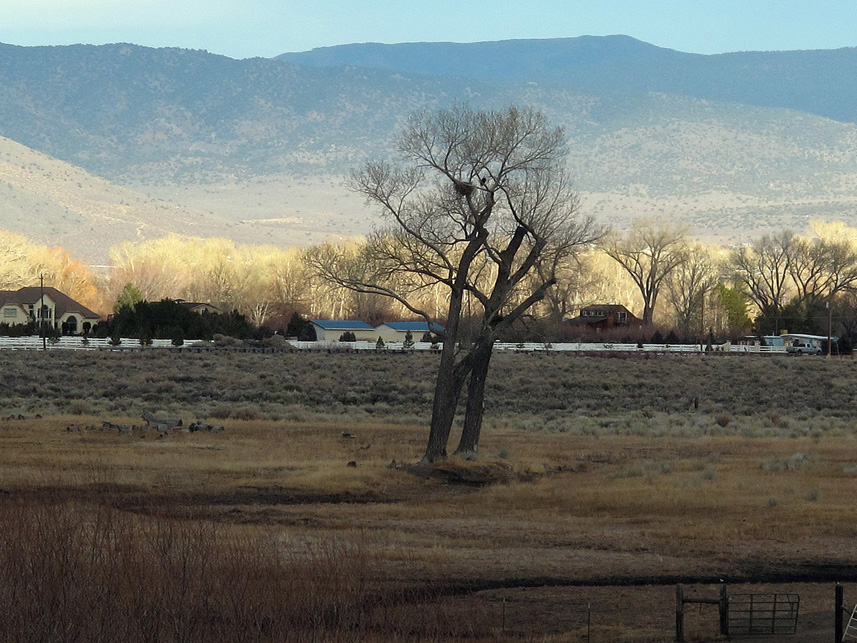
Dick arrived the day before the Fiesta and we took a ride around the Carson Valley to try to espy some bald eagles.   As I reported last year, they arrive as the calving season begins. There were a few calves out in the pastures and we think we saw a couple of eagles about 200 yards away as well as a sand hill crane. No good pictures there. So we went to the Nature Conservancy beside the Carson River where I knew was an eagle aerie off in the distance. Sure enough, we did see 2 a pair of eagles. YEA!   We weren’t up close and personal, but we did see them. The big clump of stuff in the tree is the nest and the dot next to it is one of the eagles.  (Don’t forget that you can enlarge a picture by clicking on it)

The big clump of stuff in the tree is the nest and the dot next to it is one of the eagles.

The big clump of stuff in the tree is the nest and the dot next to it is one of the eagles.

We walked a bit on the banks of the Carson and noticed some special structures on the banks. Volunteers had cut willows from nearby stands and bundled into “wattles.” Live staked willows were woven into the structure with the wattles that were placed along the banks. We think that not only was this an artistic effort (they called it a sculpture on the sign) that it would also help with a flood control effort in not letting the banks wash away. (Lord knows that we don’t have a chance for a flood unless a miracle happens and we get 20 feet of snow in the mountains soon…the drought continues here in Nevada, too). Anyway, the wattles were interesting to look at.

Wattles on the Carson River

Wattles on the Carson River

Dick took a nice picture of Job’s Peak reflecting in the Carson River.

Dick took a nice picture of Job’s Peak reflecting in the Carson River.

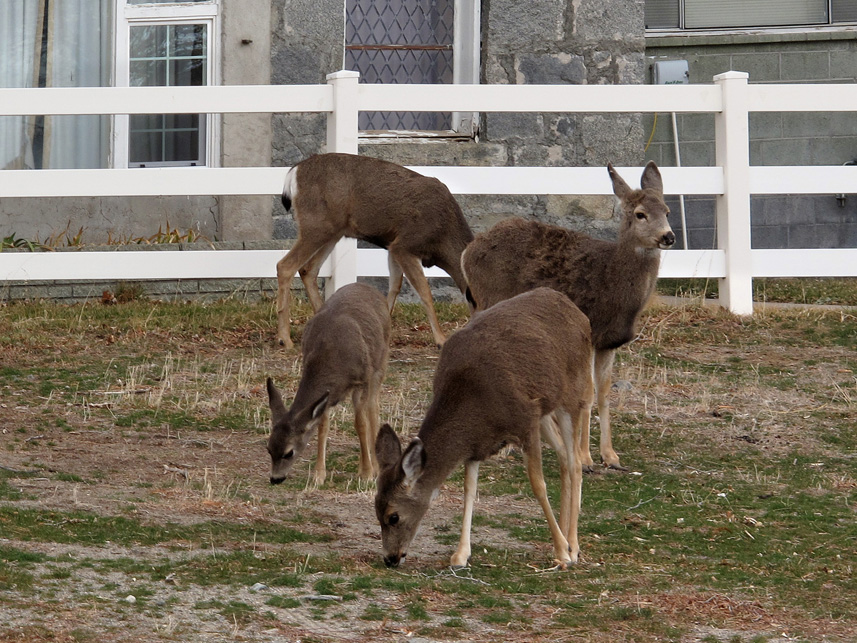
As we left the Genoa area, we took the obligatory photo of the ever-present deer that live in the area.  I love to look at them but wouldn’t want all these critters eating up my flowers and lawn.

These four deer were part of a herd of 12 that were dining in a resident’s yard.

These four deer were part of a herd of 12 that were dining in a resident’s yard.

The next morning dawned and Dick found me outside feeding “my” birds. I like to get out early before they do so as not to disturb them as they come in for their morning feeding. Bless his heart, Dick held a light and documented this feeding. I also give the birds fresh water each day because the birdbaths and the tins on the ground are often solid ice. There is no other fresh water for the birds and once I started, I felt obligated to continue because they were looking for it.   It was about 19 degrees that morning.

Hanging a feeder

Hanging a feeder

Filling the birdbath and the tin in the background

Filling the birdbath and the tin in the background

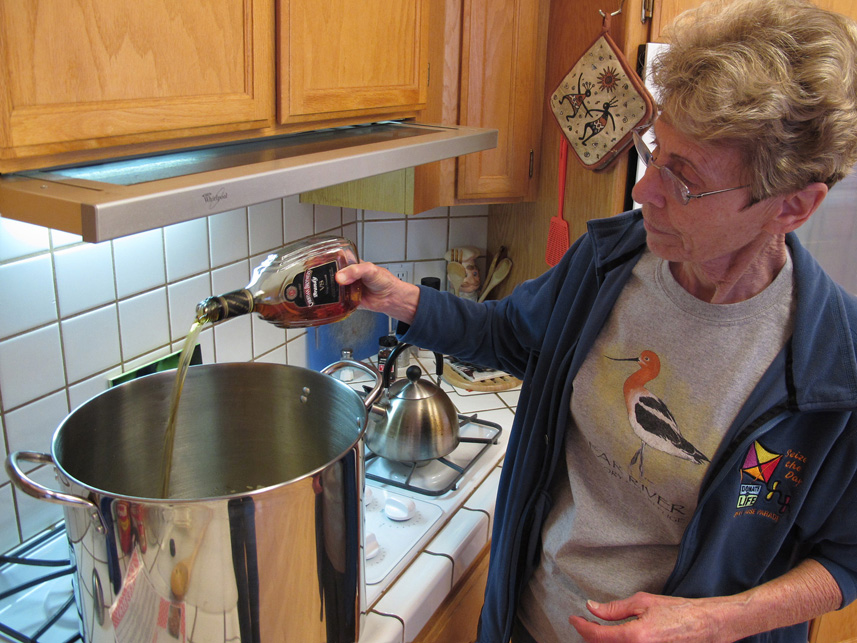
So it was the big day and after breakfast at a place called “Cowboys,” we began to prepare the cioppino sauce. We chopped, diced, sautéed, opened cans, added wine (and brandy), sniffed, tasted and finally let it reduce for several hours. This was quite a process that was fun to do but kind of tiring.   I didn’t realize how tiring it was until the big day was done. I can really appreciate how hard the Baptistas worked to feed 600 people and I was only feeding 15.

Adding a drop or two of the "sauce"

Adding a drop or two of the “sauce”

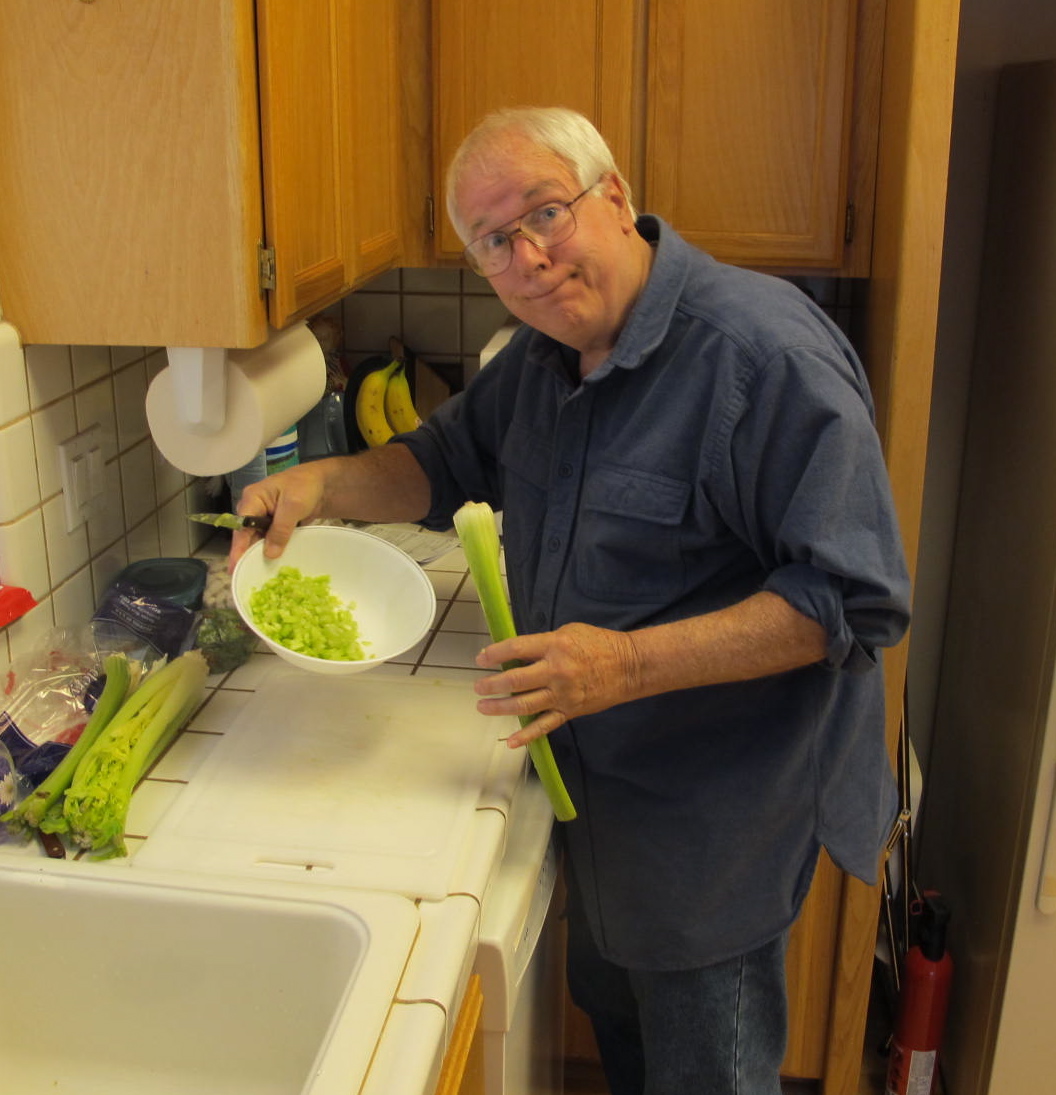
Dick is the cut up here with the celery

Dick is the cut up here with the celery

He had a green thumb with the parsley.

He had a green thumb with the parsley.

Me with the cioppino pot with paint buckets inside.

Me with the cioppino pot with paint buckets inside.

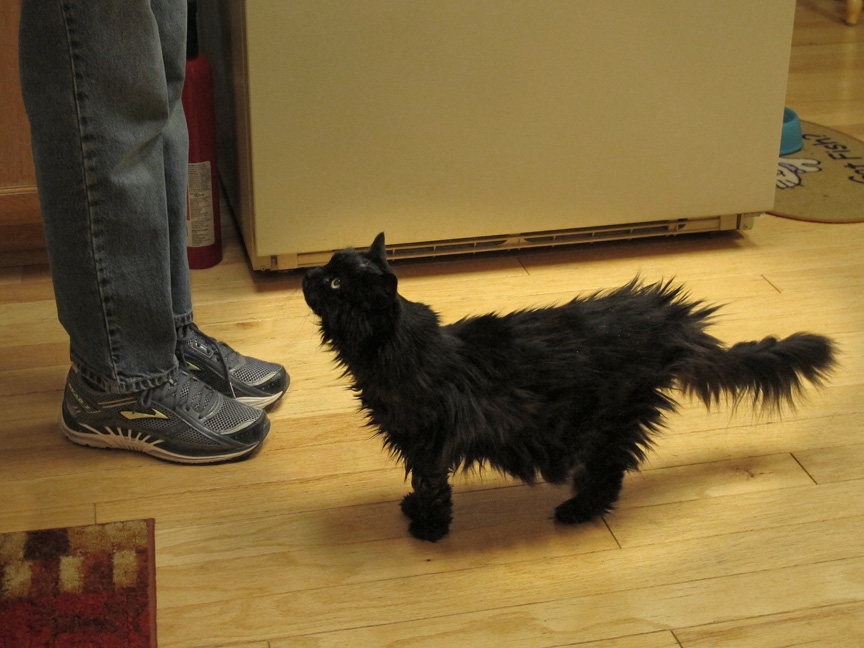
We stirred and added and stirred some more, all while BC waited around for a handout…except that she doesn’t like crab. What a crazy cat!

We stirred and added and stirred some more, all while BC waited around for a handout…except that she doesn’t like crab. What a crazy cat!

While the pot was simmering, we prepared the crab

While the pot was simmering, we prepared the crab

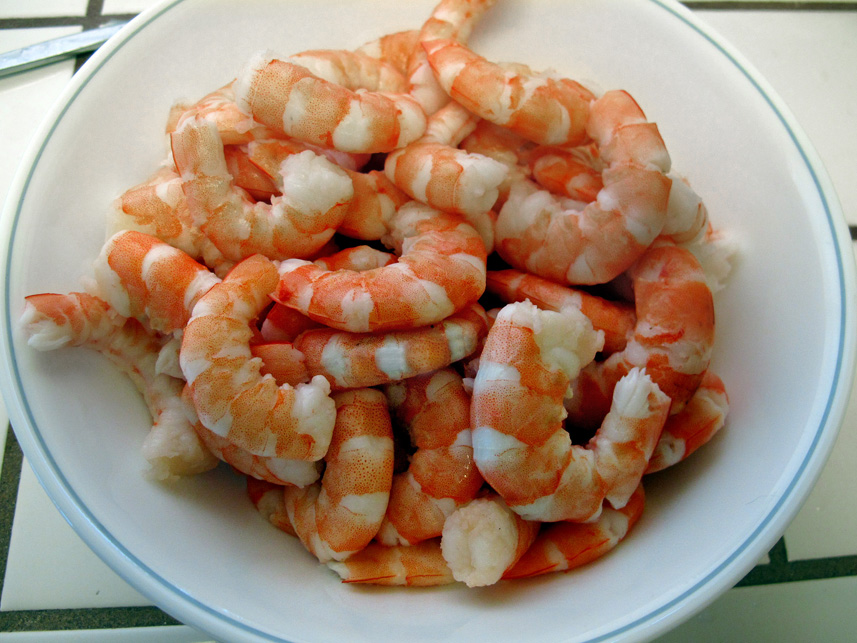
...and the shrimp

…and the shrimp

When the sauce was just right, we added the seafood and stirred some more. At just the right moment, Scott came over with his truck and carted the cioppino pot over to Jolee’s house where the Fiesta was to take place. There just isn’t enough dining area in my house for 15 people.

I also want to show you that I donned the appropriate attire for the Fiesta in wearing my new CJ’s Steak and Seafood t-shirt (not from Italy, but rather Princeville, Kauai)

I also want to show you that I donned the appropriate attire for the Fiesta in wearing my new CJ’s Steak and Seafood t-shirt (not from Italy, but rather Princeville, Kauai)

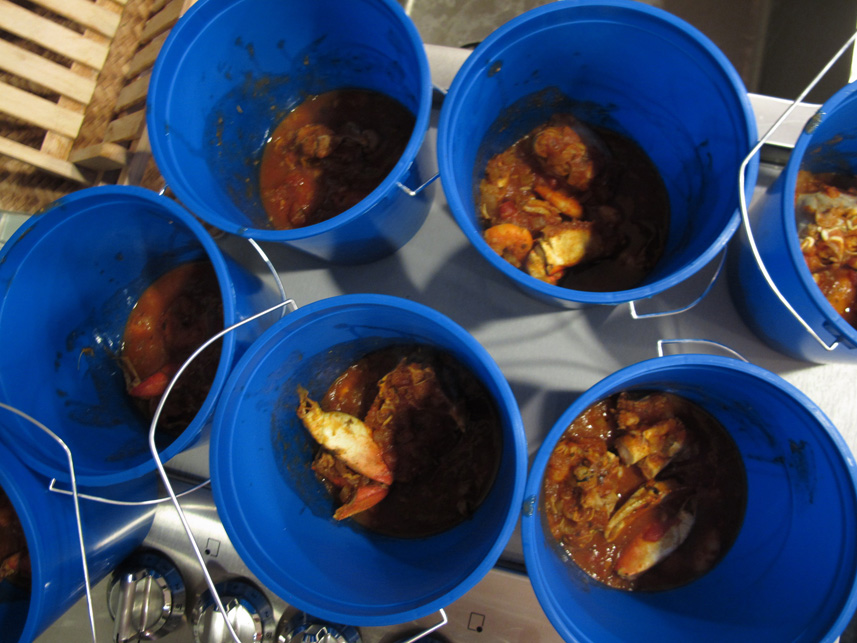
This is the finished product.

The finished product.

Cioppino servings in paint buckets, ala Baptista Cioppino Feed. They had red buckets, but I couldn’t find them. I also wanted to have lobster bibs but I couldn’t find any place in Carson City that carried them.

Cioppino servings in paint buckets, ala Baptista Cioppino Feed. They had red buckets, but I couldn’t find them. I also wanted to have lobster bibs but I couldn’t find any place in Carson City that carried them. Next year?

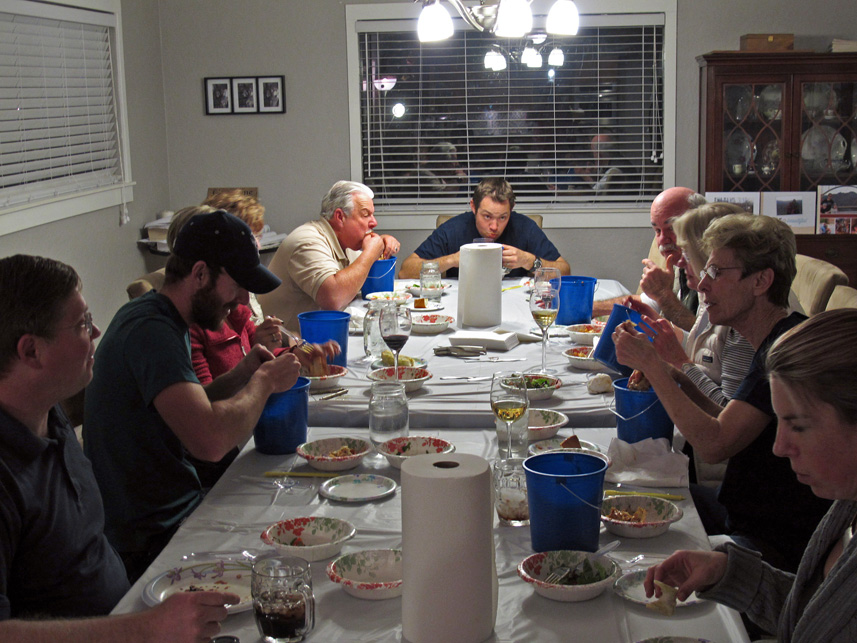
After we were all served, we all dug in, fingers and all and supped with delight. You can see that no one was holding back.

After we were all served, we all dug in, fingers and all and supped with delight. You can see that no one was holding back. We’re already looking forward to the Third Annual Cioppino Fiesta.

After dinner, the little kids went into the TV/living room to play video games. Dick got a cute picture of them playing.

Note Dalan has his own game chair while Megan made her own poor man’s version constructed of a cardboard box. Pretty ingenious, I think.

Note Dalan has his own game chair while Megan made her own poor man’s version constructed of a cardboard box. Pretty ingenious, I think.

Monstro, the dog, chilled out with his ball. A dog’s life is tough at the Tristao house

Monstro, the dog, chilled out with his ball. A dog’s life is tough at the Tristao house

Dick caught a picture with a bit of frost on the sagebrush in the open space in back of my house. It’s a pretty sight at dawn…if you like that sort of thing. Good thing I do.

The next morning, Dick caught a picture with a bit of frost on the sagebrush in the open space in back of my house. It’s a pretty sight at dawn…if you like that sort of thing. Good thing I do.


It was back to reality the next morning with a doctor’s appointment and then a tour at the museum. But Dick and I went out to breakfast one last time at Mom and Pop’s, a small café across the street from the NV State Legislature building. The food is good and not pricey.

They serve just about the world’s largest cinnamon rolls as witnessed by this picture. This one filled the entire entrée sized “to go” box. They are pretty good!

They serve just about the world’s largest cinnamon rolls as witnessed by this picture. This one filled the entire entrée sized “to go” box. They are pretty good!

Thus endeth the Cioppino Fiesta Saga. It was a lot of fun and I’m so glad the Baptista family had their Cioppino Feeds and that I got the recipe to continue enjoying this terrific food. Hooray!!! (or Ale! in Italian)

*For those of you not familiar with the Baptistas. They are the family who so generously donated their son, Tim’s, heart that allowed Bob to enjoy the Gift of Life for more than 8 years.  Their original Cioppino Feeds plus a Memorial Golf tournaments were the main vehicles they used to create endowed scholarships in Tim’s memory at Sacred Heart Cathedral Prep School in San Francisco.  They are all very special people.


Ash Meadows Wildlife Refuge And Death Valley Adventure November 10 to 19, 2014

23 Nov

Ash Meadows National Wildlife Refuge was named after the galleries of ash trees described in expedition notes from 1893.  This desert oasis, a very rare and unique ecosystem, is where I was from November 10 to 14 and where I learned a lot about a Mojave oasis.

            Top reasons to visit Ash Meadows National Wildlife Refuge!

  1. It’s the largest remaining oasis in the Mojave Desert.
  2. Nearly 30 species of plants and animals that don’t exist anyplace else on earth (referred to as endemic species).
  3. Ash Meadows has the highest concentration of endemic species in the United States.
  4. See relict species of desert fish that have existed here since mammoths drank from these very springs.
  5. Have you ever heard of fossil water?  The water here is known as fossil water because it comes from melted ice from the last ice age.
  6. This is a photographer’s paradise where ice blue spring pools are a stark contrast against the harsh desert landscape.
  7. Ash Meadows is recognized internationally as an important wetland.
  8. The mysterious Devil’s Hole over 500 feet deep and the bottom has never been found.
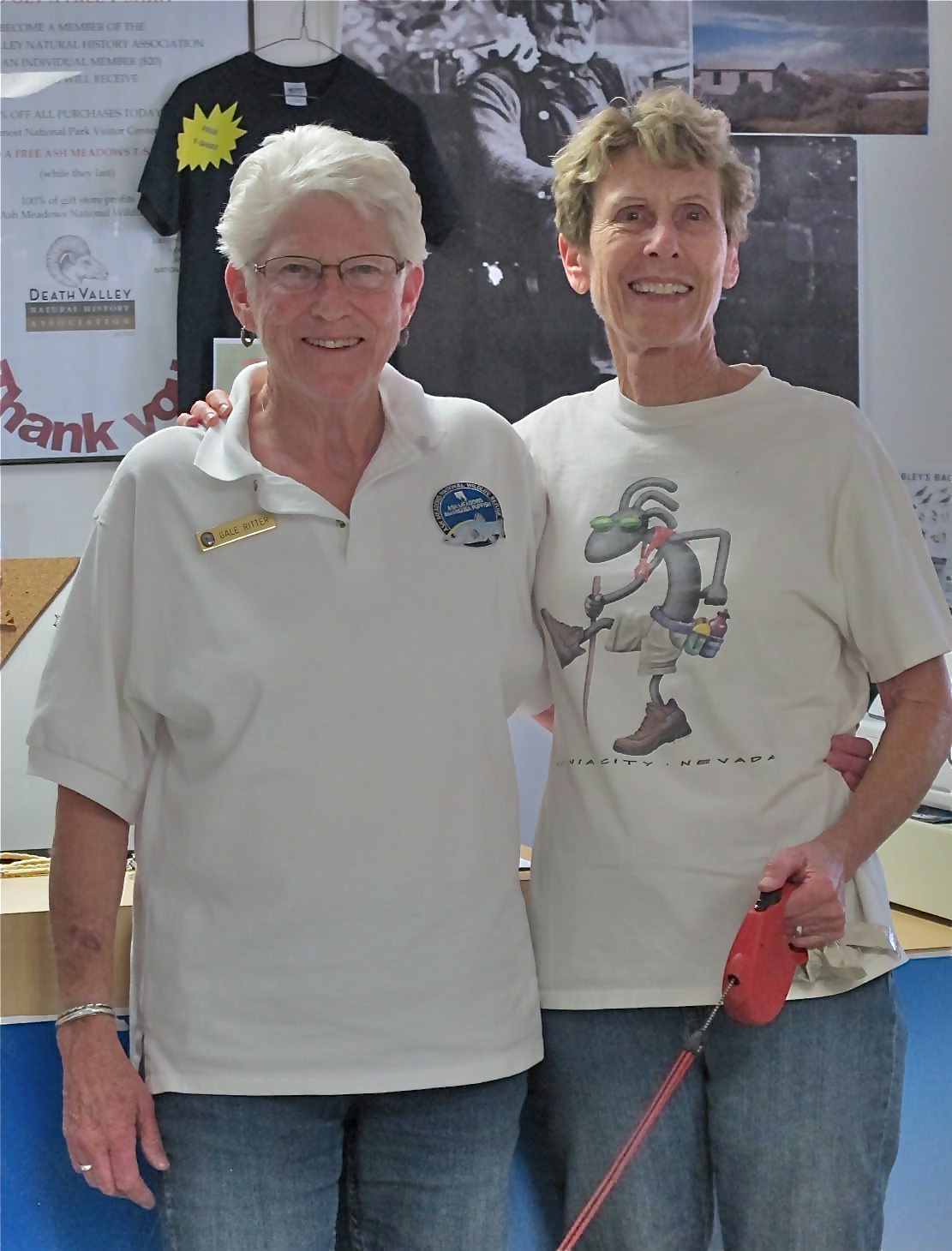
  9. My college buddy and roomie, Gale Ritter, is working/volunteering in the Visitor’s Center and invited me to visit her for a few days.

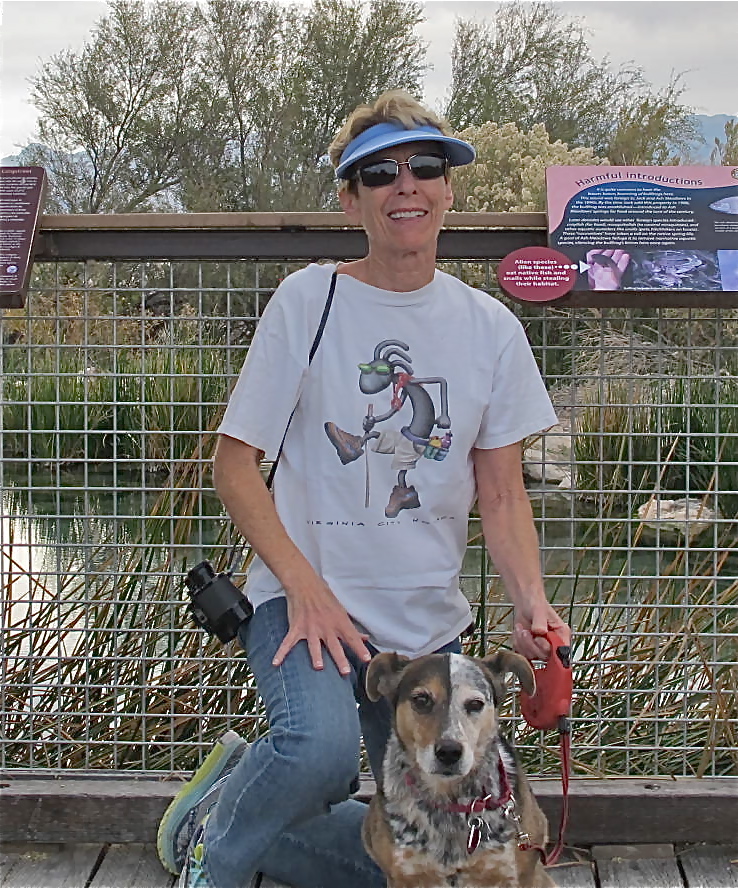
    Gale and me in the Visitor's Center

    Gale and I in the Visitor’s Center

Gale had to work in the visitor’s center the first full day that I was there, so I took her dog, Sissy, with me to check out some of the highlights of the Refuge. What a great place! You’d never know it was there if you were zooming along the highway and didn’t take time to go on some dirt roads.  We went to see Point of Rocks Boardwalk and Kings’ Spring where some Ash Meadows Amargosa pupfish live. They are often referred to as living fossils because they have survived a landscape changing from a moist and sub-tropical climate to a desert and have adapted to very harsh conditions such as heat, salt and poorly oxygenated water.

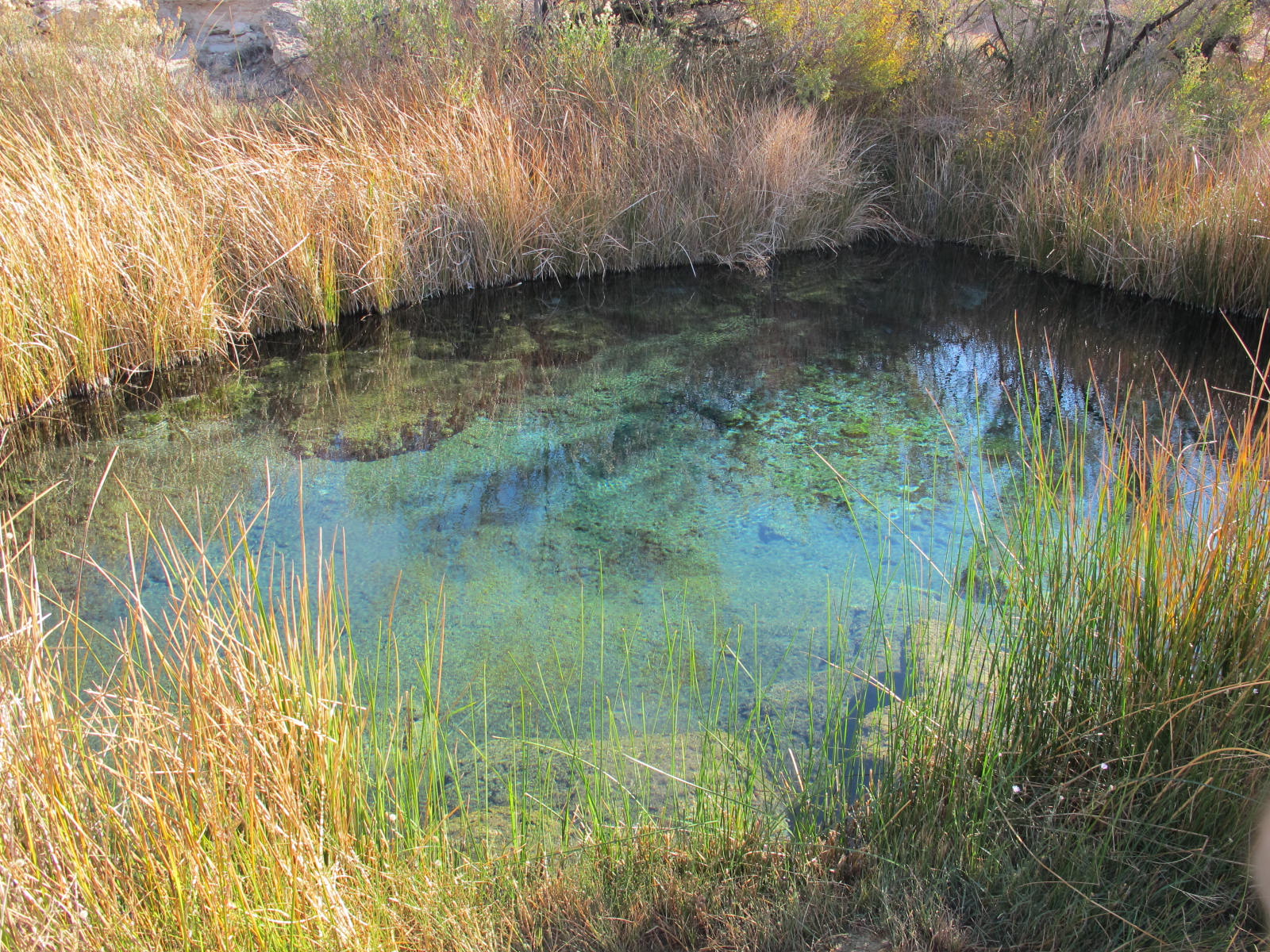
Kings' Spring is perhaps 20 to 25’ in diameter and hosts some of the pupfish as well as crayfish and other predators of the pupfish.

Kings’ Spring is perhaps 20 to 25’ in diameter and hosts some of the pupfish as well as crayfish and other predators of the pupfish.

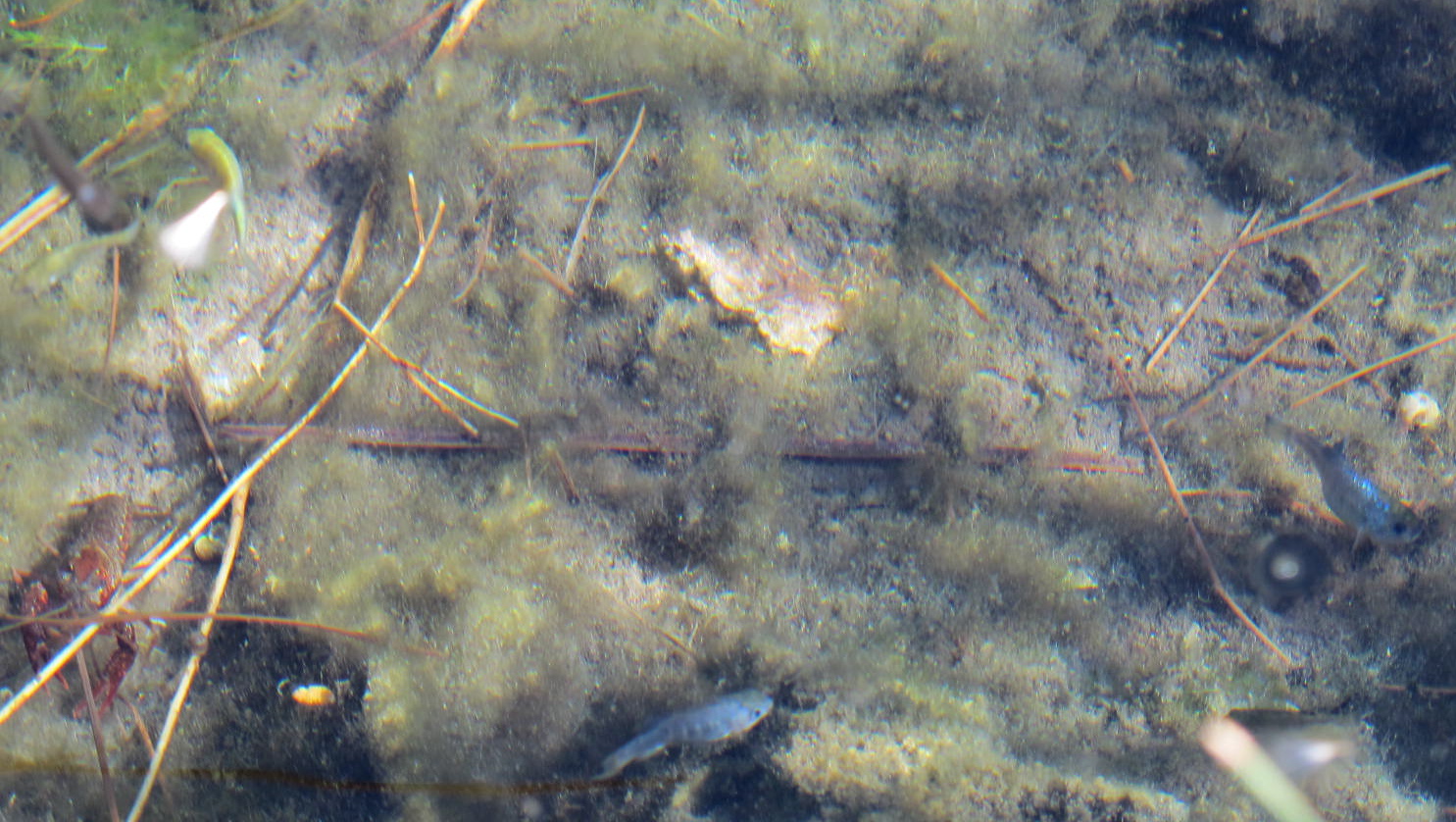
 This picture has a crayfish in the lower left corner along with a greenish pupfish and the males that have a blue tinge to them. I thought it was pretty exciting to see these fish that have survived so many challenges.

Look for the reddish crayfish in the lower left corner along with a greenish pupfish and the males that have a blue tinge to them. I thought it was pretty exciting to see these fish that have survived so many challenges.

Native Americans lived in Ash Meadows for thousands of years, settling around spring pools and meadows. They hunted big horn sheep, cultivated crops and gathered pinyon pine nuts in the mountains.

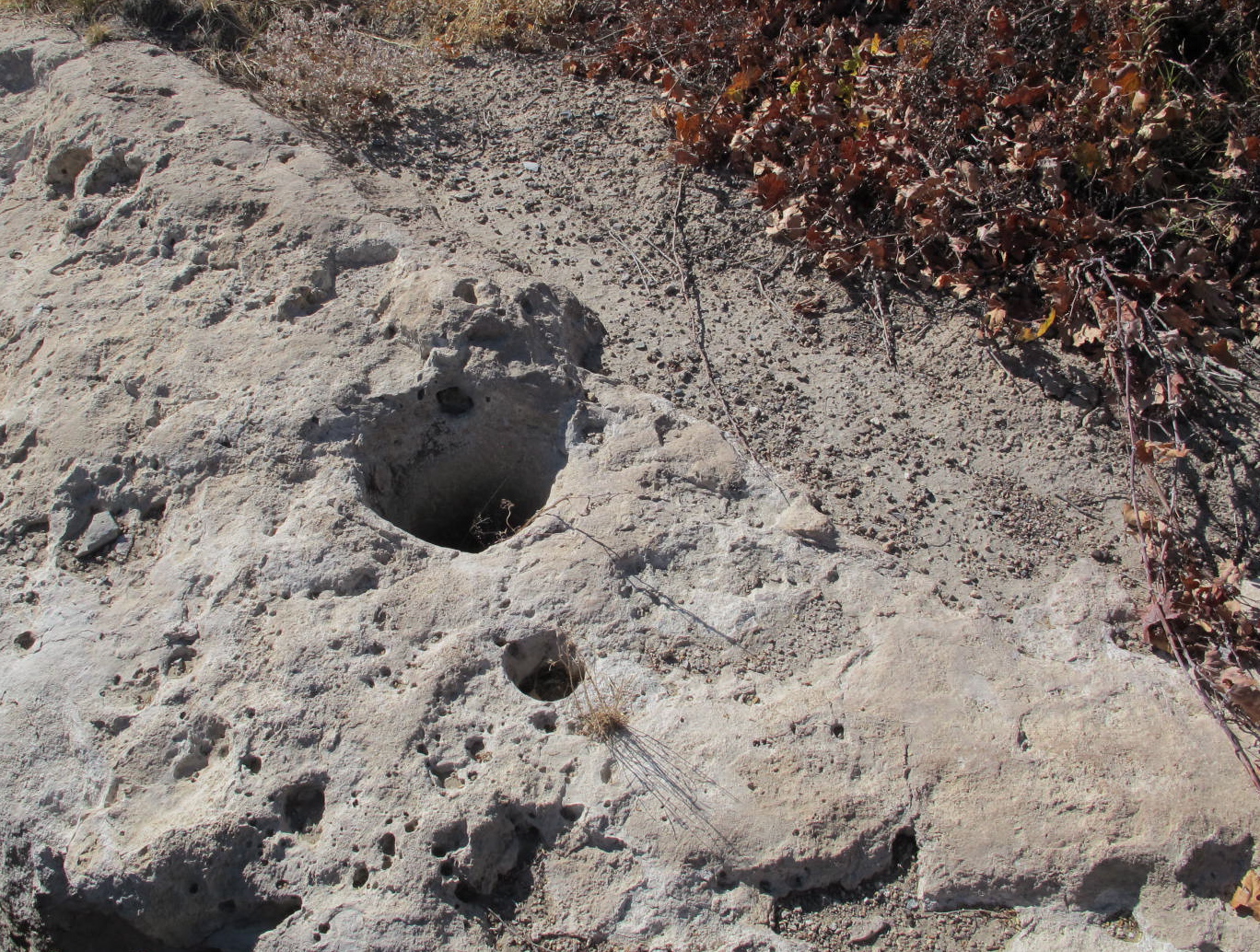
Old mortars in the rock near the spring that the Indians had used to grind their seeds and so forth. The brown plants near the mortar are wild grapes.

Old mortars in the rock near the spring that the Indians had used to grind their seeds and so forth. The brown plants near the mortar are wild grapes.

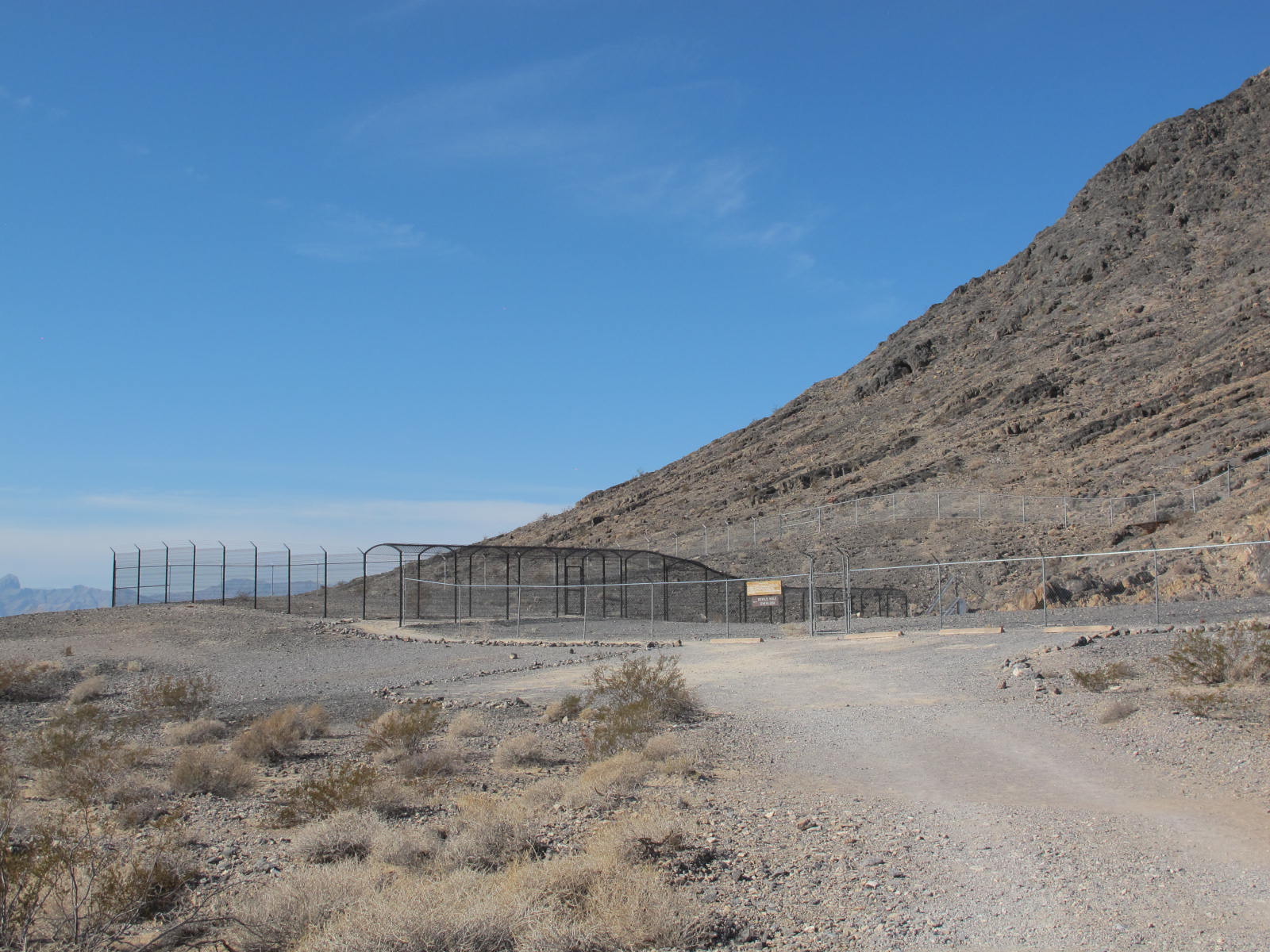
Our next stop was Devil’s Hole where the Devil’s Hole pupfish have lived for 10,000 to 20,000 years. They primarily feed and spawn on a small rock shelf near the surface of a non-descript hole.  One cannot get close to it because there is a cage around it now to prevent people from trying to capture or kill the fish.  I don’t know why people would do stupid things like that.

Devil's Hole cage with a bridge to walk on to see the actual hole

Devil’s Hole cage with a bridge to walk on to see the actual hole

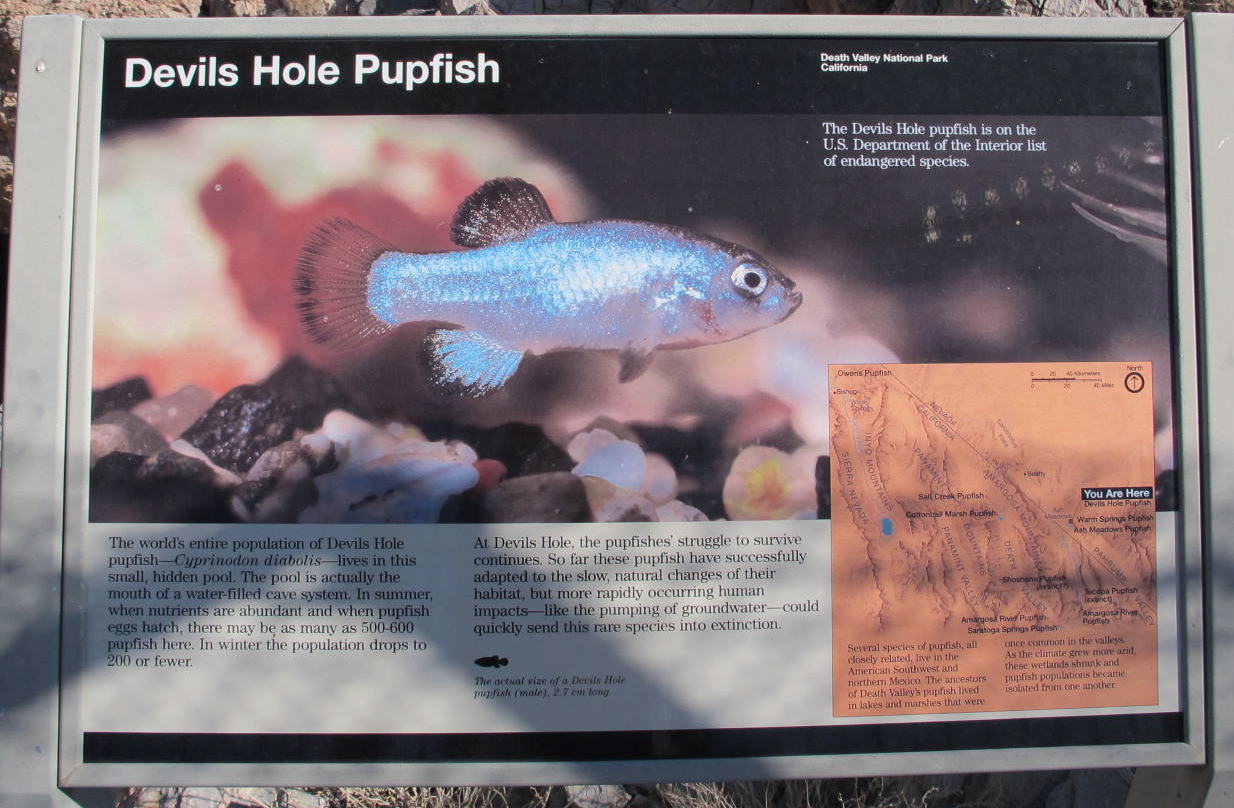
Devil's Hole sign

Devil’s Hole sign

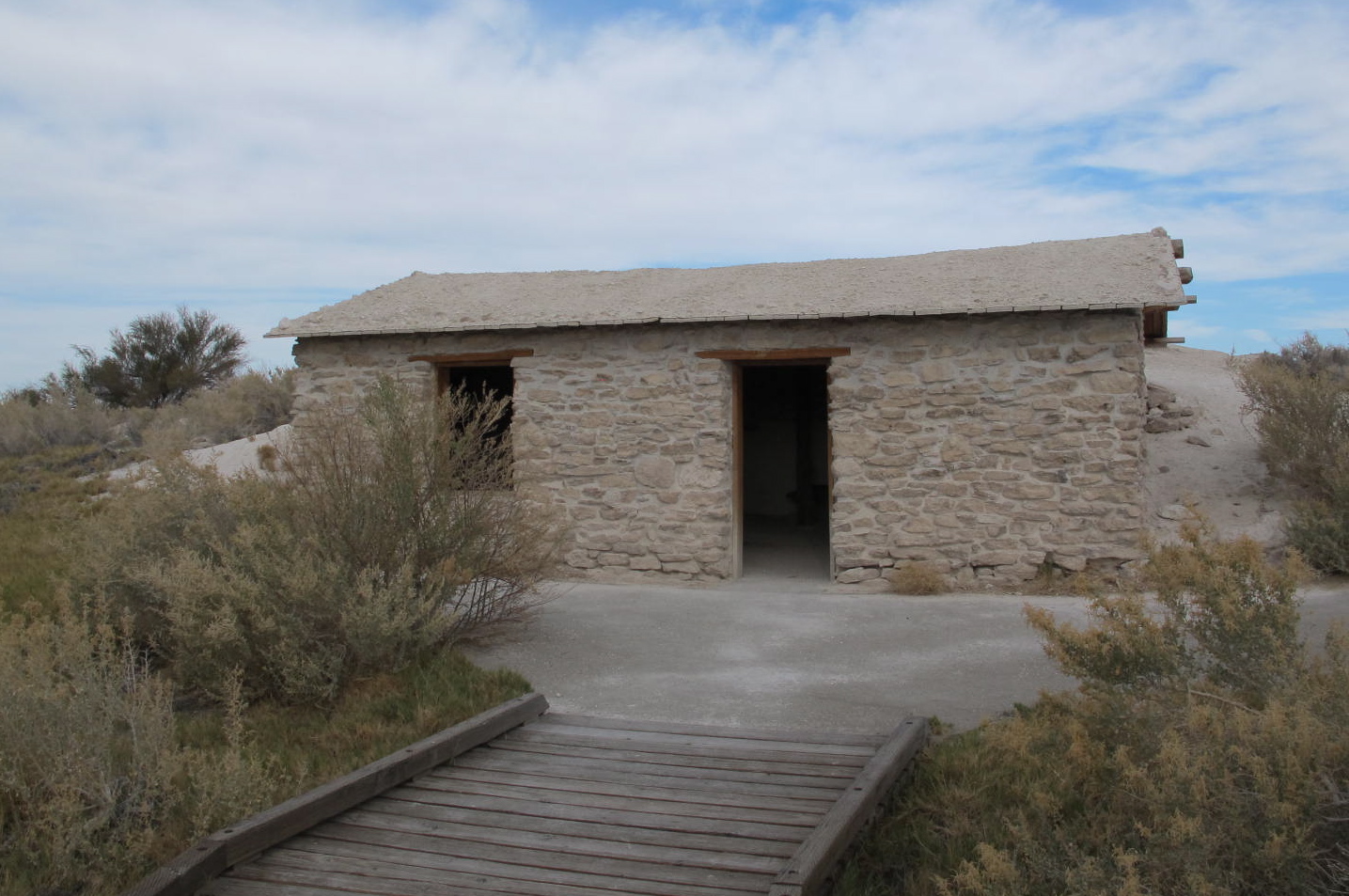
Sissy and I then drove to the Longstreet Spring, an area settled by Jack Longstreet, a frontiersman who settled there with his wife in 1895.  He built a stone house in front of a cave in a spring mound.

Jack Longstreet's stone house with the fossil spring mound to the right

Jack Longstreet’s stone house with the fossil spring mound to the right

The back of Jack’s cabin is built into a low white hill known as a fossil spring mound. Slow flowing springs trap wind-blown sediments in the surrounding mud and plants. A mound forms. Water pressure forces the spring to the top of the new mound. The cycle continues and more sediment gathers so the mound grows taller and taller. Eventually the spring’s pressure is not enough to overcome the mound and the water stays underground and comes out elsewhere.

Sissy and I with the Longstreet Spring in the background

Sissy and I with the Longstreet Spring in the background

Sissy and I also traversed the Crystal Spring boardwalk near the visitor’s center. I thought this and the other boardwalk areas were very well done in explaining what is going on with the flora and fauna of the area. As I said, I learned a lot while at Ash Meadows.

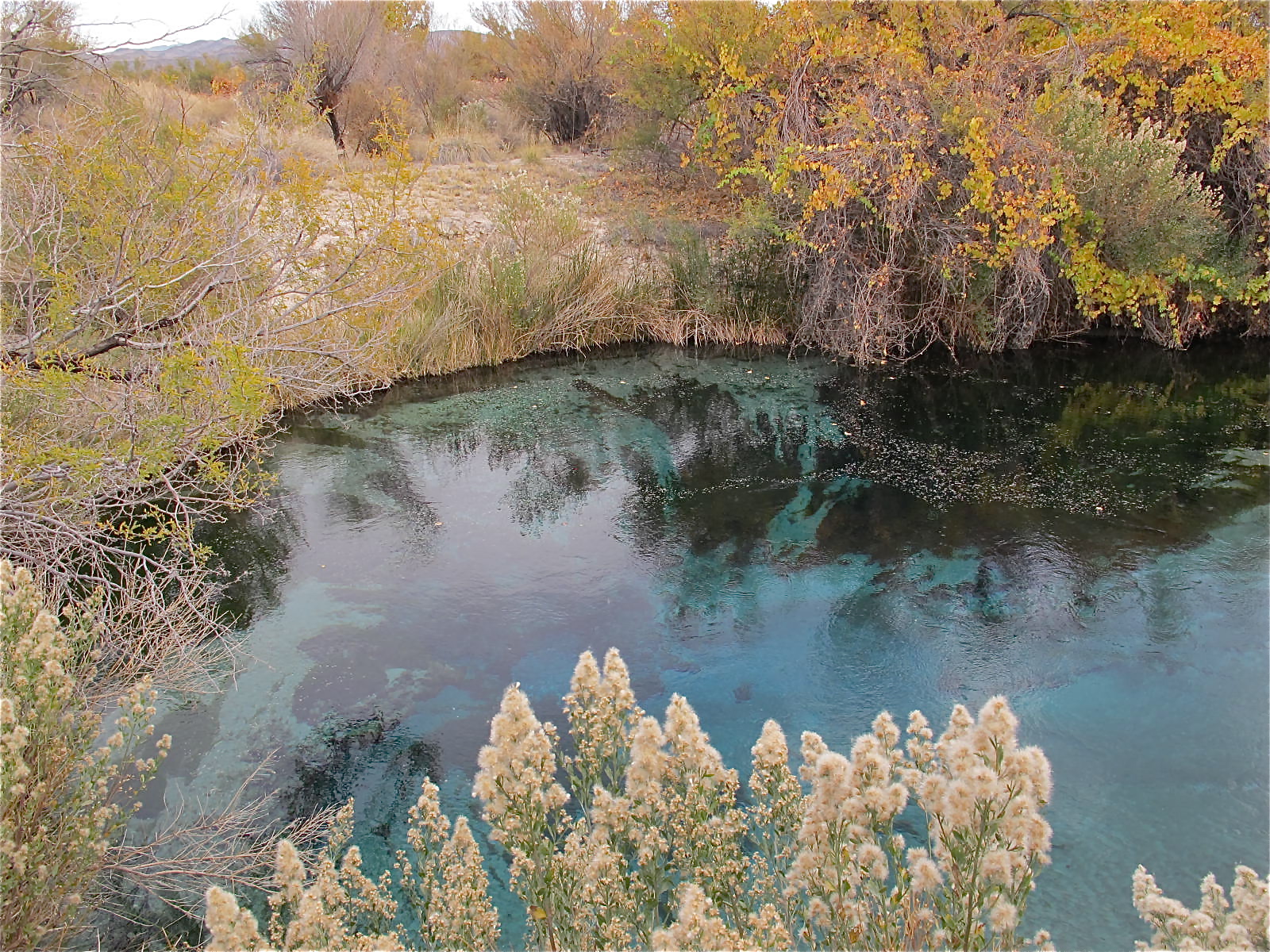
Crystal Spring out of which flow 2800 gallons of water every minute

Crystal Spring,  out of which flow 2800 gallons of water every minute

Crystal Spring is about 15 feet deep and is a pretty blue because of dissolved limestone in the water that reflects more blue light.  This water has been slowly collecting in limestone bedrock for thousands of years, forming an aquifer. The water from Crystal Spring flows about 2 miles to Crystal Marsh, an important feeding ground for migratory birds. Nearly all the Refuge’s underground water eventually joins the Amargosa River to Badwater Basin in Death Valley, supporting plants, wildlife and people along the way.

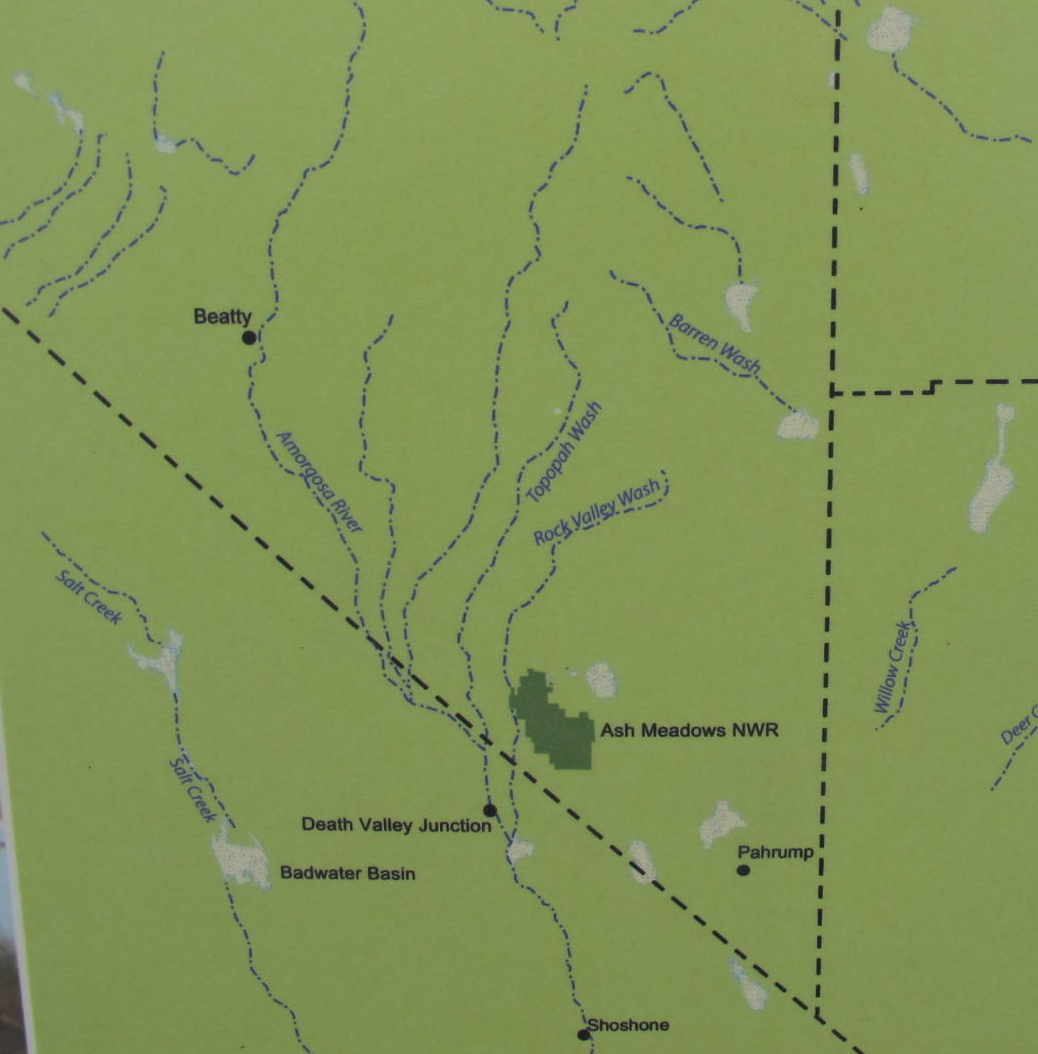
The map shows where some of the watershed is as well as little towns I will speak of.

The map shows where some of the watershed is as well as little towns I will speak of.

The next day, Gale needed to disperse Ash Meadows brochures in various areas and I tagged along. We visited places with names like Pahrump, Shoshone, and Tecopa. We had a filling lunch at Shoshone in The Famous Crowbar Café/Saloon.

Tasty, comfort food is served here

Tasty, comfort food is served here

The Shoshone Museum (an ancient gas station) is next door and sports a lot of local history. I liked the display of local ore that is/was mined in the area. They had hunks of ore with a nice explanation of each rock.

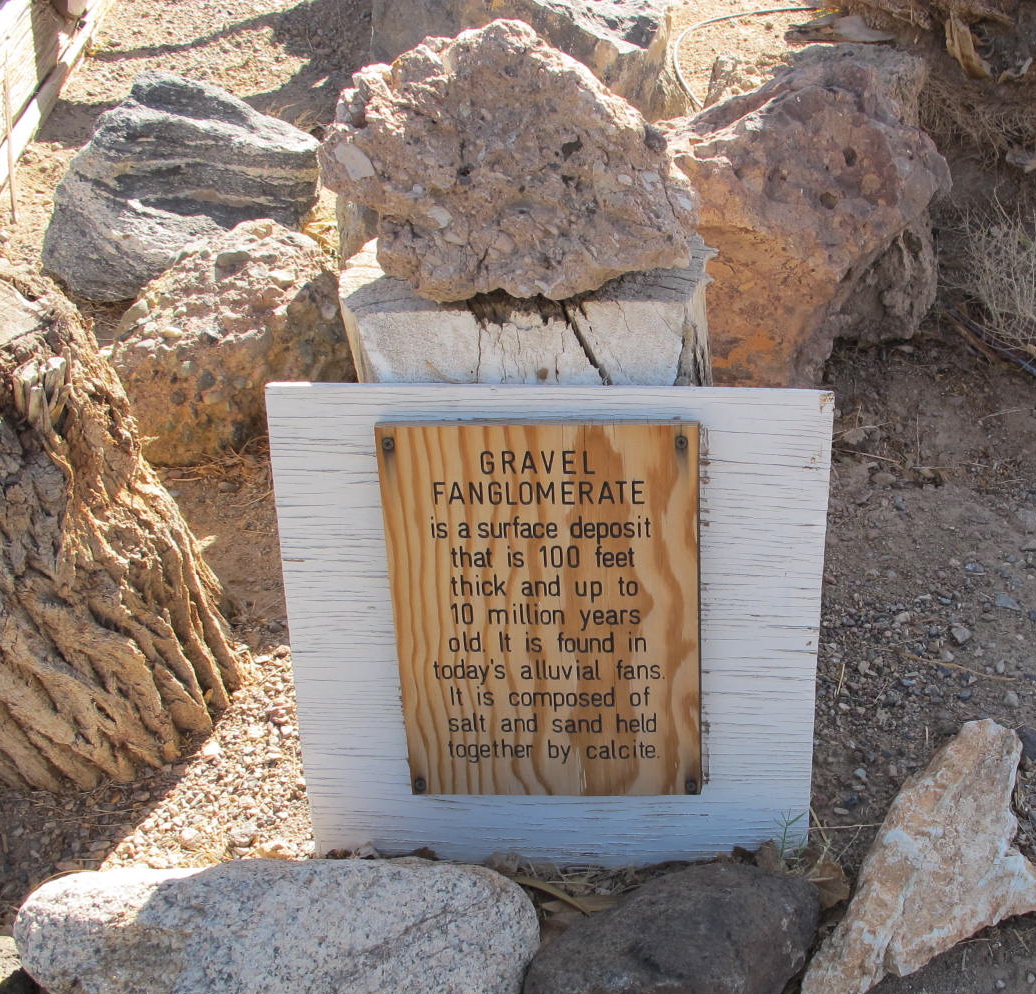
Gravel Fanglomerate is mined and used a lot in Nevada. We called it DG (decomposed granite)…at least it looks about the same.

Gravel Fanglomerate is mined and used a lot in Nevada. We called it DG (decomposed granite)…at least it looks about the same.

On the south side of Shoshone, we discovered Dublin Gulch. We drove back in a small canyon a short way and discovered caves that miners had dug and fashioned into houses in the 1920s. They even had smokestacks coming out of the top of the caves.   The black things in the foreground are rusted tin cans. One guy even had a garage dug into the dirt.

Dublin Gulch caves with smokestacks on top

Dublin Gulch caves with smokestacks on top

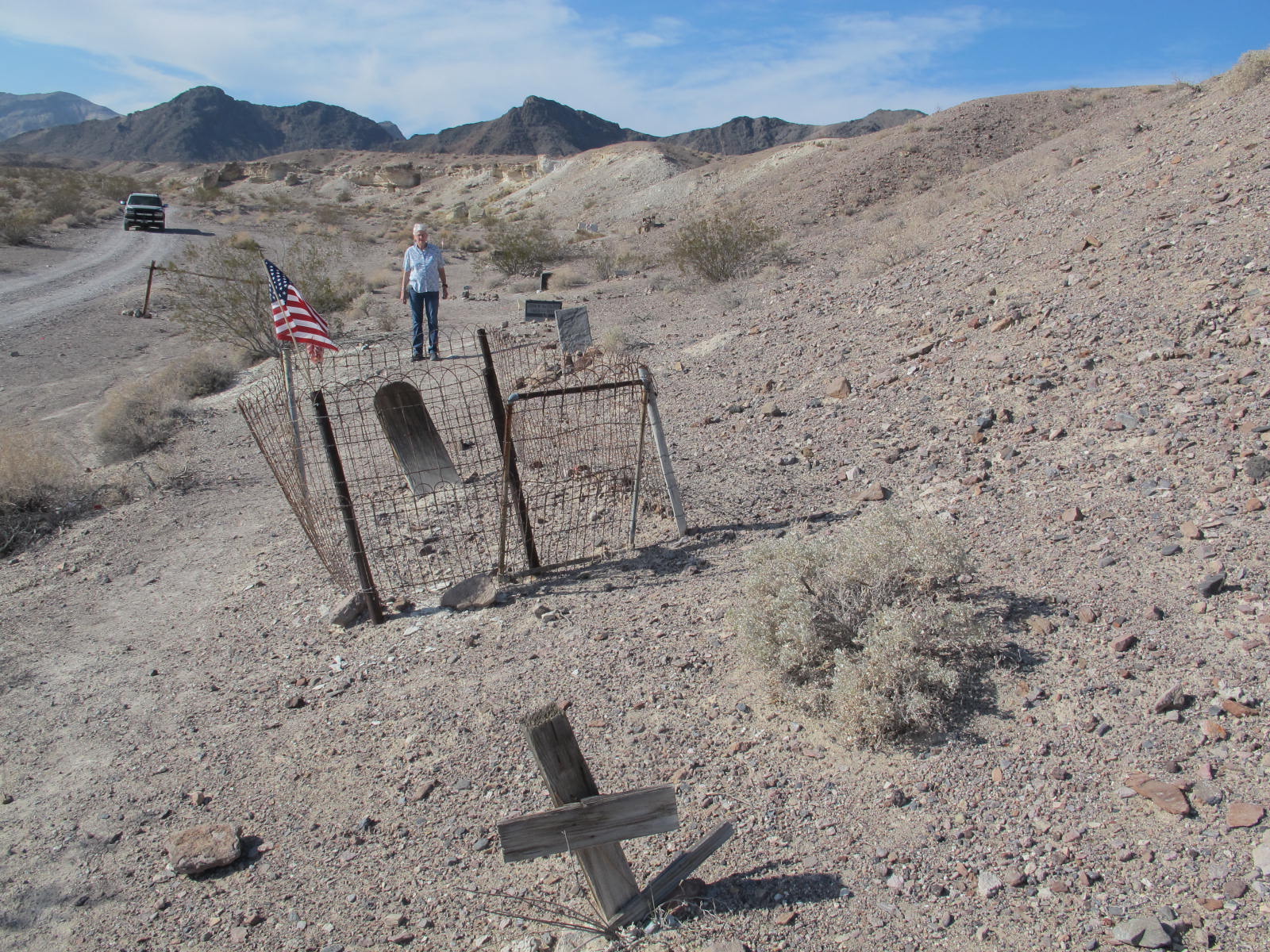
On the north side of the little canyon was a cemetery, still in use.

Usually, one sees rows of graves, but this was laid out in a linear fashion. There were perhaps, two graves beside each other before coming up against the canyon wall.

Usually, one sees rows of graves, but this was laid out in a linear fashion. There were perhaps, two graves beside each other before coming up against the canyon ridge.

Then we drove to the China Ranch Date Farm outside of Tecopa. This is an amazing place. One that I never would have guessed would be in the desert. We drove down a dirt road through a slot canyon that eventually opened up into a lush oasis-like valley. The owners grow organic dates and sell them at their gift shop along date shakes and tasty date-nut bread. We toured the ranch a bit and then hiked along one of the many nearby trails. This place is not far from the Old Spanish Trail and John C. Fremont camped in the area in 1844 on one of his expeditions. He is said to have remarked that the grazing in the valley was perfect.

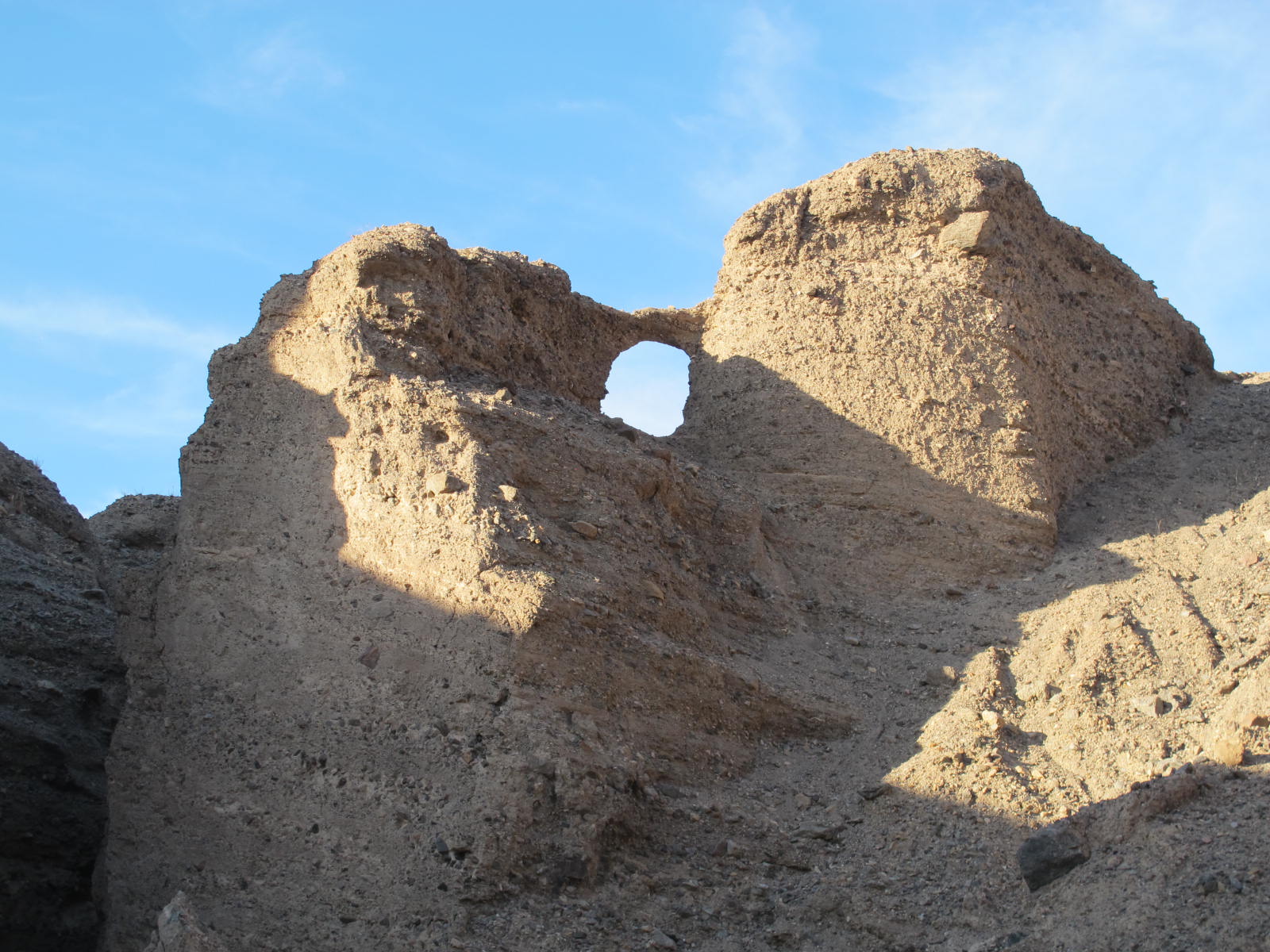
I didn’t get pictures of the lushness of the ranch but did get this arch/hole in the wall on our way out of the slot canyon.

I didn’t get pictures of the lushness of the ranch but did get this arch/hole in the wall on our way out of the slot canyon.

 On our last day together, Gale and stayed mostly in the Ash Meadows area and did a bit more exploring.

On our last day together, Gale and stayed mostly in the Ash Meadows area and did a bit more exploring.

An alkali meadow with colorful mountains and strata in the background

An alkali meadow with colorful mountains and strata in the background

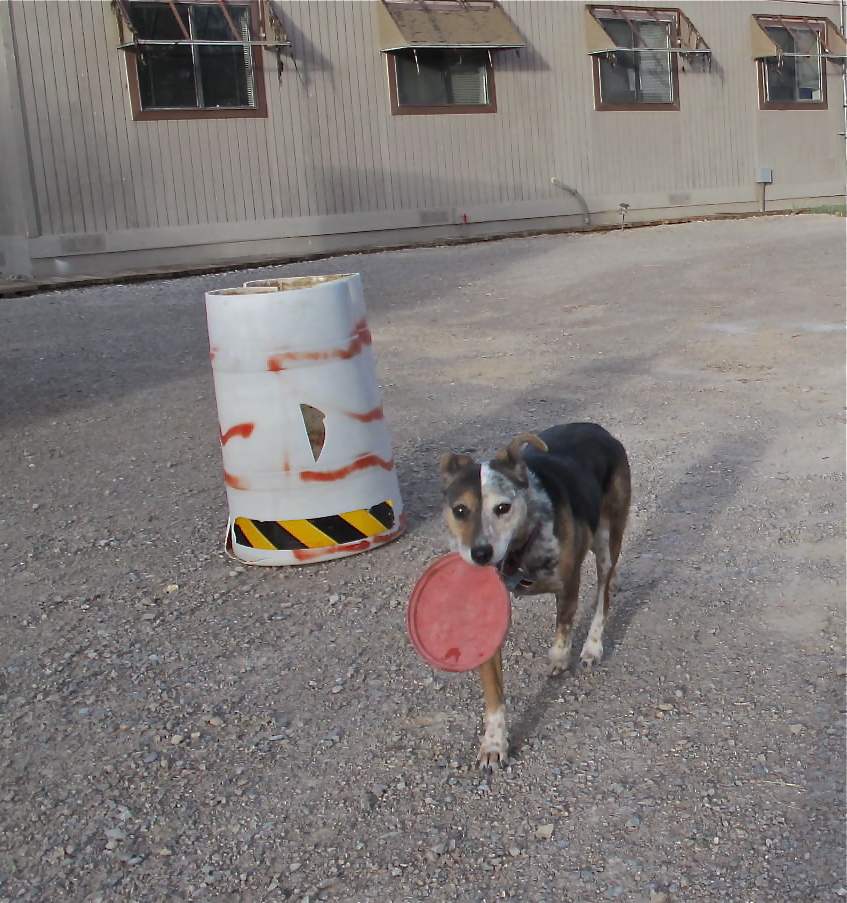
 Sissy and I played with the Frisbee a bit. I really enjoyed that and I think she did too.

Sissy and I played with the Frisbee a bit. I really enjoyed that and I think she did too.

I really enjoyed being with Gale and Sissy but all good things must come to an end. It was time to drive about an hour to Death Valley to meet the family and join their campsite at Furnace Creek.

The original plan was to go to Darwin Falls and do a major hike there but plans were changed and I arrived in time to join them in going to Hole in the Wall just off Hwy. 190. I was very glad that we had 2 trucks with 4 wheel drive as my car would have bottomed out within the first mile of going into this area. We drove almost 4 miles on a rough dirt/rocky road that was on an alluvial fan/river bed just to begin our hike.

Hole in the Wall gap

Hole in the Wall gap

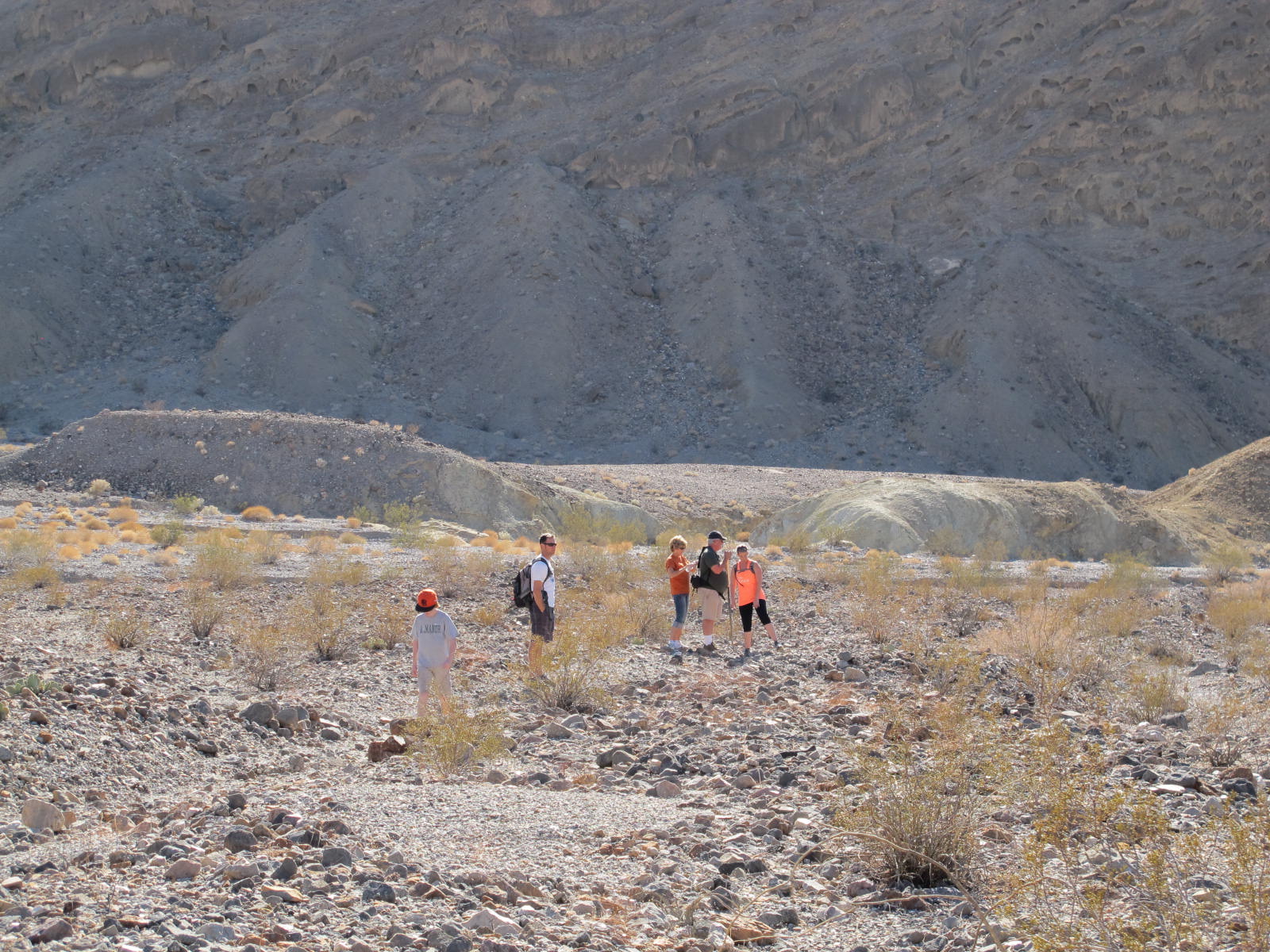
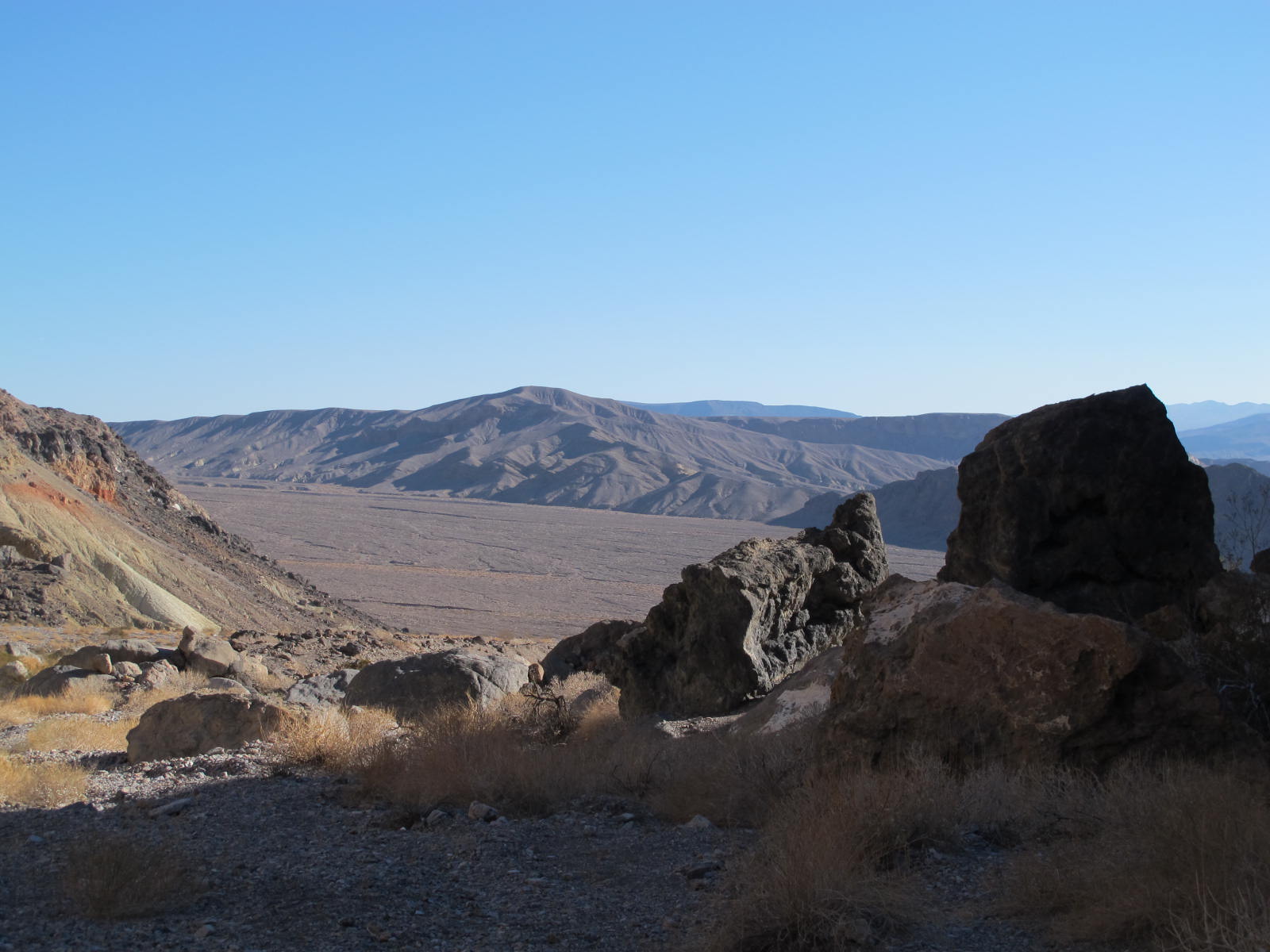
We guessed that water rushing down from the mountains kept washing and eating at that ridge you see and eventually made a cut through to make the gap. We parked at the base of that ridge and began to hike up an enormous alluvial fan (Sometimes I think that Death Valley is made up of alluvial fans. They are everywhere!) to the base of the Funeral Mountains. From there, we made a left turn into what looked like a box canyon.

Hiking up to the Funeral Mountains

Looking back toward our starting place.


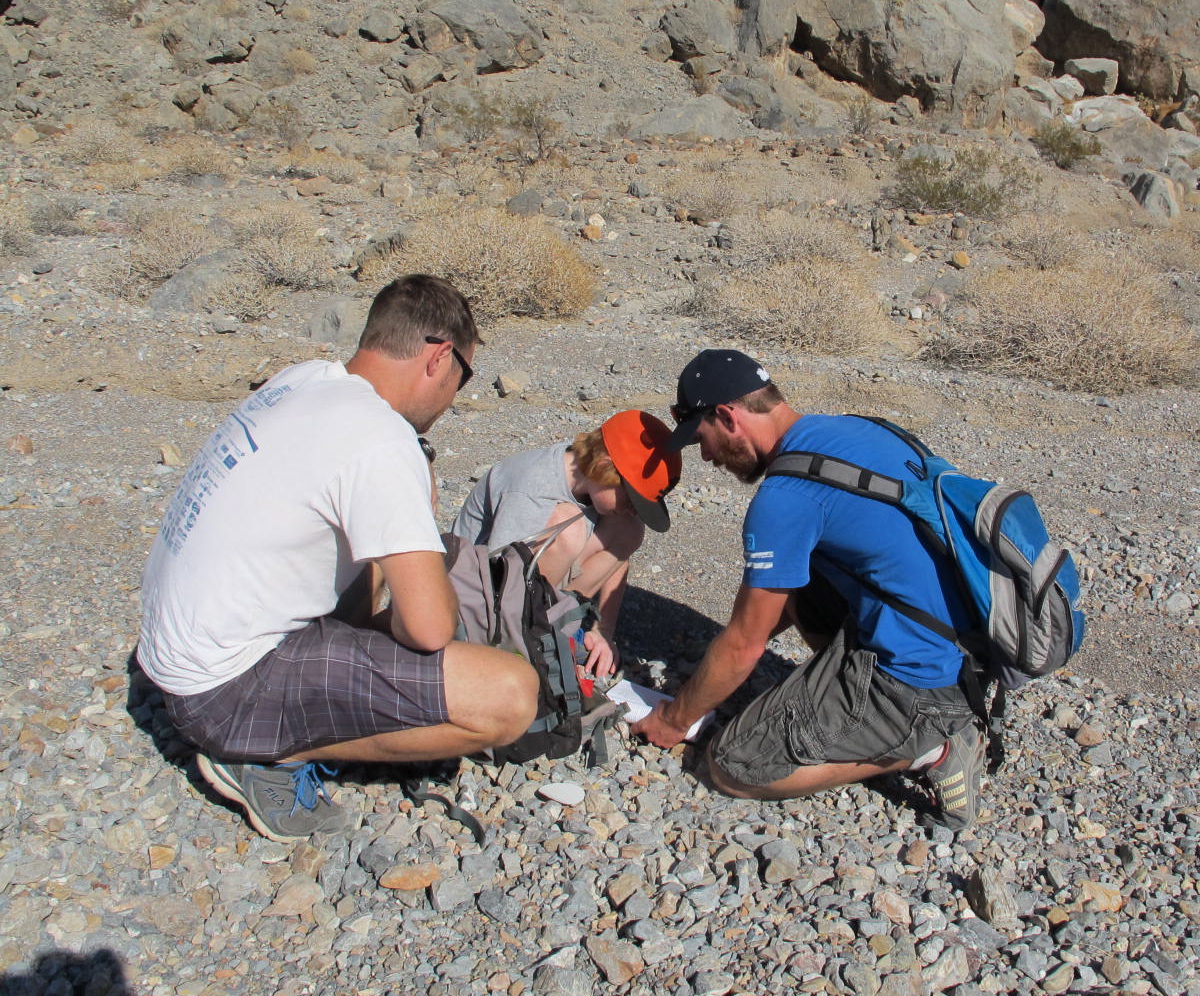
Jason, Dalan and Scott checked their hiking guide and determined the route to go.

Jason, Dalan and Scott checked their hiking guide and determined the route to go.

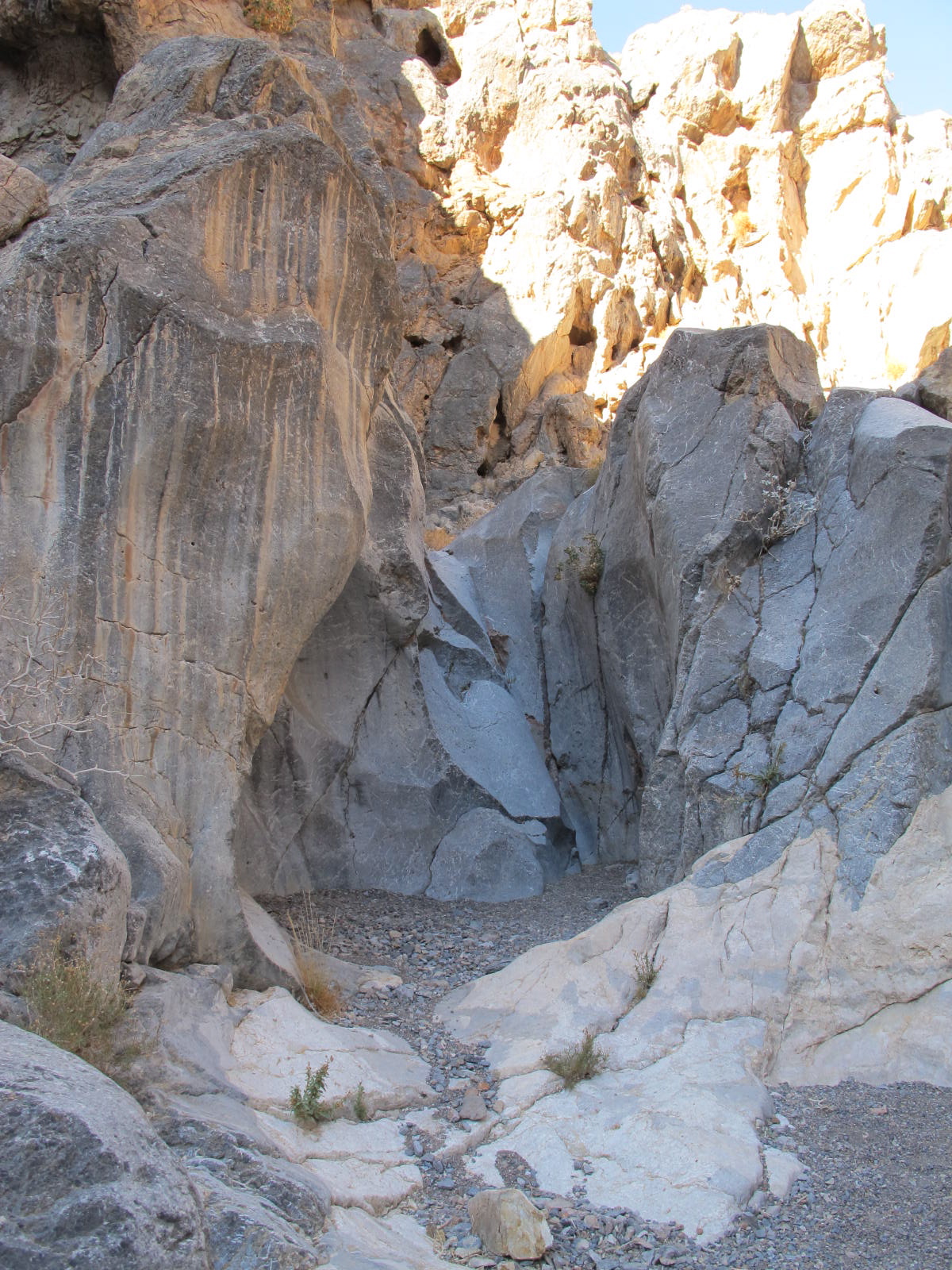
Allan and I pooped out at the mouth of a faux box canyon but Jerri and the others kept on going. The box canyon made a sharp turn and kept going into a slot canyon with 9 rock falls (meaning it was just rocks and no water at this time). Jerri and Jolee got to the first one but the boys kept going to the 6th fall. That involved a lot of climbing that Jerri and Jolee didn’t want to do. They didn’t return until almost dark which caused the rest of us a bit of consternation as it was a pretty rugged area. But they were fine and had a great time.

The first rock fall after the faux box canyon

The first rock fall after the faux box canyon.  Not something that I would have wanted to climb.

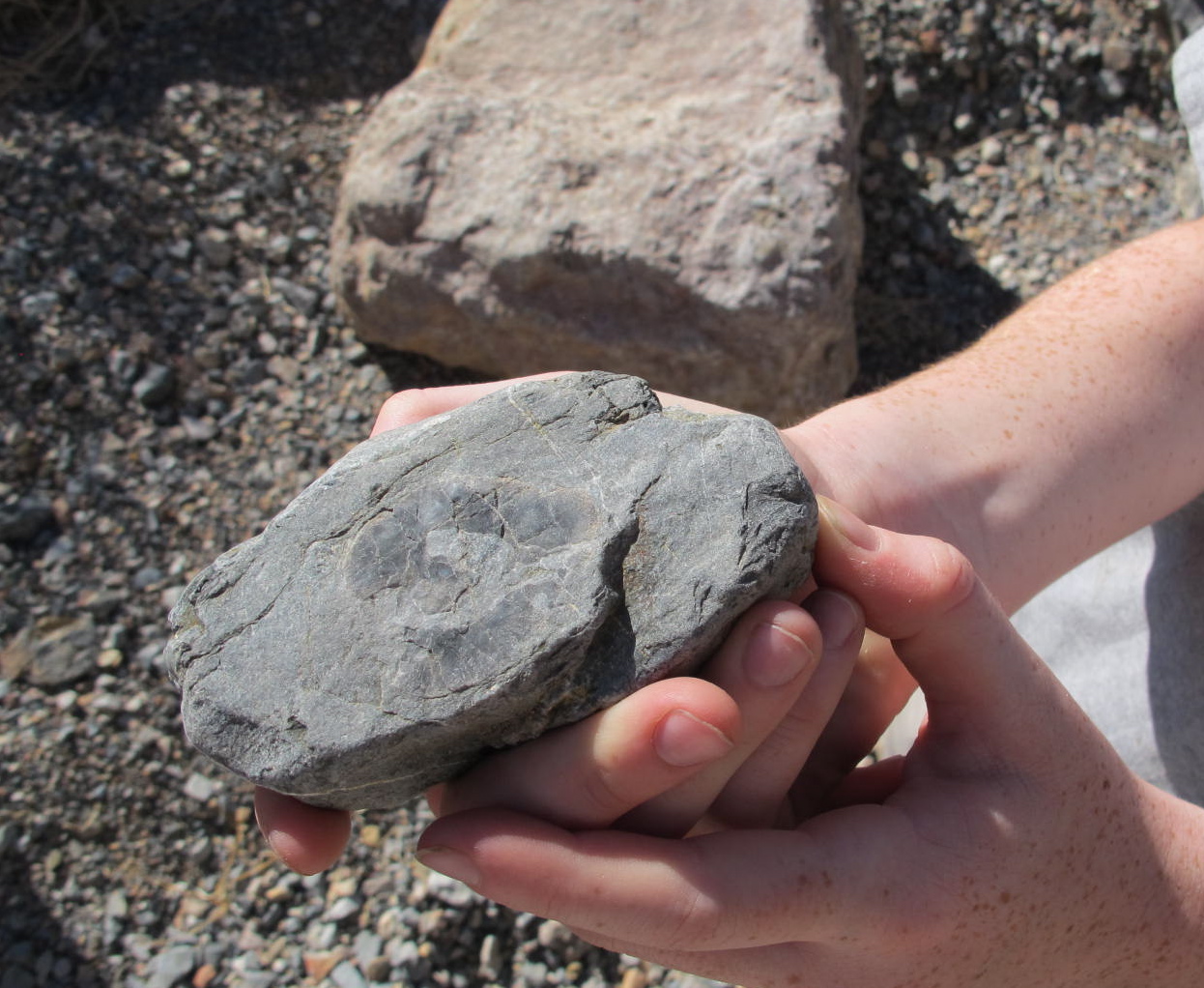
Dalan is holding a fossil that I found on the sort of trail we were following. We left it there because it’s against the rules to take anything out of the park (except for the dust in our shoes). Allan thought it might be a vertebrae from some long ago critter.

Dalan is holding a fossil that I found on the sort of trail we were following. We left it there because it’s against the rules to take anything out of the park (except for the dust in our shoes). Allan thought it might be a vertebrae from some long ago critter.

Looking from the box canyon mouth to try to show how much we had climbed from the base of the ridge in the background.

Looking from the box canyon mouth to try to show how much we had climbed from the base of the ridge in the background.

Jerri’s four legged boys were waiting for us a camp. Buddy and Max (Maxwell von Biddle when he’s in trouble).

Jerri’s four legged boys were waiting for us at camp. Buddy and Max (Maxwell Von Biddle when he’s in trouble).

We just found out that Max is not half Great Dane, but rather he’s a black mouth cur mixed with lab. Whatever he is, he’s a sweet dog who thinks everybody loves him but scares some folks due to his size. Buddy is a full-grown lab and you can see how Max sort of dwarfs him.

Another indicator of his size is his attempt to get on the bed with Jerri.

Another indicator of his size is his attempt to get on the bed with Jerri and Allan

We spent time at the Furnace Creek Resort pool that is just heavenly to swim in. It’s filled by a warm spring and isn’t chlorinated. The water is exchanged every 24 hours. We love it!

The big kids enjoying the pool.

The big kids enjoying the pool.

Megan loves to swim in it too but seems .to always want something to eat afterwards. Here she is enjoying some ice cream

Megan loves to swim in it too but seems to always want something to eat afterwards. Here she is enjoying some ice cream

 Dalan loves to be at Death Valley too. He enjoys golfing, riding his bike, swimming and playing his video games.

Dalan loves to be in Death Valley too. He enjoys golfing, riding his bike, swimming and playing his video games.

Allan's roasting the perfect hot dogs

Allan’s roasting the perfect hot dogs

Jerri getting ready to enjoy the hot dogs

Jerri getting ready to enjoy the hot dogs

We had a campfire every night at Jolee and Jason’s trailer and enjoyed some s’mores as well as other treats. Mark, Jason’s brother-in-law, brought his telescope and we all got to enjoy checking out the heavens. It was amazing to me what we could see many light years away. Mark has a great way of explaining what we saw in terms we could relate to and understand. I’m hoping to get more lessons from him one of these days.

Jerri, Allan and I toured Scotty’s Castle and were amazed again at the story told by our guide. Albert Johnson made ingenious use of hydropower that allowed the Castle to have electricity and refrigeration, making a comfortable home for everyone who lived and visited there.

The Castle is truly a treasure of Death Valley.

The Castle is truly a treasure of Death Valley.

My last full day in the Valley found us at the top of Dante’s View. Wow! What a view! Not only could we see Badwater, the lowest place in North America, but we could also see the peak of Mt. Whitney, the highest place in the Lower 48.

Looking down on Badwater in the center right of the photo

Looking down on Badwater in the center right of the photo

Jolee, Jerri and I hiked a bit around the 5475’ peak. It was fun, but a bit cold and breezy. Of course we got to fooling around a bit and had to have some pictures taken.

The Hoff sisters

The Hoff sisters

And it would not be a trip without Scott’s Pose that we all stole from him. Jolee got to laughing, thus adding more levity than usual to the Pose.

And it would not be a trip without Scott’s Pose that we all stole from him. Jolee got to laughing, thus adding more levity than usual to the Pose.

That afternoon, Allan, Dalan, Jason and I played golf on the lowest course in the world. It would have been more fun if I could have putt, but the golf holes were pretty and we saw a lot of wildlife.

I got within 20’ of this very well fed coyote when I took this picture. I wish I’d been able to get a picture of the one that ran right by Jason as he was teeing off on the 8th hole. Never a dull moment!
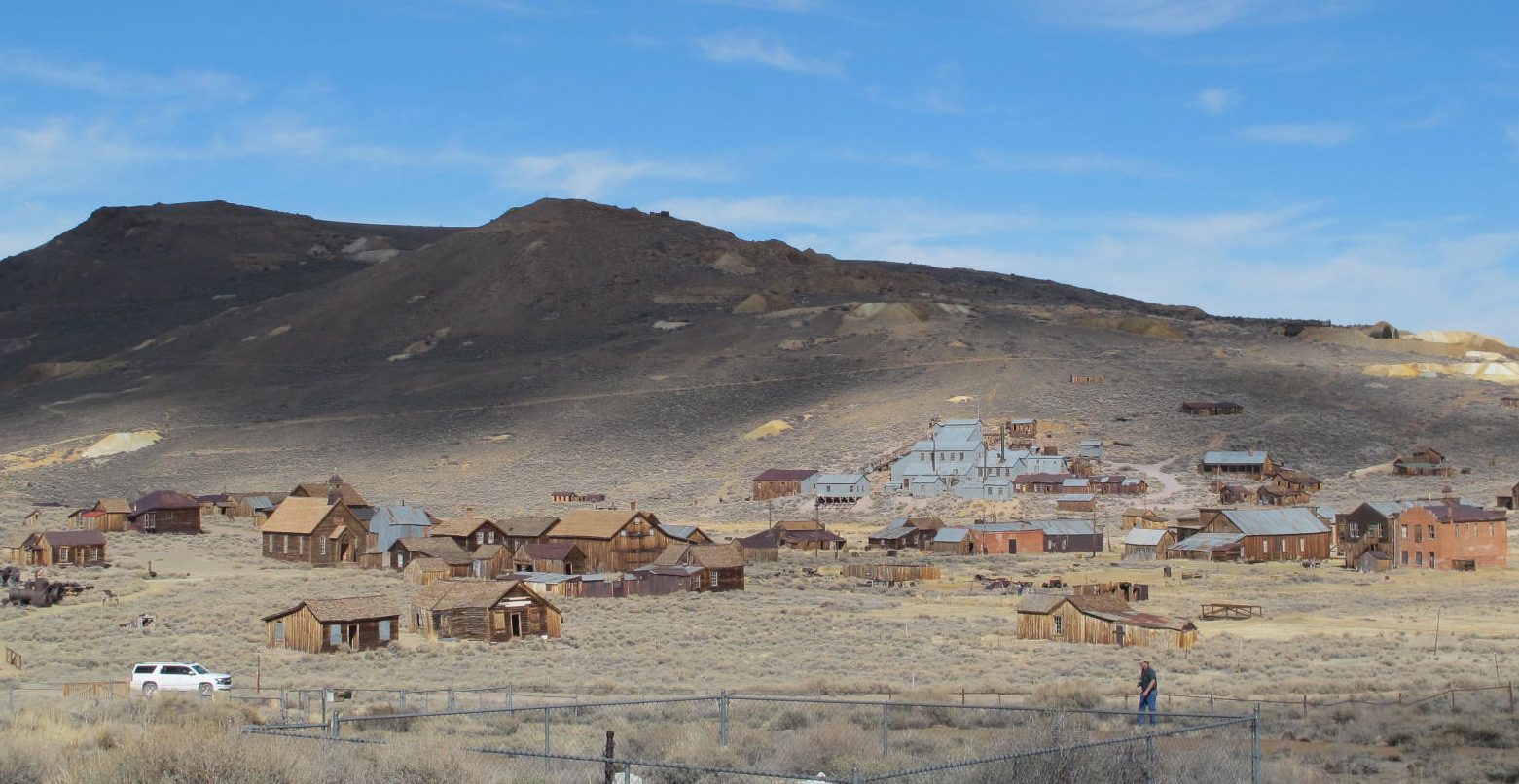
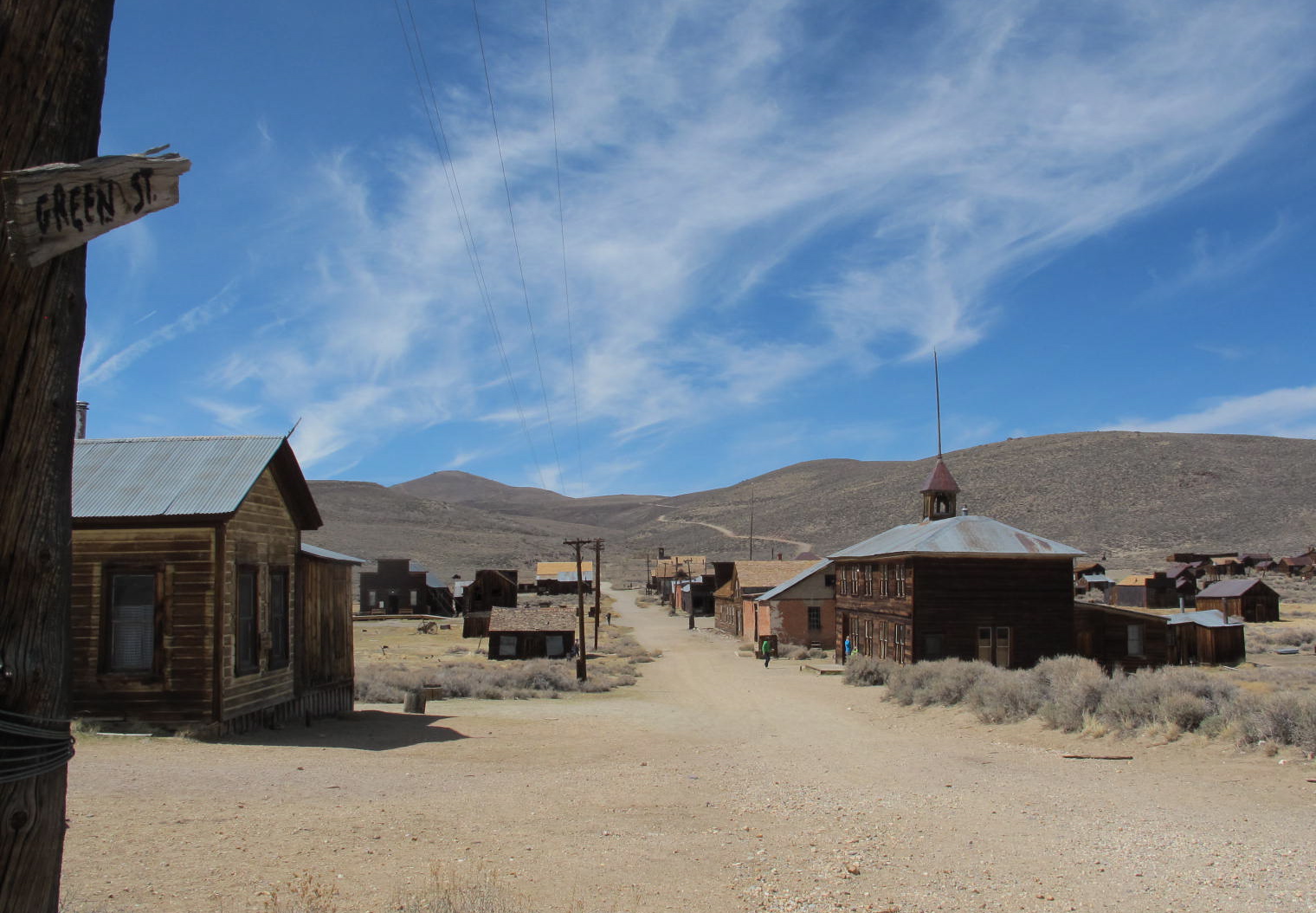
I got within 20’ of this very well fed coyote when I took this picture. I wish I’d been able to get a picture of the one that ran right by Jason as he was teeing off on the 8th hole. Never a dull moment!
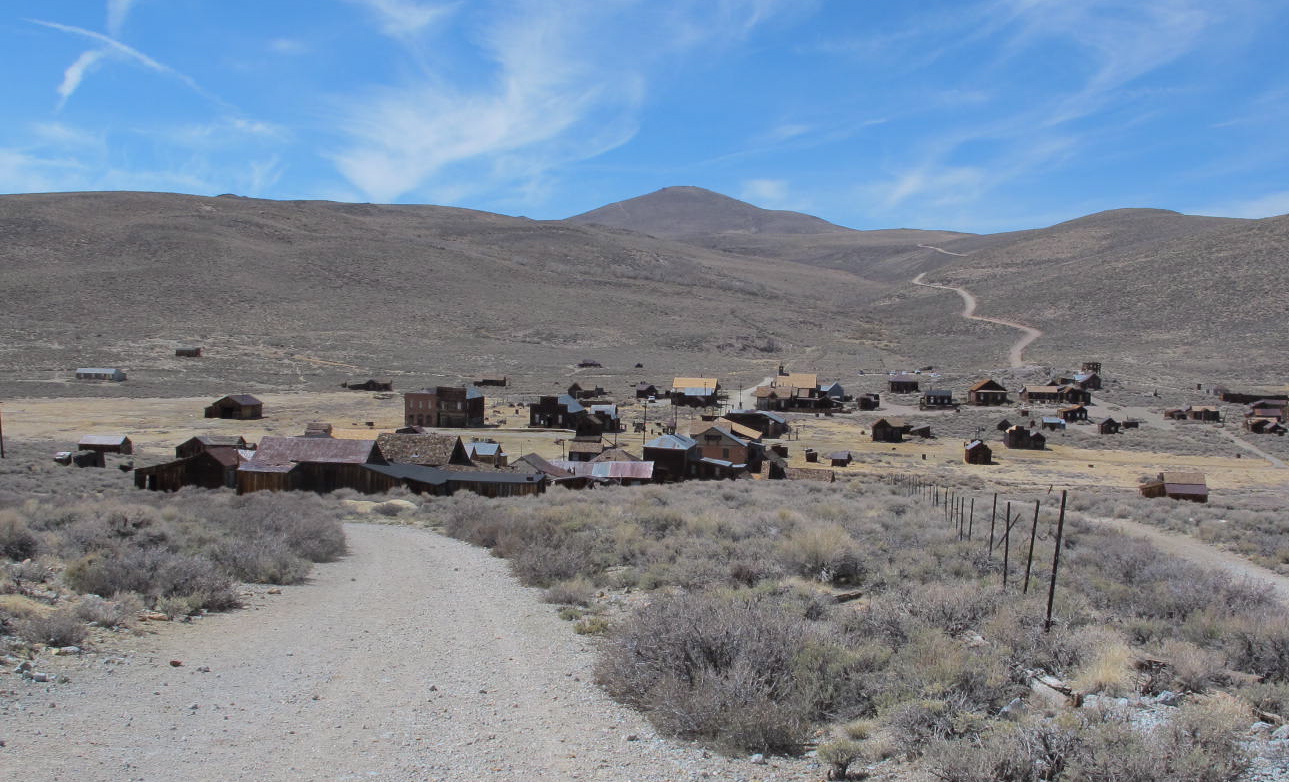
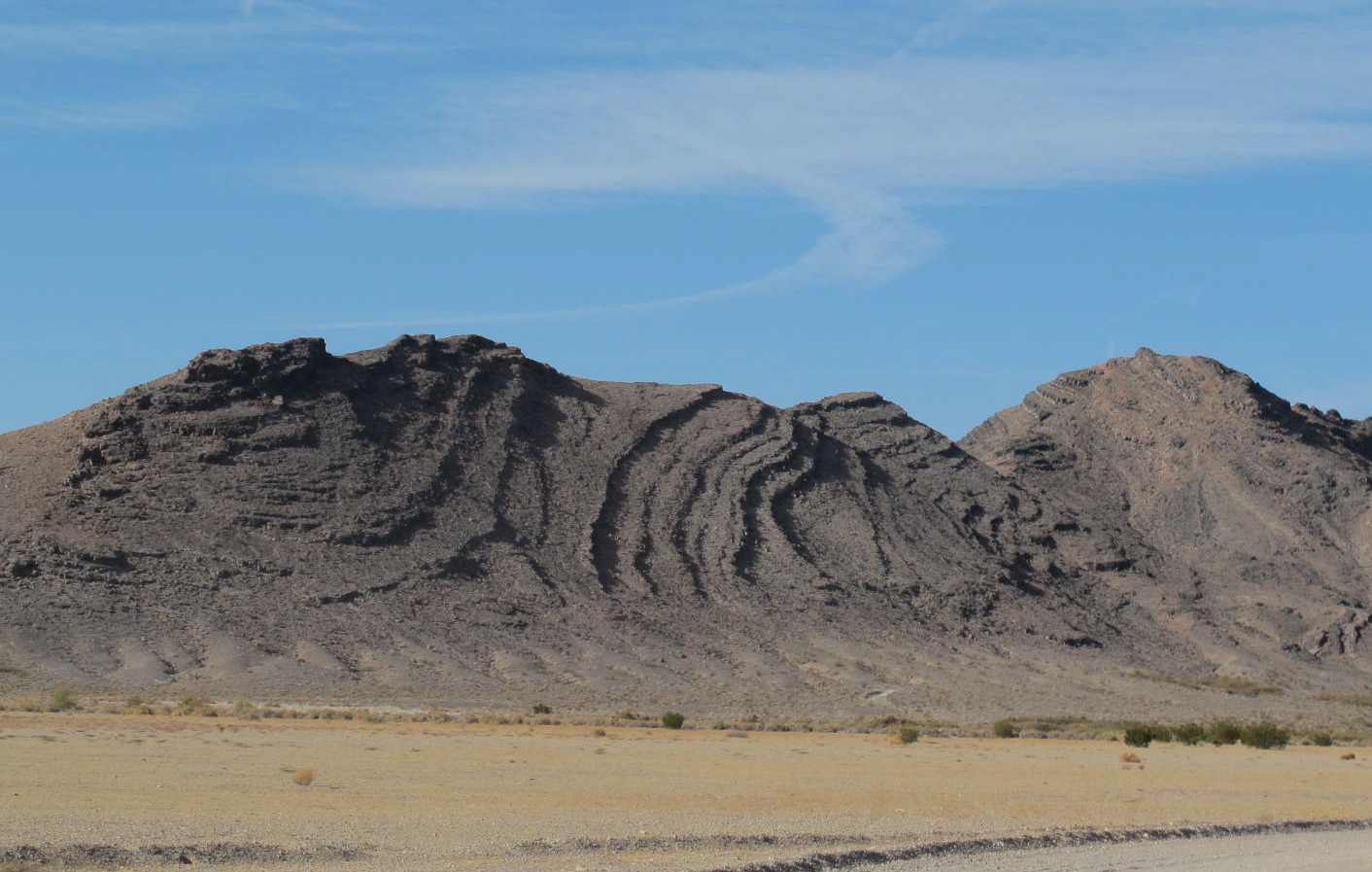
Both sections of my adventure were fun, amazing and enlightening. It’s a kick to be able to do these things with friends, family and dogs and enjoy the good life.
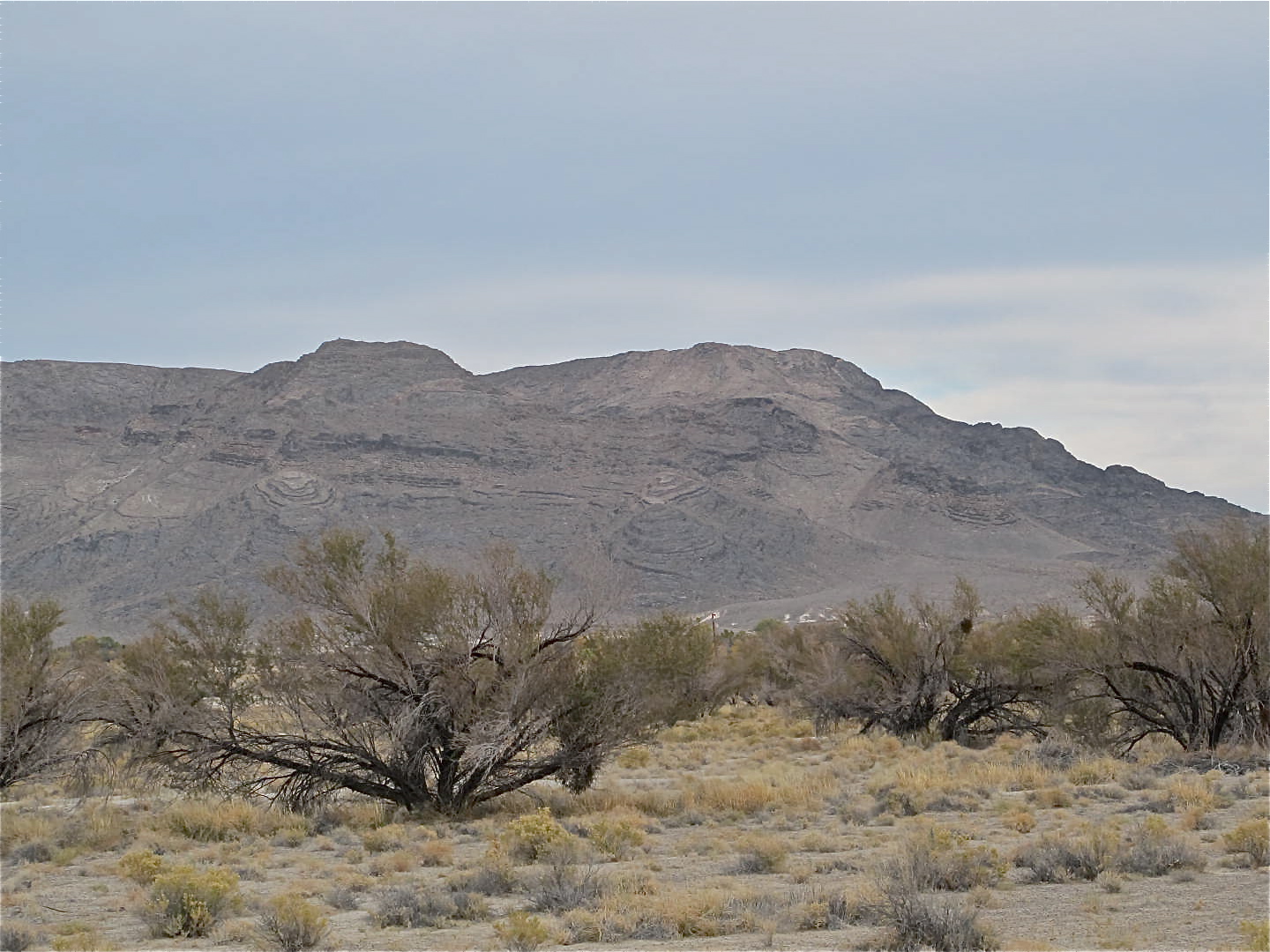
Battle Born 150 – Nevada Day, 2014

4 Nov
One of the official logos for the Sesquecentennial

One of the official logos for the Sesquicentennial

Nevada has been working up to its sesquicentennial celebration for an entire year, which has been a lot of fun to see unfold. There was a challenge to see if there could be 150 official events and it turned out that there were over 500! And I think more are happening before the end of the year.

The climax was this past weekend with the gigantic Nevada Day Parade and a tour of the Governor’s Mansion…open to everybody. It was great!

The day dawned dark and cloudy with snow in the mountains and rain on the valley floor. But this didn’t deter anyone. There was a 5K race and a pancake breakfast at the Governor’s Mansion (at which the Gov himself helped serve attendees) before the parade and then the mighty parade itself.  Thousands of people were there before 8 AM and the parade didn’t even begin until 10.  Oh my goodness! The Rose Parade has nothing on this one. Anybody and everybody may participate and I think they did. It lasted for a bit more than 4 hours!!! Since it’s an election year, all the politicians were in it with all their campaign propaganda. Governor Sandoval walked the route with some of his supporters. One politician wannabe even had 2 huge semi-tractor trailers emblazoned with his name and “Vote for Me.” There is not much regulation, except that they can’t throw candy from the floats/trucks/tractors/cars, etc. So people walk and hand candy to people on the curb.  It’s an amazing, awesome, down home event.

My part in it was to be in charge of the Friends of the Nevada State Museum bake sale. I was there by 7:30 loaded down with donated baked goods, gallons of cocoa (that I’d made and home and hauled to the museum), coffee, soda and water. Friends helped set up the booth and we were off and running.   The cold, stormy weather helped us sell a lot of stuff. I was beat by 2 PM but I was pleased that we took in more than twice as much as the last bake sale.

After the cleanup, grand-nephew Dalan and I went to the Governor’s Mansion to enjoy the open house. We had to wait in line perhaps 10 minutes to get in, but it was worth it to get a glimpse of the official first residence.

Wikipedia says: The Governor’s Mansion of the State of Nevada was built between 1908 and 1909. Until that time, Nevada’s governors and their families found lodging where they could in or near Carson City, the Capital. State Assembly Bill 10, the “Mansion Bill,” was passed in 1907 to secure a permanent site and residence for a Governor’s Mansion. Mrs. T.B. Rickey sold the land where the mansion now stands to the State of Nevada for $10 and George A. Ferris, a Reno architect, designed the mansion with Classical Revival features and Georgian and Jeffersonian motifs and a construction bid was awarded for $22,700. Acting Governor Denver S. Dickerson and his family were the first residents when they occupied the mansion in July 1909. The building was first opened to the public during an open house New Year’s Day, 1910. The governor’s daughter, June Dickerson, was born in the mansion on September 2, 1909, and was the only child ever born in the home.

 This is the only governor’s house that I know of that is decorated for halloween and the governor and his wife actually give out Halloween candy. Thousands of kids visit the house on Halloween.

The Governor's Mansion decorated for Halloween

The Governor’s Mansion decorated for Halloween (Don’t forget to click on the photo to enlarge it)

The main entrance to the Mansion

The main entrance to the Mansion

Dalan and I took advantage of the Wells Fargo stagecoach.  The photographer liked my camera.  Me, too!

Dalan and I took advantage of the Wells Fargo stagecoach. The photographer liked my camera. Me, too!

Several Friends of the Museum dressed in period costumes who were stationed around the Mansion to give an overview of each room.  Unfortunately, I didn’t get much of the furnishings as I was more interested in the costumed people in the house.  Here are our costumed friends.

Tina helped usher in the guests of the day.  She also made several of the dresses worn by the other ladies.

Tina helped usher in the guests of the day. She also made several of the dresses worn by the other ladies.

 Jan was the second greeter just inside the Mansion.  People loved her!

Jan was the second greeter just inside the Mansion. People loved her!

Teri was stationed at the beginning of the tour. We are good buddies.

Teri was stationed at the beginning of the tour. We are good buddies.

Dalan and I with Governor and Mrs. Sandoval. They are such nice, gracious people.

Dalan and I with Governor and Mrs. Sandoval. They are such nice, gracious people.

Anne in a main downstairs room. The clock by the soldier is supposed to be haunted as its chimes ring on occasion. It is not hooked up to anything and has not been wound for years.

Anne in a main downstairs room. The clock by the soldier is supposed to be haunted as its chimes ring on occasion. It is not hooked up to anything and has not been wound for years.

Abe Lincoln and me with the Gettysburg Address on the teaspoon

Abe Lincoln and me with the Gettysburg Address on the teaspoon

Jerri and Dalan in the formal dining room. Lookin’ good, huh?

Jerri and Dalan in the formal dining room. Lookin’ good, huh?

Diana in the Governor’s working office at home.

Diana in the Governor’s working office at home.

Kathy in the upstairs living quarters.

Kathy in the upstairs living quarters.

Alyce, below, is having a good laugh while doing her stint in the informal dining room.

Alyce, below, is enjoying a good laugh while doing her stint in the informal dining room.

One of our batty neighbors

One of our batty neighbors

Yes, the Mansion is allegedly haunted. There are many, many stories about hearing things, cupboards being opened when no one was in the area and other tales. Who knows for sure?