Maui – the Valley Isle and Much More!

19 Jun

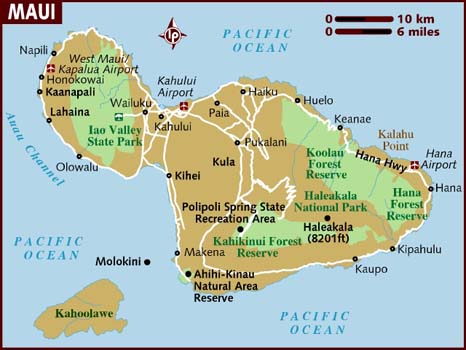
Maui is shaped much like a bust with the isthmus being the neck

The island of Maui is the second-largest of the Hawaiian Island at 727.2 square miles and is the 17th largest island in the United States.  Maui is part of the state of Hawai’i and is the largest of Maui County’s four islands, Moloka’i, Lana’i, and unpopulated Kaho’alawe.  Native Hawaiian tradition gives the origin of the island’s name in the legend of Hawai’iloa, the Polynesian navigator credited with the discovery of the Hawaiian Islands.  According to that legend, Hawai’iloa named the island of Maui after his son, who in turn was named for the demigod Maui.  The island is also called the “Valley Isle” for the large isthmus between its northwestern and southeastern volcanoes and the numerous large valleys carved into both mountains. I flew to Maui the week prior to our adventure at Kalaupapa to meet my friend, Dick, photog emeritus, who I knew would give me the finest kind tour of the Valley Isle.  He didn’t disappoint me as we did an in-depth expedition of many places that I had not visited in 15 prior visits to Maui.  Bob’s and my priorities were a bit different back when we were going to the Islands…Rest, golf and little touring was Bob’s motto. The first thing Dick and I did was to meet Craig, the owner of the plantation house we were to rent on Lanai.  Dick had been trying to finish the rental agreement with him for some time but Craig was so laid back until about 10 days prior to the actual rental.  The house and our time on Lanai were outstanding, but more about that in the Lanai posting.  Then we went to lunch at Leilani’s on Kaanapali Beach.  It’s such a pleasant feeling to dine on the beach with the trade winds ruffling your hair, small birds flitting around the restaurant begging for tidbits, and receiving a lot of the Aloha spirit that the Islands offer.

Getting into the Maui Mode
(RDS Photo)
How much better can it get?
(RDS photo)

Looking toward Lana’i from our condo at daybreak

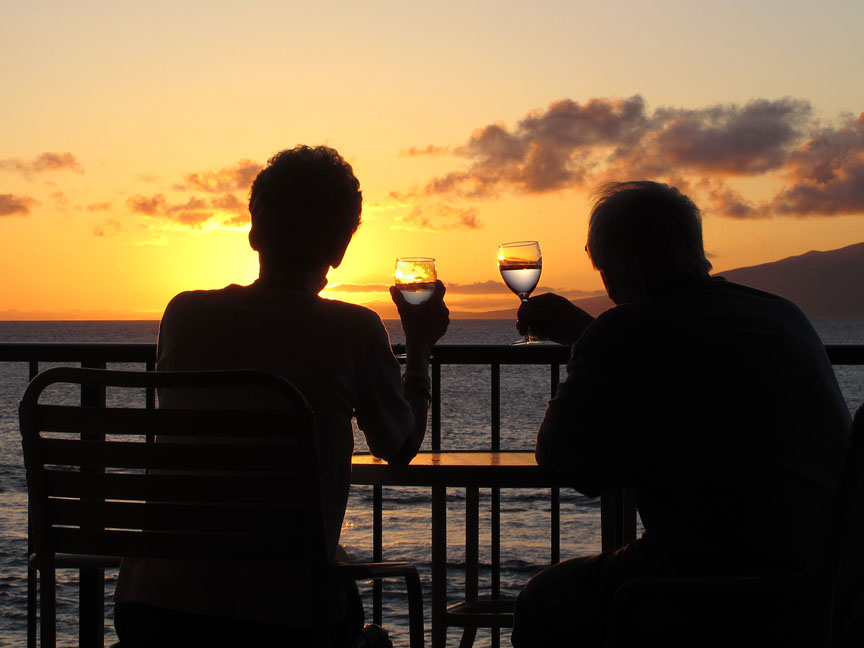
Our condo was a second floor corner unit that was about 15′ from the ocean’s edge with exquisite vistas of Moloka’i and Lana’i and sometimes when the trades were right, a view of Oahu, about 50 miles away.  With this setting, it didn’t take me long to kick off my shoes, adjust to Aloha time and the pleasant trade winds.  Within a couple hours of my arrival, a large honu (sea turtle) was grazing on the rocky reef not more than 30′ from the shore.  I didn’t get a good picture of him, but he was about 3′ long with a sort of green back.  That was the first time I’d seen a sea turtle in Maui and I really enjoyed the sighting.  I kidded Dick about arranging that sighting for me.  You can see the reef closest to shore in the left hand picture.   It was so blissful to sit on the lanai that we never ate pupus or dinner out (except when we were away from the condo at dinner time).  The dazzling sunsets provided us with so much camera fodder that I’m surprised we didn’t run out of battery power on the first day.  I bet I had 50 pictures during my first sunset and only a few of them were worth keeping.  But it was fun and SOOOOO relaxing. Dick took me to places that Bob and I had been such as Napili Sunset; beaches we had visited like Honolua Bay, Slaughterhouse Beach and Kapalua Bay; and courses we had played like  the Village and Bay Courses.  Bob so enjoyed them and I did too. It was a nostalgic drive that I wish I could have shared with Bob. The next morning, we toured Hale Pa’i (the house of printing), a small coral and timber building on the Lahainaluna (upper Lahaina) high school campus, that starting in 1834, served as the home of Hawaii’s first printing press.  The early missionaries not only learned Hawaiian, they transcribed the language and printed (after teaching students to set type and run the press) a Bible, textbooks, maps, Hawaiian culture and traditions, the first newspaper west of the Rocky Mountains (1834) as well as Hawaii’s first paper currency.  An interesting side note is that in 1844, a student was expelled for counterfeiting, causing all the paper money to be re-issued with secret marks.

Mama’s Fish House Beach

Lahainaluna High School was founded as a seminary in 1831.  It was the first school west of the Rockies and survives today as Lahaina’s public high school.  It has the distinction of being one of the few public boarding schools in the USA and accepts students from not only Lahaina but neighbor islands as well.  We happened to be there a few days before graduation and were greeted on the long road going up to the school by printed banners and bed sheets hung from fences and houses congratulating the graduating seniors.  I thought it was a fun custom. Lunch was a real treat at Mama’s Fish House,  a converted beach house in a coconut grove on a secluded white sand beach. It was voted one of the best 100 restaurants in the USA in 2011 and I can see why.  In addition to the beautiful setting, the fish was probably the best I’ve ever tasted.  Man, it was good!  The menu actually lists when, where and by whom the fish was caught.  So we knew it was very fresh and oh, so tasty. Just a bit away from Mama’s, is  Ho’okipa Beach Park, “the wind surfing beach capital’ (according to a Pa’ia web site) that was being well used.  Lots of surfers were out there trying their luck.  To me, it looks like such a demanding sport, especially on the shoulders and back.  I think it’s better for me to observe the people plying their skills than to try it.  We visited Pa’ia which is noted as a “quaint” town.  It’s supposed to be a reflection of its history as a booming sugar cane plantation town with its old plantation style wooden buildings still intact and an array of  specialty shops, boutiques, surf shops, antique stores, bakeries, and even an old fashioned tattoo parlor.  It might be a great place to browse if you like to shop.  I didn’t check it out as that’s not really my game.  We did check out Mana Foods, a ramshackle looking building with has a vast array of organic, natural, international and gourmet offerings on the inside.  I was amazed at what was inside this store.  As a matter of fact, it reminded me of Mother’s in Costa Mesa before it was remodeled.  A lot of people know about this place as there were a lot of people in its narrow aisles.  It was fun to visit.  We then drove mauka (toward the mountain or inland) to visit up country towns, Makawaoand Haiku.  Such a pretty drive seeing nice homes, some small ranches and farms, and churches.
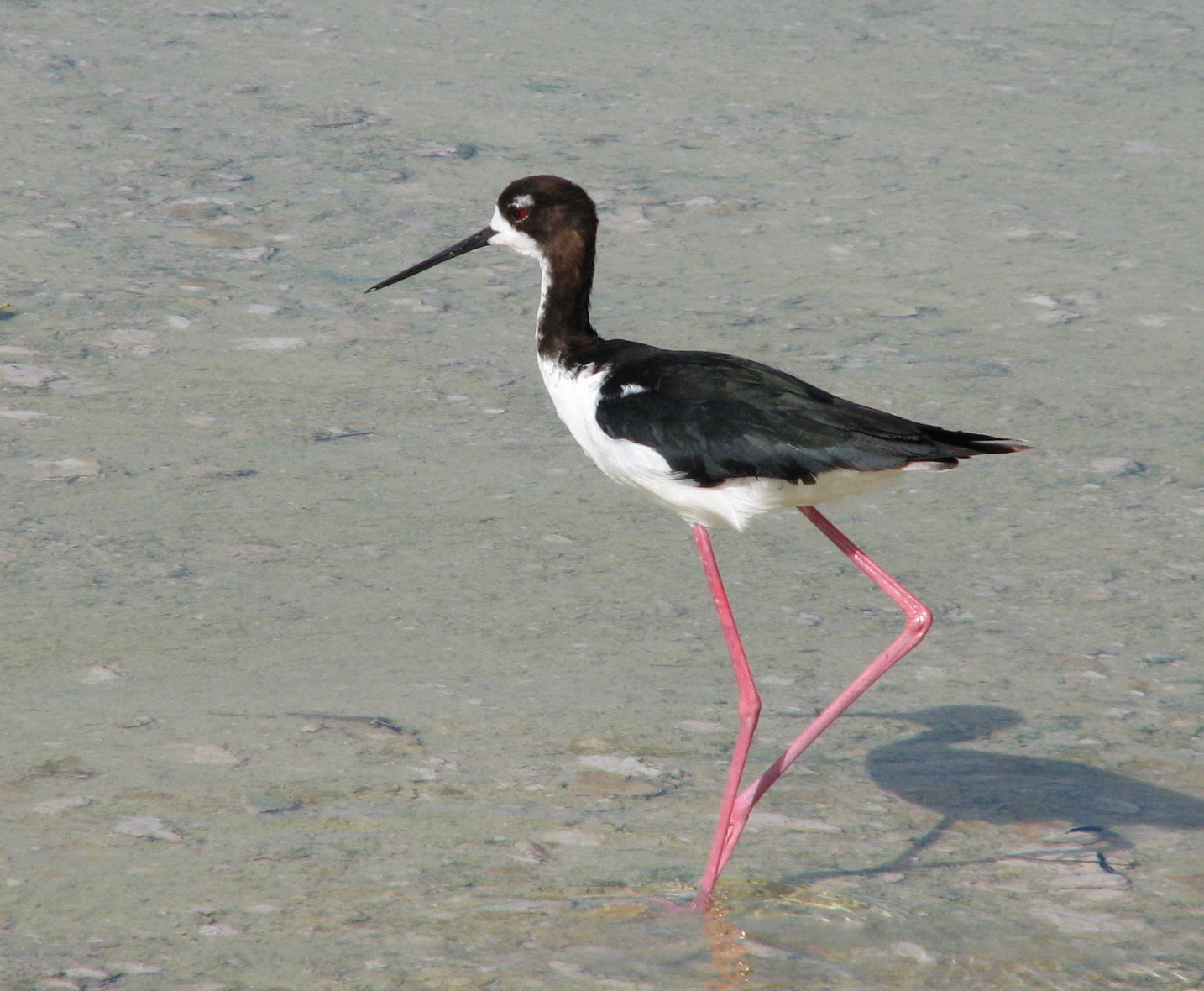
An Ae’o in Kanaha

On the way back to our condo, we stopped at the Kanaha Wildlife Sanctuary, home of the Ae’o (black-necked stilt).  The wetland sanctuary is near the Kahului Airport and has some noise from planes as well as nearby traffic that does not seem to affect the birds.  We saw Ae’o in all stages, from little puff balls on stilts to adults wading in the shallow water.  I like these birds as they appear to be in long-legged tuxedos as they stealthily walk and stalk the shallows to catch their prey.  They are a bit territorial as we saw them arguing a bit with each other by squalking  and flying at each other.

Surfacing in Kapalua Bay in front of Kapalua condos
(RDS photo)

Thursday was snorkeling day.  We checked out Black Rock near the Sheraton at Kaanapali and Kapalua and saw many fish varieties including some eels and trumpet fish.

Trumpet fish
(RDS photo)

We followed our snorkeling excursion with lunch at the Pineapple Grill (aka Grill and Bar where Bob and I had many contented, filling meals back in the ’80s).  LaPerouse Bay was
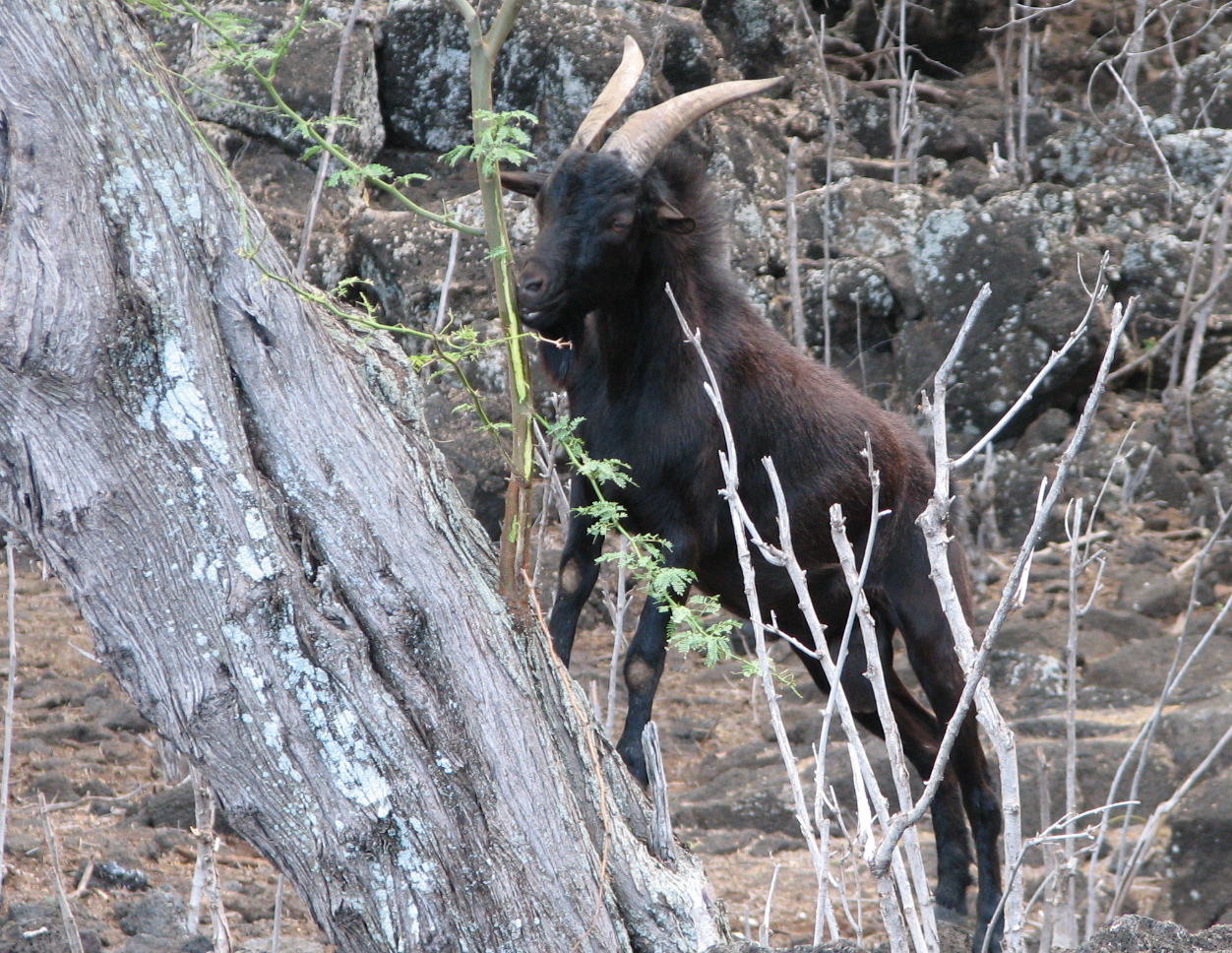
The “Old Goat” leader

our next stop on the day’s tour.  This bay is at the end of the road on the south end of Maui and is known for two things, dolphins (which we didn’t see) and wind (which we felt).  The dolphins apparently like to rest in the bay in the morning but had left for other areas by the time we got there.  There are signs all over the place to not harass the dolphins, so I guess they really do hang out there.  The wind is ever present and tousled our hair the entire time we were there.  What we did see were wild goats, which were grazing close to the path we were on.  Dick declared that we were on the “Old Goat’s Tour.”  And tour we did, seeing a blow hole, coral beach, some black sand and remnants of the 1790 lava flow, the last eruption on Maui.  It was a good hike and I enjoyed every minute of it.
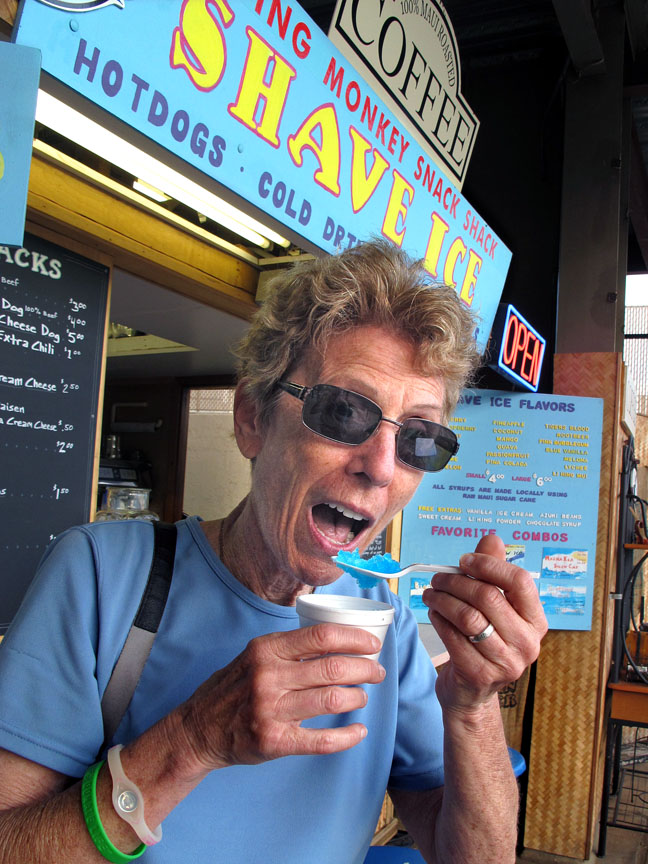
That blue vanilla is great! I’m a shave ice fan!
(RDS Photo)

On the way back to our condo, we stopped in Kihei so that I could sample for the first time, a Hawaiian delicacy know as “shave ice.”  I would have called it a snow cone, but it was much better than that.  The ice is shaved and becomes a smooth powdery snow type substance.  Much better and tastier than a regular snow cone.  I had a combination of grape and lemon-lime, much to my delight.  I noticed a flavor called blue vanilla and the lady gave me a sample of it.  Ooh!  That was good! We made it back to our condo that evening in time for another nice sunset and dinner.  Life is good!

Jan was to arrive Friday evening and we had the entire day to use to explore or goof around.  Dick knew that I’d never been on the Hana Road (Bob and I had flown in when we stayed there) and told me that it is quite a journey that everyone should see.  The guide books tell you that there are 620 curves and 46 one lane bridges (who counts these things?) on the 52 mile long “highway” from Kahului.  I put highway in quotes because the road narrows from four lanes to two to about one and a half or even one in some cases beyond ‘Ohe’o Gulch (aka Seven Sacred Pools).  Off we went from our condo about 7:30 AM (early departure) in anticipation of an exciting adventure, seeing places, things and people I’d never seen before. It was fun seeing the flora change from sugar cane waving in the breeze to very lush vegetation with ferns, bamboo, and other jungle plants  so thick that you’d be lost if you ventured more than 15’ from the highway.  It’s good to be green in this vicinity.  Sometimes we would come out of a turn espying a beautiful vista of a valley or peninsula with little houses and taro fields dotting the valley floor or be hugging the edge of a steep cliff.  Witness these two pictures.

Keanae Peninsula with houses, taro fields and the ocean in the background

Highway to Heavenly Hana. Click on the picture to better see the cut in the cliff.

Waikani Falls (aka the 3 bears) before arriving at Hana

There were not as many waterfalls as advertised in the brochures because East Maui Irrigation company (EMI) has ditches throughout the way to Hana that have diverted much of the water previously destined for the gorgeous waterfalls.  So some of them are dry or not flowing as dramatically as in previous years.  I guess it depends on the time of year or water needs as to how much water is flowing (or falling, as the case may be)  We did see several spectacular falls but the light wasn’t just right so as to duplicate what we saw.  I was still pretty impressed with the falls we saw, however. We had lunch at Tutu’s Snack Shop on the beach at Hana Bay.  It’s basically a burger joint but serves very good BBQ pork sandwiches.  I had one of the best hamburgers I’ve eaten in a long time.  So Dick and I vote for Tutu’s.  We visited Hasegawa’s General Store which features the most diverse assortment of stuff ever put together in a store.  It’s an amazing place that sells groceries, fishing equipment, clothes, galvanized pipe and you name it and it’s probably there.  I helped out their bottom line and bought a Hasegawa tee shirt.  Hana is a quiet little town that doesn’t impress you until you get out and walk around a bit and let its essence sort of creep up on you.  It’s a great place to get away from it all because “it” isn’t there.  And sometimes that’s a nice thing to do. We buzzed back to the Wai’anapanapa State Beach which has the only volcanic black sand beach on Maui.  I like this park and beach because it sported camp sites, cabins,
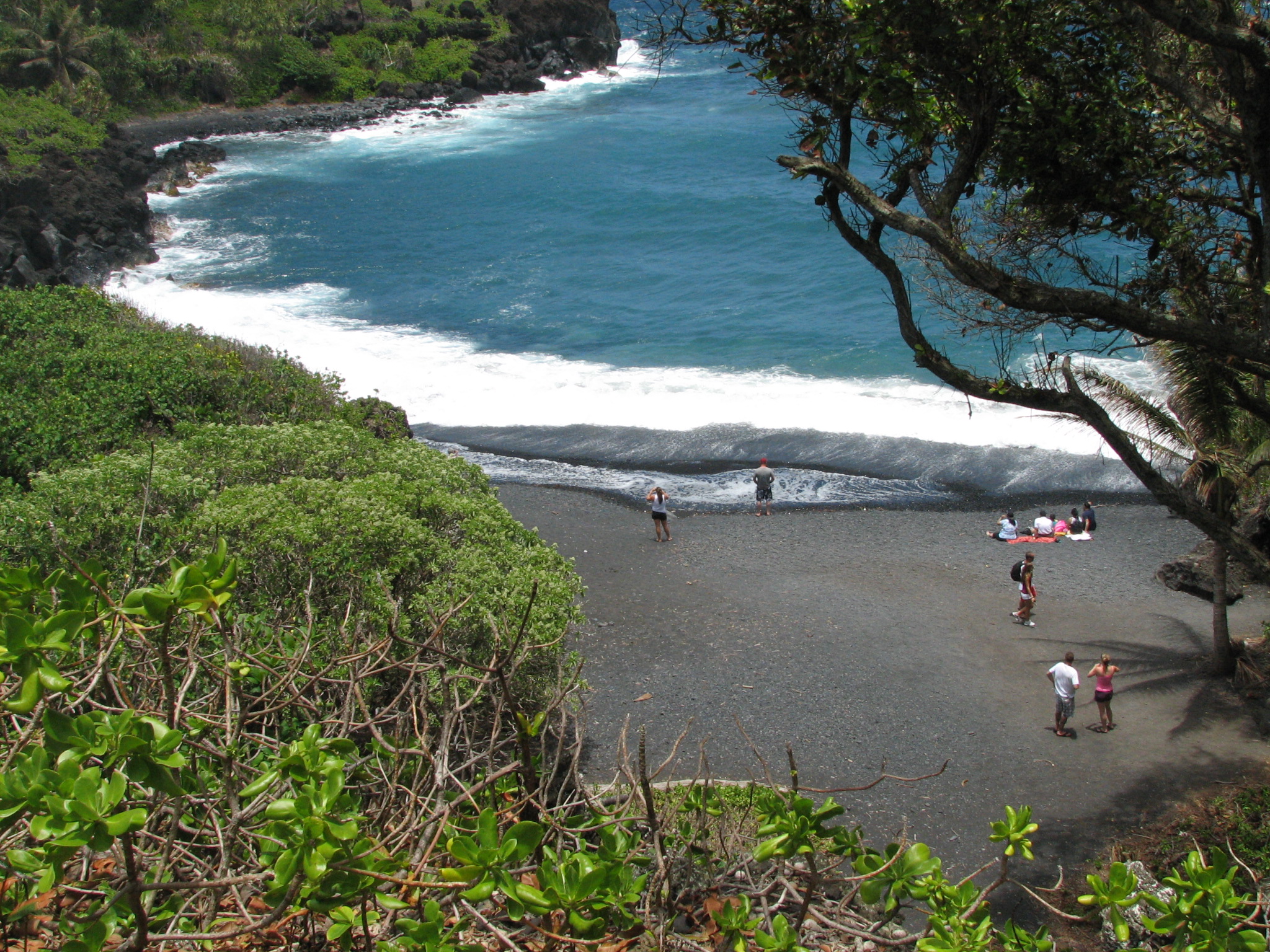
Pa’iloa Beach at Wai’anapanapa State Park

showers, picnic tables, freshwater caves, a sea arch, black sand beach and brown noddies (which I’ll explain in a bit).  Technically, the freshwater caves are a bit brackish according to some kids we talked to, but they looked inviting to swim in.  People were on the beach enjoying the cool water (although not in very far…it looked a bit tricky to me in terms of currents and such)
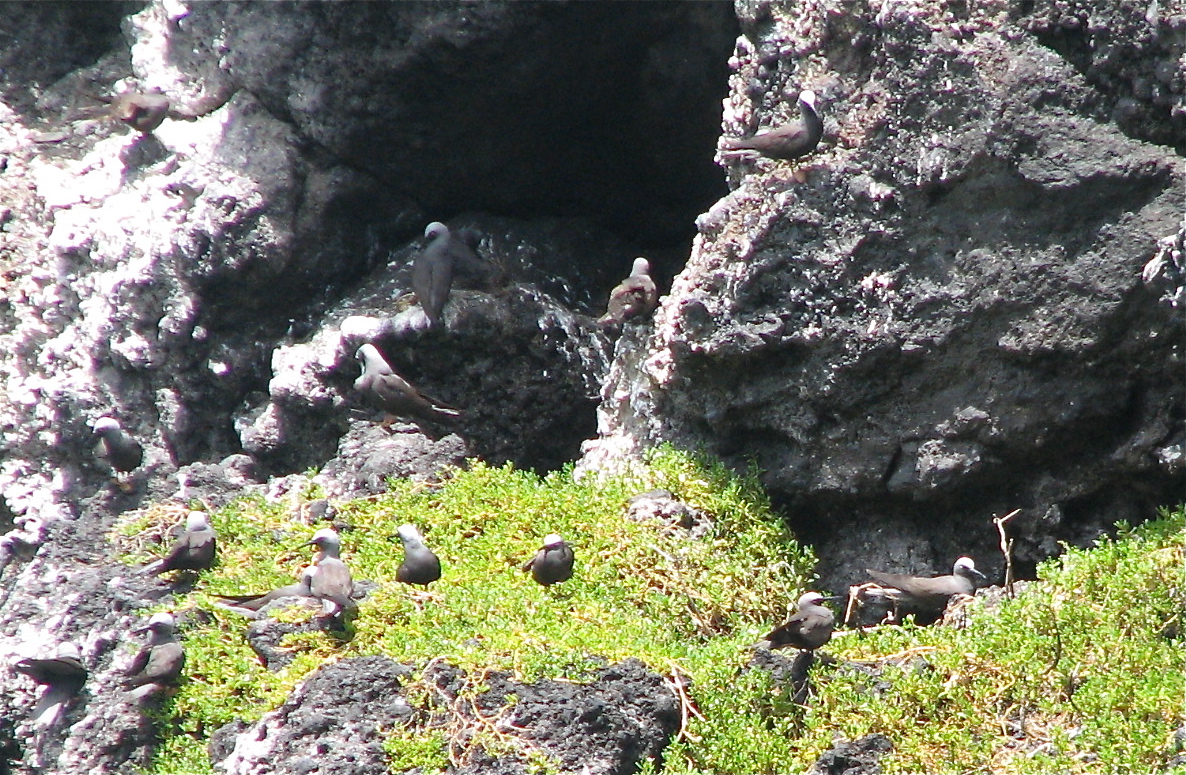
The brown noddy rookery. They forage far out to sea catching squid or fish.

A brown noddy is a bird about the size of a small sea gull (16″ long, 33″ wingspan as opposed to 18″ and 48″ for the our local gulls).  There was a noddy rookery at this beach and there were many flying around the area and resting in the rookery.  A characteristic “nodding” display between adult birds is often seen at nesting colonies, hence their name.  This was fun for me as I’d never seen a noddy before. We continued on our way, stopping at Wailua Falls for photo ops and on to ‘Ohe’o Gulch formerly known as 7 Sacred Pools.  Apparently, ‘Ohe’o Gulch is the original name of this area and 7 Sacred Pools was a monicker put out for the tourists.  What a different experience from when Bob and I were there!  Bob and I were covered in mosquitos when it wasn’t raining.  We really didn’t get to see much.  This time, the weather was perfect and there were no

Jumping at ‘Ohe’o Gulch

bugs.  Yea!  Many, many people were visiting the pools nearest the shoreline; swimming, hiking, sun bathing and just relaxing.  The pools are quite deep and lots of people like to jump from fall to fall.  Check out the guy in the red trunks who happened to jump

Ala ‘Aina grounds Could you ask for a more gorgeous view?
(Jan photo)

when I was taking pictures. Dick took me to Kipahulu and Ala ‘Aina Ocean Vista, a one bedroom B & B that he and Jan like to stay at.  It’s a beautiful place with banana trees growing all over the place.  There are many stories that Dick told me about this area, but suffice to say that it’s gorgeous and so off the beaten path, that one can totally unwind and experience culture shock just going to the little town of Hana.  It was amazing! In the little graveyard behind the small  Palapala Ho’Omau church, Kipahulu,  is the final resting place of Charles Lindbergh.  His grave is very simple in the Hawaiian style of a plot surrounded by lava rocks.  Nearby are the graves of Sam Pryor, a retired airlines executive, who had a ranch in the area.  Pryor was good friends with Lindbergh and persuaded Lindbergh to visit Maui and build a small place on his ranch.  Pryor is also remembered for his gibbon apes who he considered to be his “children.”  Their six graves are between the Pryors’ and Lindbergh graves.

Godlight looking over the Pacific Ocean

Car rental companies used to prohibit rentals from continuing on around the island on the “highway.”  I don’t know if they still do, but the road is fine (at least when we were on it).  It is a narrow, one lane dirt road for part of the way, but that aspect added to the charm of it.  It was also interesting to see the climate change almost instantly from green and lush to brown and arid.  It has to do with the wind and rainfall…which is evidently not great in this area.  We saw the top side of the two cinder cones that made the 1790 lava flow and looked down on LaPerouse Bay that we had seen the day before.  That was an interesting perspective.  The road improved to being paved and two lanes and began to climb the side of the big mountain, Haleakala.  Clouds were coming in over Haleakala and also the ocean which gave us some beautiful views.  Dick likes to call this Godlight.  We celebrated our safe return to Kahului by consuming a sumptuous Costco hot dog and then we went to pick up Jan upon her arrival from Sacramento.

Jan got up early the next day as she was still on mainland time and we went for an early morning walk.  It was so pretty to walk as the sun rose over the mountains and listen to the birds wake up with their many tunes.  I love that time of day when the world is waking up.  We also waded a bit in the ocean and saw a small eel and many little minnows. Later that day, we visited the ‘Iao Valley and Needle (A sacred burying place for chiefs and the location of Maui’s last giant
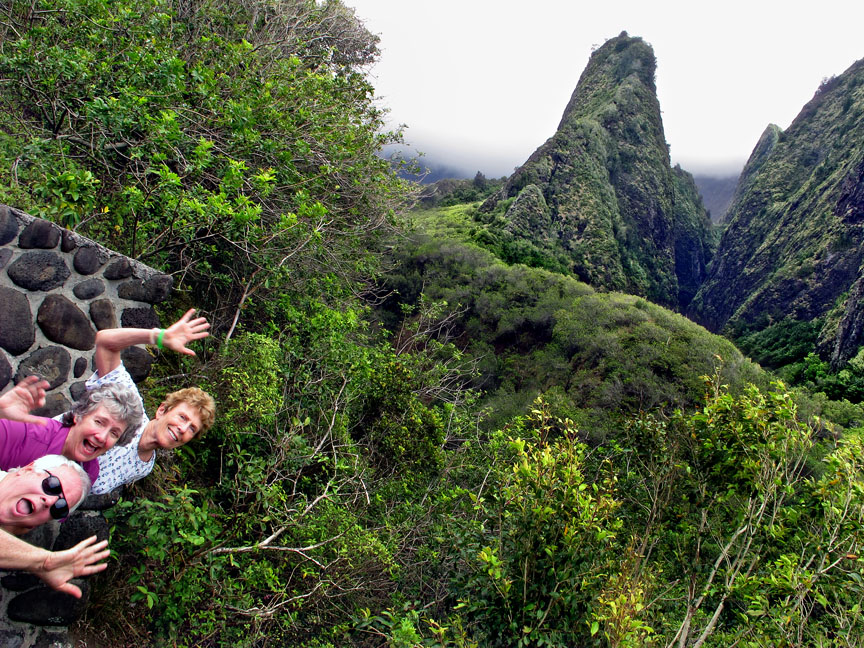
Yeow! at the ‘Iao Needle
(RDS Photo)

battle for supremacy.  The Needle itself was used as a lookout base.  It is another lush, verdant valley with a prominent point sticking up from the valley belying a violent, bloody history.  Dick’s picture shows us needling the needle.  Following our antics at ‘Iao Valley, we visited the Bailey House Museum, the house of a mid-19th century missionary.  I enjoyed this little museum and its display of Hawaiian stone tools, weapons and even a century old surfboard.  There were also exhibits from the missionary era that were very interesting.  It’s good to get some education on a vacation and be sort of well rounded.  🙂

From Maui, Jan, Dick and I went to Kalaupapa for 5 days, Lanai for 3 1/2 and then back to Maui.  We stayed at the Maui Beach Hotel, not far from the airport, to pack and readjust our thinking for future events.  I was flying home the next day and Jan and Dick were going out past Hana to the Ala ‘Aina for a few days of real Hawaiian time together.  Jan and I were walking around the hotel grounds when we happened upon a trio called “Power of Ten,” a kane singing and playing the ukelele and a kane and wahine dancing to the tune.  They were rehearsing for a show they were putting on later.  It was vigorous, beautiful and exciting.  Did you ever see such gorgeous smiles as on the “Power of Ten?”  Aloha spirit epitomized!

What a good looking group!
(RDS Photo)

The Power of 10
(RDS Photo)
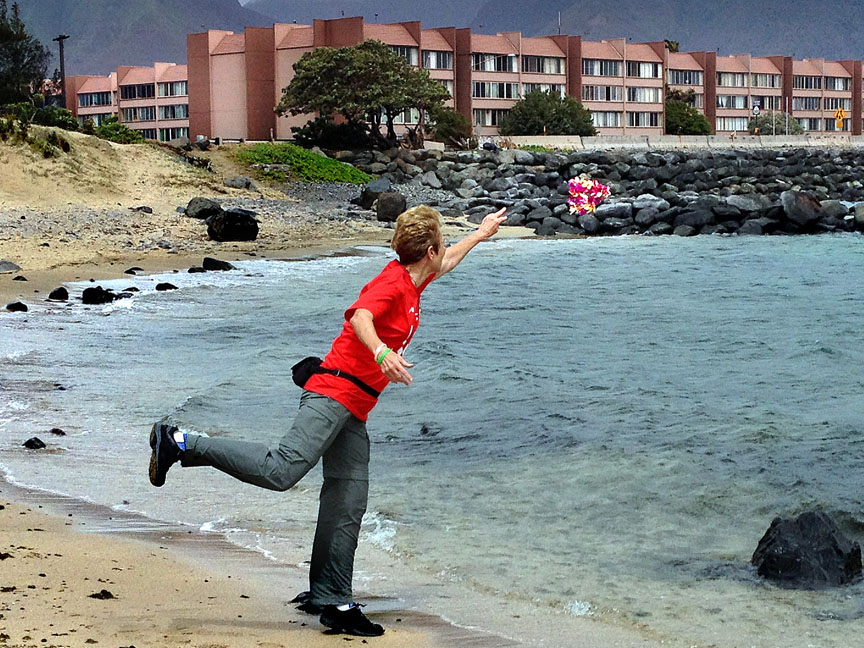


The lei toss
(RDS Photo)

Sadly, it was time to say aloha to the Islands on May 30 and I was to wing my way home.  Dick and Jan took me down to the beach where they told me I had to complete the tradition of throwing a lei into the water to see if I’ll go back or not.  Yea!  The lei did so, thanks to the wind and a not so great toss (but with great form!).  I’m looking forward to the next adventure in Hawaii which I hope won’t take another 20 years to happen.
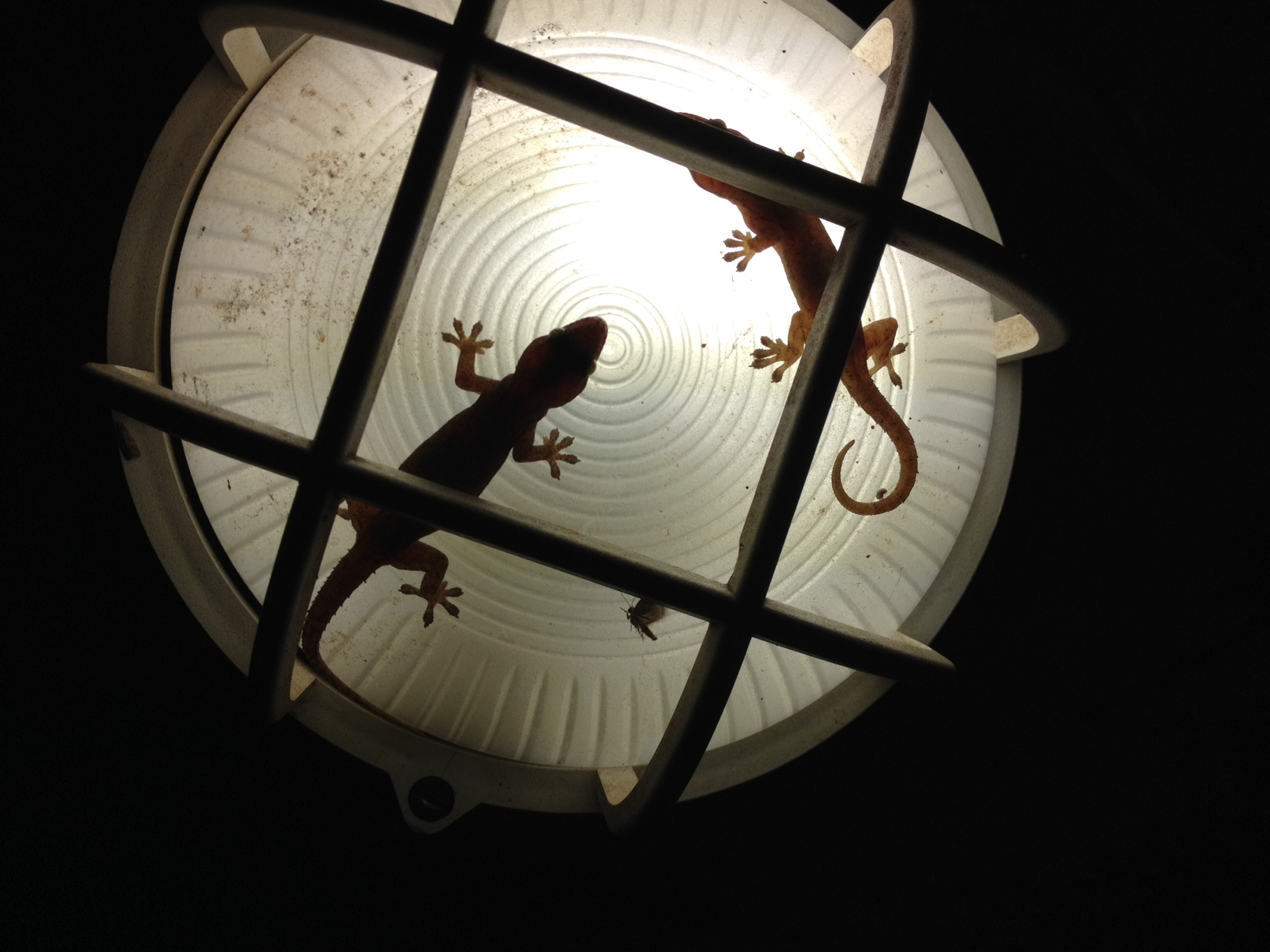
A Hawaiian adventure wouldn’t be complete without some geckos. Here they are catching their supper near a light fixture in Ala ‘Aina (Jan Photo)

Kalaupapa – Enduring Spirit, Sacred Ground

6 Jun

For several days, I have mulled over the impact of the Kalaupapa peninsula and community on me and find it difficult to express their essence in words.    I am going to attempt to recount my experience upon the peninsula even though it might not jibe or seem adequate to those who were there and saw the experience differently than I did.

First, a bit of history taken from the National Park Service’s Kalaupapa brochure.  “Surrounded mostly by ocean and cut off from the rest of Moloka’i by 1,600′ cliffs, the Kalupapa

A portion of the peninsula from our final approach to begin our adventure
(RDS Photo)

peninsula has always been one of the most remote places in Hawaii.  Native Hawaiians live here for many centuries, but in the mid-1800s Kalaupapa’s remoteness secured its role as the setting for two tragic human sagas.”  …in 1865 and again in the mid-1890s, the indigenous Hawaiian communities were displaced and the forced exile of those afflicted with or suspected of leprosy was begun.  Isolation was done because it was believed just touching a leper could cause a person to get it. The isolation policy was not officially abolished

until 1969, but forced isolation ended in 1949 when medications were made available to help patients.  Patients who still live there (about 10) are free to come and go from the settlement, but they choose to stay there as it’s more in their comfort zone.  I heard that more than 8,000 people died at the settlement which is about the same as the present-day population of Moloka’i.

Father Damien ( St. Damien since 2009) arrived at Kalaupapa in 1873 and worked tirelessly to promote the dignity of the afflicted and to improve conditions for the patients.  To see what Kalaupapa was like in those days, a good movie to watch is “Molokai,” a story of Father Damien.  It was filmed at Kalaupapa, thus giving you an idea of what the peninsula looks like and the conditions those poor folks dealt with on a daily basis.

Today, Kalaupapa National Historical Park is administered by the National Park Service in cooperation with several Hawaii state agencies.  One of the park’s primary missions is to protect the lifestyle and privacy of the aging resident community.  In accordance with residents’ wishes and State of Hawaii Department of Health regulations, Kalaupapa is a closed community.  As members of a Sierra Club Service Trip, we received special permission to stay in the community for 4 nights and 5 days…something most people will never get to do.  I felt very privileged to be a part of this endeavor.

Our group consisted of nine people (two leaders, Ruth and Lynne; one cook, the VERY able Jan; six participants, Barbara,  Elyette, Puanani and my good buddies, Jan & Dick).  We arrived mid-morning of May 21, were met at the tiny airport and after signing in at the Park office were taken to our housing for the week.  We stayed in two historic buildings that were once housed a doctor and dentist.  They weren’t very clean at the beginning, but they were cleaned after a fashion and we settled in.  Jan fixed an excellent lunch and off we went to the nursery to begin our work week.

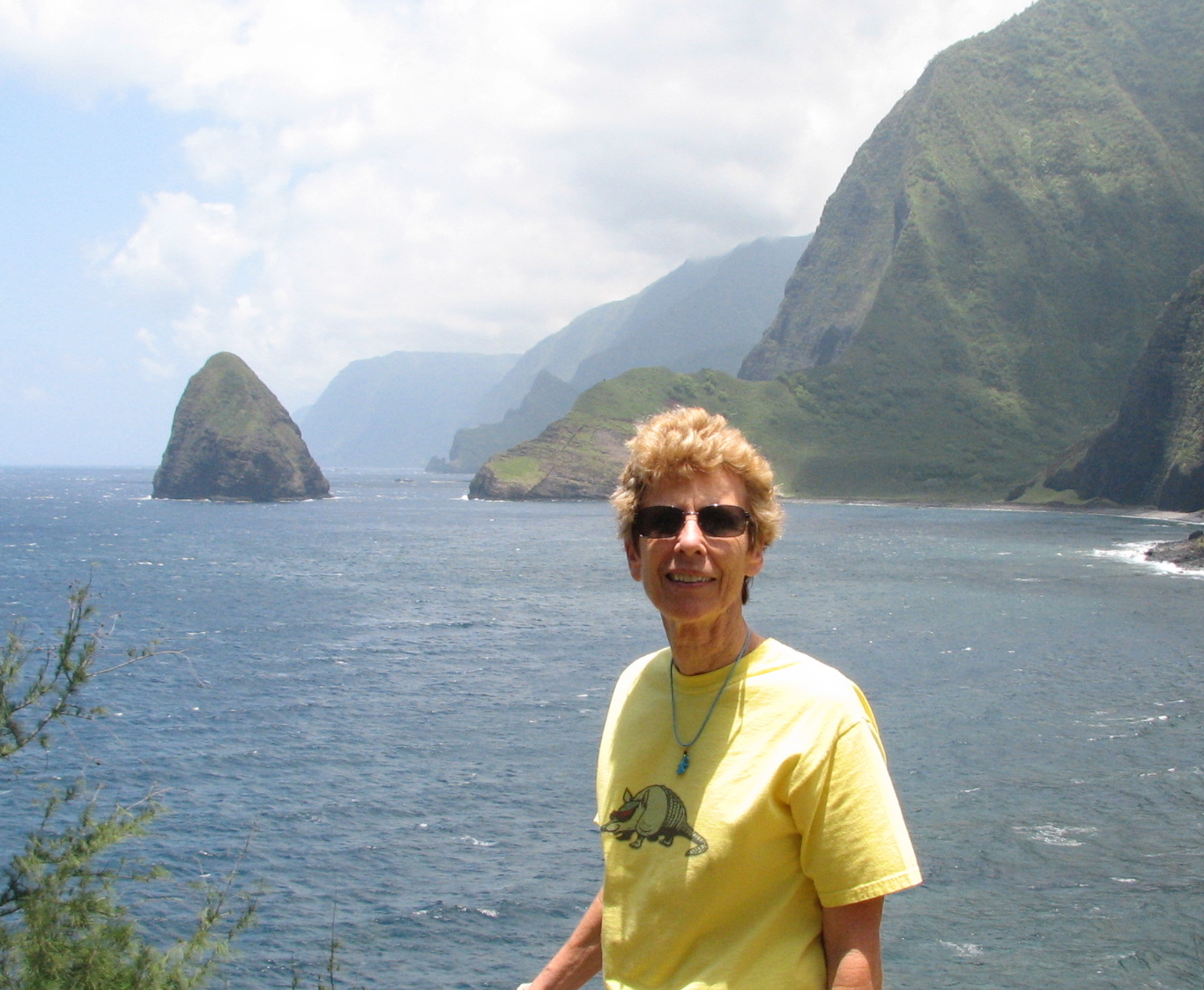
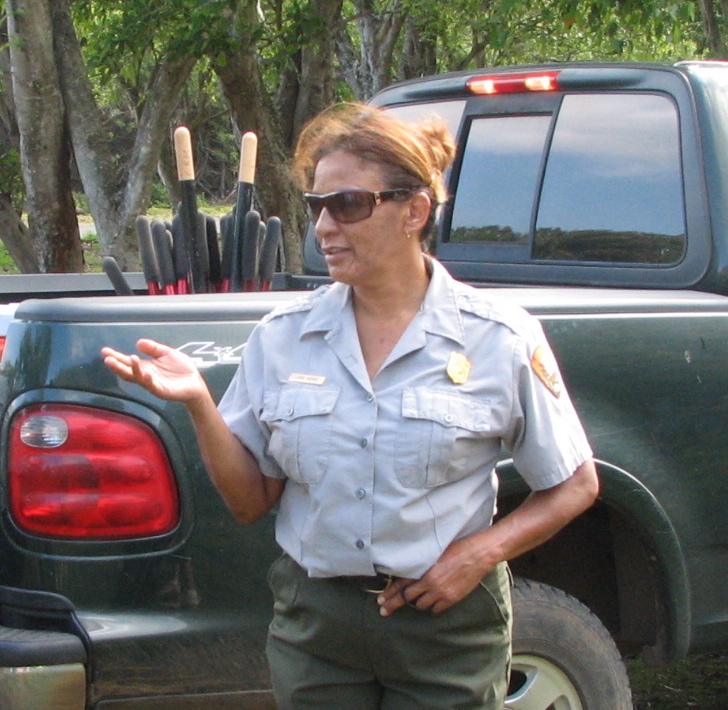
Luana helped me to understand local culture, some history and customs as well as some of the native plants

One of the goals of the Park Service is to replace the non-native plants (of which there are many) with native plants and the

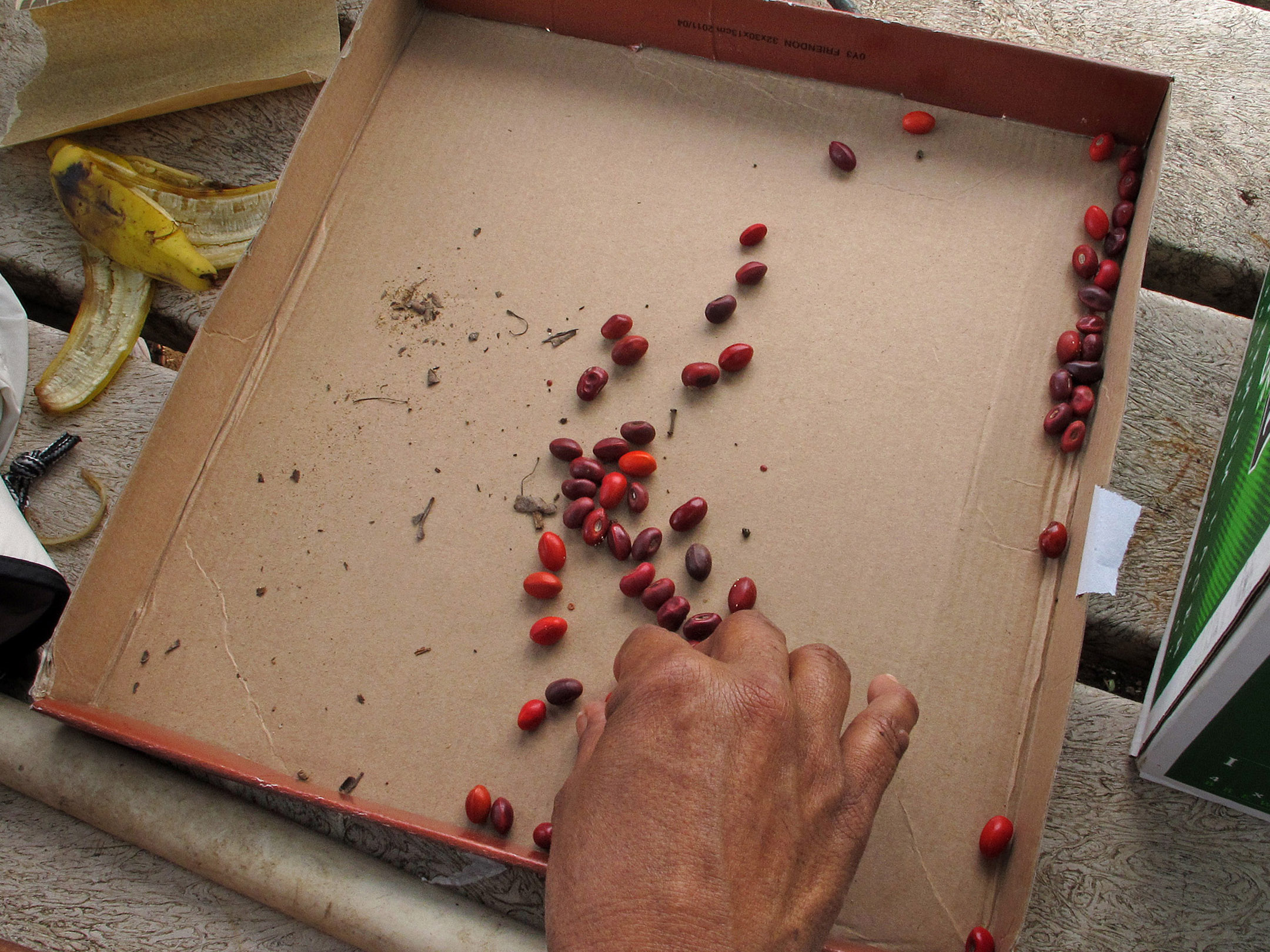
Williwilli seeds
(RDS Photo)

Rise up Wiliwili fingers! (Click on this photo to get the full effect of the fingers)

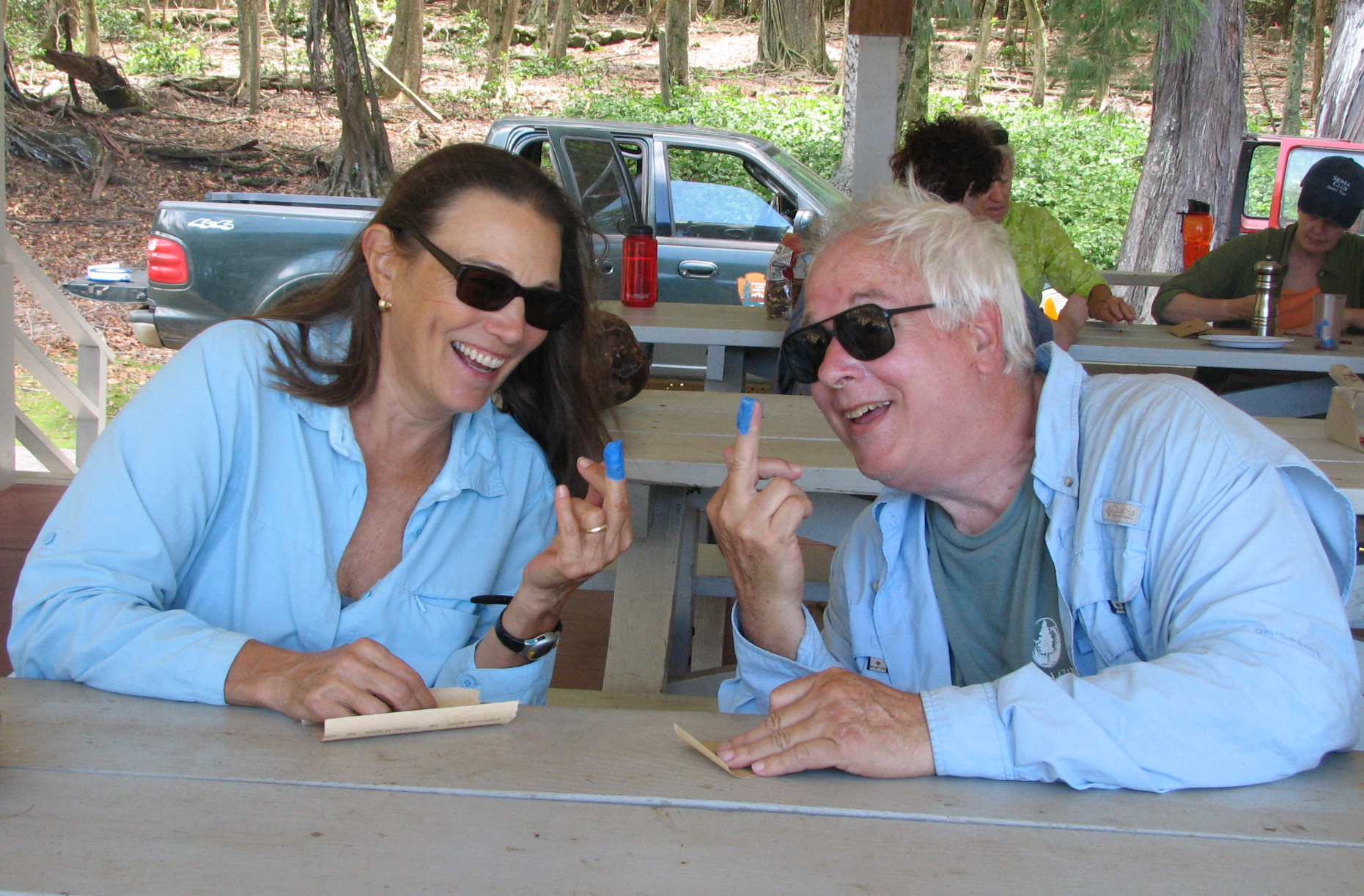
nursery is the place where this process begins.  Luana was our first boss and she taught us what to do to help her expedite her efforts to achieve her goals.  That first day, we weeded out various plants, cleaned up the nursery a bit and sanded edges of the of wiliwili seeds.  It sounds weird, but we did this to give the seeds a faster sprouting time.  Yes, the seeds were small (a bit bigger than a navy bean), difficult to grasp and tough to sand off even a small spot.  We sanded our fingers and nails, too, giving rise to many jokes and puns.  The next time we worked on the wiliwilis, we taped painter’s tape to our fingers to try to make it easier and faster.

We finished our chores early enough that some of our group walked down to the harbor to go swimming and wash off some of the dirt.  Few boats/barges arrive in the harbor, thus leaving the water very clean and refreshing.  I swam there a day or so later and really enjoyed the warm water and outstanding snorkeling.

The next day was beautiful and we were up early to get ready for our day’s tasks.  Ruth, our fearless leader, instituted a Hawaiian word of the day after breakfast to get us thinking about the spirit of the islands and why we, as Sierra Club members, were there as volunteers.  We discussed the word, its meaning and what it meant to us.  I liked that approach and I did think about the daily words often as I was working on our assigned chores.

Leimomi shared her culture as well as her knowledge about Kalupapa with us.

Our second day’s task took us to a very large cemetery (I failed to write down the name, but it was used from 1887 to 1920 and had many unmarked graves) surrounded by a

Puanani, who knows much about local and native plants and their uses and shared her knowledge with us. I learned a great deal from Pua.

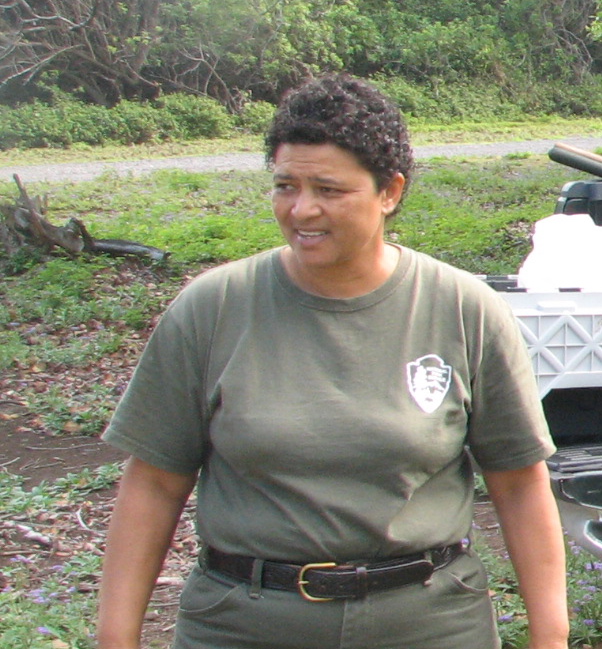
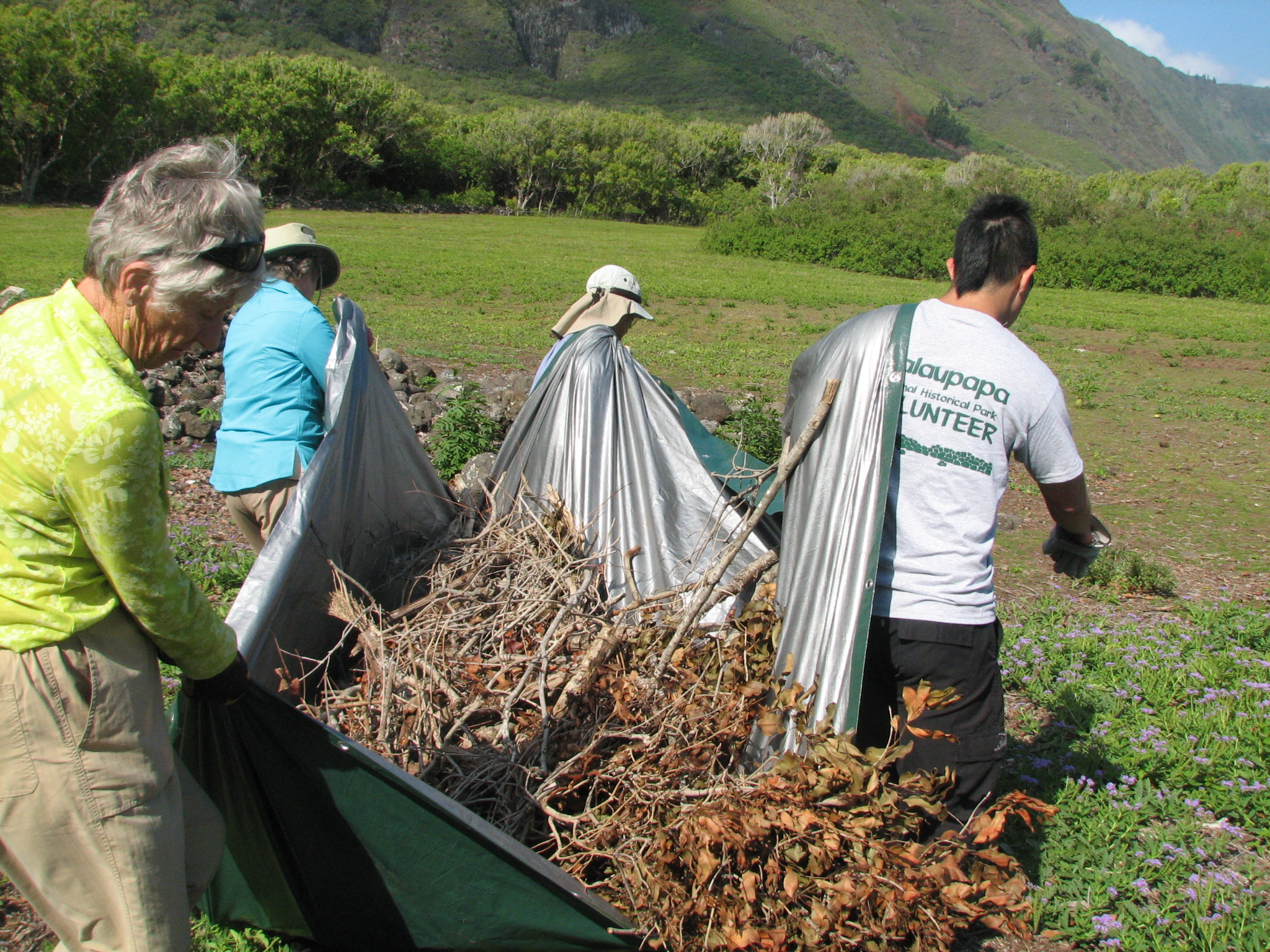
rock wall.  Other crews had been in to clear lantana bushes and other brush and stacked them in large piles.  It was our job to move the brush to outside the rock walls so that “the boys” (a crew of two could take it to the dump in dump truck)  We also raked leaves and cleared a lot of weeds and thistles.  Leimomi (aka Momi) was our boss for the day and led us very ably.  She worked right with us and got just as dirty and sweaty as we did. Before we even stepped inside the cemetery, we had a blessing to assure the spirits we meant no harm and that we wanted to please them by cleaning up their resting place.  One of our group, Puanani, a Hawaiian from Maui, sang a Hawaiian blessing with a rich, powerful voice.  Her singing really moved me.  After her blessing, the Doxology was sung in Hawaiian.

The air and mood seemed clearer as we moved into the cemetery to begin our work.  I thought at first that this was going to be a piece of cake… just putting brush on tarps and carrying it outside the cemetery and raking and weeding some.  I mean, after all, we working in teams, right?  Well, I got a sweaty education that morning.  Stacking, tromping, lifting, carrying and pushing all take a toll on one’s older body after a bit.  But we were pleased that the cemetery floor looked clearer than when we started and I think the spirits were pleased with our efforts.

Placing brush on a tarp

Haul it day

Carrying brush outside the cemetery to a wood pile in an area that used to be a dairy.

We had lunch at the Kalawao Lookout where the original Hansen’s Disease settlement was begun.  We raked up leaves and

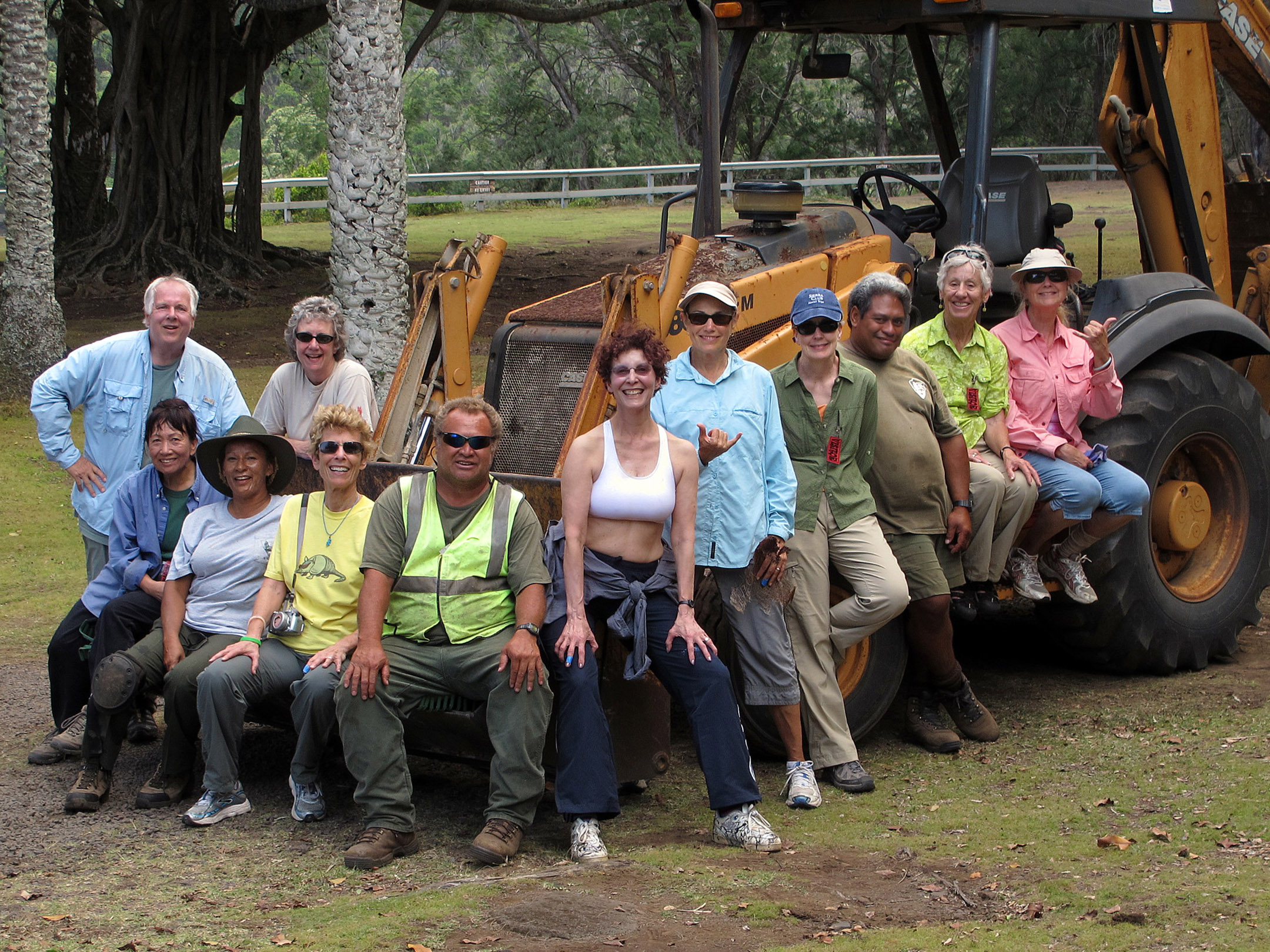
Our group plus Luana and 2 of the “boys” around the skip loader used to put trash & leaves into the dump truck (RDS Photo)

At Kalawao Lookout

a bit of debris in the park that surrounds the lookout and sanded some more wiliwilis but had time to take at look at some of

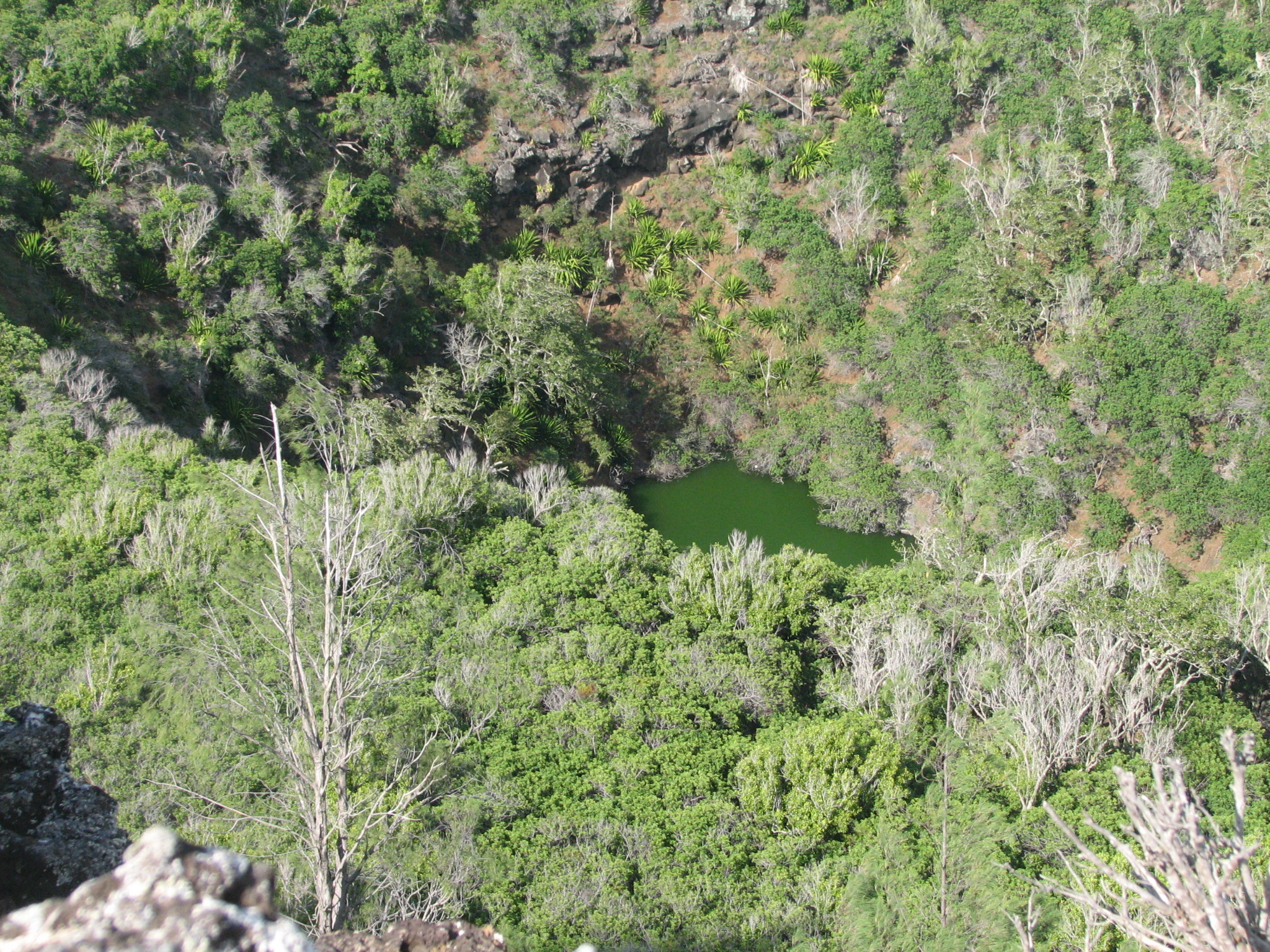
Looking down into the Kauhako Crater with the pond in the bottom

the ruins and artifacts from that era.  We could also see places where boat would bring in new people to join the settlement.  Sometimes the boat captains would take them ashore in a small boat and other times they would force the people to swim for the shore.  I saw how rough that coastline and water could be and I don’t know how any able bodied person could make it ashore, much less a sick person with poorly functioning hands and feet.

The flat, leaf-like Kalaupapa peninsula of today was created by an offshore volcanic eruption at Pu’u ‘Uao that resulted in the remnant Kauhako Crater.  We had the opportunity to visit the crater after we finished our clean up job at Kalawao.  Wow!  It was stunning!  It’s a relatively small crater overgrown with thick vegetation and trees and with a pond at the bottom of it.  Someone told us that the pond’s bottom had not been found and I read later that it was more than 800’ deep.  Don’t know as I didn’t hike down to the water.  There were stone graves on the rim of the crater which must be wind blown every day and will some day be blown into gravel.  I was knocked off balance several times by the STRONG, gusty wind as I was gazing into the crater.  It was hard to hold the camera with the wind knocking me around.

Our third day saw us going to what I would call the Lighthouse Beach as it was a bit windward from the tallest lighthouse in the Pacific. (More about that later)  We were charged

The monk seals

with picking up as much trash and junk that we could as this particular beach is in the way of a lot of floating stuff.

Portuguese Man-o-War – so small but, oh so venomous
(RDS Photo)

We

Even some type of light bulb was found on the beach

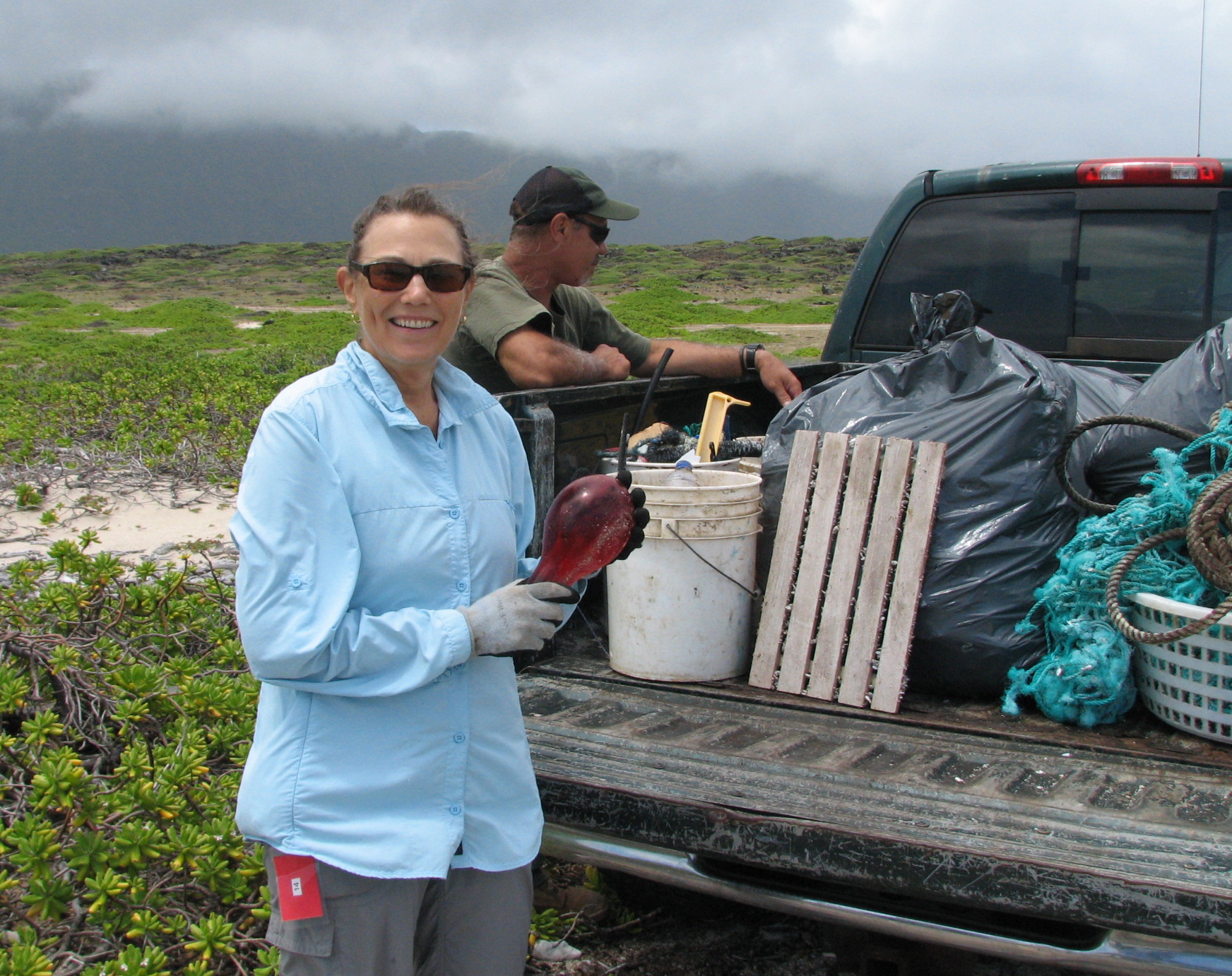
found ropes, bottles, baskets, broken glass, light bulbs, boxes,  and much more.  I found a Portuguese Man of War jelly fish clinging to a rock.  I thought they were large critters, but this one was about and inch and a half long and was told they don’t get much bigger in the Islands.  I’m pretty sure it was dead as it was out of water, but was careful not to touch the tentacles.

Is that a hangman’s noose? Check out the white stuff. That is broken coral that will some day be white sand (RDS Photo)
I reveled in this day as I was at the beach enjoying the surf pounding on the black lava rocks, the wind was blowing my hair and the rain was spritzing on us…and yet it wasn’t cold.  I loved being out there picking up the stuff.  We filled the bed of a large pick up with the junk we picked up.  On the way back to our houses, we stopped by another beach to see a mother monk seal and her “baby.”  The baby was at least half or two-thirds the size of its mom.  but they were lazing on the beach enjoying the afternoon sun. A day or so later, a black tipped shark was seen cruising the little bay checking out the monk seals.  They make good meals for the sharks.

Later that day, I went swimming and snorkeled some.  The water was perfect and the colorful fish were abundant.  It was like being in my own little world with no cares to think about.  All of us went to the local volleyball court to play some games with the locals…those being mostly park employees who

The volleyball game

play every Wednesday afternoon.  Ruth and I played some but the wind (the ever present wind) was blowing so hard that it misdirected the ball a lot and we felt silly missing it or not making a good play.  Some of also visited the local bar to get a beer or soda.  We would call it a hole in the wall at home, but I really enjoyed going there to chat with the folks in there as well as to have a $3 Heineken.  I think that’s the cheapest beer on any island or even at home!

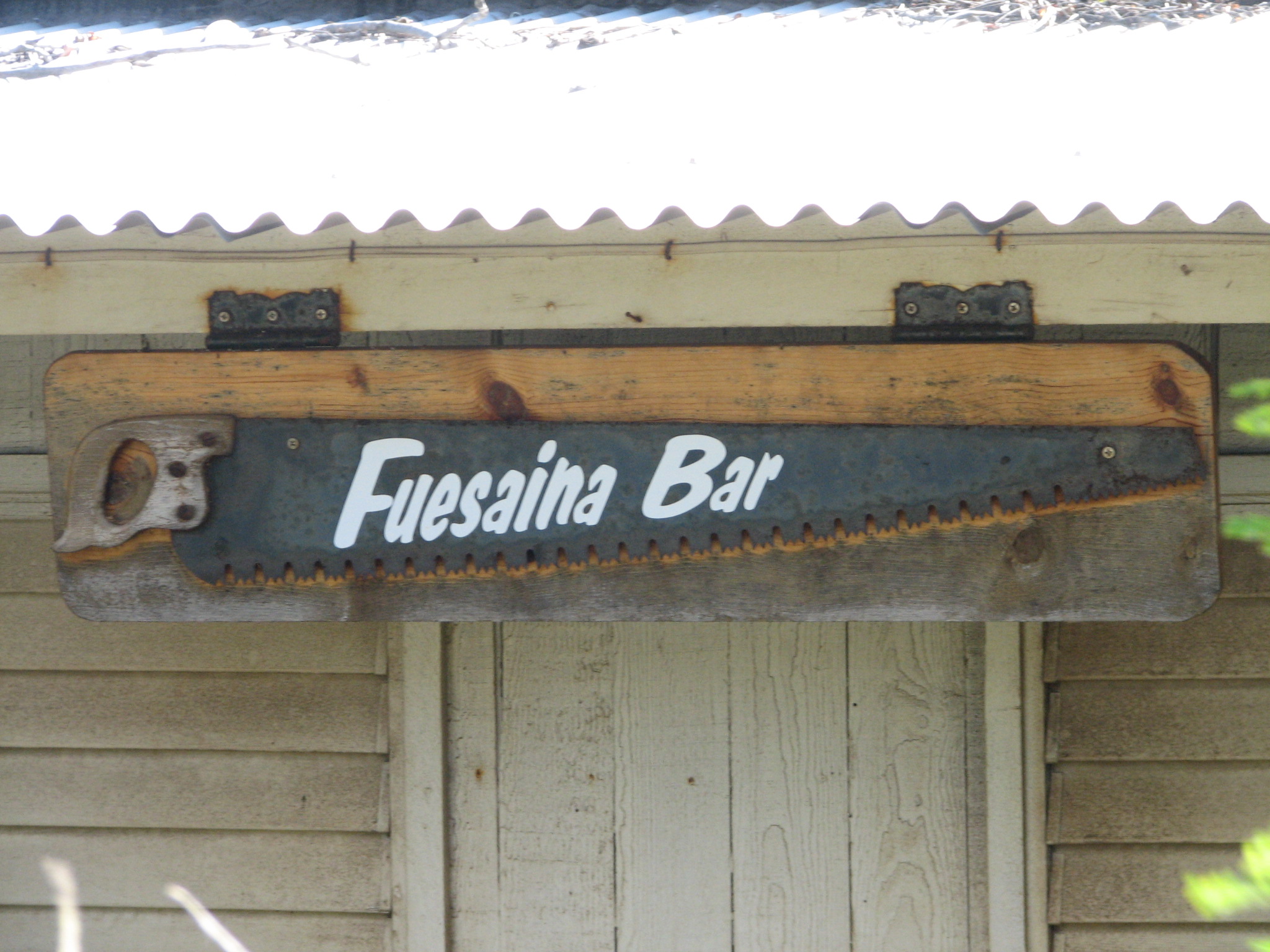
The local (and only) bar at Kalaupapa

Dick, Jan and I chatted with Edwin, a patient who had been at Kalaupapa for 70 years.  We had seen him before when he drove his white pickup with the dashboard filled with little stuffed animals.  We always waved to each other and felt a comradeship.  He served as the referee for the volleyball games and confessed to us that he cheated sometimes to help teams.  He was quite a character.  Rain was threatening as we trooped back to our houses and received a big surprise.   Leimomi came over and shortly after, Moke, another Park Service employee came with his ukulele.  He played and

Moke and his ukelele. What a sweet voice he had

sang with a beautiful sweet voice.  We sometimes joined in and even beat out some rhythm on some makeshift percussion instruments.  The aloha spirit and camaraderie was so strong that it brought tears to my eyes.  It was a grand evening.

Thursday’s word of the day was “kokua” meaning to help.  That was certainly apropos for our week as we were trying to help the settlement as much as possible.  Ruth had asked us to think about what we expected from our time at Kalaupapa and I had said something about spreading aloha spirit…thinking about giving.  But I didn’t really expect to receive as much as I did.  I truly believe that I received and learned much more than I gave.  This feeling is very difficult for me to express adequately.

We were given a tour of the new archives building just across the park from our houses.  This was a real treat as we got to see many artifacts, hear more stories and see more old

The noni fruit

photos.  We also got to see a PowerPoint presentation on grave restoration.  Many of the gravestones need to be repaired and/or restored and our presenter (whose name I can’t remember) was the one who did that work.  He also had several stories and many pictures to show us his work.  We were also able to see more of it when we walked through the cemetery later.  We then worked outside the building weeding and making it look a lot nicer.  Puanani got stung by a yellow jacket just as we were finishing up our chores.  She asked us to get some noni fruit and leaves from its tree to help take the sting and swelling down.  She had been telling us about this tree and that many natives use it as a medicine cabinet to help cure many things.  That night, she and Lynne wrapped my knee (that was sore that day) with heated noni leaves and then wrapped it in plastic for the night.  It did help relieve the soreness, but it kind of stunk like tobacco.

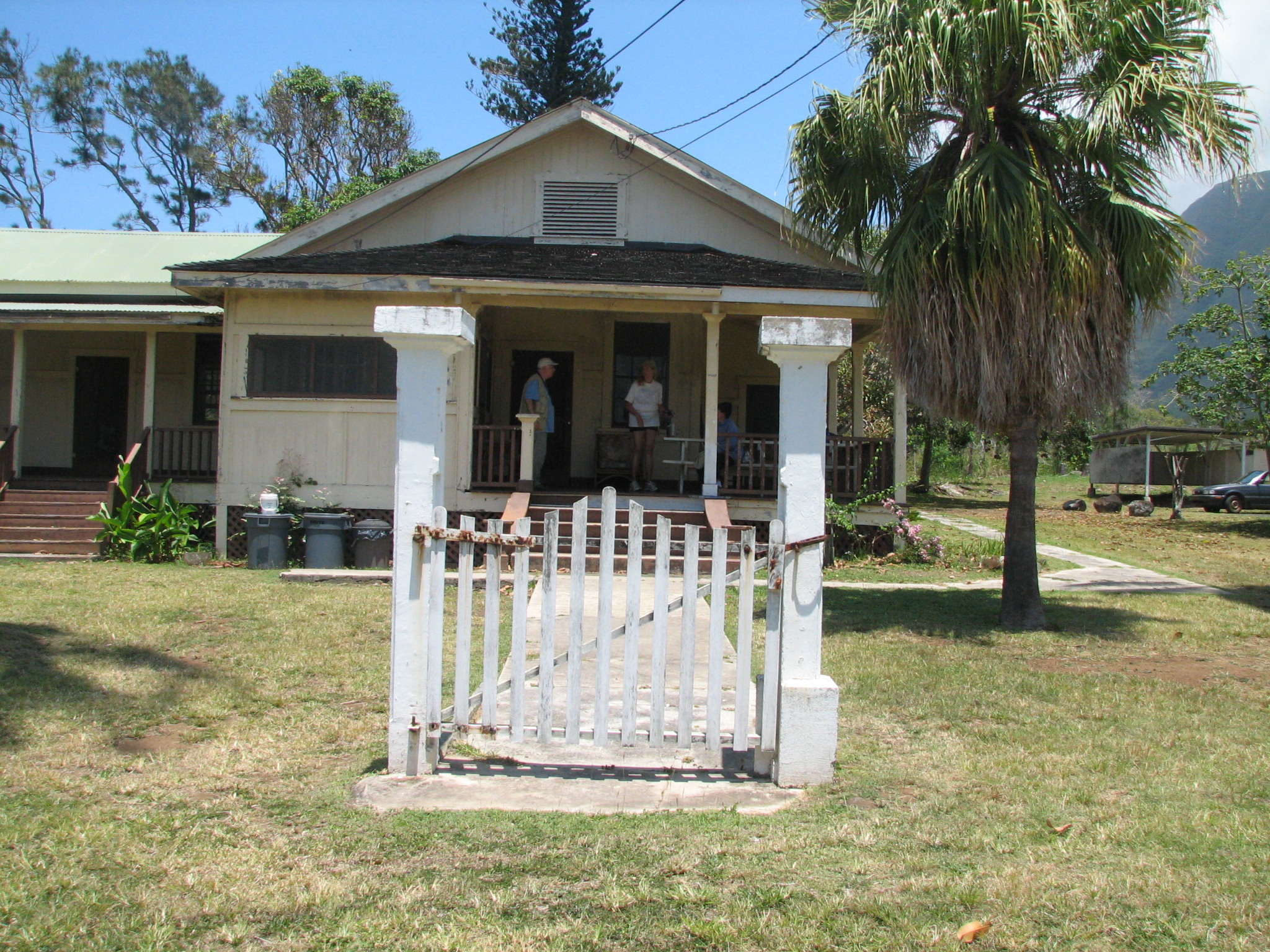
The doctor’s house where 6 of our team stayed

Speaking of our houses, here are a couple of pictures of them.  The white gate is a symbol of a hedge and fence that prohibited

The dentist’s house where we stayed. I’m not sure what Jan’s doing here. Maybe she saw the mongoose that lived under our house.

patients from just knocking on the door of a staff member.  They had to ring a bell and ask for permission to enter.  The gate and fence were the same at all staff houses. Our rooms were pretty Spartan with just a mattress and springs on the floor with not much light available.  We all had to wear red Visitor’s tags to identify us to the patients and employees that we had permission to be walking around the settlement.  There were no problems and it wasn’t a big deal to wear the tag.

My quarters. Plain but it was closest to the bathroom 🙂

The red tag ready for the next adventure

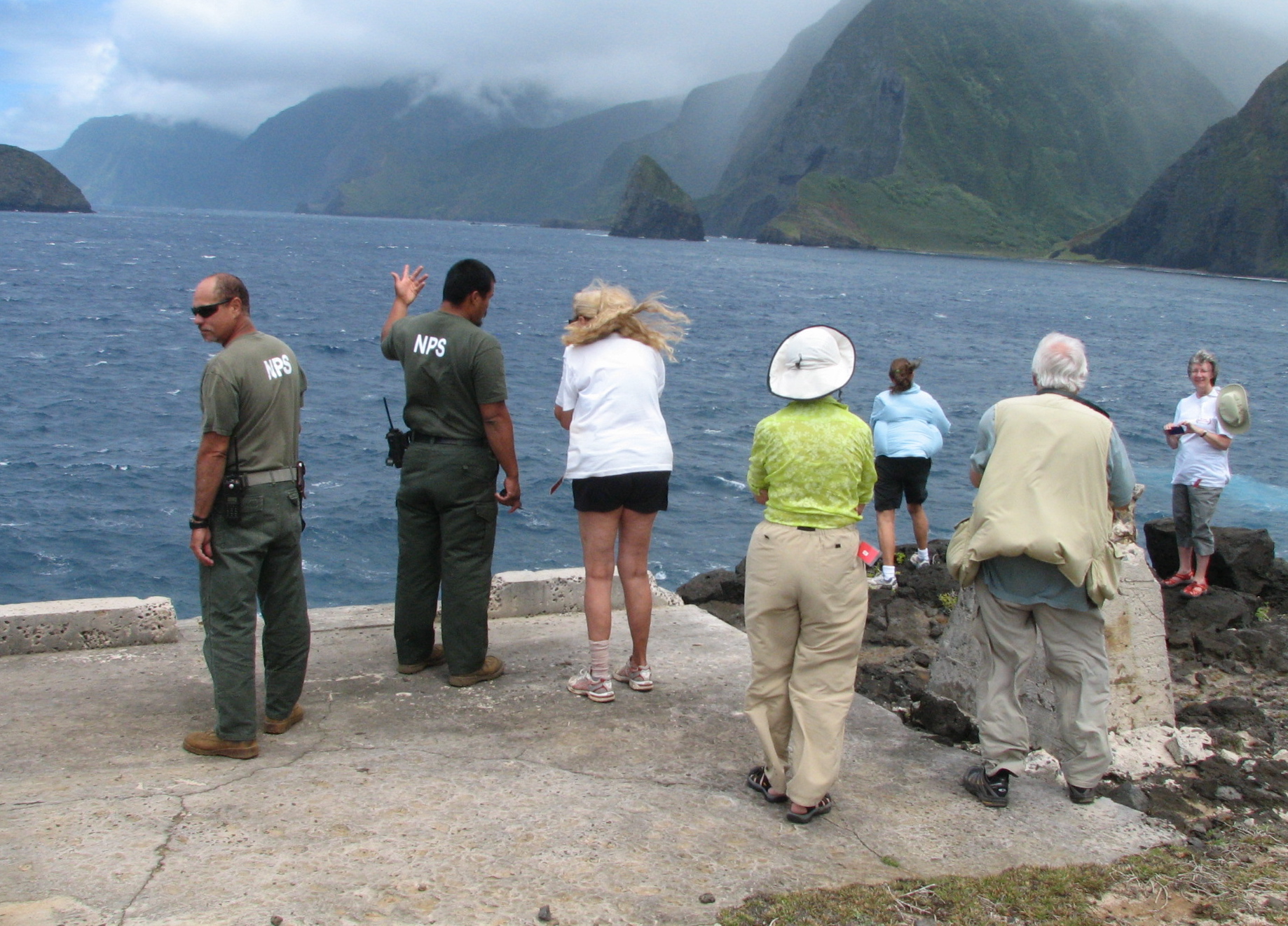
Luana and the “boys,”  Rick and Albert, took us out to where part of the original settlement was at Kalawao so that we could see where the patients had to “swim for it.”  Part of this

Looking out to the rough sea. Click on the picture to enlarge it and check out the billowing pants and shirts

area was also where the “Moloka’i” film was made.  So rugged and unprotected from the wind that I wonder how people survived, especially when they were sick.  We saw two turtles (honu) off the coast and it seemed to me that even they were having troubles negotiating the rough water.  We then made our way over a rocky trail to the “Old Ladies” cave.  We were told that people lived in the cave (a lava tube) that opened out to the ocean and served as lookouts for strange canoes and/or

Looking out from “Old Ladies” cave

sailing ships.  It used to be a very long tube going back to the Kauhako crater that we had visited on Tuesday, but part of it caved in when the US Navy used that part of Kalupapa for target practice during WWII.  I wondered how much more indignity could these people handle?  I guess no one was hurt but it just seems to me that it would have been a bit too close for comfort for me.

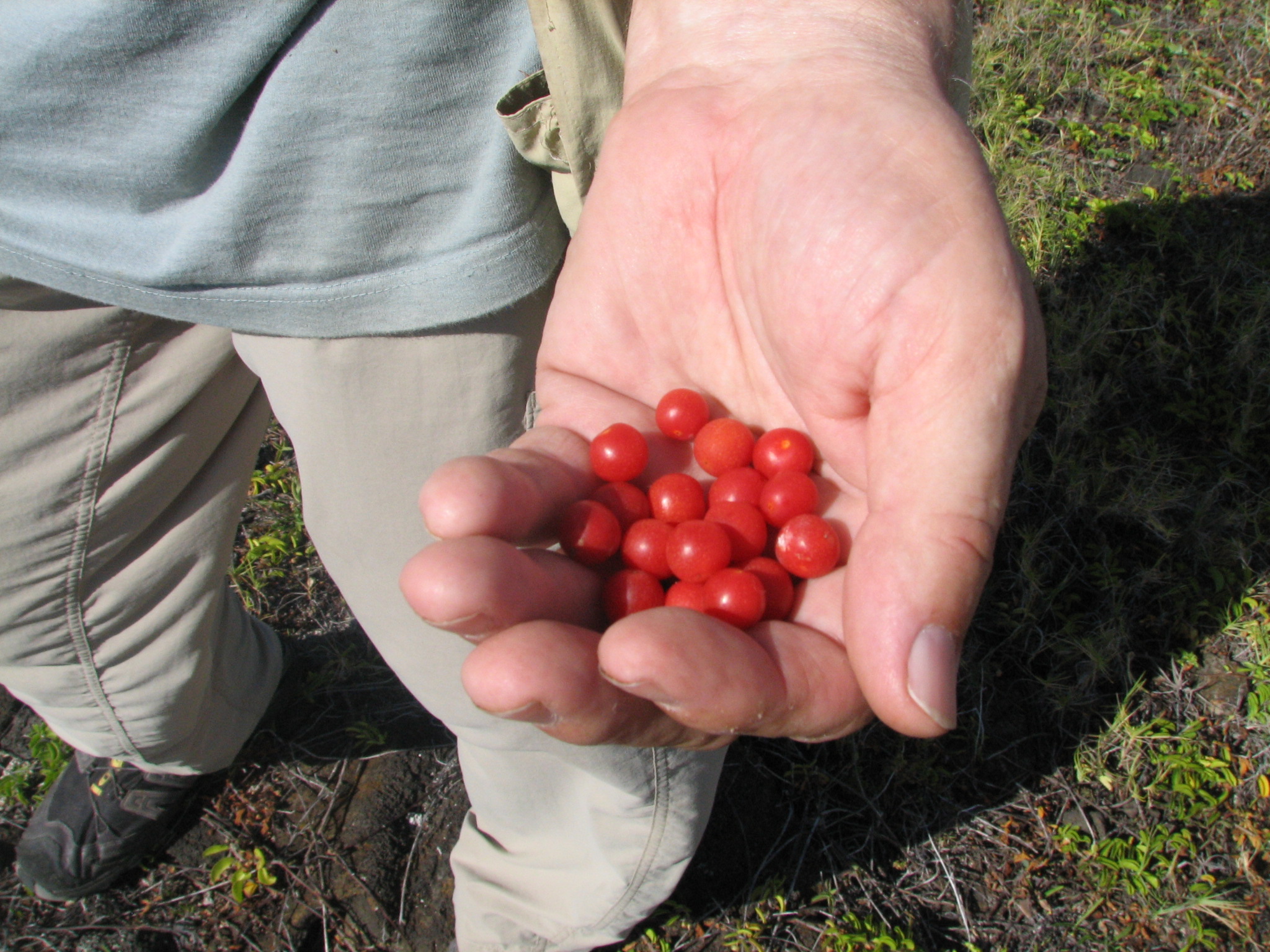
We continued our rocky ride around the north side of the island to the beach that we cleaned up a couple of days before.  We picked some acai (not sure of spelling or even the name)berries for Luana to transplant to other parts of the peninsula.  I felt sort of like a bear looking for food to eat.

Picking the acai berries about 50 yards from the beach that we cleaned up

Up close and personal with the berries

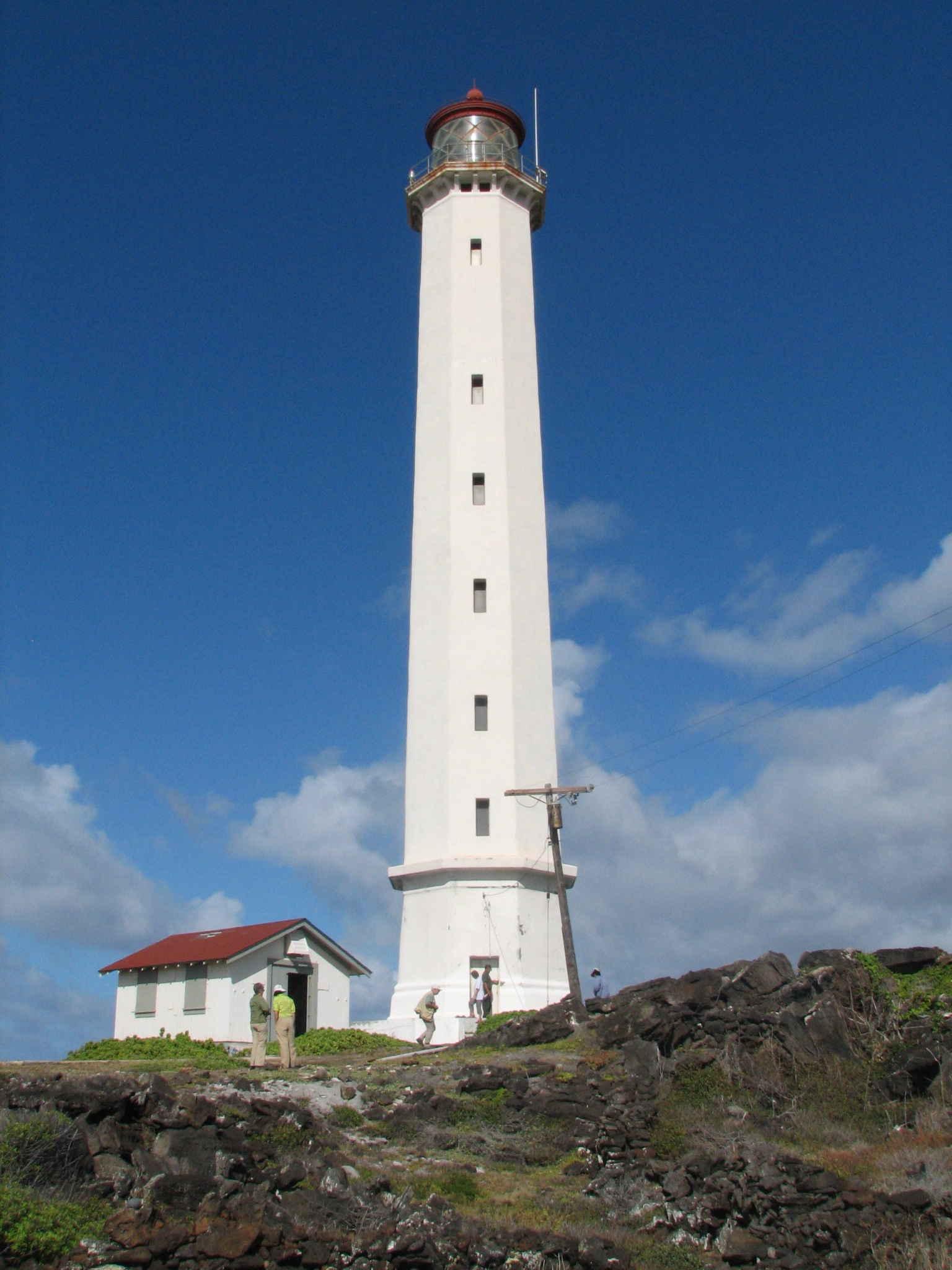
The Moloka’i Light Station…all 133′ of it

From the beach, we turned around and saw the Moloka’i Light Station towering 133′ above us.  It is the tallest lighthouse in the Pacific Ocean and is now 102 years old.  Actually we didn’t just turn around…it was very obvious that it was there.  We were all very excited to get to clamber up the stairs to the top of it to see what we could see.  It was a stupendous view of pretty much the entire peninsula and the pali.  Unfortunately, I didn’t get any good pictures from that vantage point because I couldn’t hold the camera steady enough.  I think the wind was blowing about 70 mph up at the top where we went outside.  Lynne’s watch blew off her wrist and Dick’s glasses blew out of his vest.  So it was an expensive trek up those stairs.  I felt good about going around the top without getting too scared but once I got back inside where the light was, my stomach began doing flip flops.  So I decided that I ought to descend to the ground once again.  It was very exciting for me to do that knowing that I have some acrophobia and that I conquered it to some degree.  I was proud of everyone else as they did it too.

Several of us swam in the harbor that afternoon and enjoyed the array of fish one more time.  It was great!  Then we went home to a great dinner of chicken, rice, green beans and 2 kinds of ice cream!  Yum!

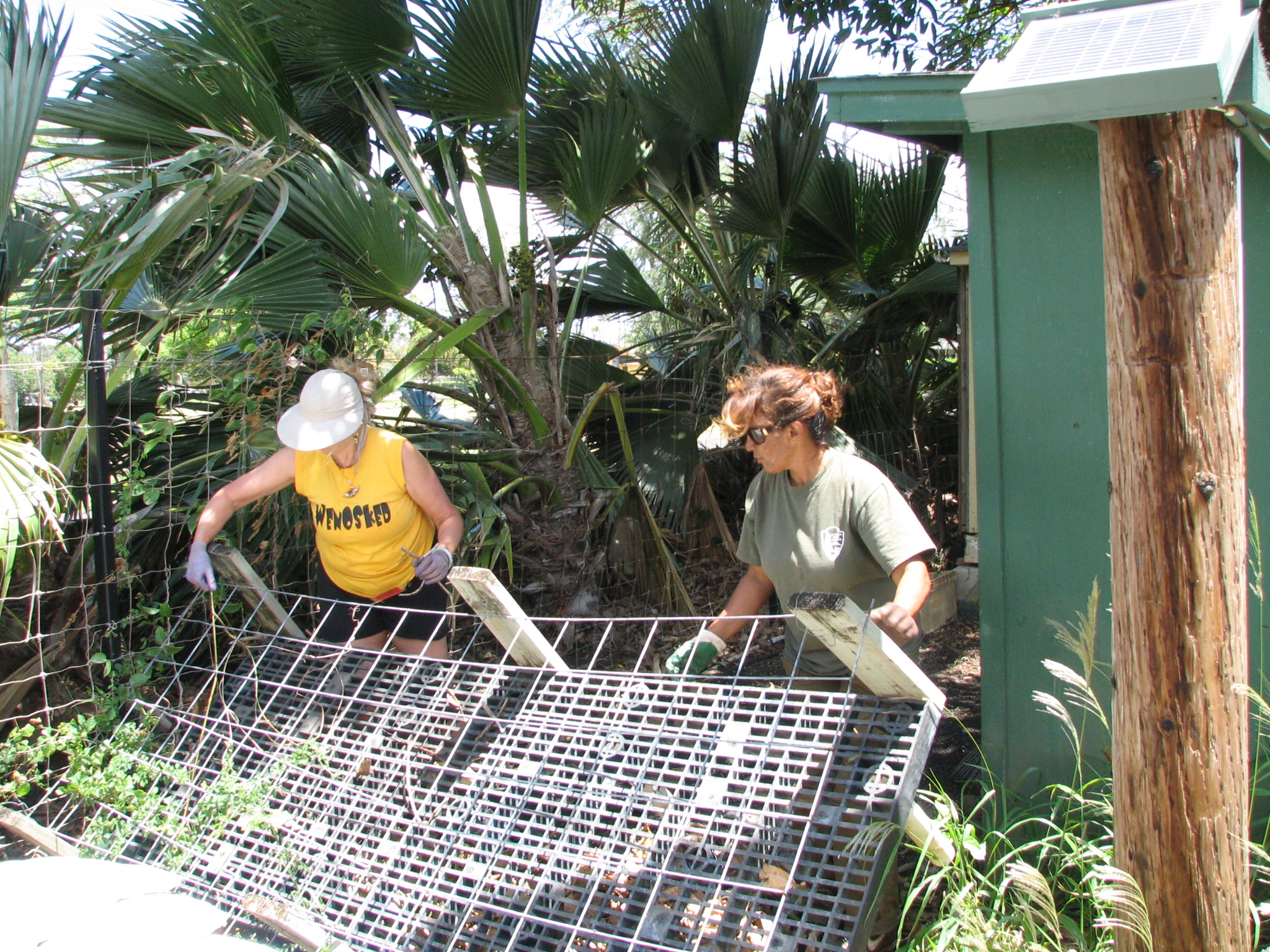
Our last morning saw us going back to the nursery where we helped Luana tidy up the nursery a bit more.  Tables were moved, equipment

Helping at the nursery

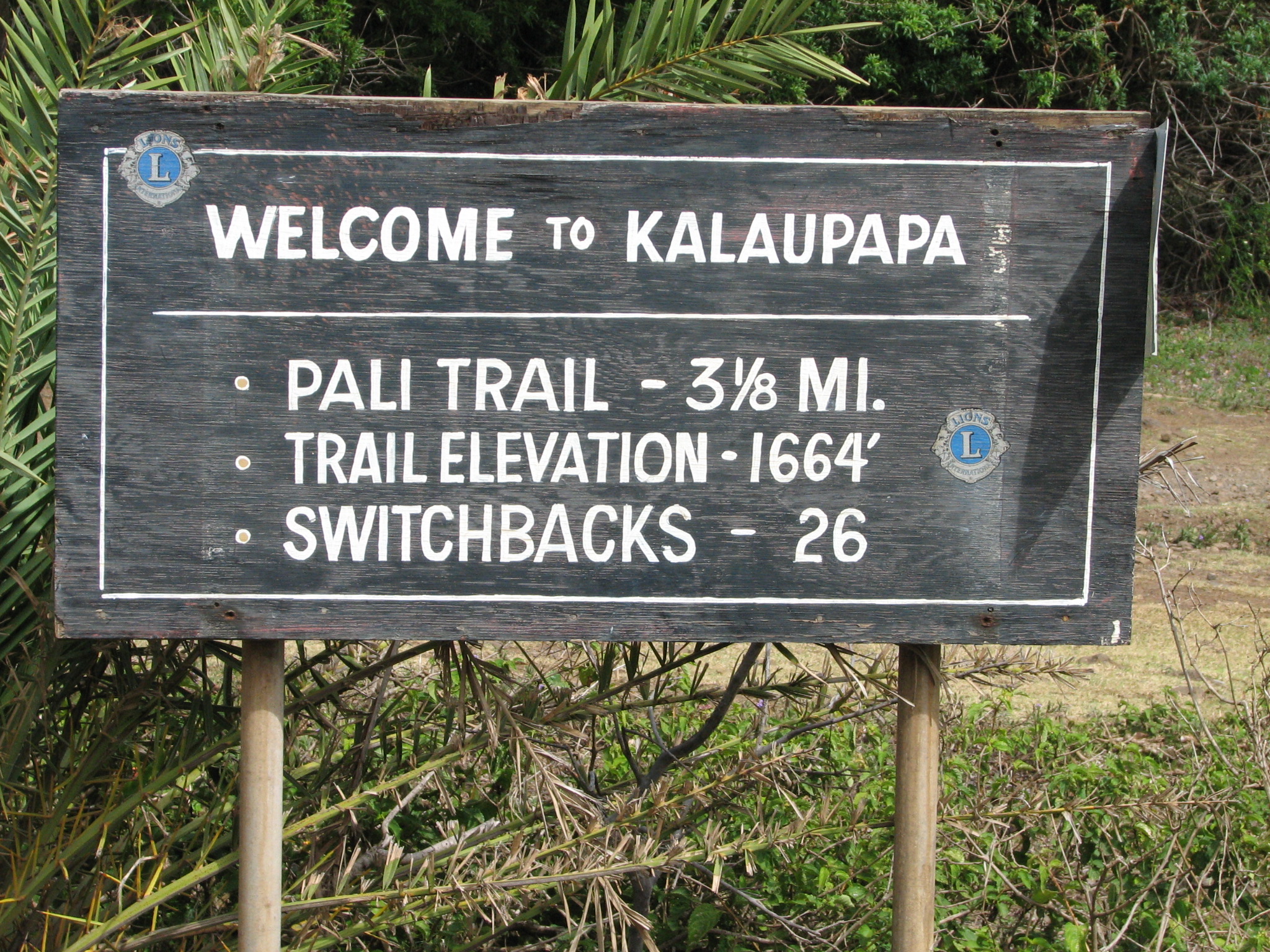
was stacked neatly, weeds were pulled and more mangos picked up.  It was just enough work to get us pretty hot and sweaty again.  After lunch, I trekked with Ruth and Elyette up the Kalaupapa trail.  I don’t know how far we went, but that climb gets to one’s knees after a while…particularly going back down.  The Moloka’i mule train had left just before we began our hike and, of course, left evidence of its

This trail is how many of the Park Service employees get to work Monday mornings. They usually stay and then go home up topside on Fridays.

passing.  I discovered that I’m allergic to the mixture of dust and dung, that it makes a rash on my ankles.  Such a bummer, but it didn’t itch, just looked bad.  That’s another reason not to hike that trail.  We saw and hear a white-rumped shama, a member of the thrush family that sounded like a mockingbird to me.  He had such pretty songs.

The white-rumped shama

We had just enough time left for a short swim in the harbor before dashing up to the house to shower, change clothes and finish packing for our flight back to Maui.  I’ve talked about the ever present wind, sometimes like a gale, oftentimes not.  I grew to embrace it because it blew allergens out of the air and I had practically no nose-blowing for the entire week.  That was a gift!  We all enjoyed the quiet of Kalaupapa.  The two primary sounds I remember were birds and the wind.  I liked that sense of peace.

None of us wanted to leave this beautiful, idyllic place filled with so many stories and so much adversity, strength and courage as we had all enjoyed our brief time at Kalaupapa.  Robert Louis Stevenson said Kalaupapa is a land of “beauty springing from the breast of pain.”  I think it was fitting that our little airplane took off into a double rainbow which to some represents a transformation or something wondrous or amazing.  Such feelings were abundant in my head as I bid my farewell to Kalaupapa.

My priceless room
(RDS Photo)
Ruth and me playing volleyball in gale force wind. Not easily done.
(RDS Photo)

Our group at the last night’s dinner table
(RDS Photo)

2012 Donate Life Run/Walk

13 May

Since last November (2011), a committee has been working toward putting on the Tenth Annual Donate Life Run/Walk to be held at Cal State Fullerton on April 28, 2012.  There

The GGs

have been meetings upon meetings as well as many preparations performed by the Golden Girls (The GGs).  We do much of the grunt work in the office such as making buttons (large, small and square), getting supplies, sending thank you notes to every registered participant and monetary donors and doing our normal duties of taking inventory, sending supplies to Donate Life Ambassadors and a multitude of other tasks that save our bosses lots of time.  But the final six weeks prior to the actual Run/Walk event finds us shifting into high gear.  I’m there every day putting in just about a full 8 hours (some days) and the other “girls” are, too.  This year, the pressure seemed to get to us more than in past years, due to various factors over which we had no control…illness, accidents and fatigue.

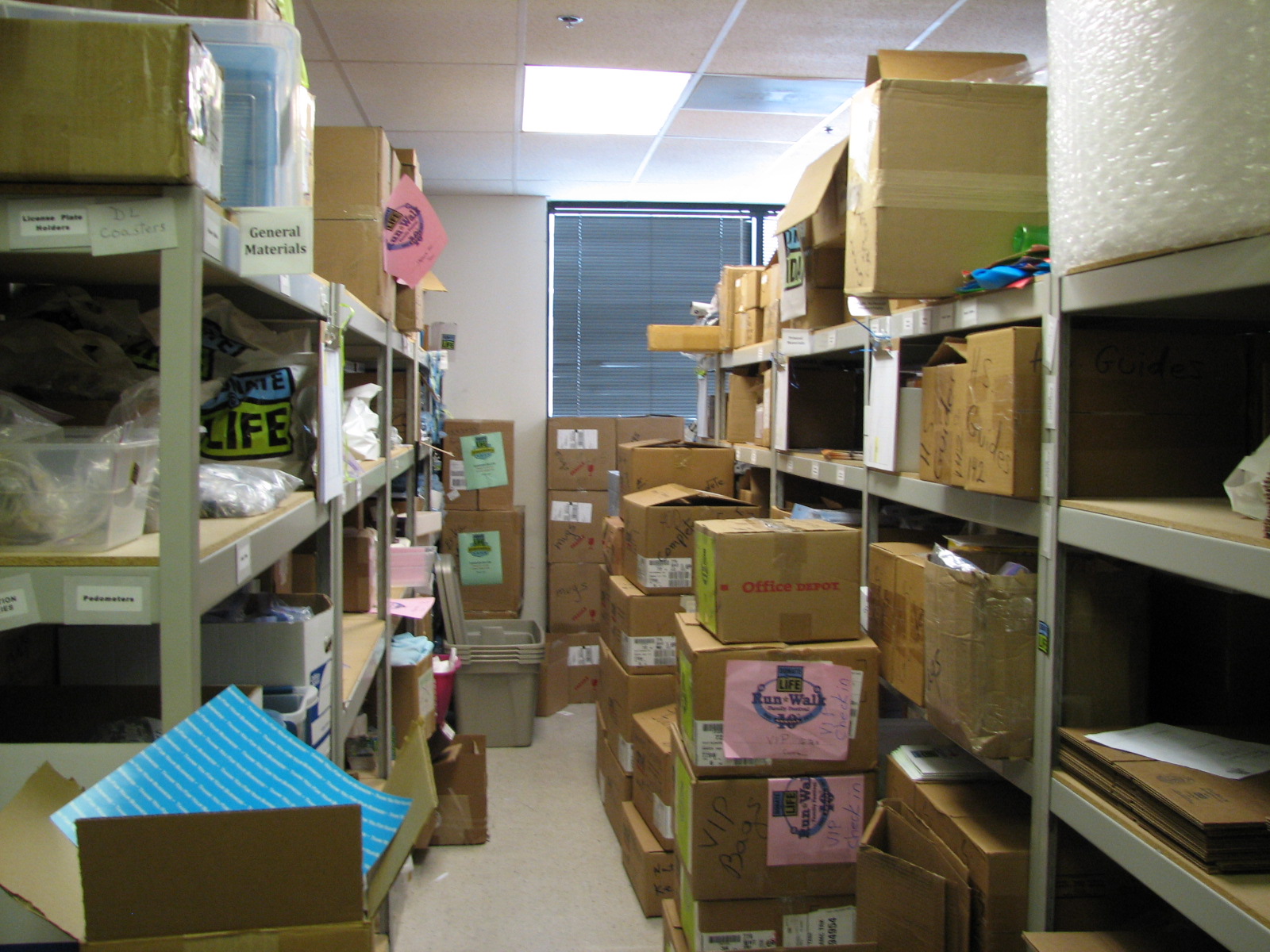
The aisles are getting smaller!

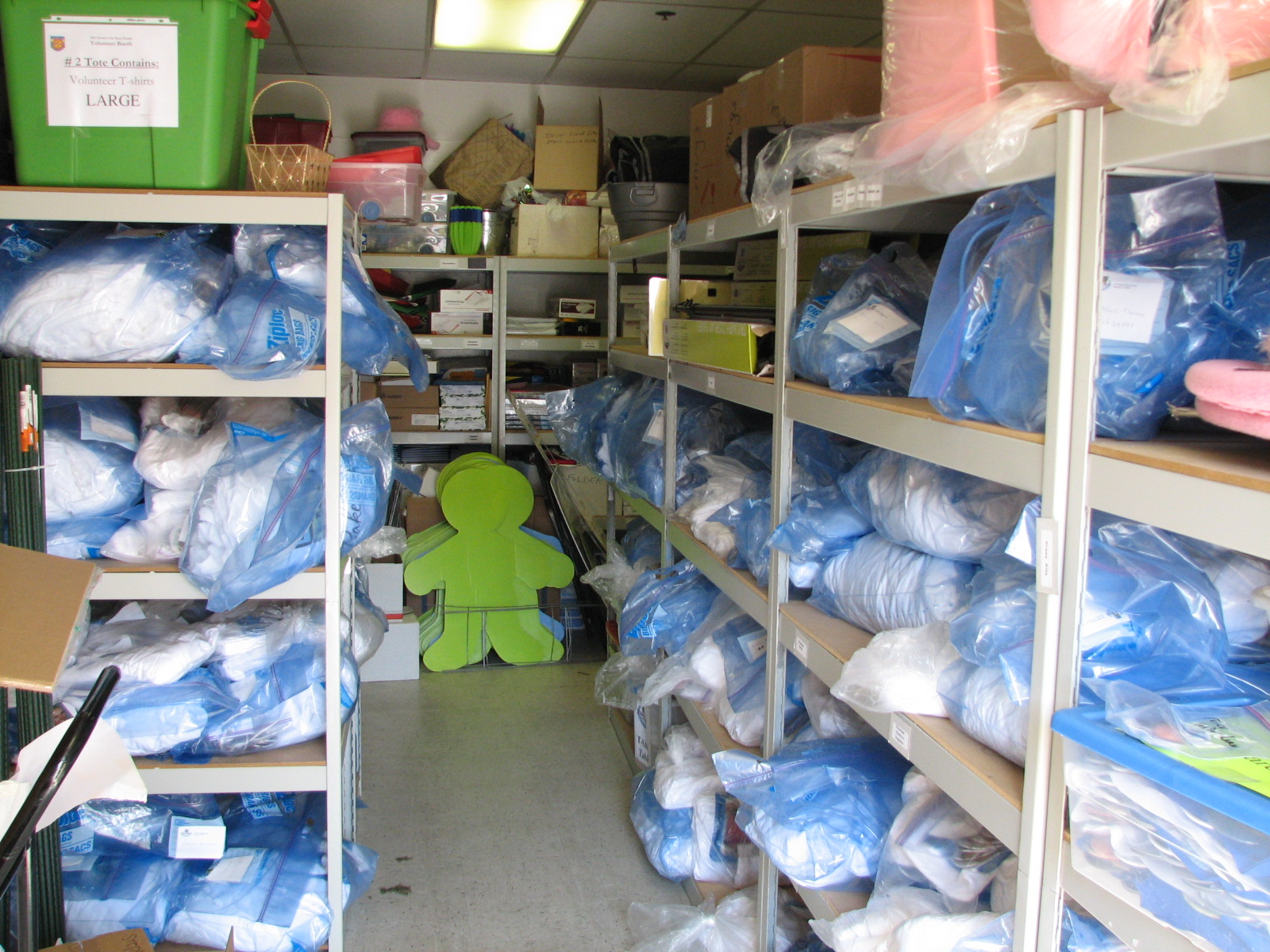
We’ve known for some time that our little warehouse is too small, but these past 6 weeks proved it.  We received many boxes of flying rings (frisbies), chap sticks, mints, key chains, coffee mugs, and other too dads that we send to ambassadors and will give away to the 10,000 runners/walkers.  I was able to get most of that stuff off the floor and onto shelves just in time to begin receiving the donor family t shirts.  Each donor family team member received a special shirt with our logo on the front and their loved one’s picture on the back.  Each shirt had to be counted and sized, matched up with the correct number of buttons that we’d already made and then placed into a plastic bag to be stored until the day before the event when they were moved to special box which then went to Cal State Fullerton to await the donor families.  231 donor families had teams ranging from 1 to 105 members which extrapolated out to more than 3000 shirts.  Normally, this is not too big of a problem, but the t shirt man caused great consternation this year with short orders, many wrong sizes, and doubling of orders.  Plus he had a terrible habit of not arriving with the order when he said he’d be there.  He delivered his final order about 11 PM Friday night and the families arrived before 7 AM the next morning.  That’s cutting it too close!  Needless to say, we’re looking for another t shirt person.

Shirts ready to transport

This shot shows a few of our shirts ready to go to the special boxes.  They represent a lot of sweat and aggravation But we respect the donor families so much that we try very hard to get them just right so that the families will have this to help

Moving the shirts to boxes and then to the campus

them enjoy the day.  The picture to the right shows just part of the process of getting the shirts in the right boxes.  The morning of the event, the boxes are lined up on a field where the families gather around and don their new shirts along with signs we have made for them to carry.  It’s quite a to-do these days.  Many of the families have made it like a family reunion and even bring their barbecues, EZ ups and their own banners.  It’s an amazing sight.

Jolee, Jason and Scott (niece and nephews) came down from Minden, NV to help us get ready and help they did.  Luckily, they have muscles and incredible stamina that take quite a load off us.  They also have a lot of fun with each other and make light of hard work.  I enjoy being with them so much.  They make me feel a lot younger!

Preparing signs for the walk route

This was just one of the tasks they did at the office.  They also went to the campus and spent hours placing hundreds of signs along the route.  They earned their stripes those two days!

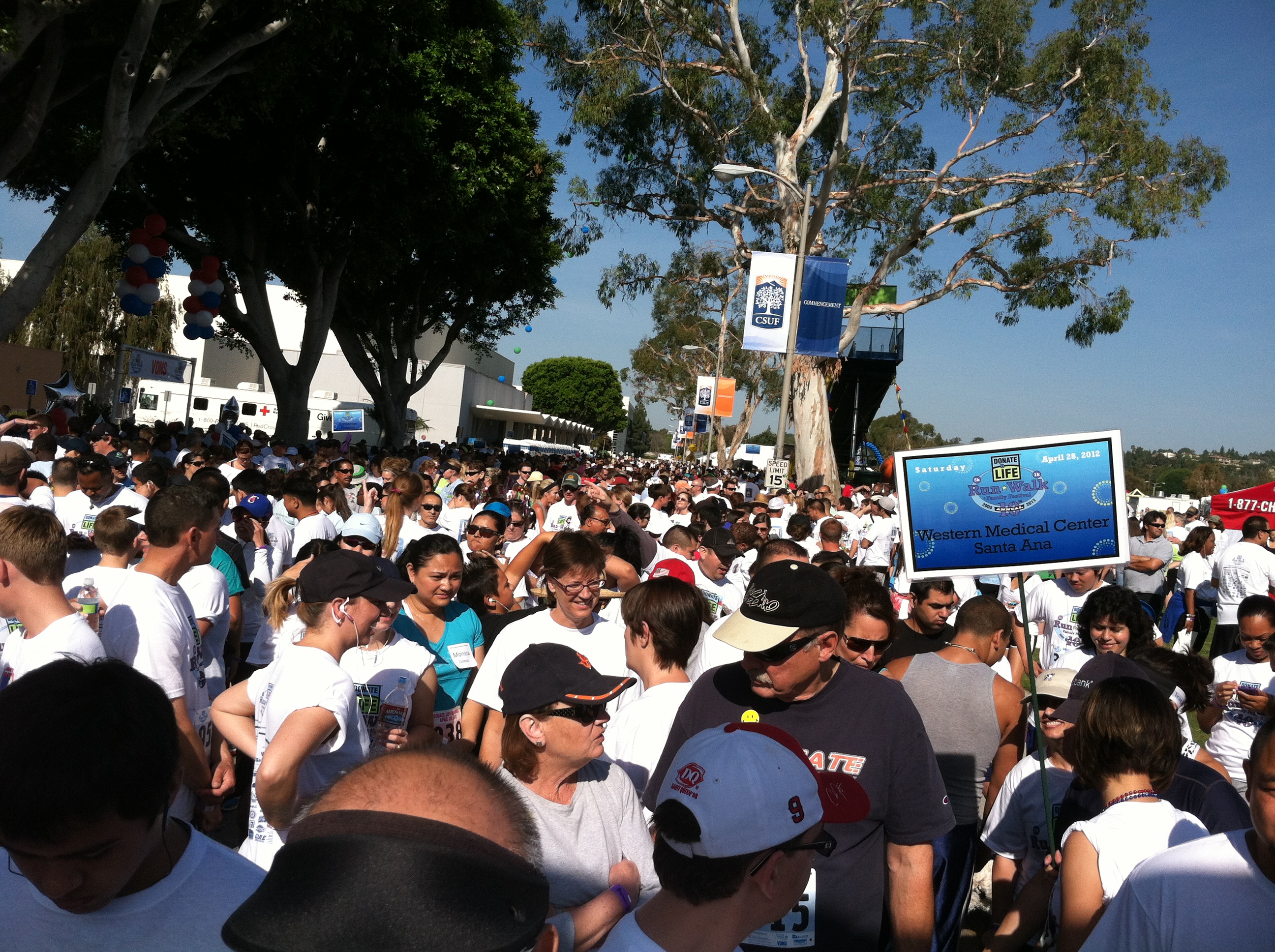
Saturday morning arrived very early.  I was on campus about 5:15 preparing my VIP checkin area and the kids arrived to finish off their area about 5:30, I think.  I liken the Run/Walk to a rainstorm.  It begins with a little sprinkle as people trickle in to register, then the storm really arrives with thousands of people swarming around the site before, during and after the race.  Then the rain peters out again as the event winds down, people go home and we begin our cleanup detail.  It is an amazing event when all our preparation coalesces into a successful happening.  More than 11,000 people attended the event this year…about a thousand more than we expected.

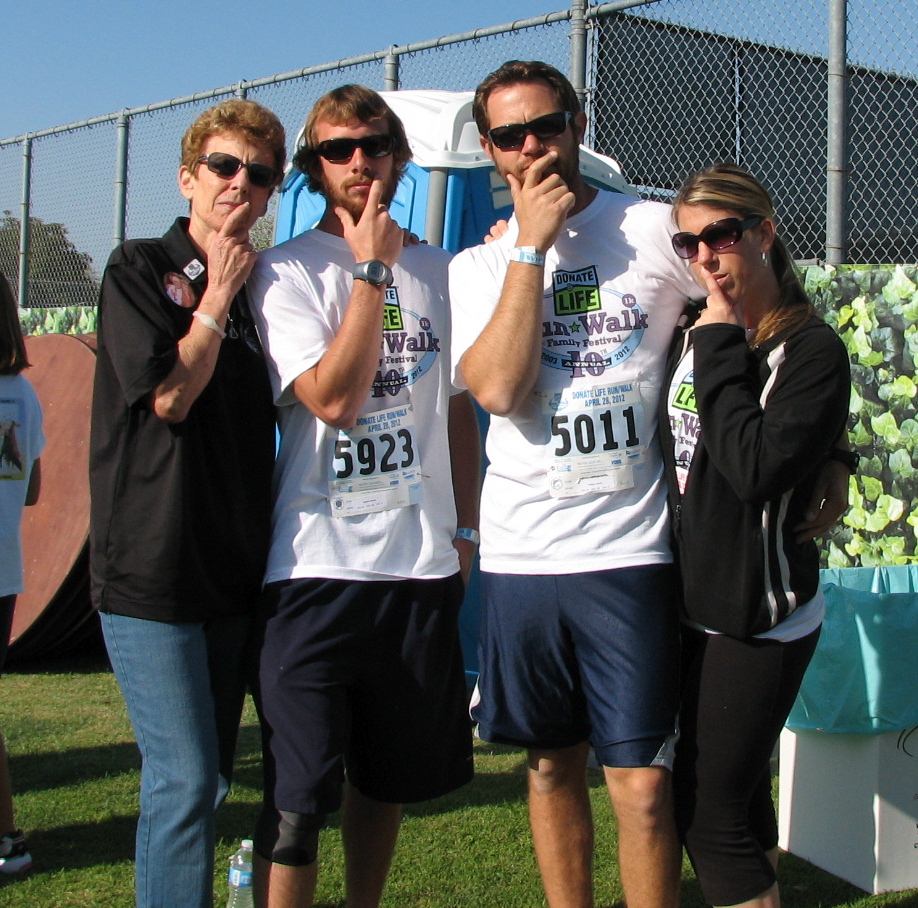
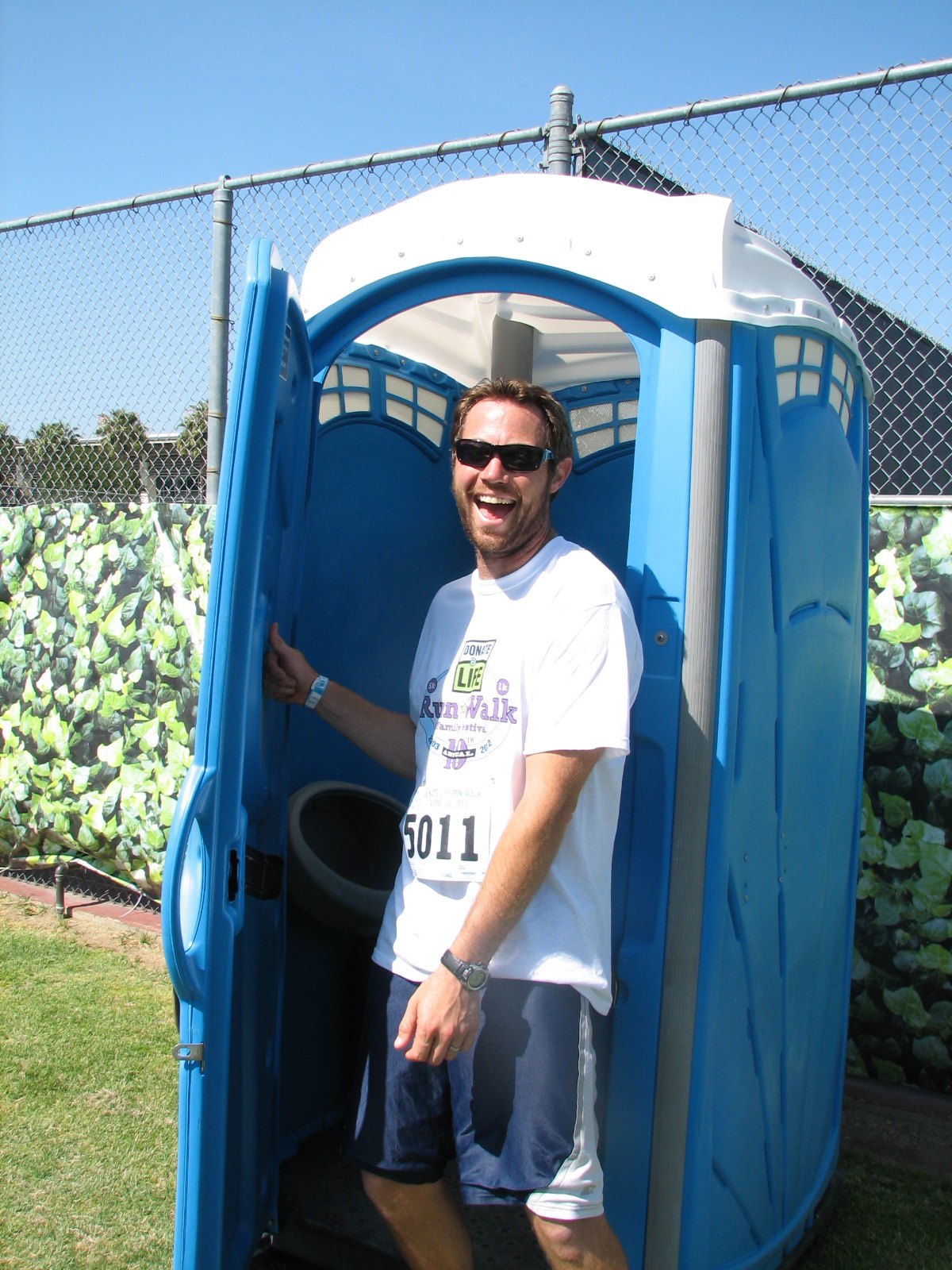
The kids and I posed for a couple of pictures before the race using Scott’s infamous pose that we all have to use at one time

The Pose in front of the Porta Potty

or another when we get together.  Luckily, he doesn’t have a copyright on it or he’d sue us for infringement.

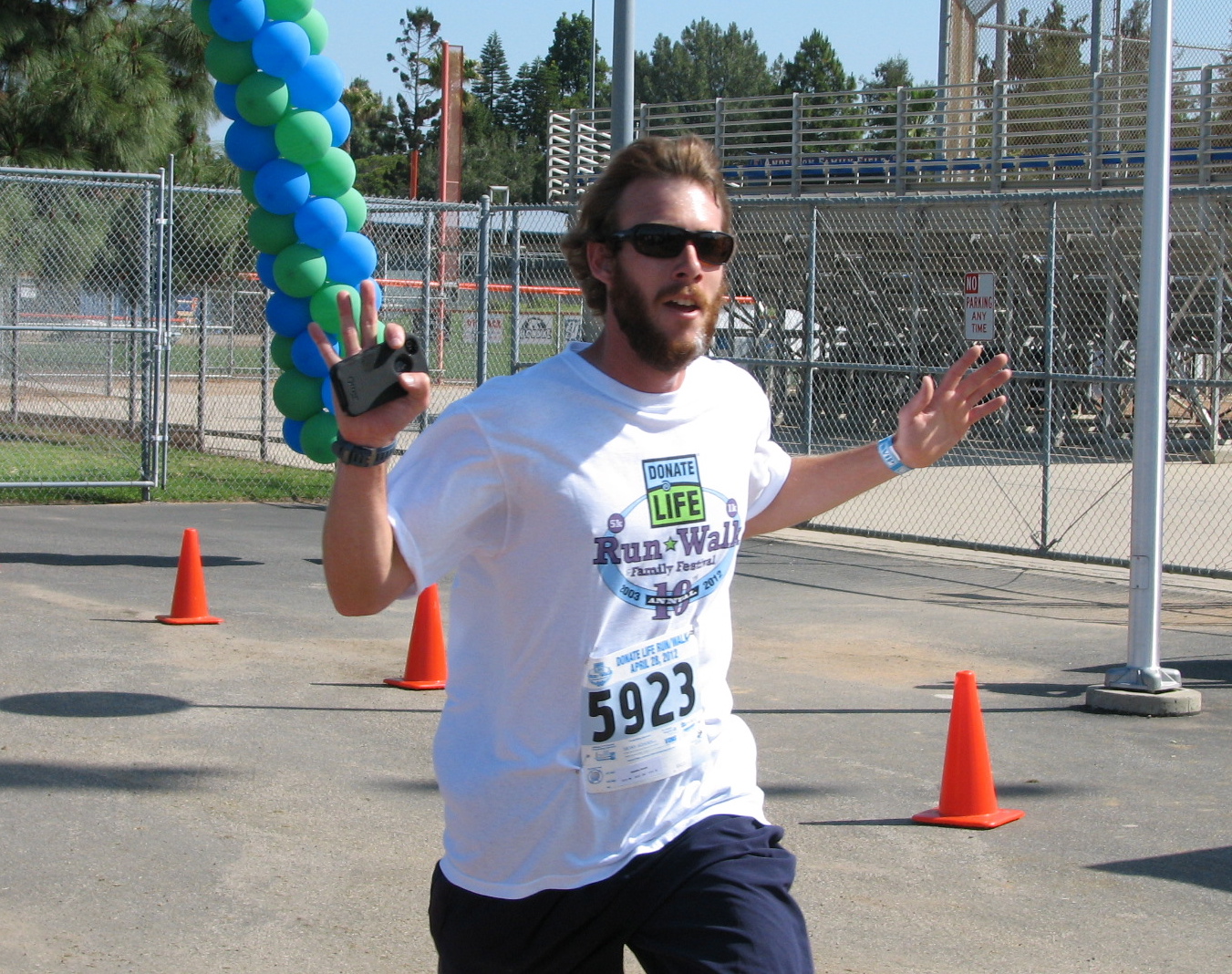
Scott trained very hard for this race as he wanted to improve his 3rd place in the 2011 race.  One of his training methods was to run for miles wearing his fire fighting gear at altitude in Nevada and his

Yea, Scott!

hard work paid off.    He came in second in his age division with a 5K time of 18:50 and he was sprinting when he crossed the finished line!  Scott said his time improved by almost 2 minutes.  That’s my nephew!  Jolee and Jason also finished well ahead of the pack but didn’t place in the top three.  I was proud of all three of them.  Scott really touched me when he said it was an honor to run in memory of Uncle Bob and Bob’s heart donor, Tim.

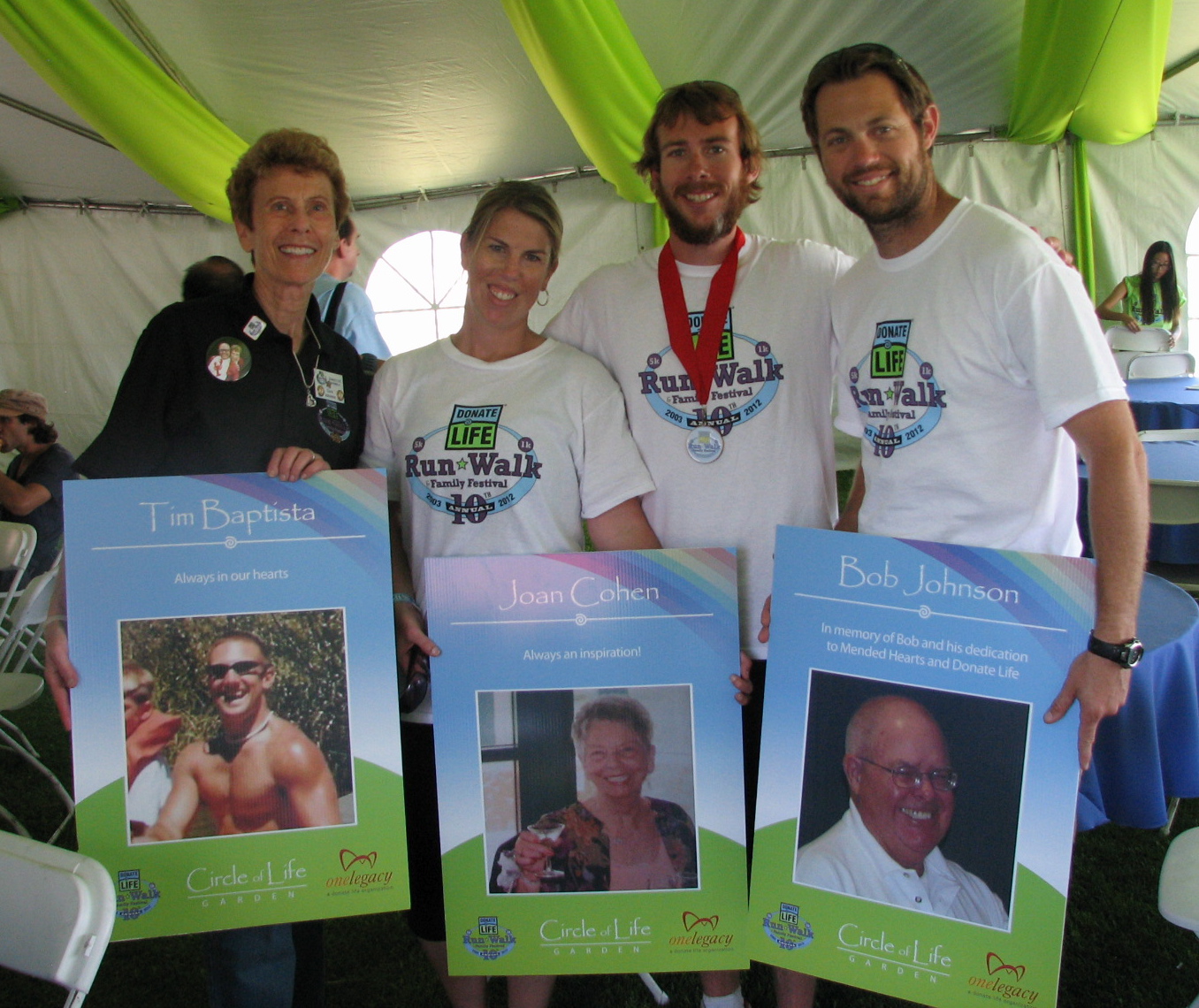
After they cooled down a bit, we went to the Garden of Life which has many pictures of donors, people who are waiting for organs and people who have passed.  About 165 posters were made and placed in the Garden.  It has become such a focus point and memorable place that families sort of camp out by their loved one’s picture.  Some bring flowers or other tokens of affection to remember them and then they take the poster home with them.  It’s quite an inspirational place, one that often brings tears.  I had a picture of Bob, one of Tim on a raft in Lake Tahoe and one of Joan, a good friend who recently passed away.

In the Garden with Uncle Bob

I had to go back to work in the VIP area, but the kids wandered around the exhibitors’ area, bought some raffle tickets and even won a prize.  The medals were presented and we cheered Scott like the fan club we were.  The kids helped me pack up the VIP area and we were ready to go to the Pint House for their special treats of the the afternoon.  Kathleen gave me special dispensation to leave early for which I was thankful.  I was very tired and wanted to spend some quality time with the kids.  We had a great afternoon and evening together.

In my estimation, the 2012 Run/Walk was a great success as evidenced by the numbers of people attending, participating and having fun.  Kathleen said a week later that she had received no negative reviews and had many positive comments along with many thanking her for providing such a positive, inspirational event.  We know that we always have room to improve, but we feel that we met our goal of celebrating life, donor families and those who are awaiting organs, tissue and eyes.

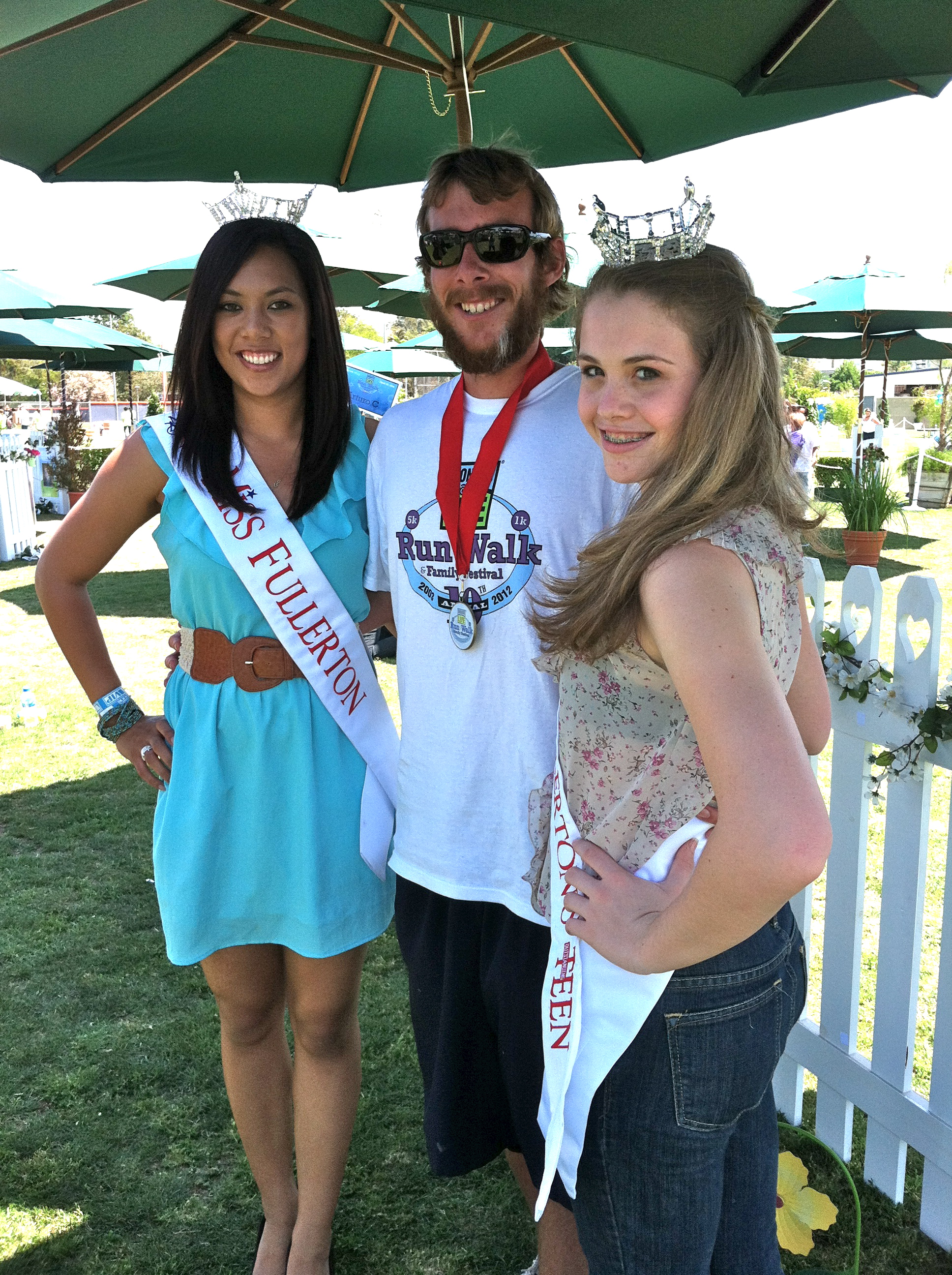
In closing, they say pictures are worth a thousand words and here are a few more thousand words to let you see a bit more of the event.

The starting line. Did you ever see so many white shirts?

Us with our heroes

Scott’s Chicks

‘Nuff said!

The Perpetual Songster

23 Apr

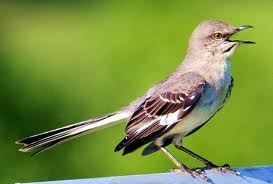
A few days ago, I awoke in the middle of the night to a rich variety of trills (no spills) and warbles.  It was one of my favorite songsters, the mockingbird, who loves to serenade his lady love in the dark of night, much to the chagrin of some folks.  Since I’ve grown up with the mockingbird’s tunes, I enjoy them anytime of day or night.

Singing his little heart out

The mocker is a tidy, trim bird, which can sing his own song (although I am not sure which is his own) as well as mimic many others.  Some experts say some mockingbirds can imitate up to 200 other birds’ songs as well as some non-human noises, such as sirens or cats.  I don’t know about that.  Every time I try to count a mockingbird’s songs, I max out about 9 or 10 because I lose track of what I’ve heard before.

I love to watch and listen to them as they make their way through the day.  The Cerritos mockers love to perch on something high, such as the top twig of a tree, the highest gable of a house or a light post.  They don’t like crows, cats or hawks and will chase them alone or sometimes in tandem.  Our ol’ cat, Bert (from many years ago), literally crawled on his belly across the street to get home when a pair of mockingbirds were chasing him.  He couldn’t get inside the house fast enough to escape their torment of plucking his short hairs and beak nips.  I think the crows might like to get into the mockers’ nests because they will chase crows in flight.  It’s amazing to me that neither the mocker nor the crow ever run into anything while the pursuit is going on.  I’ve even seen a crow do a barrel roll in an effort to escape those sharp beaks.

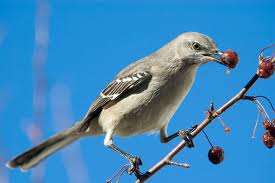
I have several bird pepper bushes in the back yard that are favorites of mockingbirds in the fall.  These little red peppers are hotter than Hades (Bob tried one once and told me

They like fruit and berries in the fall

not to even put my tongue on one which I took for the Gospel) and the mockers love them.  They land on the block wall and hop down to one of the branches to gobble up as many peppers as they can.  They try to be sneaky about it, but every time I see the bushes wiggle some, I know it’s them.  This picture is of a mocker eating a crab apple, but the effect is similar as one eating my bird pepper bush.

I had always heard that it was only the male of the species that sings, but the National Geographic Field Guide to Birds claims otherwise.  Both sexes sing in the fall to claim feeding territories.

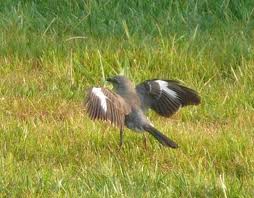
I’ve sometimes seen a mockingbird spread his wings as if to pump himself up or make himself look bigger.  This wing

Wing-flash

movement is called a wing flash.  A Wikipedia article says it might be to cast a different shadow on the grass so as to fool insects or whatever the prey may be at that time.  I guess that makes sense, but I like my thought better.  They are saucy birds and I think they’d like to make themselves look bigger.

I wish I had taken all these pictures, but I never have the camera at the right moment nor do I have the skill or patience to get shots like these.

As I was outside this morning doing some weeding, I was treated to quite a symphony by mockingbirds, finches, sparrows, phoebes, a few warblers and even some starlings.  Some people might think all the songs are a cacophony but I choose to think they are a symphony because they were all blending into happy, contented sounds of creatures carrying on their lives without bothering each other or worrying about who has the correct religious or political viewpoint or who has more money than the other.  While I don’t particularly enjoy weeding the yard, I do really enjoy being outside listening to and watching God’s creatures.

7 Apr

Some have asked me why “Buzzard Notes.”  That’s a fair question and I’d like to explain how this blog title came about.

When I finally got enough gumption to figure out how to do this thing and got some good information from Güd Writer who also has a blog on Word Press, I began to tinker with this thing.  One of the first things they ask you is what you want to call your blog. I tried “cora” with many variations and numbers along with “cjohnson” and many of its variations.  They were all taken.  What to do?

Jerri, my sister, has called me “Buzzard” for just about as long as we can remember but we don’t remember why.  There must have been a reason, but it escapes us.  (Maybe because I have a skinny neck?)  I figured no one could possibly have “buzzard notes” and tried that title.  It worked!  So there you have it.  buzzardnotes@wordpress.com

Periodically, I add some little tidbit of something that interests me and post it (Please realize that many things interest me and I love to share them, but time, sometimes, is of the essence)  So if you are interested in being alerted as to when a new post comes along please look for the small “follow” box in the bottom right hand side of the latest post.  If you click on that, it will ask you for your email and then you should be alerted as to when the latest posts happen.

Spring Feelings

7 Apr

Today is a gorgeous day in Cerritos…a bit too warm with 89° but nice, nice the less.  No smog or haze and a slight breeze.    I was outside talking to one of the neighbors when I noticed a mockingbird was serenading us with his many songs.  I’m sure he’s trying to attract a mate as he just kept on singing with hardly a breath.  I know it was a male mocker because it’s only the males who sing the many tunes.  I enjoy hearing them  because it reminds me of  spring days of yore…many birds singing their tunes with seemingly no cares, blooming flowers galore and a nice feel to the air.  Life is good!

Water Henge's 5 pieces

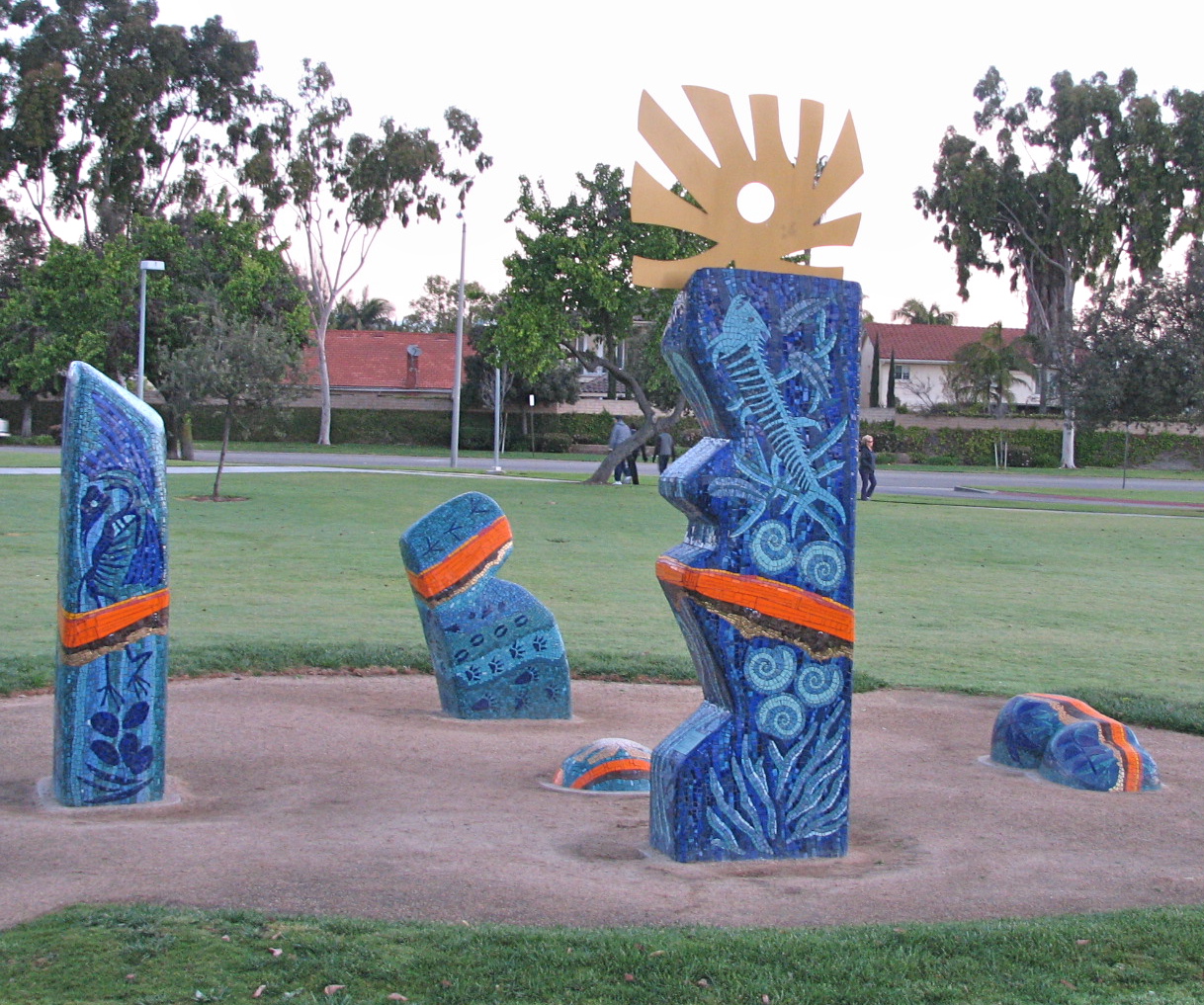
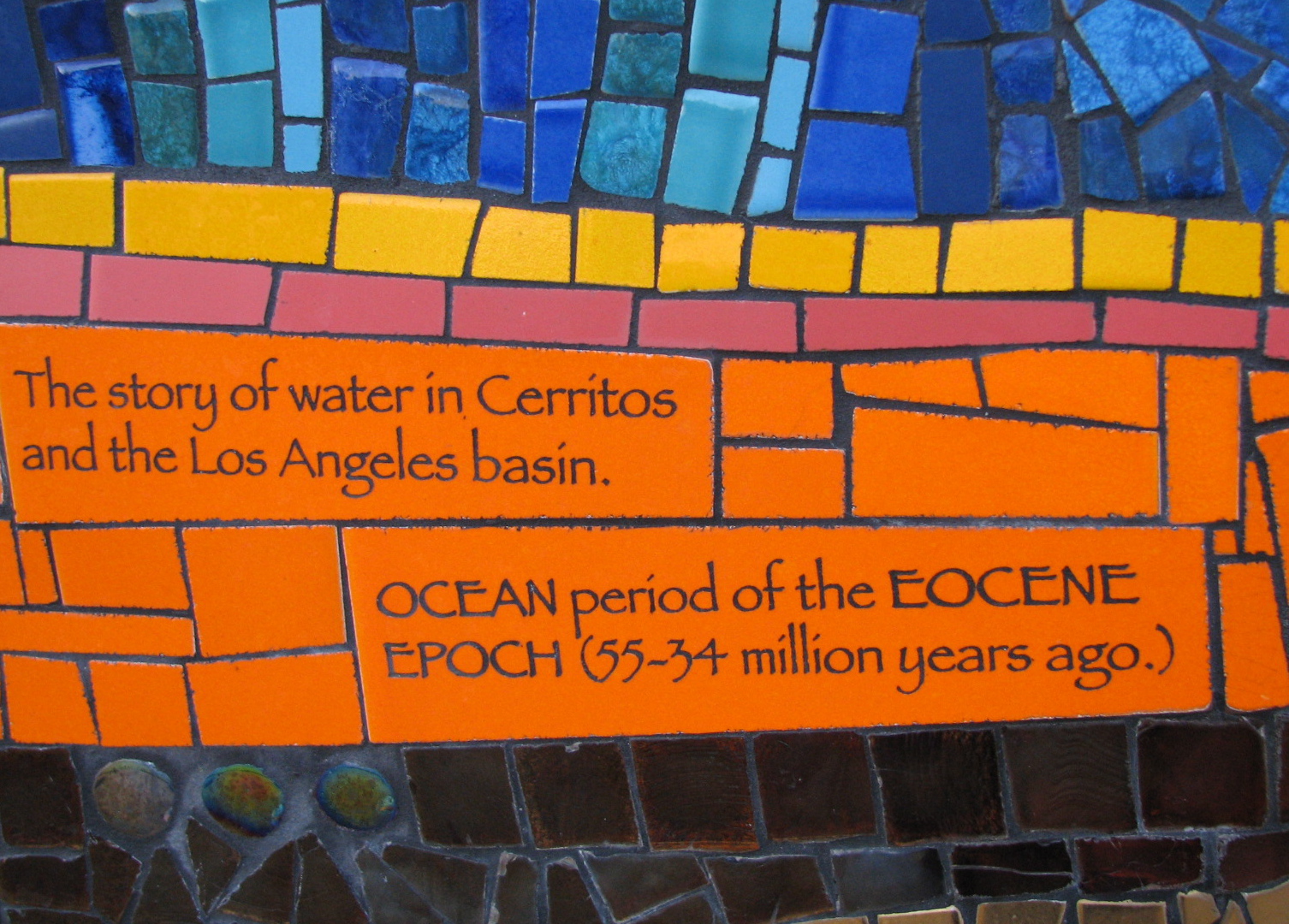
On the first day of spring, I walked over to the Cerritos Regional Park to check out “Water Henge: H2O = Life,” a sculpture near the community pool.  Cerritos has many sculptures throughout the city, but this is my favorite because I can understand it.  It’s also different from all the other sculptures in Cerritos because of its composition is of Expanded Polystrene (EPS) that is coated with one” thick cement.  Ceramic tiles accented with glass pieced surround the cement.  The piece was commissioned by the City of Cerritos and Los Angeles County and was created by artist Kim Emerson. The artwork is made up of five mosaic landscape sculptures that represent a visual timeline of the presence of water, or lack of water, in the region. The pieces range in size from 9 inches high to 15 feet high.  The tallest piece has a part on top that looks like the sun and the sun is supposed to shine through the hole onto the smallest piece on the first day of spring.  This is why I went over to see it.  But I didn’t think far enough ahead and failed to realize that I had to wait until the sun

Cerritos Water History

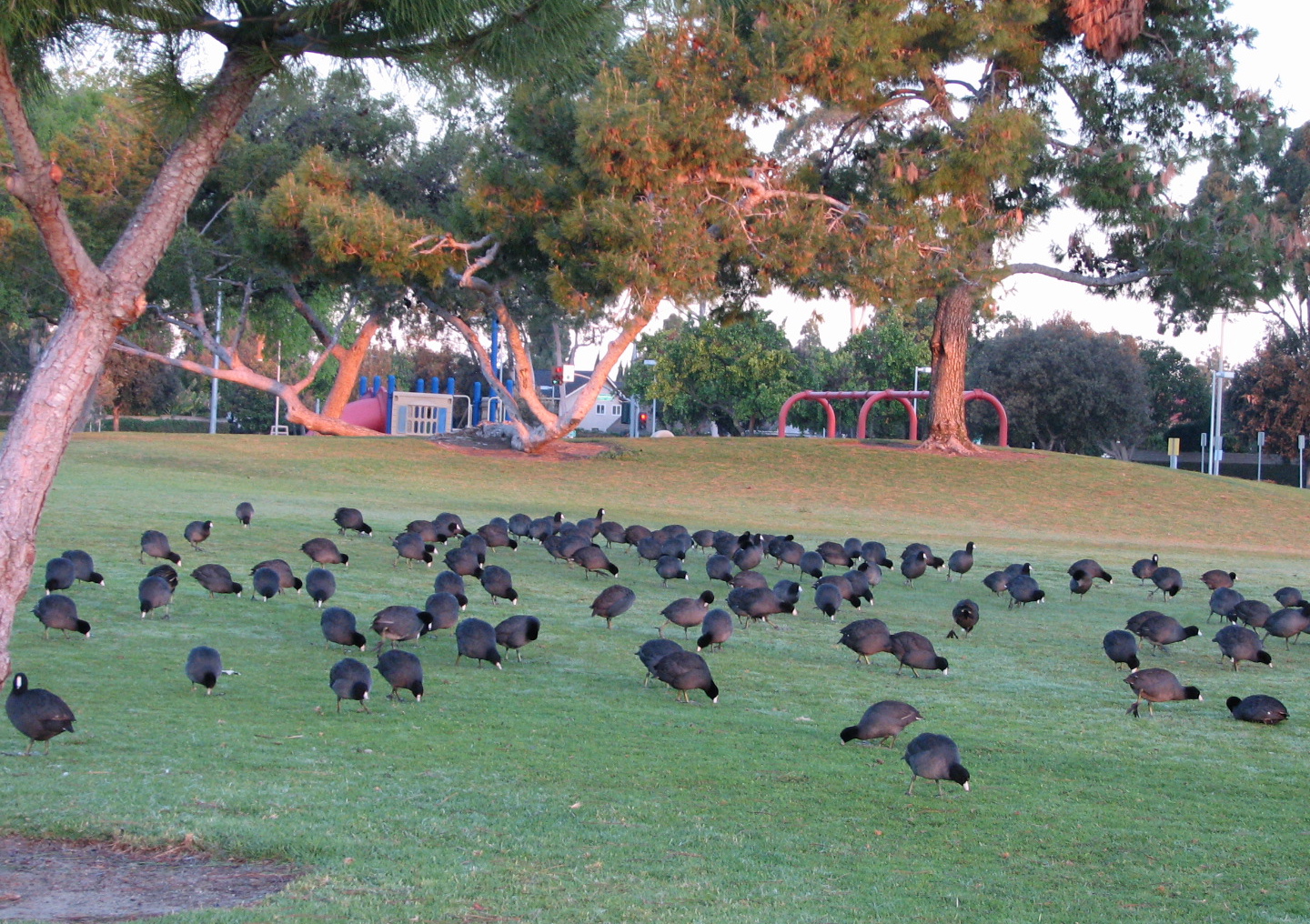
had risen higher.  Well, I couldn’t wait that long and so I’ll just have to rust that this really happened.  I don’t know if it ever does because I’ve never seen an article in the newspaper or online about this little piece of trivia.  The smallest piece of Water Henge represent an 11,000 year drought 10,000 years ago.  And we think we’re in a drought now after a year or so!  After being a bit disappointed in not seeing the sun shine, I continued my walk around the park and took a picture of a large flock of coots (what Dad used to call mud hens).  They were “grazing” on the grass, probably leaving their evidence everywhere.  Those birds are really messy!

The messy coots!

Speaking of birds, I’ve seen evidence of several sparrow and finch nests around the house and one of the neighbors told me he has a swallow’s nest attached to his house.  Since the birds have completed it, he’ll let them finish out their cycle before knocking it down.  Swallows are persistent little birds as they will try two or three times before giving up on a nest if someone knocks down their attempts at building their little mud house.

Spring has sprung and hope springs eternal (most of the time)  Happy Spring and Happy Easter to you all!

Prime Time – March 12-15, 2012: It Was Lovely!

17 Mar

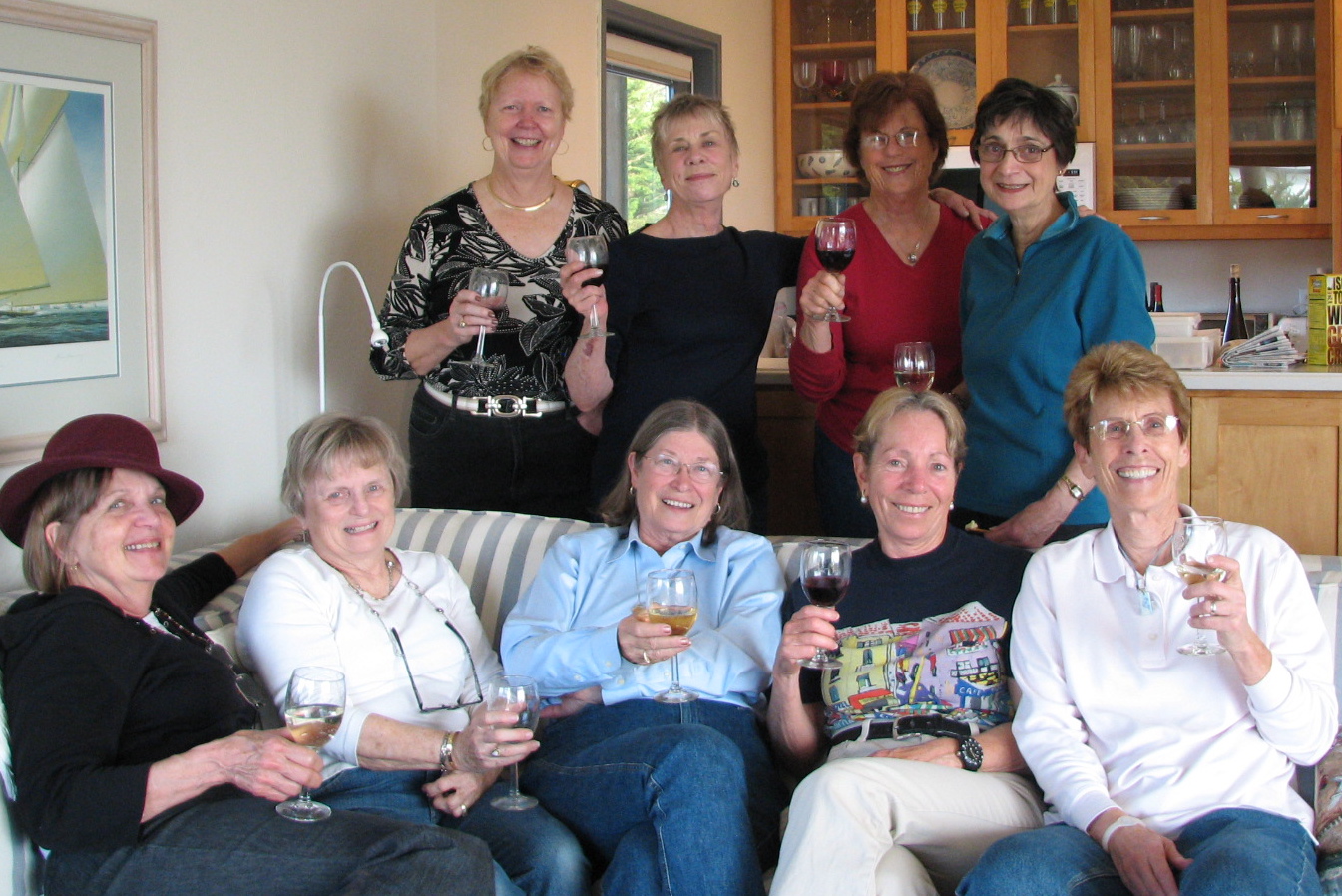
It WAS lovely and we are too.  Here we are toasting us as well as those not able to attend…Michel, Diana and Angel.

My Prime Time began on Sunday, March 11, when Dot Demmin arrived in the afternoon and then we awaited Susan’s arrival at LAX.  She was flying in from Mexico, D.F. after celebrating the 85th birthday of her Mexican mother, the lady (and family) she lived with when she was studying Spanish in Mexico.  Susan arrived on time and then all we had to do was wait for Monday’s dawn to take off for Pajaro.

We got on the road in time to miss the majority of the traffic through LA and that was a relief.  It’s frustrating to sit in traffic when one wants to be zooming off to good times and fellowship.  The weather was good as were the roads.  We had a little hitch going north when Dot was experiencing blurry vision from meds for recent cataract surgery.  Through the miracle of Internet, cell phones and prayer, she was able to schedule an appointment with an ophthalmologist she had worked with years before.  (It also helped that she and Bill have moved quite a few times and she has doctors all over the map  )  A great load was lifted off her shoulders when the doctor told her surgery was progressing properly.  He tweaked her medication and off we went.  It was a great day!

Walkin'

Dot, Susan and I made some requisite stops at Trader Joe’s and Costco for dinner, treats and wine supplies and we arrived at Pajaro around 3, I think it was.   Others arrived in time for us to take a walk on the expansive Pajaro beach.

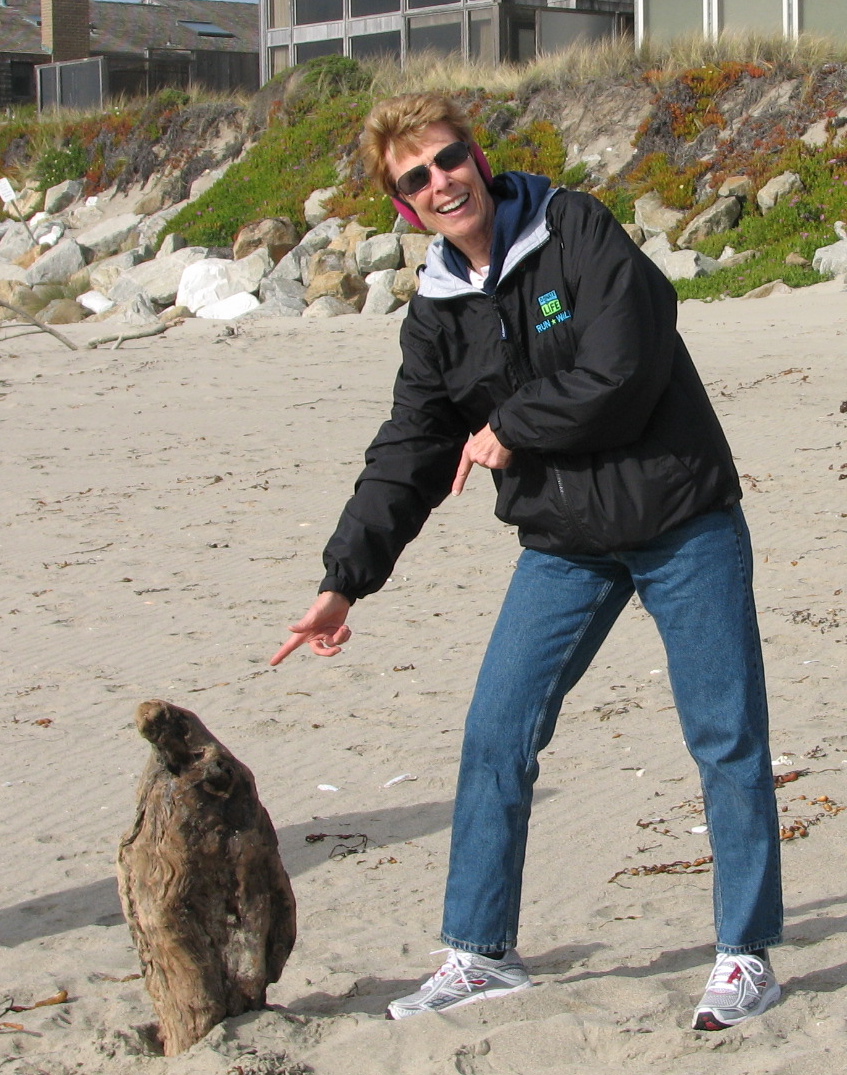
The weather was going to be inclement for the next few days and we wanted to get in at least one good walk.   There was a brisk breeze blowing as you can see from Dot’s holding of her hat.  We turned around quicker than our usual several miles because of a wind chill factor that penetrated jackets.  But not before we discovered a Buzzard statue.   This piece of driftwood reminded us of a buzzard and so it was named.

Two Buzzards

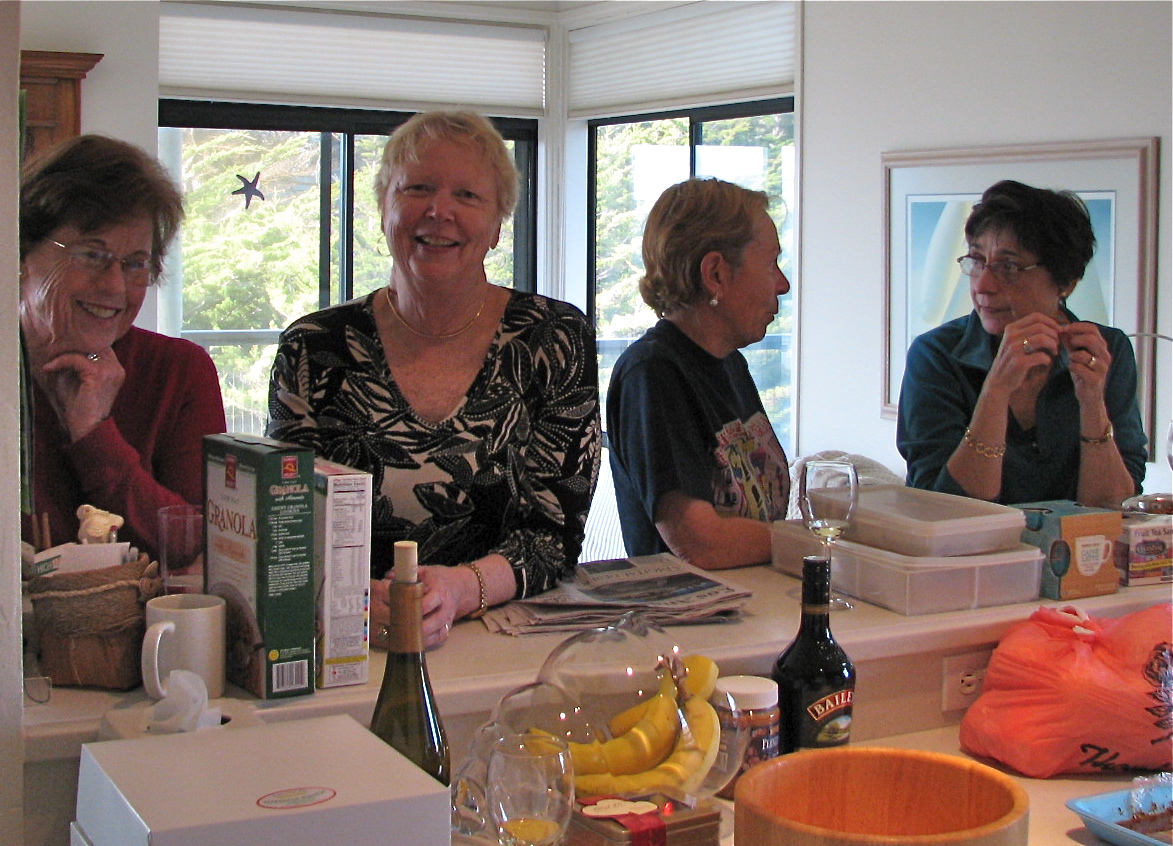
By the time we returned to our Buzzard’s Roost (Trish’s condo that is technically Pelican 10), it was time for a taste of the grape, some appetizers, much catching up with each other and the beginning of many fascinating discussions, and dinner.   I call this picture, “Hangin’”

Dot prepared a wonderful dinner of marinated salmon, salad and rice.  I helped a bit, but she is the primary, creative cook.  She does such a terrific job with being innovative with foodstuffs.  I admire how creative she is in making tasty vittles.   She also made some delicious brownies that were something like three layers with brownie, marshmallow, peanuts and more chocolate.  I can’t remember what she called them, but I thought they are akin to rocky road candy bars.

Now Dot’s dinner was very healthy (brownies aside), but, of course, we had dessert.  Linda had brought Gizdich pies, her

Dot's Salmon

famous biscotti and some persimmon cookie bars.  There were other treats, too.   Here is a picture of passing around some of the treats.  This is actually the second night because Shoo forgot to pick up ice cream when she and Sherry were driving down.  It became the joke of the event because Shoo doesn’t forget many things.

Passing the dessert(s)

Baileys and???? It's all good!

THEN, we discovered that one of our staples, Bailey’s goes with just about anything (except salmon and eggs).  It’s really great with pie, ice cream, cookies, brownies, etc. as Elizabeth is demonstrating.

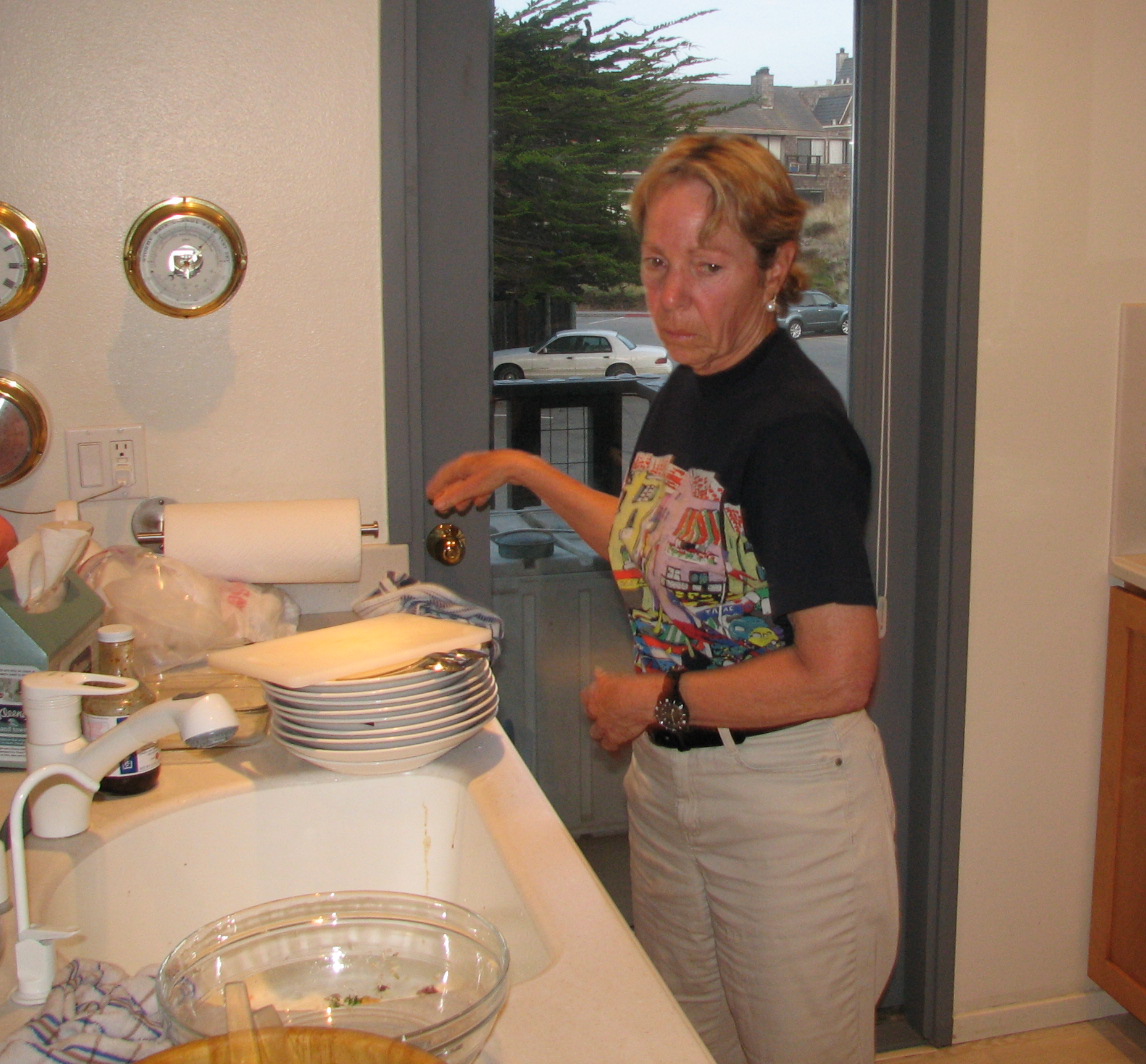
Unfortunately, after dinner, dishes have to be done and Pat graciously stepped up to the task.  She doesn’t look very pleased in this picture, but she always says she doesn’t cook and this is her contribution.  She does a great job and we thank her for all her effort.  The table and counters look great when she’s finished with her task.

Damn Dishes

I wanted to talk about our many discussions during the time we were together…and we did have many, as it seemed there was never a totally quiet moment.  Someone always had a comment or an idea to put forth.  But, alas, not being a good reporter, I took no notes as Michel would have and, thus, don’t remember all we talked about. (See, Michel?  We needed you!)  However, I do remember thinking that if the politicians would leave the nation’s problems to us, there would be more equality, fewer social problems, no wars and men would not be allowed to enact laws concerning women’s private parts or what’s inside them.  They have no clue as to how demeaning some of their ideas and rules are.

Our group is so well educated, reads so much and is knowledgeable of so many issues that it’s inspiring to listen, watch and learn from all of you.  Although, sometimes I’m not up on all that is being discussed and am not always able to put my two cents worth in, I always come away enlivened.  It’s a great feeling to have friends like you to enlighten me.

This is a landmark year for our group in that we’ve all known each other for a minimum of 50 years (as we graduated from dear ol’ OHS in 1962…a very good year).  Some of us have known each other since grammar school…for example; Diana and I met in Kindergarten and have known each other for about 63 years.  Amazing!  But, the point is, that even though we might not see each other annually or more often, our friendship is such that we can pick up and continue as if we had seen recently seen each other.  It doesn’t matter if it’s the large group or just a couple of us; it’s automatic to pick up where we left off and have a good time together.  I have to think that this large of a group with such a relationship for so long has to be unusual.  Prime Timers rule!

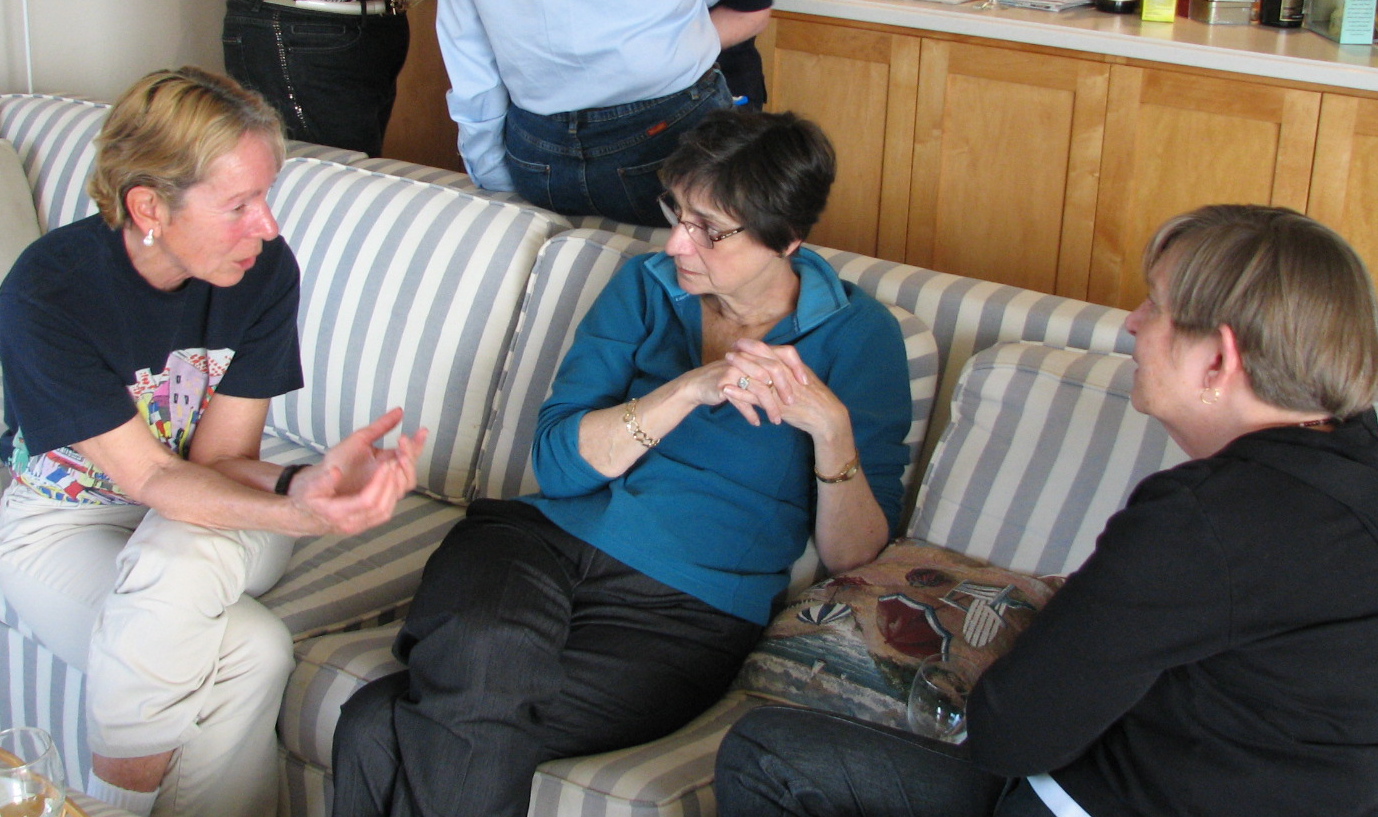
Talking hands

Speaking of conversations, I noticed that we have a couple of folks who need their hands to carry on a conversation and we are all very engaged in active listening.  I think we all do this, but Trish and Pat were the only ones I caught on camera.

Talking Hands 2

We made our traditional trek down to the Whole Enchilada at Moss Landing during the second day and had a delightful meal.  I apologize to Dot ahead of time as my camera cut her off a bit, but we know that she’s smiling.  Lynda might have a better picture and I can insert it later if she has one.  This was before we were served, so you can’t see the sumptuous meal we consumed.   Rest assured the Enchilada has outstanding food and if you don’t get enough to eat, it’s your own fault.

The Wholey Trek Group

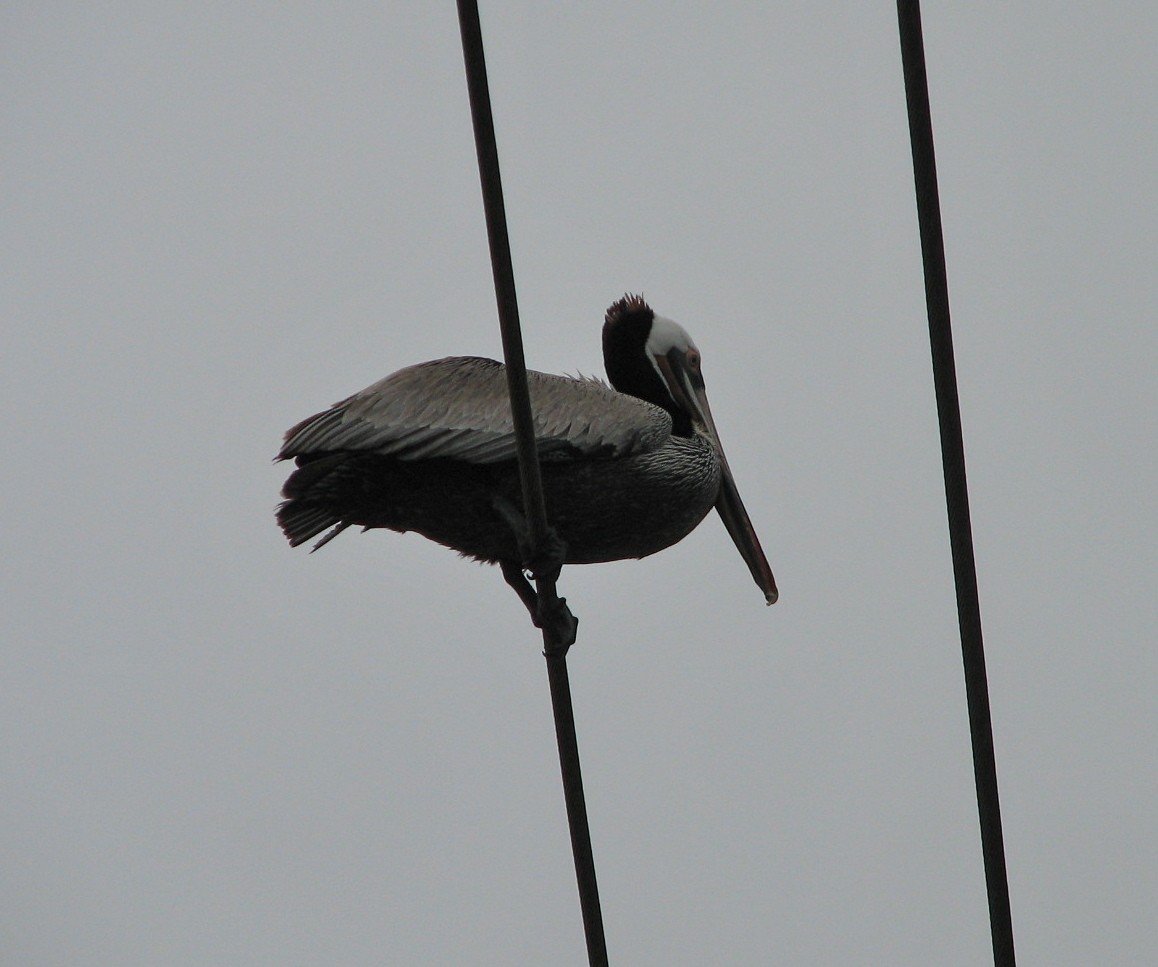
Online Pelican


While leaving the Enchilada, I happened to spot a pelican perched on a power line.  I’ve never seen pelican perched like this before and had to get a picture of this guy or gal.  The wind was blowing and he was wobbling back and forth but didn’t seem to be uneasy about being online.

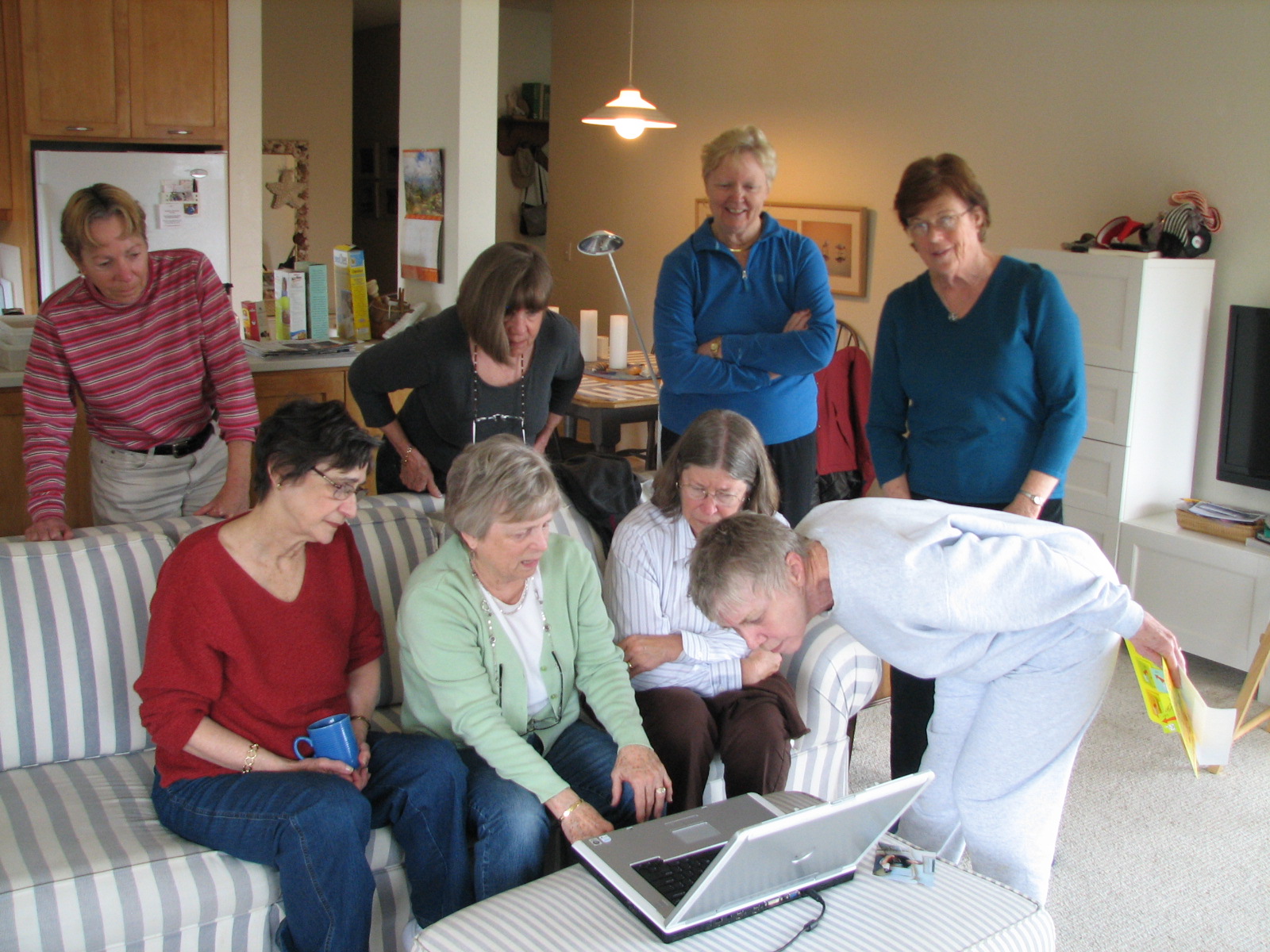
Is This Real?

A fun thing about having online access at Trish’s condo was that we could use Google Earth to show each other where we live.  It was really neat to do this and we gained a bit more insight as to each other’s domicile.  Dot is showing us her ranch (that’s what I would call it) and pointed out where she and Bill have planted trees, put in a garden and how far they have to go just to get the mail.  We could also see Evert’s observatory at Lynda’s house and much of the work they’ve done repairing earthquake damage as well as preventative measures for other possible problems.

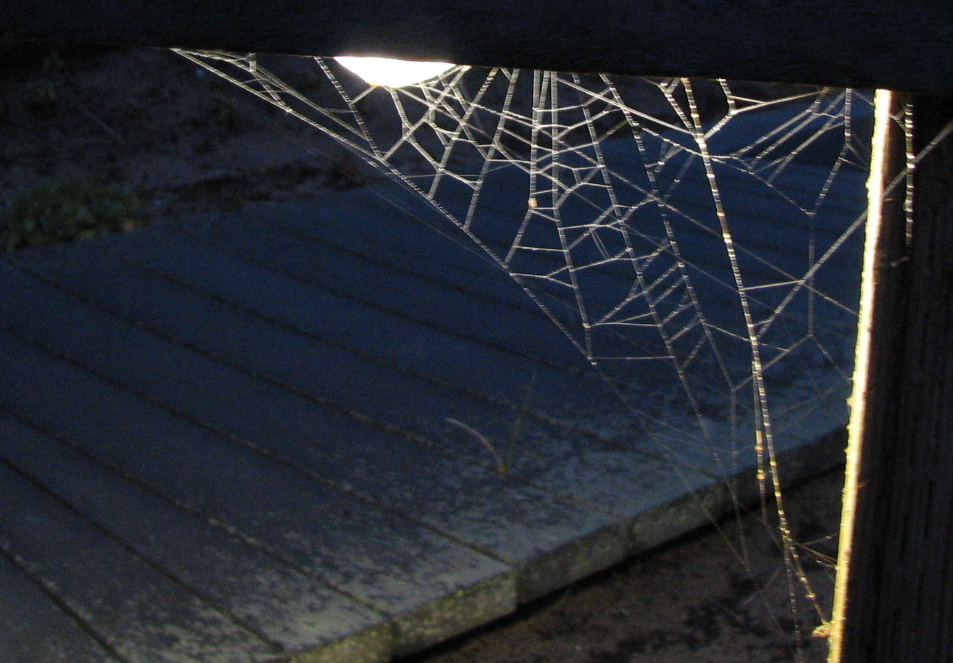
No Cobwebs for Us!

Sometimes we feel as though we have cobwebs in our joints (or perhaps even our heads), but this really isn’t true.  As a group, we are vibrant ladies still contributing to society in our own ways.  I am very proud to be buddies with you all as you have all contributed to making me what I am today.  Thank you all and thank you for a primo time at Prime Time.


The Ninth Annual Tim Baptista Memorial Crab Cioppino Dinner – The Ultimate!

8 Mar

This long anticipated annual feast happened on Tim’s 31st birthday, February 25, 2012.  It was tough for me to realize that within a few months, it would be 11 years since the Baptistas so generously  gave Bob the Gift of Life with Tim’s heart.  It doesn’t seem so long ago and yet seems like forever.  Difficult to explain.

I had planned on leaving home about 9 or 9:30, but got antsy and left too soon, traffic-wise.  It took a bit more than hour to traverse about 50 miles.  Oh well, such is life in Southern California.

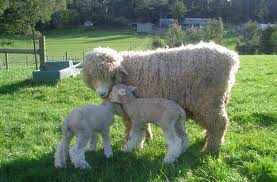
My first pit stop was at Buttonwillow, a mile or so north of Route 58.  A few years ago, some shepherds had their sheep grazing next to the roadside rest.  It was very pleasant to hear the sheep contentedly baahing to each other.  A real pastoral scene.  This time, there were no sheep, but there were flocks of blackbirds, starlings and other birds chattering to each other.  A bit farther north, I did see a flock of sheep and off by themselves was a ewe with twin lambs that weren’t very old.  That made up for missing other sheep herds.  I also saw a beautiful male northern harrier (technically a kite bird and not a hawk) flying over a pasture.  I imagine he was looking for a mouse or something for lunch.  Once I got going on I-5, I made good time going north and then cutting off at Hwy. 152 to Gilroy.  Gas at the Gilroy Costco is a LOT cheaper than in San Francisco. I arrived at my Hotel Kabuki about 4 PM.

After checking in and getting settled, I walked a few blocks to Van Ness to catch a bus to Fisherman’s Wharf.  I had a craving for clam chowder in a bread bowl, which I bought to go and took it back to my hotel room.  For $6.24, it was probably the cheapest dinner I’ve ever had in San Francisco.  I love the SF bus system and so do many other folks, as it always seems to be crowded.  It only cost me 75¢ each way.  It would have cost at least $9 an hour to park at the Wharf.

The next morning, I walked over to Sacred Heart Cathedral Prep to help with the set up for the Cioppino feed.  About 450 people had signed up for the dinner compared to the 600 in 2011.  But the economy has affected many people and perhaps interest has waned for the dinner.  But that didn’t dampen the spirit during the day.  We put flowers in strategic spots, set the tables with bibs, plates, bowls, napkins, and other things and we were finished about 2 PM, I think.

Traditionally, Louise Upp organizes and decorates the dessert table, which consists of cookies and sometimes Hershey’s Kisses or some such candy.  She does such a good job that I just follow her instructions and together we place dozens of cookies in an attractive manner on the table.  This year, it was decided to serve the cookies family style after the cioppino has been eaten.  Although it took a bit of figuring to get equal amounts of cookies on the 58 plates, it worked out well.  The student servers brought them to the tables and that way, no one jumped the gun in getting dessert.  For a change, everyone had an equal opportunity to get dessert.

I went back to the hotel to rest a bit and await the family to arrive.  Jerri and Allan checked in a bit later and then the kids (Jolee, Jason, Dalan and Megan and Scott) arrived about 4 or so.  They toured Fisherman’s Wharf for a few hours, as they’d never been there.  They enjoyed it and looked forward to going back the next day to see more.

We all walked the few blocks to Sacred Heart Prep about 5 to begin the celebration, see old friends and feast on the cioppino.  In addition to the family, I had invited Anthony Robinson and his fiancé, La Monica, to join us.  Anthony is a heart transplant and is also a firefighter for San Francisco.  We became acquainted during the Rose Parade festivities and it just seemed right that he and La Monica join us.   We had a great time with them, lots of laughs and great conversation.  You can see they were pleased with their cioppino buckets.

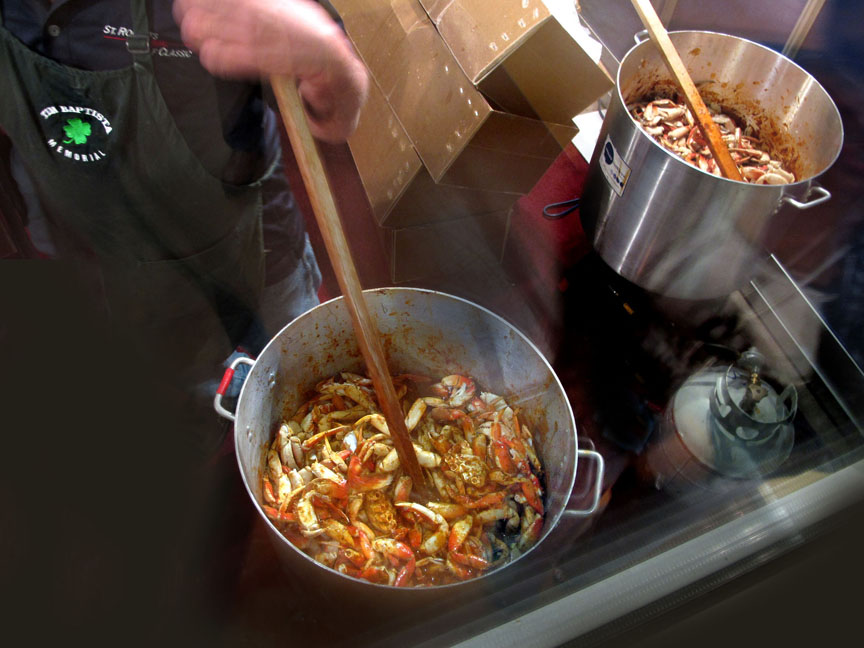
We took Anthony and La Monica downstairs to see where and how the cioppino is prepared and we happened to time it just right so that they could see the crab and shrimp dumped into the multiple vats of sauce.  Oh boy!  Did it ever smell good!  They were quite impressed with what the Baptistas have done with the funds they have raised during the past 9 years. 

The dinner was superb as usual, beginning with traditional sourdough bread, salad, pasta with pesto sauce and the piece de resistance, the cioppino.   It was difficult not to eat too much of the first courses, but we sort of restrained ourselves.  Not!

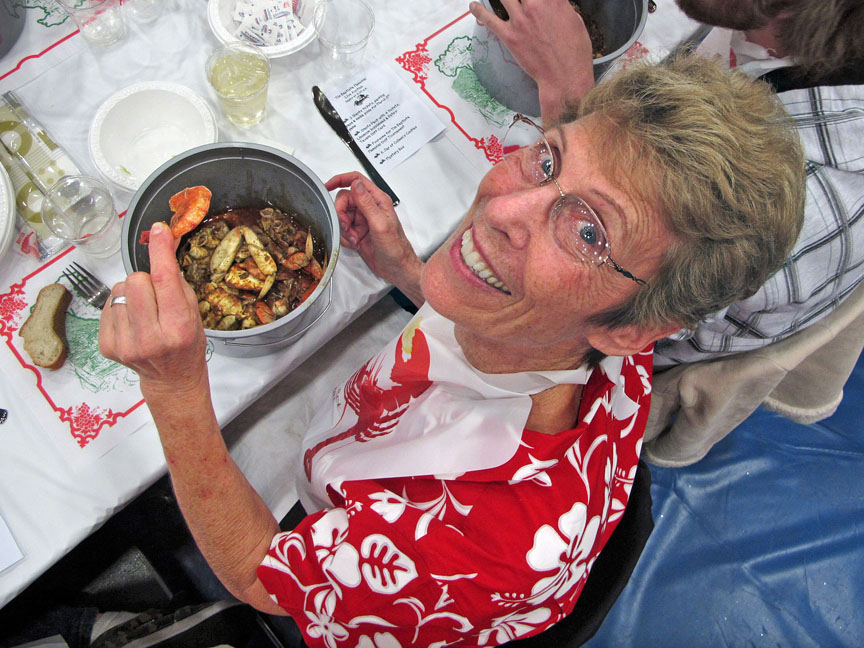
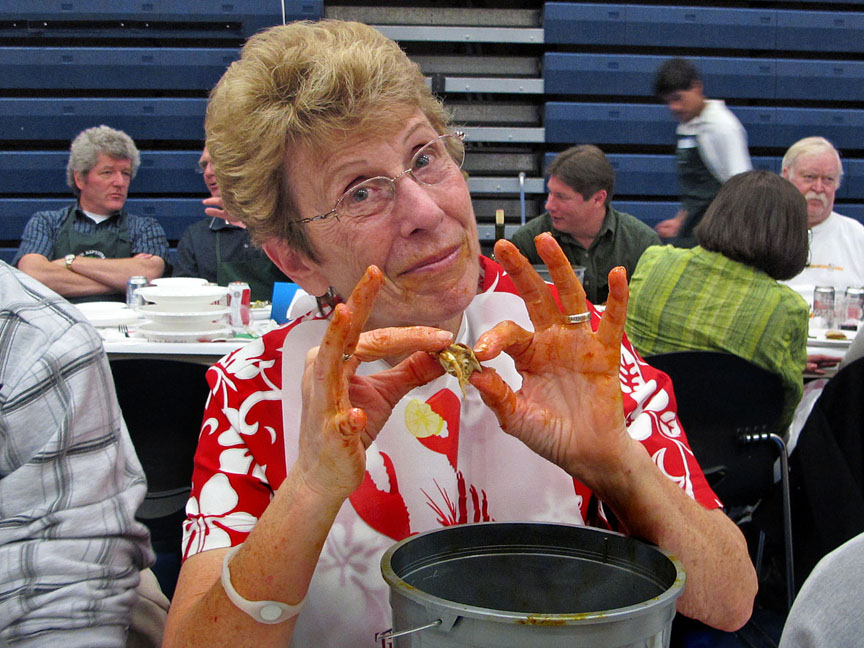
It was a good thing that Dick tied on my bib for me or as he says, “We tied one on,” as you can see in the pictures below. Tying One On Eating cioppino is not for the faint of heart.  One just digs in and chows down. I tried to savor each bite and tried not to wolf it down like I usually do.   You can see how much food was in my bucket, which was just about all I could handle.  But Scott, Jason and Allan each had another bucket.  They were loving it!  They all told me that the next day, they could still smell the cioppino on their hands even though they had scrubbed their hands.  It was a good memory to have.

First Bite - No Mess

After digging in, a big mess

Jason's getting into the groove

We ate our fair share of cookies too.  The little kids liked some that were on some other tables, so they scrounged around and picked what they wanted.  No one came to complain, so I guess it was ok.  I think a lot of folks were too full after scarfing down all that good fare.

After dinner was the traditional auction but we didn’t score this year as we have in the past.  No cabin (the Baptistas sold it last year) and no cioppino pot (I got that last year).  They did auction off some of Colleen’s famous cookies ($350), some Giants tickets, some Sacred Heart gear, and a mystery box.  Dalan and I bid on the mystery but were glad when we didn’t get it.

Waving our bids

It turned out to be some more Giants tickets along with some gift certificates for local restaurants.  We struck out in the raffle, too.  Oh well, we contributed to the cause.

It was kind of a bittersweet dinner about halfway through it because Colleen made the announcement that the 9th Annual Tim Baptista Crab Cioppino Dinner would be the last.  There was a collective sigh from all over the audience…I think for different reasons.  People like us don’t want to give up the delicious vittles and they enjoy attending and helping the cause.  I like the camaraderie as well as eating the dinner.  The cioppino dinner is hard work, not only to cook, but, to organize, get prizes for, and a multitude of other things.  The Baptistas are tired and, as Colleen told me, “It’s time.”  Colleen also mentioned that the kids at Sacred Heart today didn’t know Tim and it’s just a different atmosphere.  The economy had an effect too.  So as she says, it’s time.  They plan on continuing their Memorial Golf Tournament in August that will help to perpetuate Tim’s fund.

I can certainly understand where they are coming from.  It’s been a long time and a lot of work for them.  They’ve created a lasting legacy in Tim’s name and he certainly won’t be forgotten with the two endowed scholarships to deserving seniors and a state-of-the-art fitness center.  I think that was one of their goals as well as helping Sacred Heart Cathedral Prep.  I’ll miss going north each February, but then I’ll have time to go other directions.   When one door closes, another opens, is my philosophy.

We hung around after dinner, kind of wanting to relish the evening and embed the memories in our little brain cells (at least I wanted to do that).  Dick took a nice family shot of us as well as some clowning shots.  I’ve included them on the next page.  I should add that Scott has a certain pose he likes to strike and we complimented him by imitating him.

Cora and Dick

Jan and Cora

The family - Allan, Jerri, Cora, Scott, Jason, Dalan, Megan, Jolee

The Pose

So endeth our festive evening at the Ninth Annual Tim Baptista Memorial Crab Cioppino Dinner.  It was a night to remember.

I would like to thank all those who have been great supporters of this event and of Bob and me.  It means a lot to me that you have traveled from far and wide throughout the years to attend and enjoy the food and fun.  Louise and Charlie, Dick, Jan, Mary Lou, Connie,  Allan and Jerri, Scott, Jason and Jolee, Dalan andMegan.  Your love, support and encouragement has been uplifting and I really appreciate it.  I also want to thank the Baptistas because without them, none of this would ever have happened.  Their generous Gift of Life and their desire to create a legacy for Tim while benefitting Sacred Heart Cathedral Prep have made them tops in my book.  Thank you Colleen, Rick and Kate!

“Levitated Mass” Moves through Cerritos

7 Mar

This is my first ever post and I’m interested in seeing how it works out.  Thanks for reading it.

Some of you may be have been following the Los Angeles County Museum of Art’s (LACMA) new acquisition, “Levitated Mass.” LACMA is moving this behemoth rock from a quarry in Riverside County to its campus on Wilshire in Los Angeles at a cost of about $3 million (from private donations, thank goodness).  It’s been in the news quite a bit since it’s so huge (21.5 feet tall and 340 tons), costs so much to move, needs special transports and and requires a circuitous route to get to LACMA because of bridge tolerances and street width/strength.  Image  Compare the size of a man to the rock 

The customized transport moves about 3 mph and only in the wee hours of the night so as not to cause too much disturbance with traffic.  The movers have been surprised that people have lined the streets along the route even during the night and even more so when the rock is parked for the day.  Teachers have been taking their classes to see it, parents with their kids and dogs and people like me who are curious to see it before it’s actually placed at LACMA.  

The “Mass” moved through Cerritos early this morning and was parked in the middle of South Street just west of the San Gabriel River overpass.  It fully took up the two middle lanes of South Street.ImageMaking the turn at Studebaker and South Streets

I didn’t see the rock on the move, but did venture over to see it this morning in its parking spot.  I wasn’t surprised to see a lot of people there but I was surprised at how friendly people were in discussing the rock.  The camaraderie reminded me of when the Olympic Torch went through Anaheim and everybody was so happy to see it pass by. I met a lady with her 13 week old chocolate lab puppy, Bear, and her two girls who wanted to see it before school.  Something new to tell the teacher, I suppose.  A man told me that his first real memory was seeing his house being moved from a rural area to a place where they had more services like electricity and running water.  Ever since, he’s been interested in seeing how things are moved.  We both agreed that we’d have to go to LACMA to see how they are going to “mount” the thing to “levitate” it.  I can’t imagine how or where they are going to put it.  As you might know, the tar pits aren’t far from LACMA and if they’re not careful, it might sink into a pit.  Wouldn’t that be the pits?  

Image

Yes, the Oversized Load sign is definitely a must! 

The white thing is the actual rock, strapped in and supported by huge steel girders.  Note the number of tires needed!  I was amazed that giant tires weren’t used but I don’t know much about tires.

Image

The rock is supposed to arrive at LACMA March 10 and then become the centerpiece of “Levitated Mass,” a piece of art by Michael Heizer.  Perhaps other things will be levitated in lieu of the actual rock.  who knows?  As I said, I’ll have to go see it to figure out how it worked out.